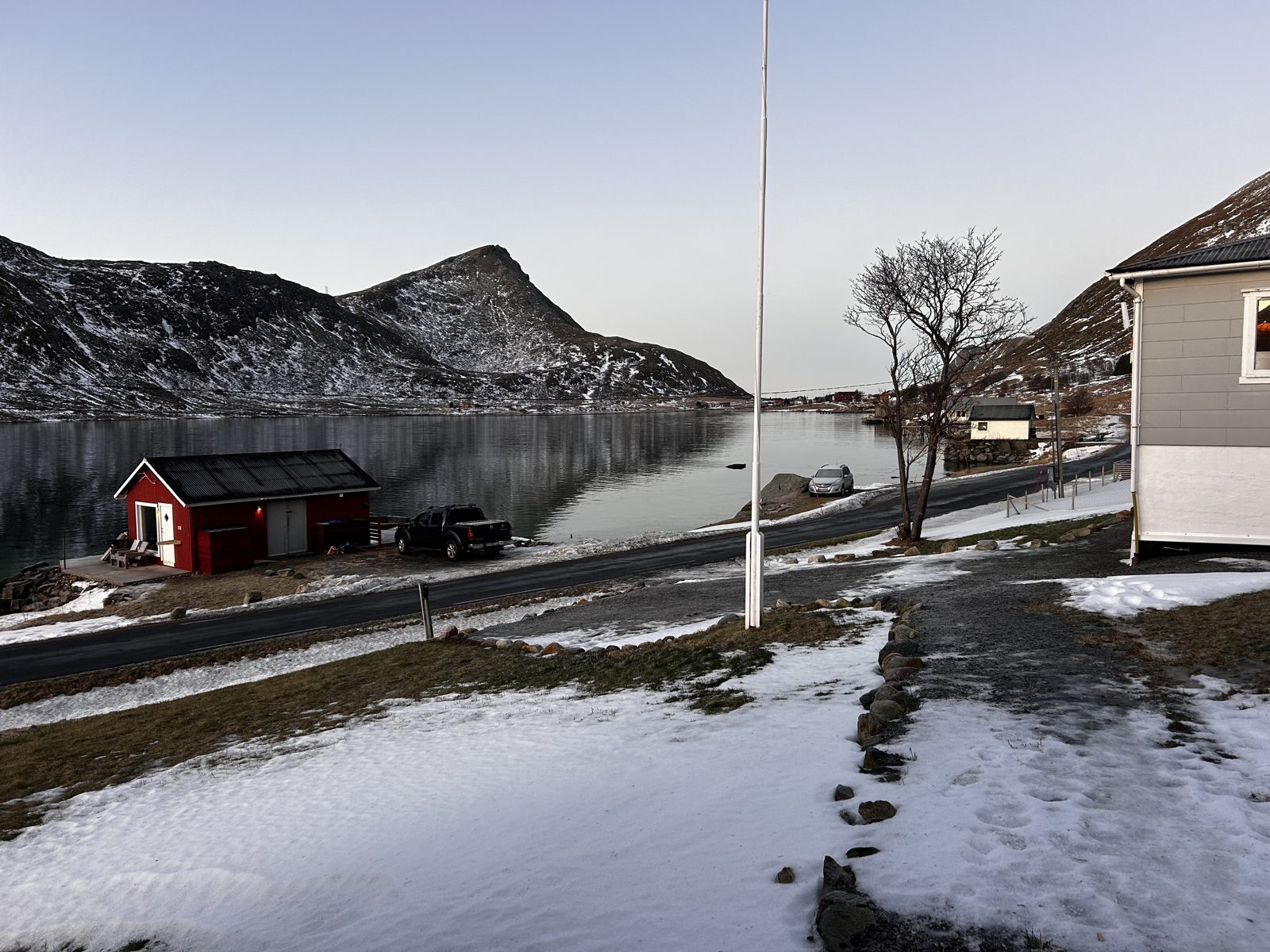
Lofoten Weather: What to Expect — and What to Do When It TurnsLofoten Weather: What to Expect — and What to Do When It Turns
Why Lofoten weather changes so fast, how to plan around it, and what locals actually do when it turns — from hosts in the west of Lofoten.Why Lofoten weather changes so fast, how to plan around it, and what locals actually do when it turns — from hosts in the west of Lofoten.
Every week, someone planning a trip asks us some version of the same thing: what will the weather be like?
And every week we give the same honest answer: we don't know. Nobody does. Not in the way the question means.
So this guide answers the question behind the question:
How do you plan a trip around weather that refuses to be planned?
Because that is a skill, it can be learned before you arrive, and it changes more about your trip than almost any other piece of preparation. The visitors who fight the weather here have a hard week. The visitors who work with it have the trip they came for — often because of the weather, not despite it.
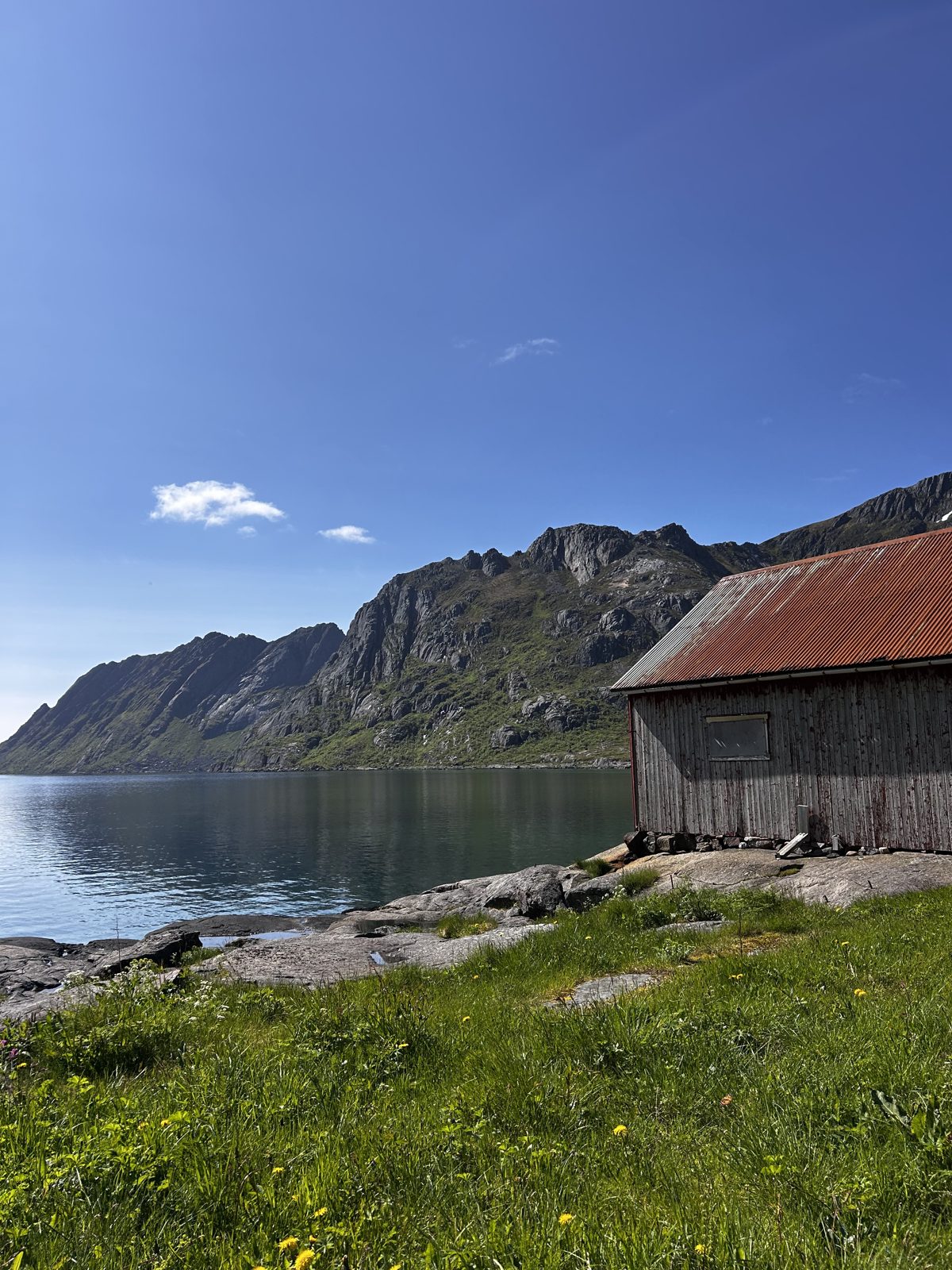
Why the weather is the way it is
Lofoten should, by latitude, be frozen solid. The islands sit at 68° north — level with northern Alaska and Greenland. Instead, winter at sea level usually moves between roughly −5 and +5 °C.
The reason is the sea. The Gulf Stream carries warm Atlantic water up this coast, and the islands sit in the middle of it, a thin wall of mountains with open ocean on both sides. That warm water is a gift: it gives Lofoten mild winters, green summers and fishing grounds that built everything you see here.
But the same ocean is the engine of the weather. Atlantic low-pressure systems roll in off open water with nothing to slow them down, and the mountains then carve each system into local weather: rain on one side of a ridge, sun on the other, wind funnelled down one fjord while the next sits still. It is entirely normal here for one village to be in sunshine while its neighbour, ten minutes away, is inside a rain shower.
Two practical truths follow from this:
1. The weather changes in hours, not days. A morning can hold three seasons. This sounds like a warning; it is mostly a promise. The light that photographers cross the world for — beams through rain, storm edges, sudden clearings — exists precisely because the weather moves this fast.
2. The weather is local. A grey forecast for "Lofoten" often means grey somewhere in Lofoten. Driving twenty minutes, or simply waiting an hour, is frequently the whole solution.
What the forecast can and cannot do
We check yr.no — the Norwegian Meteorological Institute's service — at breakfast, every day, and we recommend guests do the same. It is very good. But it is good at the right distance:
- A few days out: genuinely useful. Trust the shape of it — the wind especially.
- A week or more out: treat it as fiction with confidence intervals. Do not cancel a trip, or build one, on a 14-day forecast.
This is why our itinerary guides plan in day-shapes, not dates: decide what kinds of days you want — a summit day, a beach day, a village day, a slow day — and let the weather at breakfast choose which one today becomes. The full method is in our 5-day itinerary, and it is the single best answer we know to Lofoten weather.
One more planning truth, and it is the honest one: the best weather strategy is more days. Weather evens out over a week in a way it cannot over a weekend. If you are choosing between a short trip in a "good" month and a longer trip in a "worse" one, take the longer trip.
What each season actually throws at you
The full season guides cover this properly — summer, autumn, winter, and when to visit for the overview. The weather version in brief:
- Summer (June–August): the gentlest stretch — cool, maritime, with the long, light nights. Rain still visits; it just rarely stays.
- Autumn (September–October): the drama. The Atlantic storm season arrives from late September, and October is often the wettest stretch of the year. Also, for us, some of the best light of the year.
- Late autumn and early winter (November–January): the highest-risk window for real storms, arriving as the light shrinks. This is deep-weather Lofoten — and prime aurora darkness.
- Late winter (February–March): typically the steadiest winter weather — the reason it is peak season for northern lights and white mountains.
- Spring (April–May): the quiet in-between: longer days, melting snow, changeable but softening.
No season is a mistake. They are different trips.
The one rule, and the clothing that makes it true
There is a Norwegian saying you will hear until you believe it: there is no bad weather, only bad clothing.
It sounds like a slogan. It is actually the operating system. Almost every plan in this guide only works if you are dressed so that being outside in wind and rain is comfortable rather than heroic. That means layers — wool against the skin, wind and rain shells over it — and it means dressing for the hour, not the season, because the hour is what changes.
The complete list is in What to Pack. The short version: if your rain jacket is an umbrella, start there. (Umbrellas do not survive Lofoten.)
When it turns: the repertoire
Now the part most weather guides skip — the actual answer to a day when it turns. Not "visit a museum" as a shrug, but the repertoire we use ourselves, roughly in order.
1. Wait an hour before you decide anything. Storms here pass through in hours. A wild breakfast is very often a fine afternoon. As we put it in the driving guide: a storm hour is a postponed drive, not a lost day.
2. Check whether the weather is somewhere else. Local means local. If your side of the island is grey, the forecast for a village twenty or thirty minutes away may be a different day entirely. Some of our guests' best beach hours have happened while it rained at the house.
3. Take the fog upstairs. Fog at sea level is not a verdict. Quite often the sun is shining above the fog — and a walk up a ridge puts you on top of a white sea with only summits breaking through. Some of the best mountain days we have had started as grey ones. (Judge wind and visibility honestly first — the safety guide covers when a mountain day is off the table.)
4. Go low instead of high. When the tops are in cloud but the day is walkable, swap the summit for a coastal path. The Nesland–Nusfjord walk is our standing answer: sea-level views the whole way, and a warm dinner available in Nusfjord at the end of it.
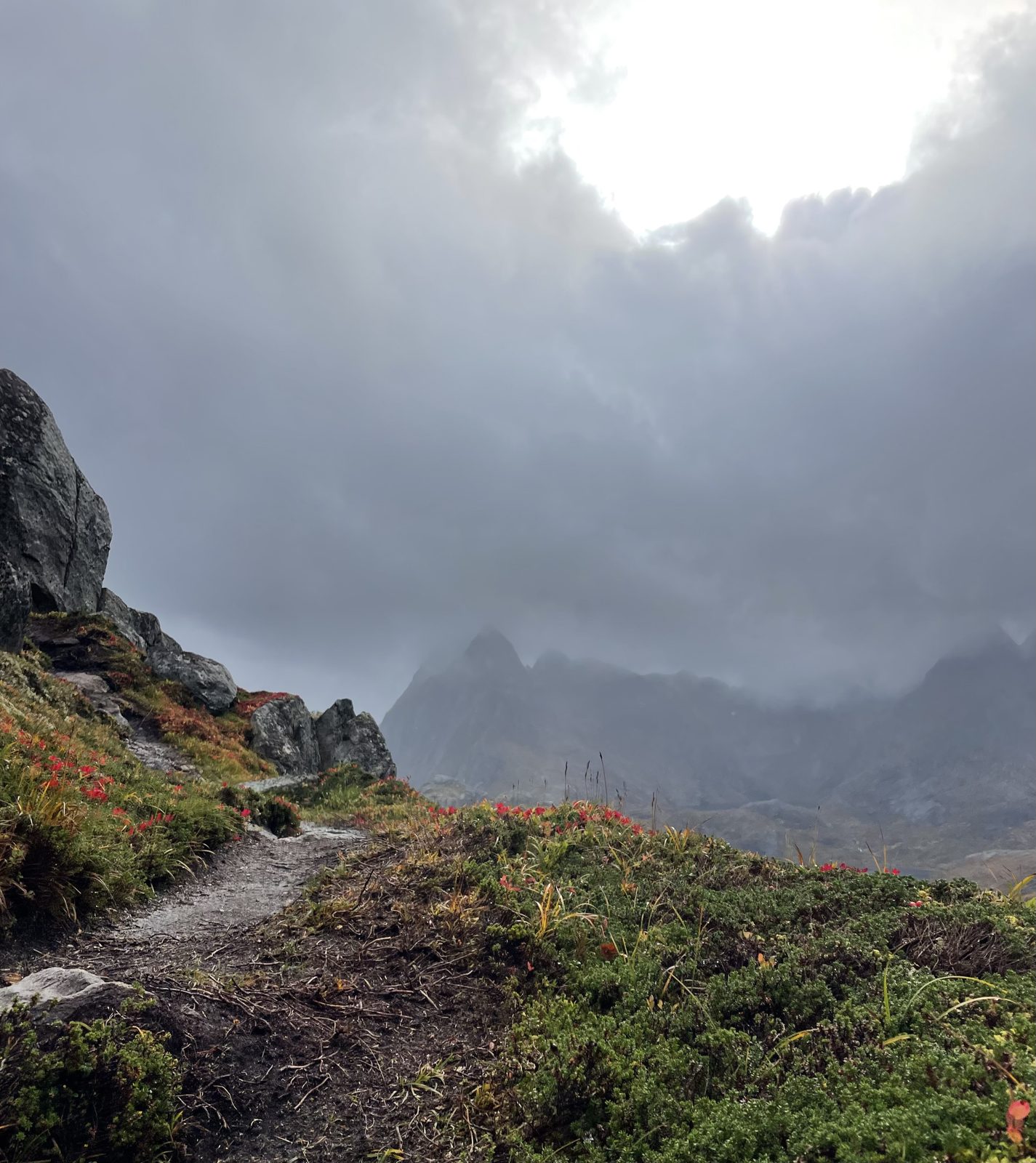
5. Watch the storm properly. A real Atlantic storm is one of the sights of Lofoten — from the right side of the glass. Coffee, a window facing the weather, and a sea in full temper is an afternoon we would not trade for sunshine. In autumn, guests sometimes tell us the storm was the thing they remember. Short version: the storm day is not the ruined day. It is the most Lofoten day of all.
6. Have a village afternoon. The west keeps a handful of small, warm, indoor places that were made for exactly this weather. The little museums and the 19th-century buildings of Å at the end of the road. The doll museum and the seafood lunch counter on Sakrisøy. Nusfjord, the preserved fishing village, with dinner booked for the evening. And the glassblowers' studio at Vikten on Flakstadøya — northern Norway's oldest, with a café facing the open sea — where watching molten glass being worked is a genuinely good use of horizontal rain. (All of these run on seasonal hours; check before you drive, especially outside summer.)
7. Watch the surfers. Storm swell is what surfers wait for. A coffee at Brunstranda's beach camp watching wetsuited figures in a winter sea recalibrates your definition of bad weather permanently.
8. Declare a kitchen day. Bake something. Cook the long dinner. Light the fire, deal the cards, and let the weather do its work on the windows. In a well-equipped house this is not the fallback plan; it is one of the days you came for — and there is a reason our accommodation checklist puts the kitchen so high.
And the classic finish to any weather day in Lofoten, in any season:
Did you know? — from Casa Lofoten
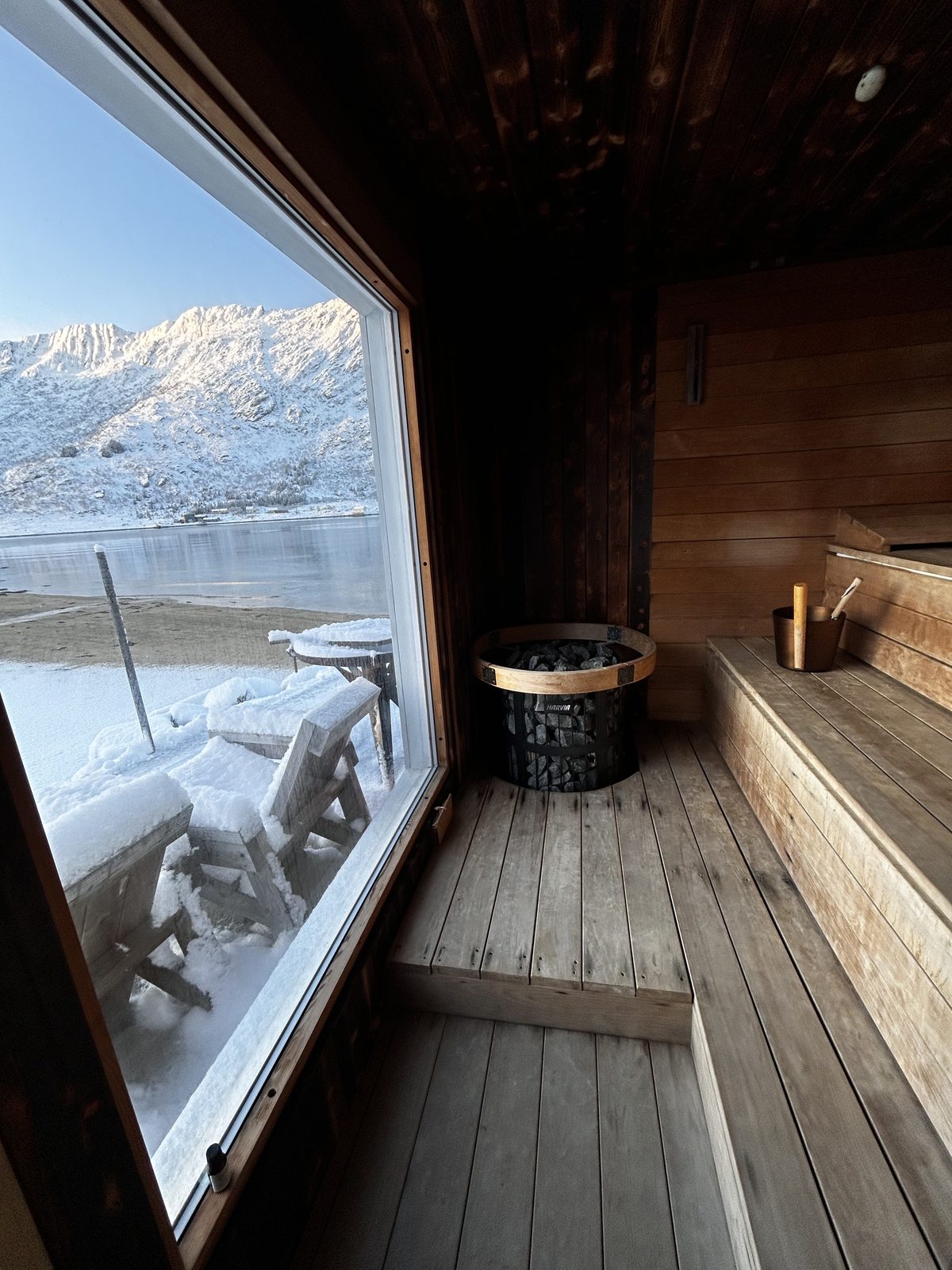
Casa Lofoten has its own sauna a few steps from its own beach — the classic Lofoten answer to a cold, wet afternoon. Heat, a run across the sand, the sea, and back into the heat. The weather stops being the enemy at approximately the second round. → The sauna and the beach
The safety line
One honest boundary under all of this. Wind is the serious weather here — more than rain, more than cold. When a real storm is blowing:
- The mountains are closed to you that day. Not officially — practically. Wind that is inconvenient at sea level can be dangerous on a ridge.
- Driving waits for the worst hour to pass. The road will still be there; so will everything at the end of it.
- The sea is watched from land.
The mountain rules that make this judgement for you are in the hiking safety guide. The weather decides, not the plan — that rule was written for exactly these days.
FAQ
Is the weather in Lofoten really that bad?
No — it is that changeable. There is plenty of fine weather here; it just refuses to appear on schedule. Statistically the roughest stretch is October to January and the gentlest is summer, but every month contains both kinds of day.
Can I trust the forecast?
For the next few days, yes — yr.no is very good, especially on wind. Beyond that, no. Never judge a trip by a 14-day forecast, in either direction.
Which is the wettest time of year?
Autumn — October is often the wettest month. Summer is typically the driest stretch. There is no true dry season; there is also no month without good days.
Does rain ruin a Lofoten trip?
Only if you dress badly or plan rigidly. With proper layers and the repertoire above, weather days become part of the trip rather than holes in it. Many of our guests' strongest memories are from the rough days.
What about wind and driving?
The E10 is maintained year-round, and normal wind is just weather. In the rare worst hours of a real storm, you wait — the pattern here is that systems pass in hours. More in Getting Around Lofoten.
Is there a "safe" month to book?
No — and that is liberating rather than worrying. Book the month whose light and character you want (see Best Time to Visit), pack correctly, plan day-shapes rather than a fixed schedule, and the weather takes care of itself.
No bad weather
There is no bad weather, only bad clothing — and a base with a drying cabinet, two fireplaces and a sauna makes the saying easy to live by.