Å
Å · MOSKENESØYA
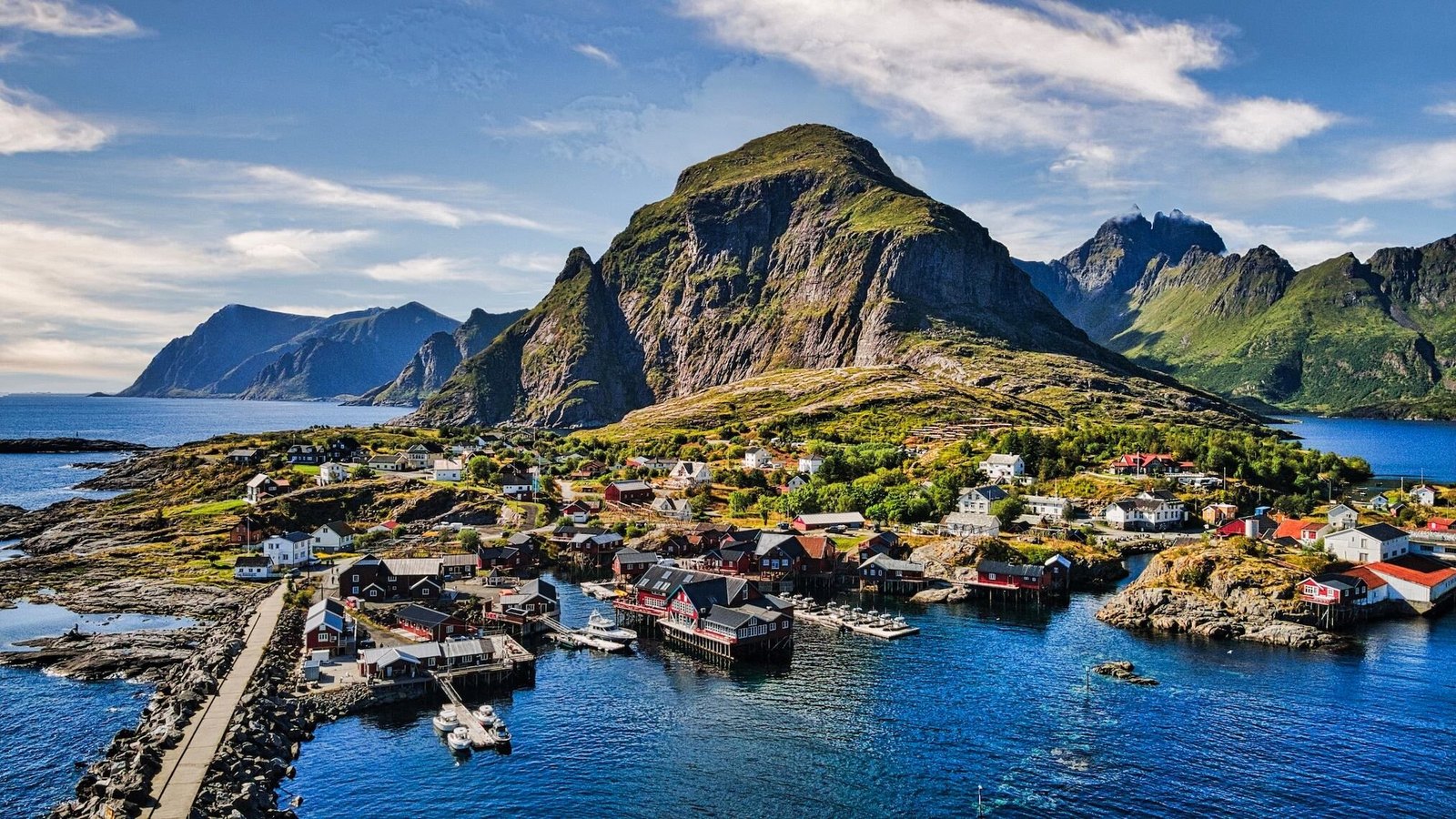
The village at the end of the road, where the E10 stops at a car park and the sea takes over. Two museums, one working 1800s bakery, and the feeling of standing at the edge of the map — thirty to forty minutes from the house.
The village that became a museum
Å is a preserved fishing village more than a village with a museum in it: dozens of the buildings are listed, and the Norwegian Fishing Village Museum uses the old estate itself to show how the Lofoten fishery worked from about 1840 to 1960 — the boathouse, the smithy, the post office, the crofter’s cottage, and what is said to be Europe’s oldest cod-liver-oil factory. The bakery has been at it since 1844 and still bakes cinnamon buns in its old oven in summer. Around the corner, the Lofoten Stockfish Museum fills an old fish-landing station with the trade that built these islands — the unsalted, wind-dried cod that has gone to Italy for centuries.
The name, by the way, is the last letter of the Norwegian alphabet and comes from the Old Norse word for river. The end of the road, in every sense.
Getting there
Thirty to forty minutes from the house, ten minutes past Reine. Park at the big lot through the tunnel and walk in.
Timing
The bakery and the summer activities run roughly June to September; the museums keep shorter hours off season — check before a winter visit.