When is the best time to visit Lofoten?When is the best time to visit Lofoten?
Guests ask us this all year round, and our honest answer surprises most of them: there is no bad time to visit Lofoten. The real question is when Lofoten is right for the trip you want.Guests ask us this all year round, and our honest answer surprises most of them: there is no bad time. Winter here is not a lesser version of the year — it is a different place entirely.
Every season, on its own terms
Every season here has its own light and its own weather, and each is worth a trip on its own terms. The white mountain tops of spring and autumn. The green mountains of summer. Snow-covered villages in winter. The long, light nights from May to September, with the midnight sun at their heart. Autumn colours. The grey tones and blue twilight of the polar night. And the northern lights, waiting through the whole dark half of the year.
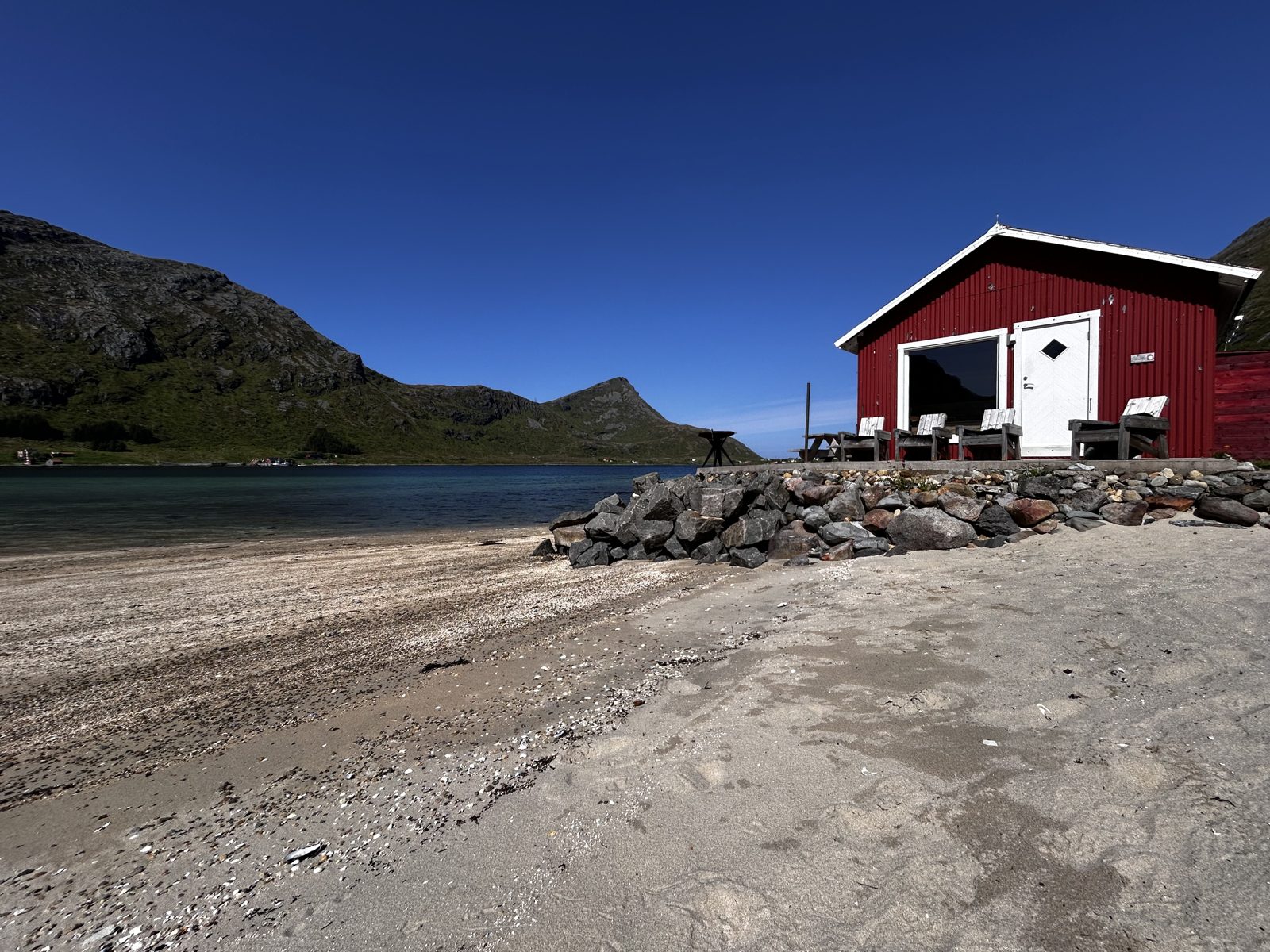
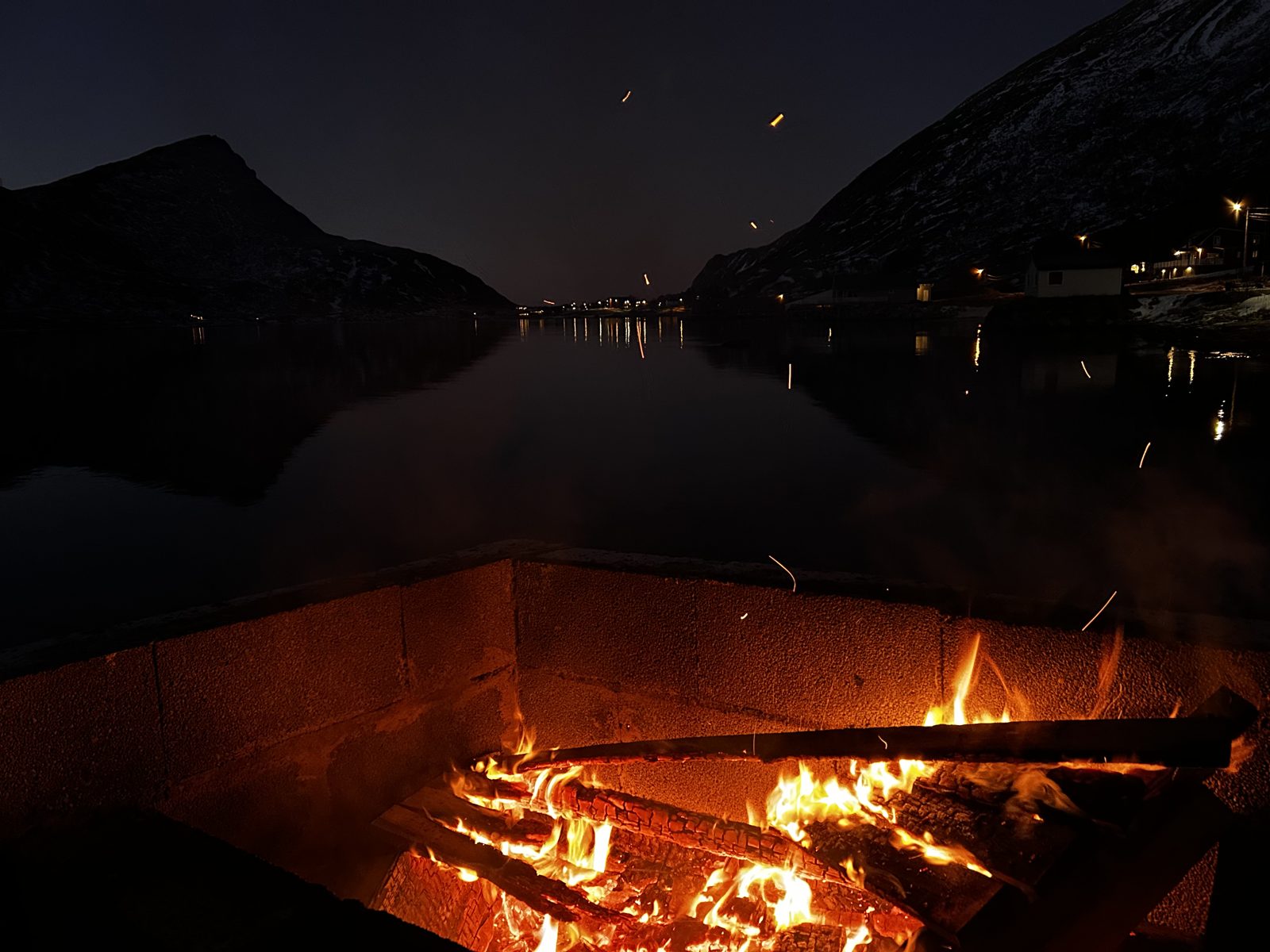
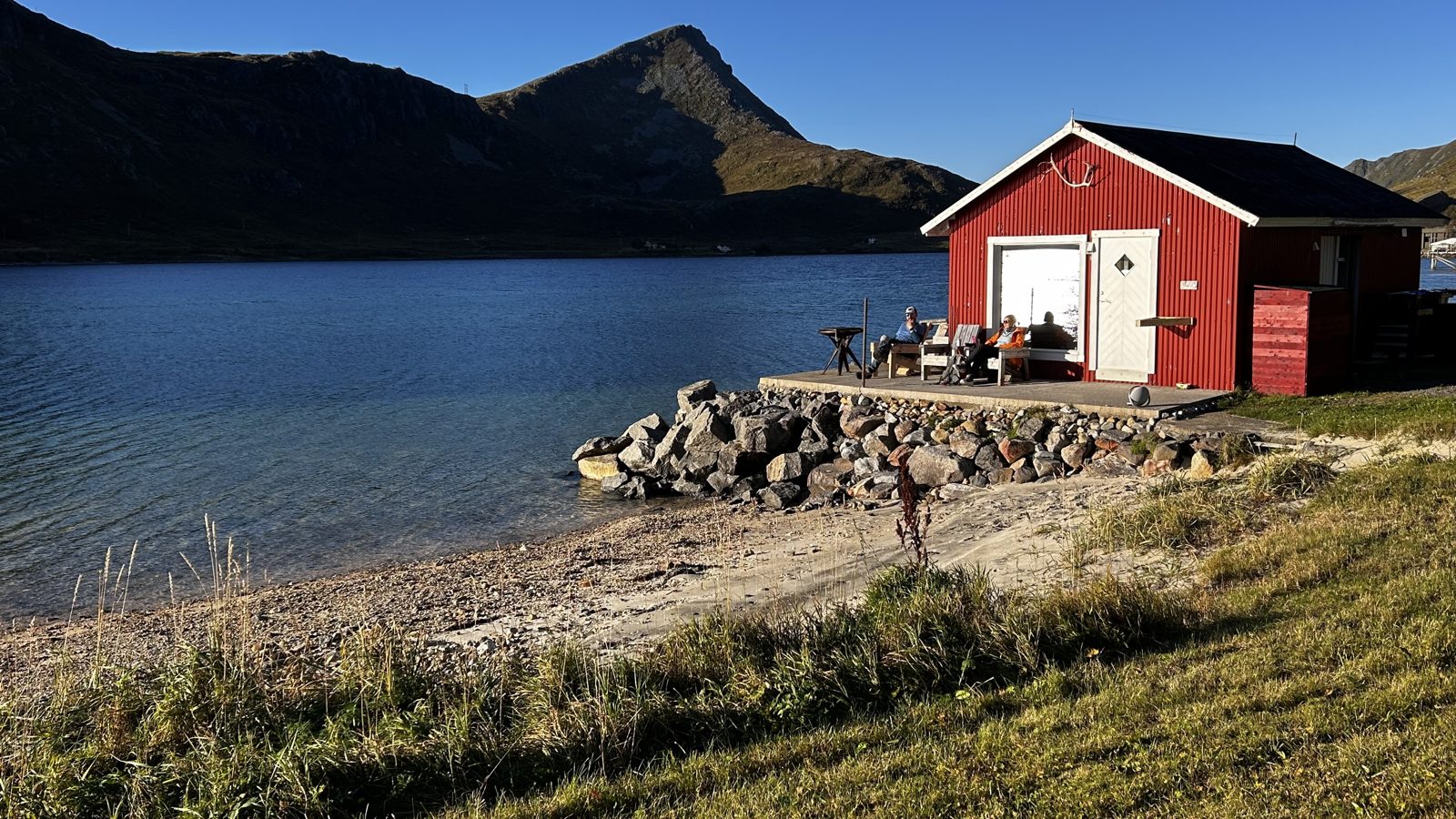
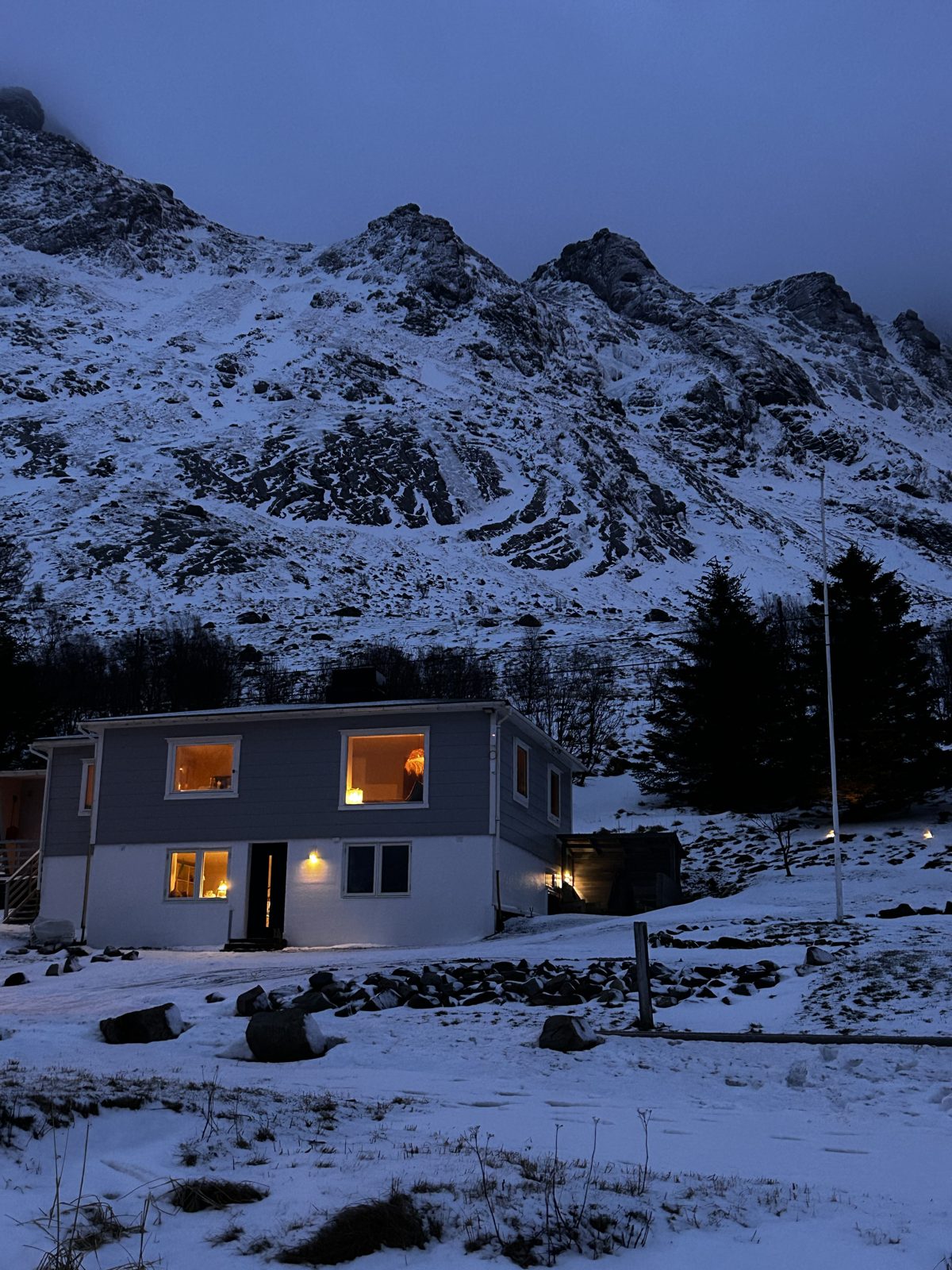
So this guide does not rank the seasons. It takes one real constraint first, then walks each season honestly — what it gives you, what it takes away, and who it suits. The four frames below are the whole argument at a glance: the same shoreline, photographed by us through the year.
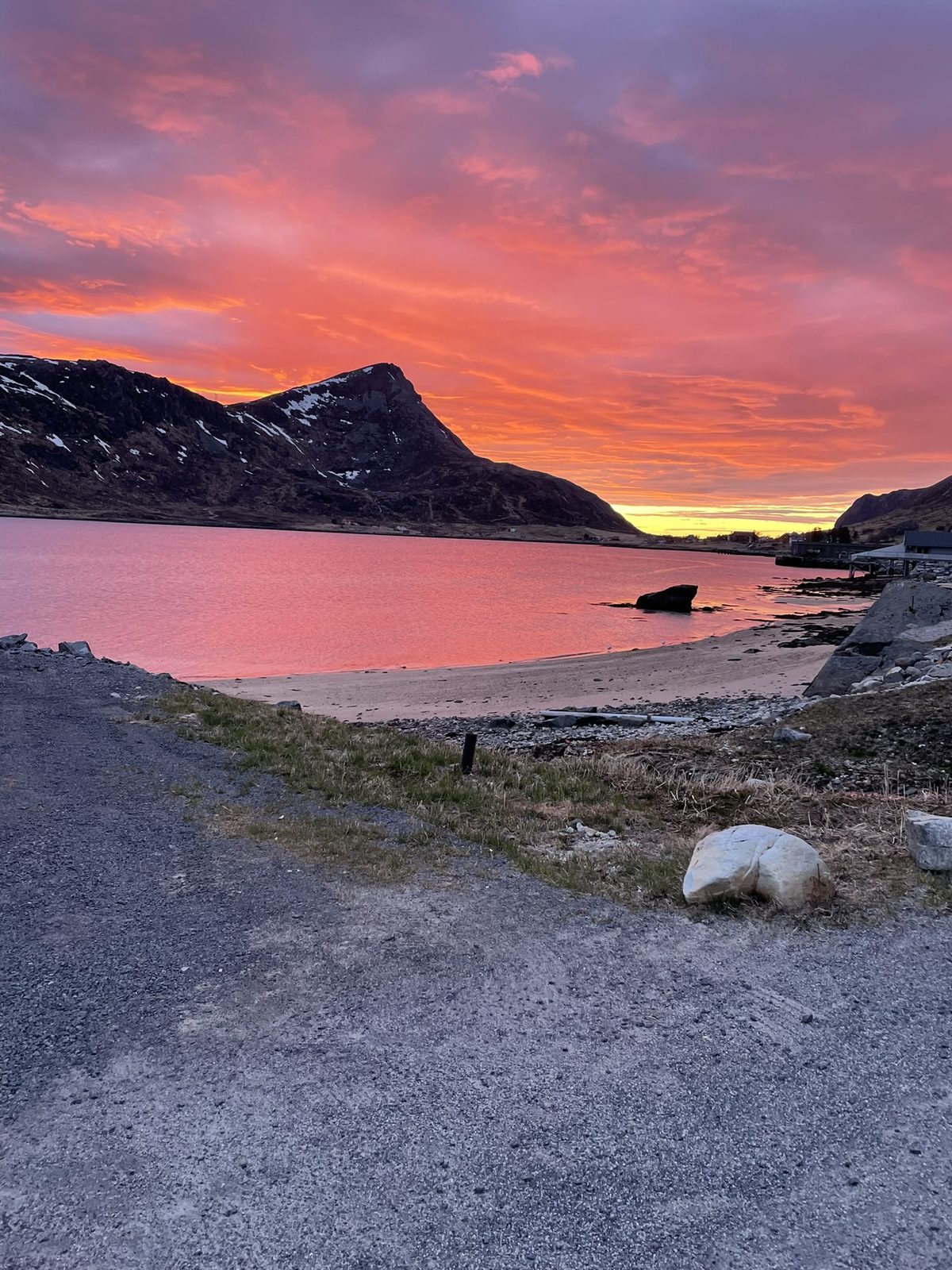
File list, in reel order
If the trip is built on mountain hikes, come April/May to October
That is the window when the classic trails — Reinebringen, Volandstind, Ryten above Kvalvika, and the rest — can be walked without spikes or snowshoes. Two honest footnotes to that rule:
Reinebringen is closed in winter. The municipality marks the start of the sherpa staircase with a chain outside the season, to make one thing unmistakable: this is not a winter hike. Icy steps here have cost lives, and every year hikers who ignore the warnings are brought down by rescue crews. Treat it as a May-to-September trail — our Reinebringen guide has the measured route.
In high season, the famous trails are shared. On fine July days, so many walk Reinebringen that the staircase moves at queue pace in places. It is still worth doing — go early or late in the day, when the staircase is at its quietest. When conditions allow it, sunrise or sunset from the top is often the finest of all. Or trade it for one of the equally fine, far less visited summits nearby — Volandstind, which starts by our door, is the one our guests thank us for.
Beyond that, winter changes the mountains rather than closing them. Summits remain genuinely possible with the right equipment and experience — and rewarding. But they are not where a first visit should place its bets.
The second filter: winter driving. The roads are ploughed and maintained, rental cars come on proper winter tyres, and locals drive all year. But between roughly November and April you should expect snow, wind, icy stretches, short daylight and the occasional day when the sensible plan is to stay put. If that sounds like normal driving to you, the whole year is open. If it sounds stressful, be honest with yourself now rather than at a snowy airport — and plan your trip between May and October instead. Do you need a car covers the driving honestly, eight-second winter film included.
What the light does through the year
Lofoten sits above the Arctic Circle, and the light — more than the temperature — is what defines each season here.
Lofoten’s light calendar
One more thing that surprises visitors: Lofoten is far milder than its latitude suggests. The Gulf Stream keeps the sea open and the winters comparatively soft — winter days at sea level typically sit between −5 and +5 °C. This is not Arctic Siberia. What the islands do have is weather that changes fast, in every month of the year. Up here we put it the way Norwegians always have: there is no bad weather, only bad clothing.
And one local secret worth knowing: a grey morning at sea level is not always a grey day. The sun often shines above the fog — and standing on a summit with only the peaks rising out of a white sea of mist below you is one of the finest sights these islands offer. Some of the best mountain days begin in fog.
Summer: green mountains and daylight without end
This is Lofoten as most people first imagine it. Green mountains over turquoise bays. The mountains at their most accessible. Kayaks on still evening water. And light that simply does not stop — you can start a hike after dinner and come down at midnight in full daylight.
The midnight sun itself runs from late May to mid-July, and the beaches that face north — Rambergstranda among them — become natural grandstands for it. And the beaches get used: the sea is at its least cold in late summer — bracing, but genuinely swimmable on warm afternoons — and the surf runs gently enough for beginners at Unstad and at Brunstranda, home of Lofoten Beach Camp, two minutes’ drive from Ramberg.
What summer gives you: the full menu — the hikes, the beaches, the boat trips, the longest days of your life.
What summer takes away: solitude and spontaneity. The genuinely crowded weeks run from late June to late August. The E10 fills with motorhomes, the famous villages fill with day-trippers, trailhead parking fills by mid-morning, and the best-located accommodation sells out six to nine months ahead. And one thing many don’t realise until they arrive: it never gets dark — so there is no northern lights in summer.
Summer suits you if: hiking and long days are the point, you are travelling with children, or this is a once-only trip where you want everything open.
An honest tip: within summer, late June differs from early August. June has the highest midnight sun and lingering snow patches on the highest trails; August has warmer sea, ripening cloudberries, and — at the very end of the month — the first properly dark nights in months, the run-up to the aurora season that begins in earnest from mid-September.
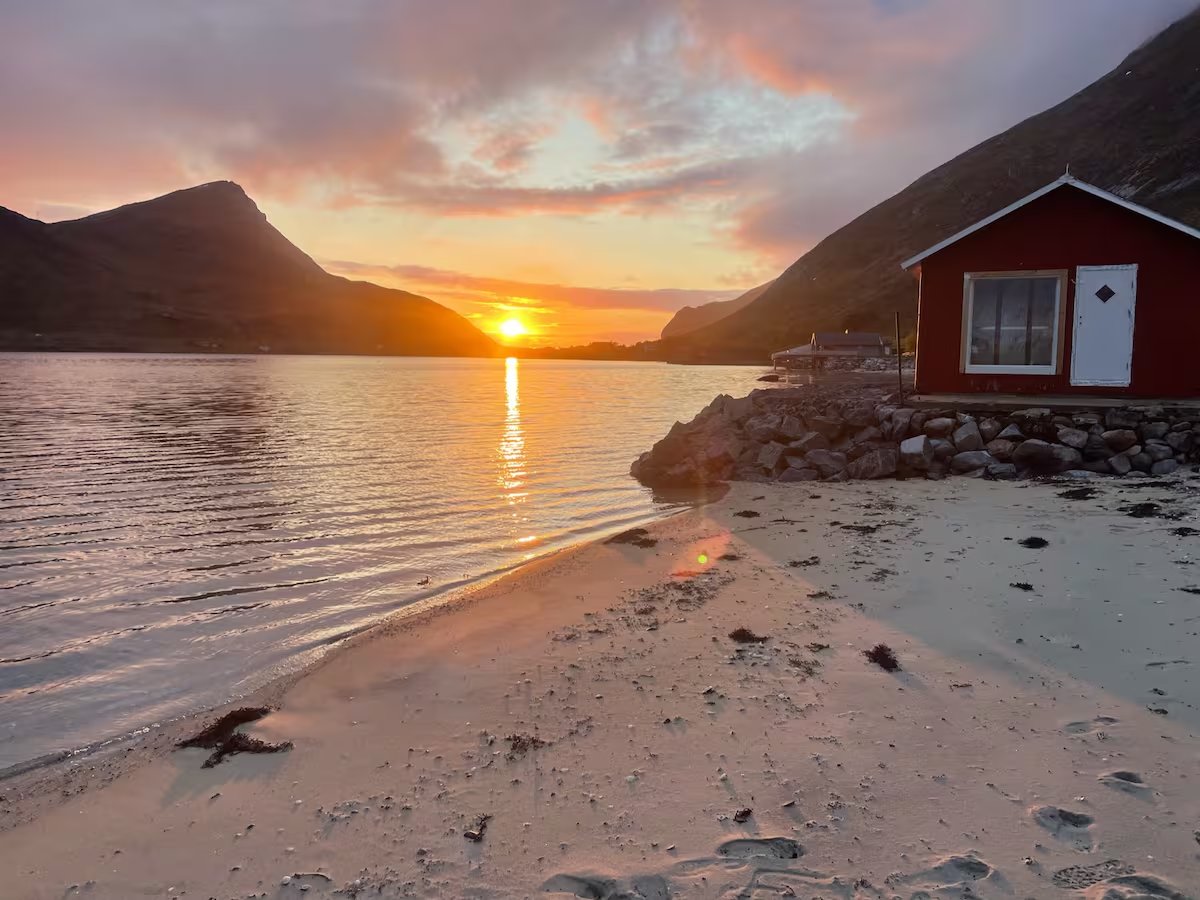
“Volandstind, this one you can walk up to from the house, fantastic view! takes 3 hours.”
Autumn: the overlap season
September is the month when two seasons shake hands. The hiking trails are still open — dry-ish, snow-free, quiet. And from the middle of the month the nights are properly dark again, which means the aurora season begins — often while the days are still mild enough to hike in a light jacket.
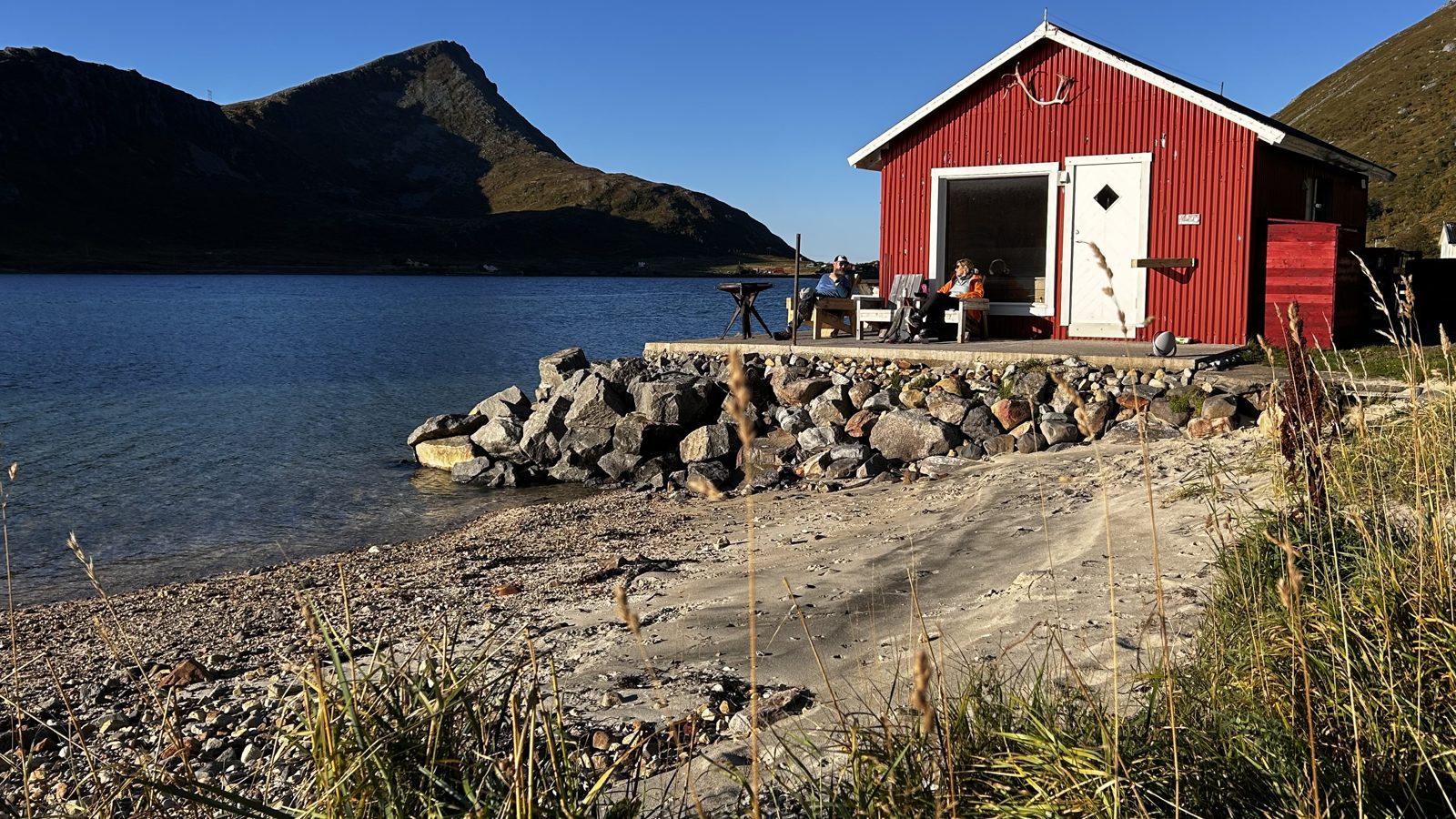
The mountains turn. First the birch slopes go gold and rust, then the first snow lands on the summits — the white peaks over autumn colours that photographers cross the world for.
What autumn gives you: hikes and aurora in the same trip. Colours. Empty trails. Far easier booking. Dramatic skies.
What autumn takes away: certainty. From late September the Atlantic lows begin to roll through, and October is honestly stormy at times. You will get magnificent days and wild ones, and you cannot order which. Daylight shortens quickly — but read that both ways: every hour of daylight lost is an hour of dark sky gained, and October’s long nights are long aurora windows.
Autumn suits you if: you want the widest range of experiences in one trip, you photograph, you value quiet, or you want the aurora without deep winter.
Did you know? — from Casa Lofoten
The September aurora is not a rumour: the first display of the 2025 season was photographed over our own boathouse on 26 September — the pictures open the northern lights guide. September to December is also when the area around the house is at its darkest and quietest — the season our returning aurora guests book first.
Winter: the blue season
Winter in Lofoten is not a lesser version of the year. It is a different place entirely.
The polar night runs from about 7 December to 5 January. The sun stays down, but the days are not black: for a few hours around midday the world turns a deep, luminous blue — the grey tones and twilight that painters and photographers come for. Snow settles on the rorbuer and the peaks behind them. And overhead, on clear nights, the northern lights — with more dark hours to appear in than at any other time of year.
Then, from late January into April, comes something most visitors have never heard of: the skrei season. The Arctic cod migrate into the waters around Lofoten to spawn, as they have for a thousand years, and the fishery that built every rorbu and every drying rack comes alive. By late winter the wooden racks — the hjeller — fill with drying fish. It is the most Lofoten thing there is, and it happens when almost no one is watching.
What winter gives you: aurora with maximum dark hours, snow-covered scenery, the blue light, the living fishery, quiet roads and trails, and evenings that reward a warm house more than any other season. For a hardy few it is also the best surfing season — storm-fed, world-class waves at Unstad and Brunstranda, for the experienced in full winter wetsuit.
What winter takes away: daylight, certainty and the mountains. Activity windows are short. Storms can park over the islands for days, and plans must bend around them — winter here demands flexibility and a base you genuinely enjoy being inside. Reinebringen is closed for the season, and other summits demand winter equipment, experience and respect for conditions. Note also that November and early December, before the snow settles and the Christmas light arrives, are the rawest weeks of the year — atmospheric for some, bleak for others.
Winter suits you if: the northern lights are the priority, you want the snow-and-twilight version of Lofoten, or you are a photographer chasing the blue hour that lasts all day.
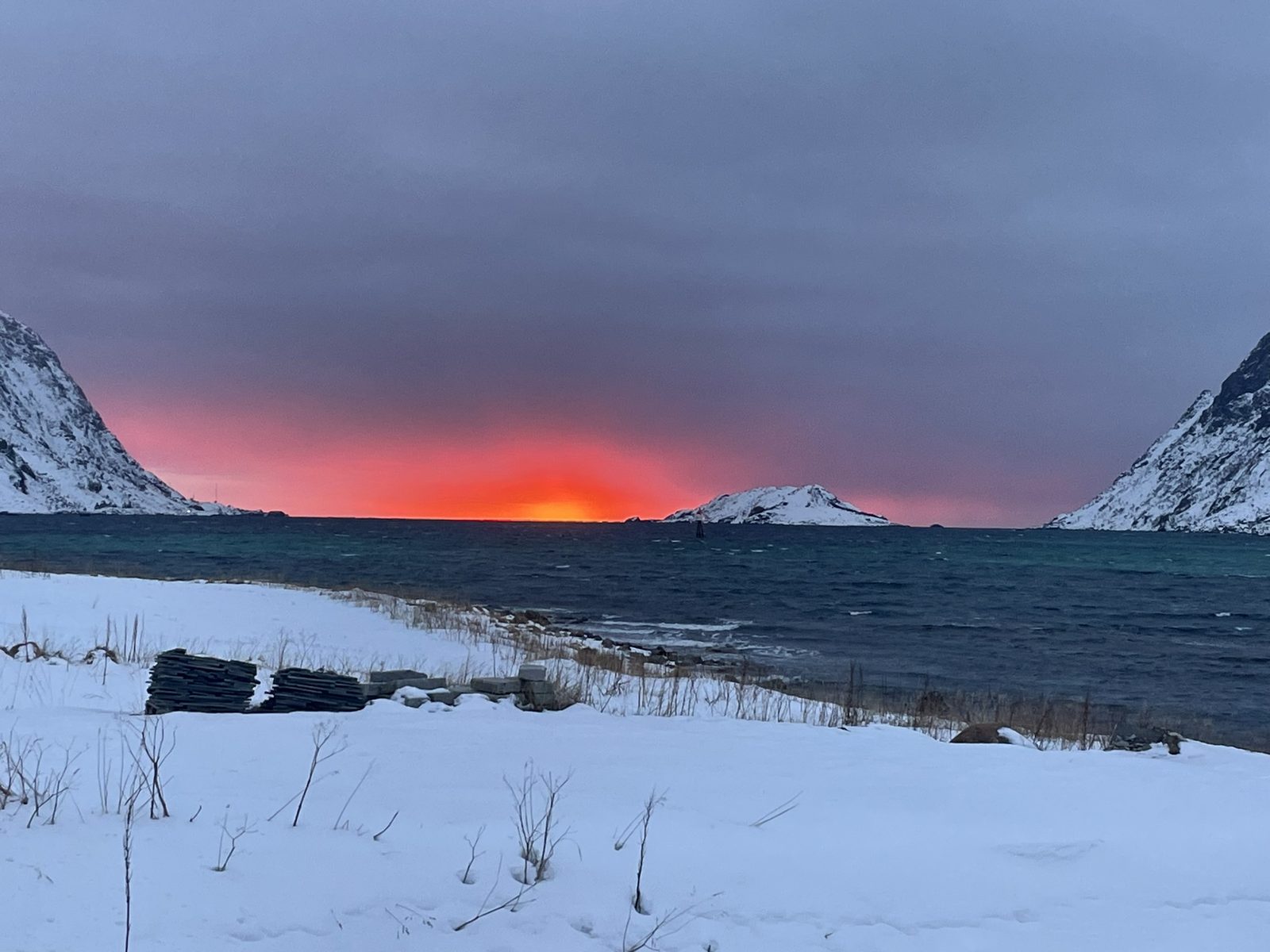
“We saw the most enchanting northern lights.”
Spring: white peaks over a blue sea
Spring arrives here as light before it arrives as warmth.
Through March the days stretch fast — nearly twelve hours of daylight by mid-month — while the peaks stay white and the aurora still shows on clear nights into early April. Few sights in Norway match snow-covered mountains standing over a sunlit, ink-blue sea.
The drying racks stand full through spring, the villages go about the end of the fishing season, and the islands are quiet in a way summer visitors never see.
What spring gives you: the white-peaks-and-blue-sea combination, returning light, aurora into early April, and quiet mornings at places that will be busy in July. By May, the first trails dry out and the long, light nights begin.
What spring takes away: predictability. April in particular can serve winter and summer in the same week. The higher trails hold snow well into May. The sea is at its coldest, and some seasonal restaurants and activities have not yet opened.
Spring suits you if: you photograph, you want winter scenery with civilised daylight, or you want May’s opening trails and long, light nights before anyone else arrives.
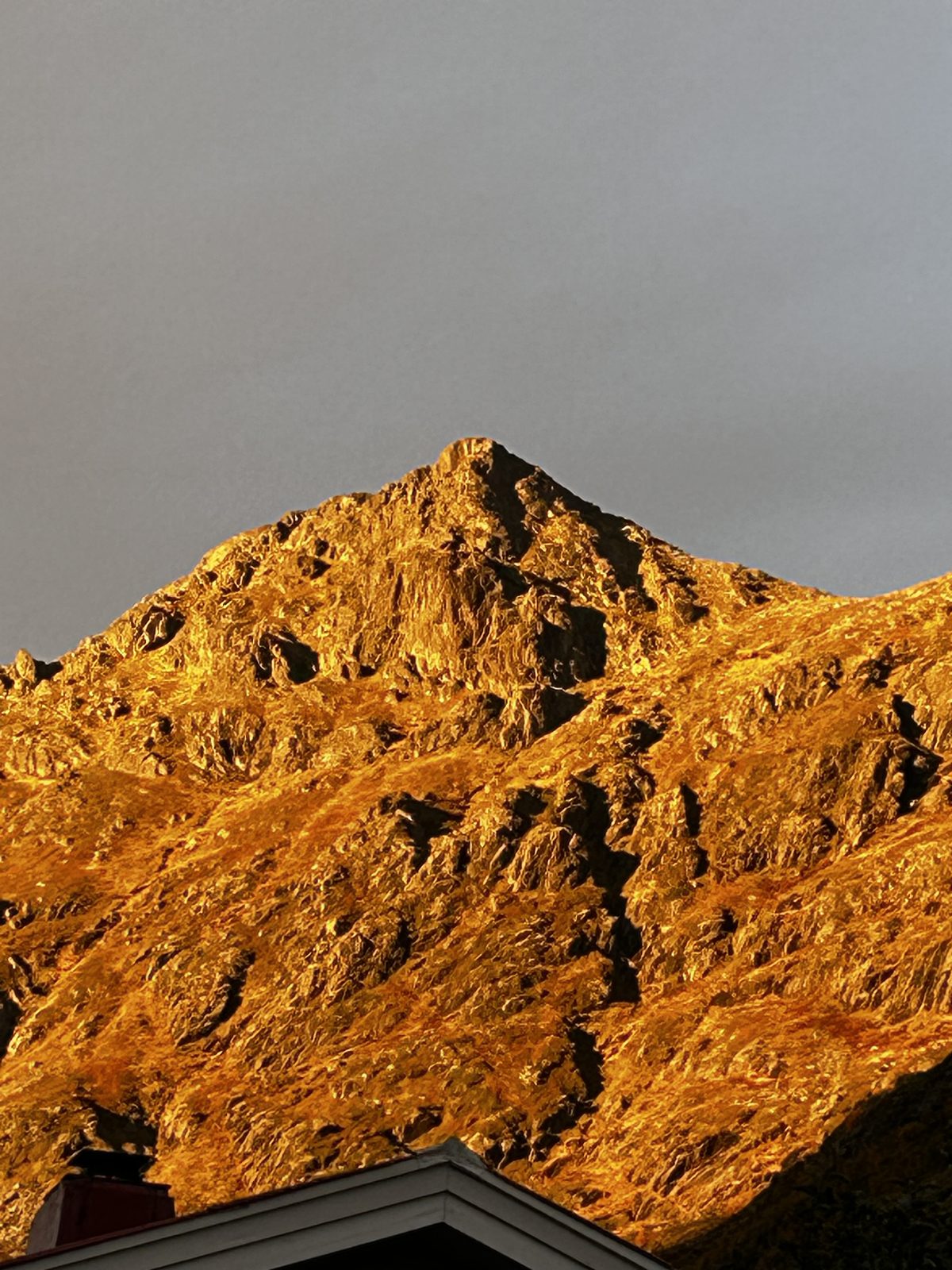
The year, month by month
What it actually feels like to be here, month for month.
January
The light returns. The polar night ends in the first days of the month, and every week adds noticeably to the day. Snow on the peaks, aurora on clear nights, and the first skrei boats heading out. Quiet in a way that feels almost private.
February
The classic winter month. Longer days, white mountains, the fishery in full swing — and statistically some of the best aurora weeks of the year, as the weather begins to steady. Winter photographers’ favourite, together with March.
March
Winter scenery with civilised daylight: nearly twelve hours by mid-month. White peaks over blue sea, drying racks filling, aurora still frequent. If you want winter without the darkness, this is the month.
April
The wild card. It can deliver late-winter snow and early-summer sun in the same week. The aurora fades in the first days of the month as the nights turn bright. Lower trails begin to open; the high ones hold snow. Few visitors, honest unpredictability.
May
The islands wake. Trails dry, days stretch towards the endless, and from around the 26th–28th the midnight sun arrives. The 17th of May — Norway’s Constitution Day — fills every village with flags and parades. Still quiet, and often surprisingly lovely.
June
Peak light. The midnight sun stands at its highest around the solstice, the mountains turn green, and the trails are at their most accessible — though the highest may keep snow patches early in the month. Visitor numbers climb steeply through the month.
July
The busiest month of the year. Everything open, everything bright, everything booked. Magnificent — and shared. Use the light nights: hike towards sunrise or sunset, visit Reine early, let midday belong to the crowds.
August
Summer with the edge taken off. Warmer sea, ripening berries, slightly thinning crowds — and at the very end of the month, the first properly dark nights in months. A fine compromise month.
September
The overlap month: open trails, autumn colours arriving, the aurora season opening from mid-month, mild days, quieter car parks. Its price is rising weather uncertainty — pack for four seasons.
October
Drama. Gold and rust on the slopes, first snow on the summits, long dark nights for the aurora — and the first real storms of the season rolling in from the Atlantic. For photographers and storm-romantics; less ideal for rigid itineraries.
November
The rawest weeks. Dark, often wet, before the snow settles and softens everything. The quietest month on the roads — atmospheric for some, heavy for others. We are honest with guests about this one.
December
The polar night begins around the 7th. Blue twilight at midday, Christmas light in the villages, aurora whenever the sky clears. Not a month for doing — a month for being somewhere warm with a view of the dark.
The whole year in one table
| Month | Light | Northern lights? | Hiking | Crowds |
|---|---|---|---|---|
| January | Short days, blue light returns | Yes | Winter gear only | Calm |
| February | Growing fast; skrei season | Yes — peak | Winter gear only | Calm, but lively |
| March | Long days, white peaks | Yes — peak | Winter gear only | Moderate |
| April | Light half the night by month’s end | Early April only | Lower trails opening | Calm |
| May | Light nights; midnight sun from ~26–28 May | No | Season opening | Rising |
| June | Midnight sun | No | Full season | Crowded from late June |
| July | Midnight sun to mid-month | No | Full season | Crowded |
| August | Long days; first dark nights late month | Not yet | Full season | Crowded until late August |
| September | Mild days, dark nights | From mid-month | Full season | Moderate |
| October | Shortening fast; storms begin | Yes | Open, weather permitting | Calm |
| November | Darkest weeks approach | Yes | Winter gear only | Quietest |
| December | Polar night from ~7 Dec | Yes | Winter gear only | Calm |
Choose the light you most want to stand in
An honest observation from years of hosting: almost nobody comes here for a single reason. Most trips are a combination — mountain hikes, nature, and peace and quiet, in some personal proportion. So read these as ingredients to weigh, not boxes to pick one of.
If hiking comes first: June to September. September if you also want a chance of the aurora on the same trip.
If the midnight sun is the point: 26–28 May to 14–17 July. Stand somewhere with an open horizon to the north.
If the northern lights are the point: September to early April. February–March gives the steadiest weather; September–October gives milder temperatures and open trails alongside; the polar night gives the most dark hours and the fullest winter atmosphere. The northern lights guide takes it from here.
If photography is the point: September–October for colours, first snow and aurora; February–March for white peaks, blue light and aurora. Ask ten photographers and you will get both answers.
If you are travelling with children: the summer holidays are the natural fit — trails, beach days, and daylight that forgives any schedule. The school holidays at Easter and in autumn work well too: Easter for snow, returning light and late-season aurora; the autumn break for colours and the first dark-sky evenings.
If quiet and value matter most: September to early December, or March to May. Fewer people, easier booking, lower prices — and, in the darker months, the aurora as a nightly possibility.
And if you are still torn, here is the answer we give our own guests: every season here is genuinely fine. Choose the light you most want to stand in — and let the rest of the trip form around it. Then decide where to stay and how many days you need.
The season questions, answered
What is the single best month to visit Lofoten?
There isn't one — it depends on your trip. For hiking with a chance of aurora, September. For midnight sun and the trails at their most accessible, late June to mid-July. For northern lights with steadier weather, February–March. Each answer is right for a different traveller.
When can I see the midnight sun in Lofoten?
From roughly 26–28 May to 14–17 July, depending on where you stand. Choose a viewpoint with an open horizon to the north — beaches like Rambergstranda face the midnight sun directly.
When can I see the northern lights in Lofoten?
From about mid-September to early April, on dark, clear nights. It is impossible in summer — the light nights keep the sky too bright from roughly mid-April until into September. The northern lights guide covers the how.
Is winter in Lofoten completely dark?
No. During the polar night (about 7 December to 5 January) the sun stays below the horizon, but several hours of deep blue twilight arrive in the middle of each day. Outside those weeks, winter days lengthen quickly.
Can I hike Reinebringen in winter?
No. The municipality chains off the start of the sherpa staircase outside the season — icy steps here have caused fatal accidents. Treat Reinebringen as a May-to-September hike. Other summits remain possible in winter for hikers with proper equipment and experience.
When is Lofoten most crowded?
From late June to late August: full trailhead car parks, busy villages between mid-morning and evening, and, on fine days, queue-pace walking on the Reinebringen steps. If you come in these weeks, book well ahead and use the mornings and evenings.
Should I choose my dates to save money on accommodation?
Within reason, no. Once flights and the car are counted, accommodation is usually a fraction of a Lofoten trip's total cost — and in every season, the best-located places are booked first. Choose the light and the experiences you want; then book the base early.
Is September a good month for Lofoten?
It is arguably the most complete month of the year: trails still open, aurora back, autumn colours arriving, crowds gone. Its price is less predictable weather than midsummer.
What is the weather actually like?
Milder than the latitude suggests, thanks to the Gulf Stream — and changeable in every month. Winter days at sea level typically sit between −5 and +5 °C rather than deep cold; summers are cool by continental standards. Up here we put it the way Norwegians always have: there is no bad weather, only bad clothing.
When are the stockfish racks full?
The skrei fishery runs from mid-winter to April, and the wooden drying racks fill from late winter and stand through spring. Visit February to May to see the working side of Lofoten's thousand-year story.
Is winter driving in Lofoten difficult?
The roads are maintained and rental cars come with winter tyres, but you should be comfortable with snow, wind, icy stretches and short daylight — and flexible when a storm passes through. If winter driving worries you, plan your trip between May and October. Do you need a car covers the driving honestly — including eight seconds of what it looks like.
Can you swim or surf in Lofoten?
Both. The sea is bracing but swimmable on warm late-summer days, and the white beaches get real use. Surfing runs all year, at Unstad and at Brunstranda (Lofoten Beach Camp) near Ramberg: summer is the gentle season for learning, while winter — storm-fed and world class — belongs to experienced cold-water surfers in full wetsuit, hood, gloves and boots.
Is the polar night worth experiencing as a visitor?
For the right traveller, yes — the blue midday light, the aurora, the quiet. But be honest with yourself: activity windows are short, storms are real, and much of the pleasure lives indoors. It rewards travellers who want atmosphere over activity.
When should I book my accommodation?
For June–August: six to nine months ahead. For February–March and September: a few months ahead. But the pattern that matters more than any season is this: the best-located places go first, all year round. Book the base as soon as your dates are set.
One base, every season
We live with this year: the midnight sun from the beach, the September aurora over the boathouse, the blue December light on the fjord. Whichever season you choose, the house, the sauna and the shoreline are set up for it.