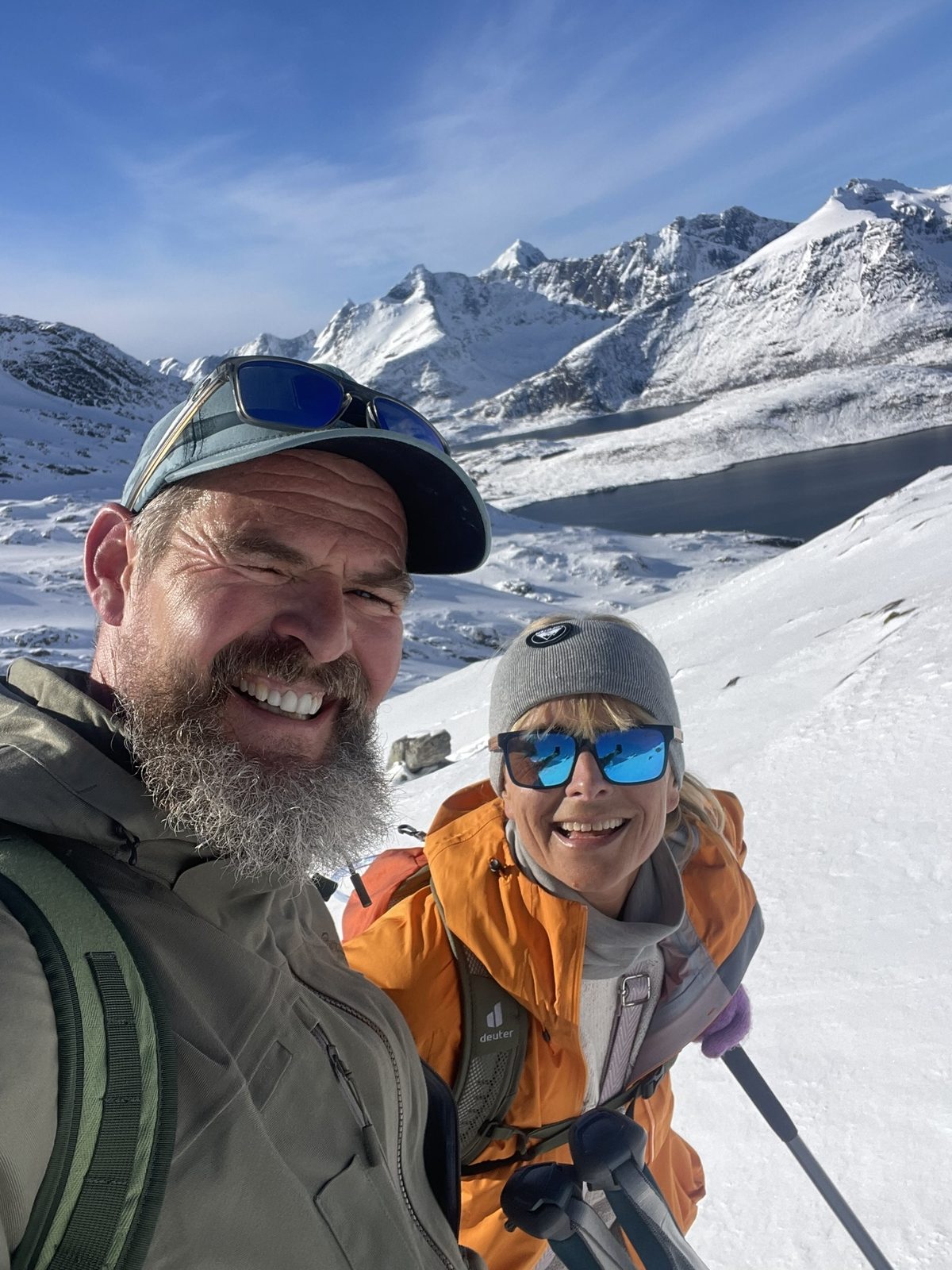
What to Pack for Lofoten: A Year-Round List from Local HostsWhat to Pack for Lofoten: A Year-Round List from Local Hosts
One packing list for every Lofoten season: the layers that always work, what each season adds, and what you can safely leave at home.One packing list for every Lofoten season: the layers that always work, what each season adds, and what you can safely leave at home.
Most packing lists for Lofoten make the same quiet mistake: they pick one season and stop there.
You will find good summer lists and good winter lists. But the Lofoten reality is that the seasons overlap, the weather changes within a day in every month of the year, and the core of what you need barely changes from June to January.
So this guide answers one question: what do you actually need to bring — and what can you safely leave at home?
We live here year-round, we walk the same trails in every season, and we watch a few hundred guests a year arrive with their suitcases. This is the list we would send a friend.
The one rule that covers every month
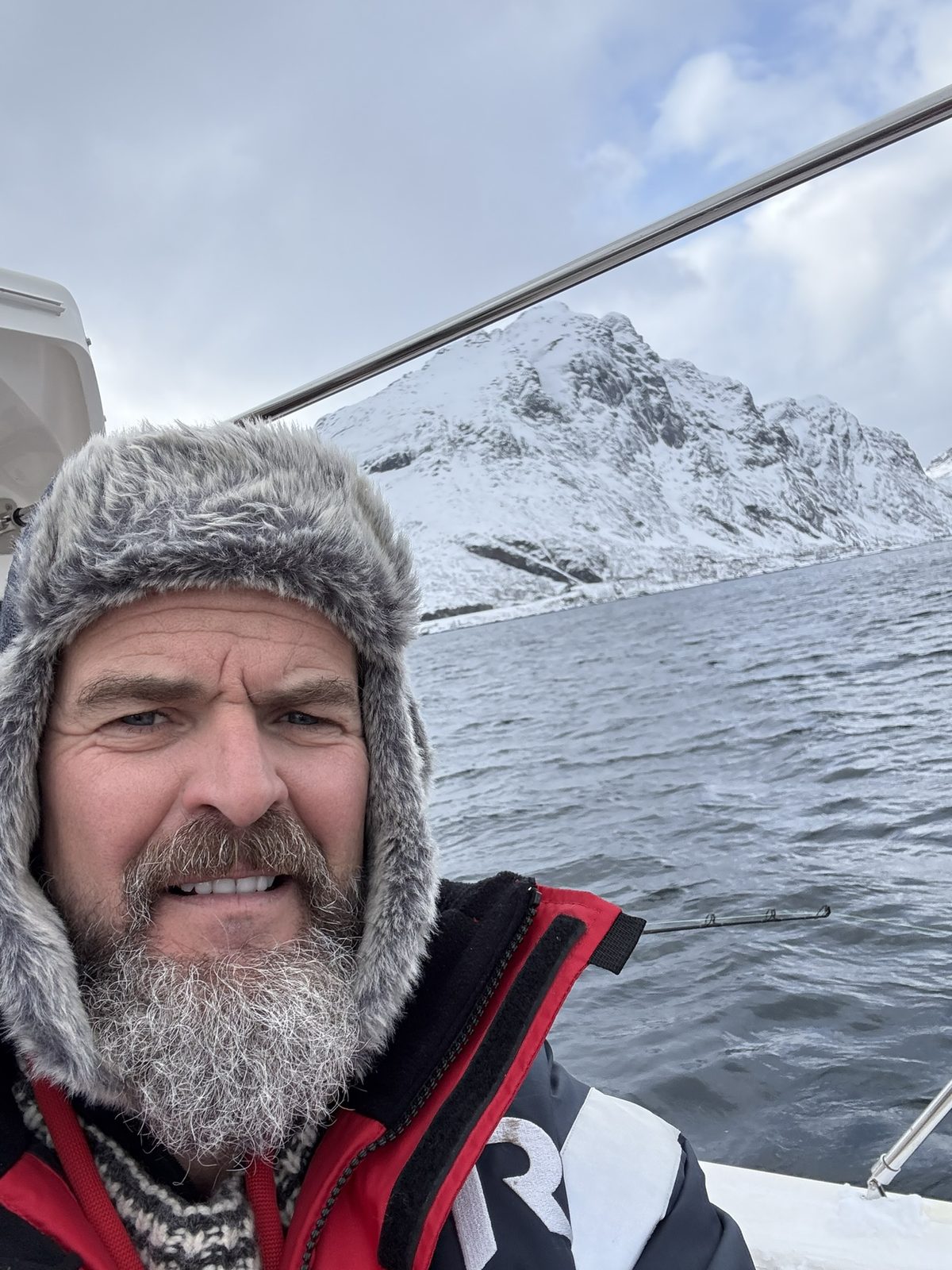
If you remember a single thing from this guide, make it this: wool innermost, wind layer outermost, and nothing cotton in between.
Lofoten sits above the Arctic Circle, but the Gulf Stream keeps it surprisingly mild — winter at sea level is often only −5 to +5 °C. What defines the weather here is not deep cold. It is wind, moisture and change. A calm, sunny beach can be a wind tunnel an hour later; a warm hike ends on a cold, exposed ridge. Clothing that handles change beats clothing that handles one condition perfectly.
That is why layers win, and why the material matters:
- Wool (merino) against the skin. It insulates even when damp and does not chill you the way wet cotton does. This is the local habit, not a marketing line.
- A warm mid-layer — fleece or a light insulated jacket — that goes on and off as conditions change.
- A wind- and waterproof shell, jacket and ideally trousers. On many days here, wind protection matters more than rain protection.
One local hiking rule we give all our guests: on hikes where you sweat, carry a second wool base layer and change from wet to dry at longer breaks. It sounds fussy until the first time you do it on a cold summit. It is how we stay warm.
The core list — every season
These items earn their place in the suitcase in all twelve months:
Clothing
- Wool base layers (tops and, outside high summer, bottoms)
- Fleece or light insulated mid-layer
- Wind- and waterproof shell jacket; waterproof over-trousers for wet days
- Warm hat and gloves — yes, in summer too; ridge-tops and boat trips are cold in July
- Wool socks, several pairs
- Waterproof hiking boots with ankle support — the single most important item you bring; trails are steep, stony and often wet
- Comfortable shoes for villages and evenings
Gear
- A daypack with room for food, drink and the layers you take off
- Refillable water bottle — Norwegian tap water is excellent, and you can fill up anywhere
- Sunglasses — the light is low-angled and strong off sea and snow in every season
- Headlamp — needed in every season except the midnight sun weeks, when it never gets dark
- Swimwear and a quick-dry towel. This is the item people forget, and the one they regret. The sea dip — ideally straight from a sauna — is one of the things guests remember most, in February as much as July.
Small but important
- A European power adapter if you need one: Norway uses the standard European two-pin plugs (Type C/F, 230 V)
- Any personal medication for the whole stay — full pharmacies exist only in Leknes and Svolvær; villages have small medicine outlets in the grocery shops for basics
- Payment card or phone — Norway is close to cashless, and you can comfortably travel here without ever touching cash
That is the constant. Now the seasons.
Summer additions (June – August)
- A sleep mask. From late May to mid-July the sun does not set, and the long, light nights run from May into September. Accommodation usually has decent curtains, but a mask costs nothing and guarantees your sleep.
- Sunscreen and a sun hat. The Arctic sun is deceptively strong, especially with a whole day outdoors and light reflecting off the sea.
- Insect repellent. Mosquitoes and midges appear on still summer evenings, particularly away from the coastal wind. Most days the breeze does the job for you; on the calm evenings, a small bottle of repellent earns its place.
- Shorts and t-shirts for the warm days — they exist, and they are glorious — but treat them as the bonus layer, not the plan.
Autumn additions (September – November)
- The full rain setup. Autumn brings the storm season from late September, and October is often the wettest month of the year. Waterproof trousers move from "ideally" to "definitely".
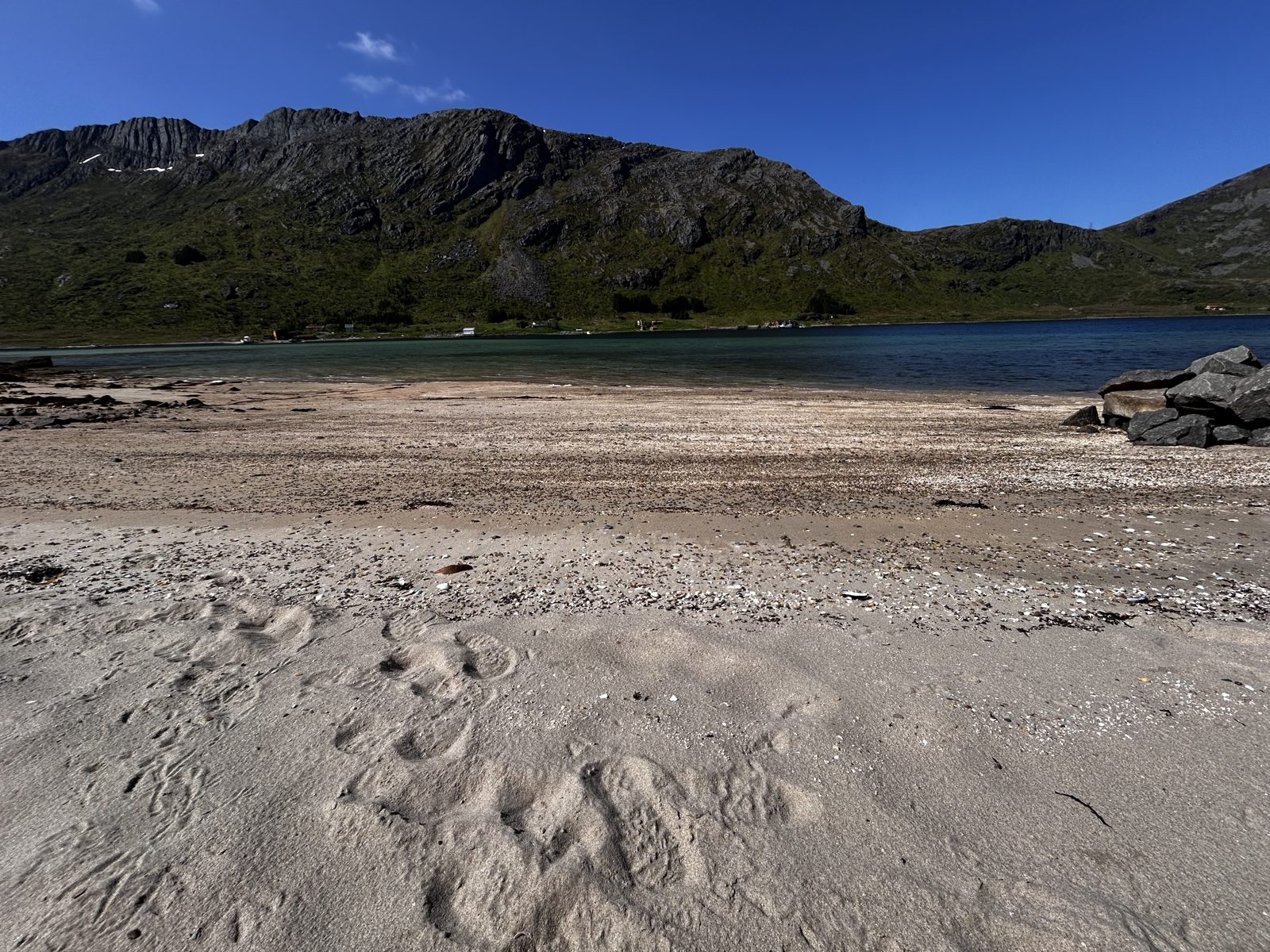
- The headlamp comes back into daily use as the darkness returns — and with it, from mid-September, the northern lights. If aurora is on your list, add warm standing-still layers: watching the sky is cold work in a way hiking never is. An insulated jacket, warm trousers and a thermos change the whole experience.
- An extra wool layer for the shortening days.
Winter additions (December – March)
- Microspikes — not crampons. This is the most misunderstood item on every Lofoten winter list. Crampons are technical climbing equipment for glaciers and steep ice; you do not need them. Microspikes are light rubber-and-chain traction aids that stretch over normal boots and grip ice and packed snow — and in a Lofoten winter, where paths and pavements freeze and thaw constantly, they are close to essential. Spikes and poles are our standard winter recommendation; if there is a lot of fresh snow, consider snowshoes.
- Trekking poles, for the same reason.
- A properly warm insulated jacket over the usual layers. The temperatures are moderate; the wind chill is not. Wind is what defines the Arctic winter here.
- Moisturiser and lip balm. Cold wind dries skin fast — a small tube saves a week of discomfort.
- Warm boots with good soles for everyday walking, thick wool socks, insulated gloves, and a thermos for the aurora nights.
Spring (April – May) is the overlap season: pack the winter traction gear for the mountains and the summer optimism for the valleys, and you will use both.
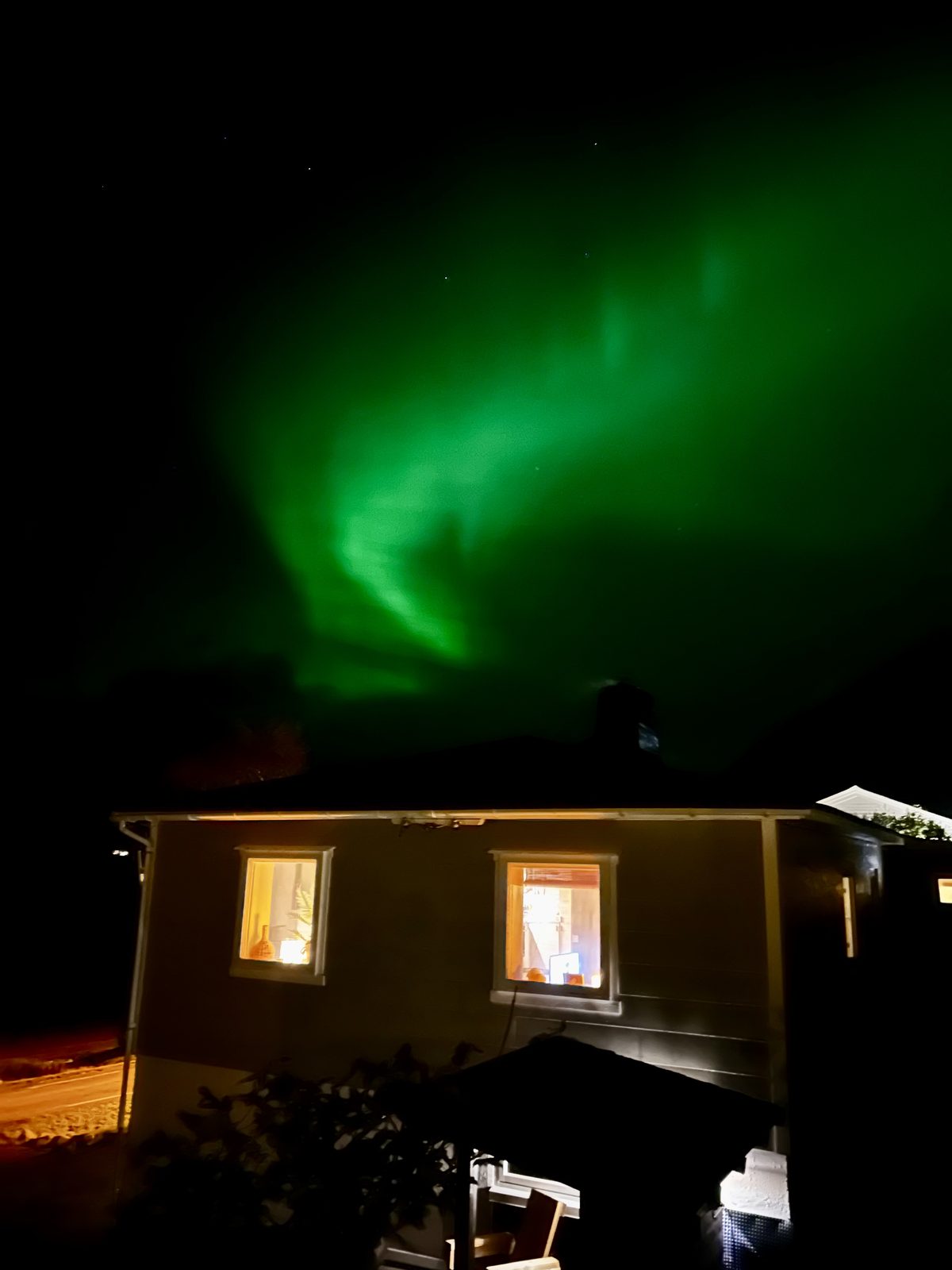
What you can safely leave at home
An honest list should also shorten your packing, so:
- An umbrella. The wind will win. A good hood is the Lofoten umbrella.
- Dressy clothes. There is no dress code anywhere on these islands — people arrive at the nicest restaurants in hiking trousers, and nobody looks twice.
- Crampons, ice axes and technical alpine gear — unless you are here for guided winter mountaineering, which is a different holiday than this guide covers.
- A heavy camera bag "just in case". Bring the camera you will actually carry up a mountain.
- Half the shoes. Boots plus one comfortable pair covers essentially every situation here.
Check what your accommodation offers before you pack
This is the step most packing lists skip, and it can take kilos out of your luggage. Accommodation in Lofoten varies enormously in what is provided. Bed linen, towels and basic soap are usually standard — but beyond that, the differences are large: some places have hairdryers, spices, proper coffee equipment, washing machines and drying facilities; many have none of it.
Two things are worth asking about specifically:
- A drying cabinet or drying room. After a wet hiking day, this is the difference between starting tomorrow in dry boots or damp ones. If your accommodation has one, you can pack fewer clothes and simply dry-and-repeat.
- A washing machine. On a week-long trip, one machine load halves the clothing you need to bring.
Did you know? — from Casa Lofoten
Our house is equipped the way we wanted it for ourselves: a drying cabinet for wet hiking clothes and boots, a washing machine, and a kitchen stocked like home. As one guest put it: "so much equipment … spices and Nespresso coffee capsules." (translated) It means our guests genuinely pack less. → What to look for in your Lofoten accommodation
If you forget something
You are not going to the end of the world — it only looks that way. Groceries, basics and non-prescription essentials are available in the village shops (the Ramberg shop is even open on Sundays), and Leknes and Svolvær have supermarkets, pharmacies and sports shops. Microspikes and other winter gear can usually be bought locally in season, and snowshoes can often be rented — but selection is limited and prices are Norwegian, so the safest version of any essential is the one already in your bag.
One planning note for the suitcase itself: if you fly the small Widerøe plane into Leknes, baggage allowances are those of your ticket, not of the aircraft — check your airline's current rules rather than any list's memory of them.
Frequently asked questions
Do I really need hiking boots, or will trainers do?
For the villages and beaches, trainers are fine. For any real trail — and the trails are why most people come — you want waterproof boots with ankle support. Paths here are steep, stony and wet, and good boots are the difference between a great day and a turned ankle.
Is a swimsuit worth packing in winter?
Yes — arguably more than in summer. The sauna-and-sea ritual is at its absolute best when there is snow on the sand. Ask whether your accommodation has a sauna before you decide.
What about mosquito repellent — is it really necessary?
On breezy days and at the coast, you will rarely need it. On still summer evenings, especially inland, you will be glad it weighs almost nothing.
Do I need different clothes for the northern lights?
Not different — more. Aurora watching means standing still in the dark for long stretches, which is far colder than moving. Add an insulated layer, warm footwear and a thermos, and bring the headlamp for the walk. Our northern lights guide covers the rest.
Can I buy wool base layers in Lofoten if I arrive without them?
Usually yes, in Leknes or Svolvær, at Norwegian prices. But wool is the one category worth getting right before you travel — it is the foundation of everything else on this list.
What single item do guests most often wish they had brought?
Waterproof over-trousers, followed closely by the swimsuit. One keeps the wet days good; the other makes the best memories.
Packed for the west
Whatever the season, the drying cabinet in the hallway means wet gear is dry by morning — pack for the day, not for the worst case.