Lofoten in Summer: What It Is Really LikeLofoten in Summer: What It Is Really Like
Summer in Lofoten from a local perspective: full hiking season, long light nights, honest crowd advice, cool-water swimming, surfing — and how to do it well.Summer in Lofoten from a local perspective: full hiking season, long light nights, honest crowd advice, cool-water swimming, surfing — and how to do it well.
Summer is when most people first meet these islands, so the question deserves a straight answer: what is Lofoten in summer actually like — and how do you do it well?
The short version: it is the season when everything is open at once — every trail, every beach, every boat — under a sun that barely sets. It is also the one season where you share the islands with real crowds. Both halves are true, and knowing how they fit together is most of the trick.
“The outdoor area by the sauna is lovely, and a morning swim at the beach is wonderful. Sun from 08:30 and all day.”
The season when everything works
Summer is the islands at their most accessible. The mountains are in full season — snow-free, dry underfoot on the good weeks, walkable from the shortest family stroll to the long summit days. If a trail is on your list, summer is when it asks the least of you. Our best hikes guide sorts them by effort.
The mountains turn green in a way that surprises people who arrive expecting Arctic austerity — grass to the ridgelines, wildflowers along the paths, sheep everywhere.
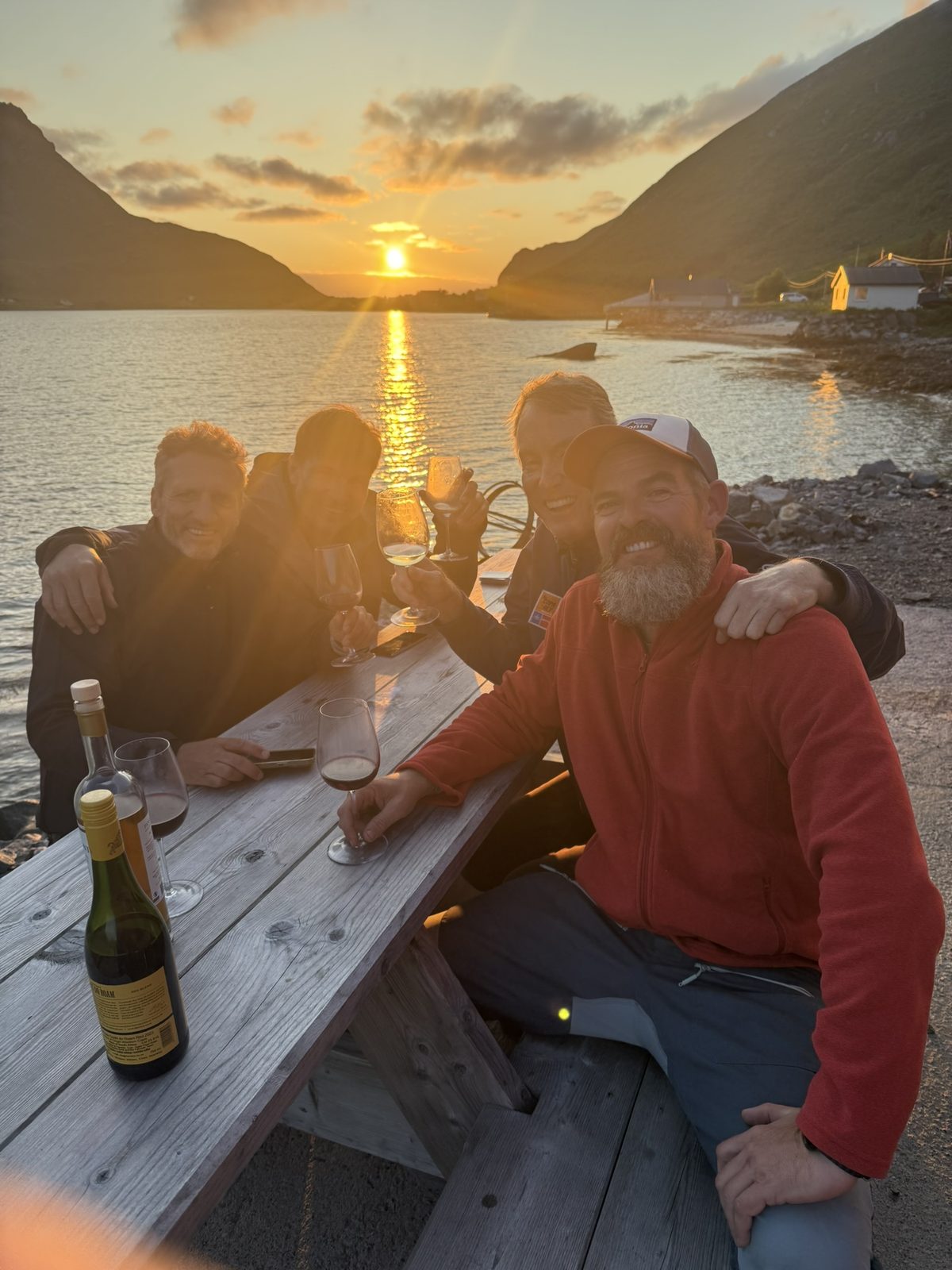
And above it all: the light. From late May to mid-July the sun never sets, and from May well into September the nights stay long and light. Evenings stop having a deadline. We have given the midnight sun its own guide — for planning purposes, the one fact to carry is that the sun is at its lowest around one in the morning, not twelve.
The honest part: crowds
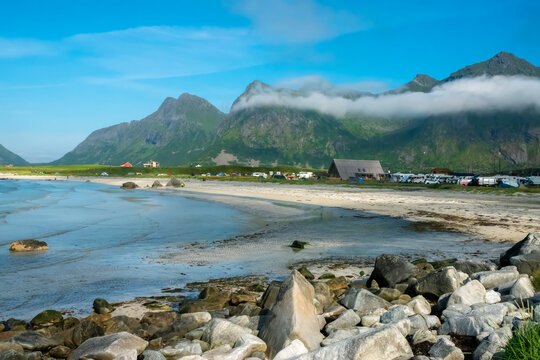
Lofoten's genuinely crowded period is late June to late August. In those weeks the E10 carries a steady stream of campervans, parking at the famous trailheads fills, and Reinebringen moves at queue pace — you climb at the speed of the person in front.
Three habits change the experience completely:
Go early or late. The islands empty out before nine and after six, and in the light season "late" costs you nothing — an evening ascent is as bright as a midday one and far quieter.
Base yourself off the main artery. The crowds concentrate on a handful of honeypots along the E10. A quiet side fjord in the west is a different summer from a rorbu on the main road — the argument runs through our Where to Stay guide.
Book the roof early. The best places to stay go first — in summer, earliest of all. The activities can be spontaneous; the base cannot.
Worth knowing either side of the peak: June before the rush and late August into September are calmer versions of the same season — September being the overlap month where hiking and the first northern lights coexist, as we cover in Lofoten in Autumn.
The water: swimming and surfing
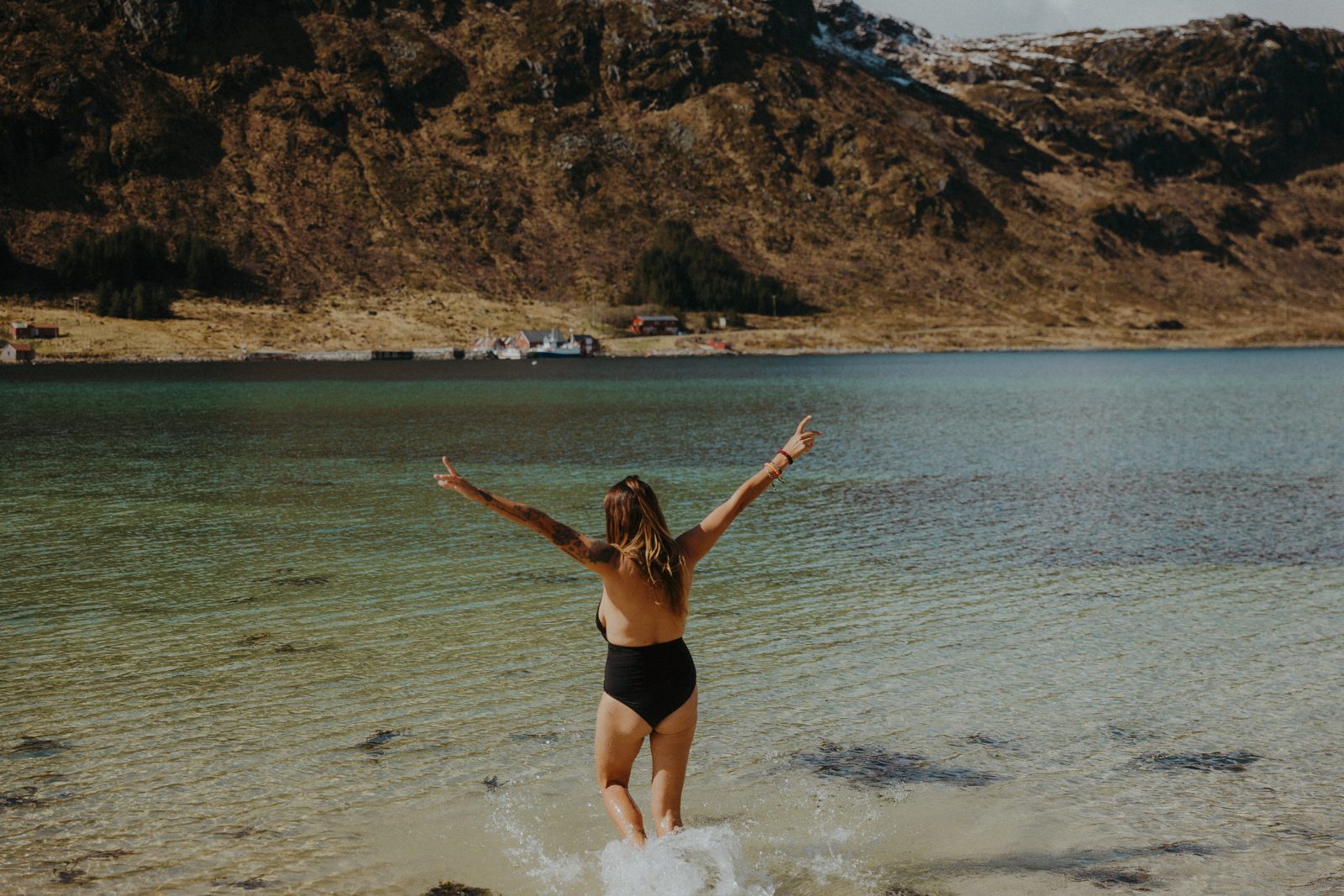
Yes, people swim. The sea reaches roughly 9–15 °C at its warmest — least cold in late summer — which means short, loud, wonderful swims on warm days, not afternoons floating on an airbed. White sand, turquoise water, Arctic temperature: the photographs are honest about the first two and silent about the third.
Did you know? — from Casa Lofoten
The house has its own sauna a few steps from its own beach — and the sauna-and-sea ritual is how this coast actually swims: warm through properly, walk into the Atlantic, repeat. It is the single thing our guests mention most. → The sauna and the beach
Surfing is real here, year round. Brunstranda — about two minutes by car from Ramberg — is home to Lofoten Beach Camp, with courses and rentals; summer brings the mildest conditions and is the beginner's season. Unstad on Vestvågøya is the other classic surf beach. (Winter is when the experienced surfers come, but that is a different guide.)
The full west-coast line-up — Rambergstranda, Hauklandstranda, Uttakleiv, Kvalvika, Bunes and the rest — is in Best Beaches in Lofoten.
Weather, clothing, and the sheep
A Lofoten summer is cool, maritime and changeable — sun, cloud, a shower and sun again, sometimes in one afternoon. There is no bad weather, only bad clothing: a wool base layer and a wind shell belong in the daypack in July exactly as in October. The complete list is in What to Pack — including insect repellent for the still evenings, which nobody warns you about and everybody wishes they had.
On the roads: summer is sheep season and campervan season at once. The E10 is narrow, the sheep consider it theirs, and driving times run longer than the map claims. The full picture — including the temporary tunnel works between Leknes and Flakstadøya — is in Getting Around Lofoten.
A summer day, done well
Our formula does not change with the season: one or two experiences a day, done properly. A mountain in the morning or a beach afternoon; a proper lunch and a proper dinner; the sauna and a cold swim to reset the legs; and the long, light evening as the reward rather than another slot to fill. The light stretches the days — not your legs. The most common summer mistake here is simply trying to do too much of a good thing.
FAQ
How warm does it get?
Cool and maritime — this is the Arctic's gentle version of summer, warm in the sun and jacket-weather in the wind, often on the same walk. Pack layers, not shorts-only optimism.
Can I actually swim?
On warm days, absolutely — briefly and by choice. Roughly 9–15 °C at its warmest, least cold in late summer. A sauna nearby transforms the proposition.
Is it too crowded to be worth it?
No — but late June to late August is genuinely busy at the famous spots. Go early or late in the day, stay off the main artery, and the crowds become something you visit rather than something you live in.
Do I need to book things in advance?
The accommodation, yes — the best places go first, and summer earliest of all. Most activities can be decided day by day, which suits the weather here anyway.
Are all the trails open?
Summer is full season — the trails are at their most accessible, including Reinebringen, which is closed in winter. Normal mountain judgement still applies: see our safety guide.
When exactly is the midnight sun?
Roughly 26–28 May to 14–17 July, with long, light nights for weeks either side. The details — including why 01:00 is the hour that matters — are in the midnight sun guide.
Is summer the best season to visit?
It is the easiest season, and for a first trip that counts for a lot. Whether it is the best one depends on the holiday you want — the honest comparison across all four is in Best Time to Visit Lofoten.
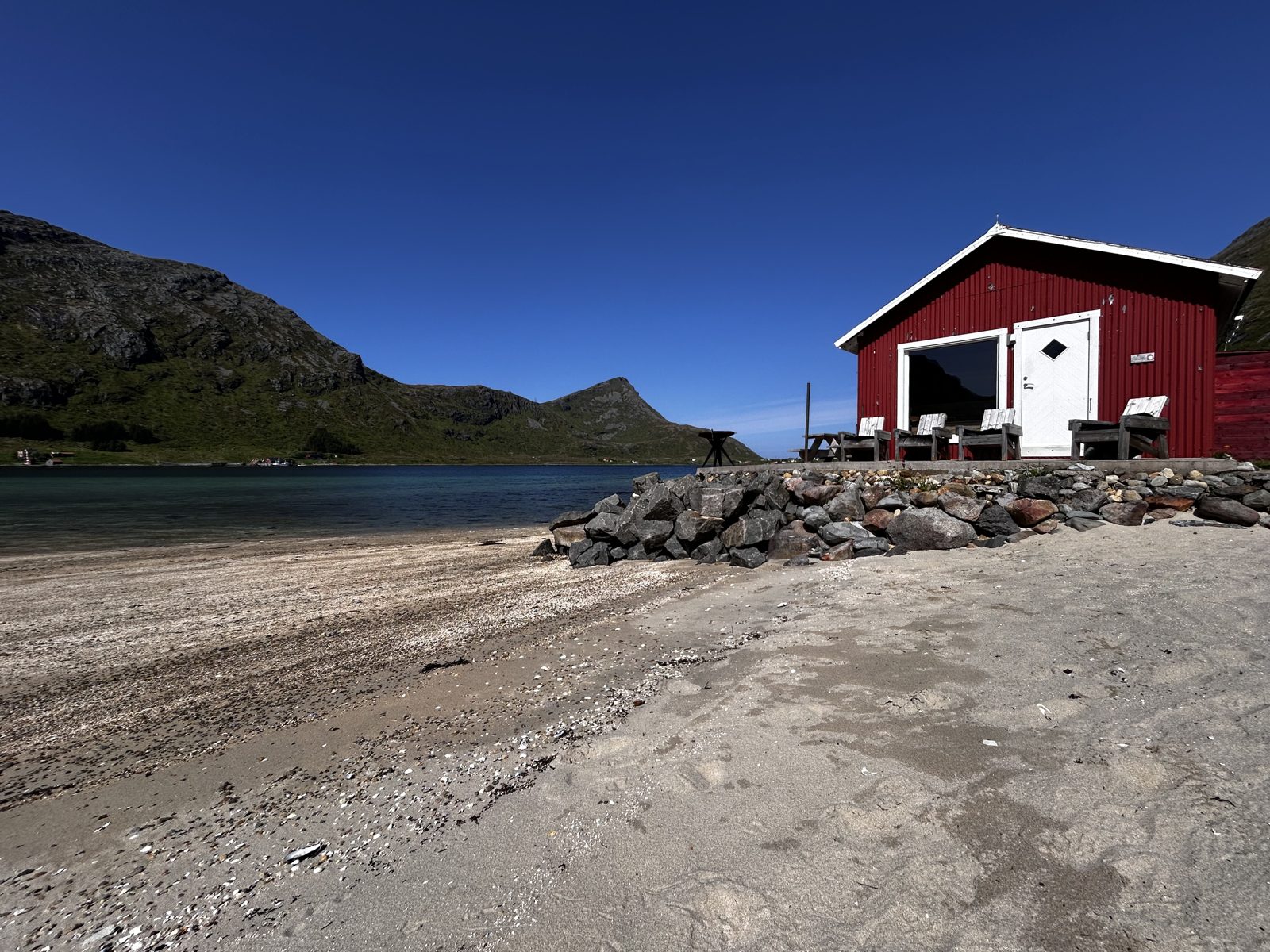
Summer from the shoreline
The midnight sun from our own dock, the swim before breakfast, and the whole west within a short drive.