A 5-Day Lofoten Itinerary from One Base in the West (With a 3-Day Version)A 5-Day Lofoten Itinerary from One Base in the West (With a 3-Day Version)
Five day-shapes from one base in the west — no daily packing, the weather picks the order. With an honest «if you only have 3 days» version.Five day-shapes from one base in the west — no daily packing, the weather picks the order. With an honest «if you only have 3 days» version.
Most five-day Lofoten itineraries share one exhausting assumption: that you should move. New village, new bed, repack the car, hand back one key and collect another — sometimes three times in five days.
We live here, and we would plan the same five days differently. So this guide answers one question: what can you actually do with five days in Lofoten — done well, not done fast?
Our answer has two parts. First: stay in one place, in the west, where the famous mountains, beaches and villages sit closest together — everything below is 0–40 minutes from a base around Ramberg, most of it under half an hour. Second: treat the days as shapes, not dates. We give you five day-shapes; the weather decides the order. That is not a compromise — it is how locals plan, and it is why our version survives a rainy Tuesday that would sink a fixed schedule.
How to use this itinerary
Three rules make it work:
- Check the forecast at breakfast, then pick the day-shape that fits. A clear, calm day is spent on a summit; a wild one at a stormy beach or in the villages. There is no bad weather, only bad clothing — but there are wrong plans for the day's weather.
- One main experience per day, plus slack. Lofoten rewards one to two things done properly over four things ticked off. The long summer light stretches the days; it does not stretch your legs.
- Count day 1 honestly. The last leg of the journey usually takes half a day, and you will want an evening to land in the rhythm. Our day-shapes assume four full days plus an arrival day — which is exactly what "5 days in Lofoten" really is.
Day-shape 1 — Arrival: land softly, then walk to the water
Whatever time you arrive, resist the urge to start ticking. Get the keys, unpack once — the only time you will — and buy groceries on the way in or at the village shop.
Then take the evening's reward: walk a beach. Rambergstranda sits directly by the village of Ramberg — a chalk-white crescent you can be standing on a minute after parking. It faces west, so in the midnight sun weeks of late May to mid-July the evening light lands straight on it, and it is the perfect first answer to "why did we come here?"
If it is autumn or winter, the same evening works in reverse: darkness is aurora time from mid-September — check the forecast, find the darkest spot near where you stay, and let the first night surprise you.
Drive today: essentially zero once you have arrived.
Day-shape 2 — The summit day: Volandstind or Ryten
Save this shape for the clearest day of your week — the views are the point.
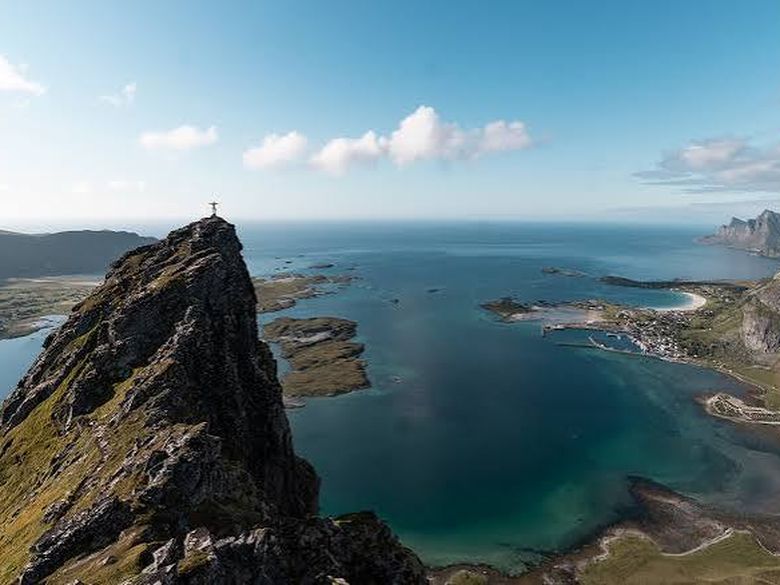
- Volandstind (457 m, about 2–3 hours round trip) is the west's quiet classic: parking at the Skjelfjorden community house, a gentle start along the fjord edge — with a rest shelter after about 15 minutes that makes a perfect short walk with small children — then a steeper pull onto the ridge and along it to the summit. From the top: Kvalvika, Fredvang and its bridges, the open sea northward, Rambergstranda below. Few people, honest effort, enormous reward.
- Ryten (about 540 m, 2–3 hours round trip) delivers one of Norway's most famous views: straight down onto the double bay of Kvalvika Beach. Many combine it with the descent to the sand — allow more time if you do. Trailheads are about 15–20 minutes' drive from Ramberg.
Either mountain, done at ease with a proper break on top, is a full and satisfying main experience. End it the local way: sauna if you have one, and a short, cold dip you will talk about at dinner.
Did you know? — from Casa Lofoten
The Volandstind trailhead is a 1.8 km walk from our door — about 20–25 minutes on foot, no car required. As one guest put it: "Volandstind — you can walk up it from the house … takes three hours." (translated) → The Volandstind hike
Day-shape 3 — The Reine day: villages at the end of the road
Drive west to where Lofoten runs out. From a base in the west this is a 25–40 minute drive, not a day trip — which changes everything about how you can time it.
- Reine (20–30 minutes away) is the postcard: the fjord, the peaks, the red cabins. Walk it rather than just photographing it.
- Reinebringen, above the village, is the most famous viewpoint in Lofoten — a sherpa-built stair of over 2,000 steps to 448 m. It is open roughly May to September (closed and chained off in winter), and in July–August it is queue-pace walking in the middle of the day. The local trick: go early or late. Sunrise from the top, 20–30 minutes from a western base, is one of the best things we know. Allow 1.5–3 hours; parking in Reine takes patience.
- Continue to Å, the village whose name is the last letter of the alphabet and the literal end of the E10 (30–40 minutes from the base), with Sakrisøy and Hamnøy as stops on the way back.
If legs are fresh and the light is right, Reinebringen is the day's main event and the villages are the garnish. If not, the villages alone fill a slow, rich day.
Day-shape 4 — The beach day: Haukland, Uttakleiv and the coastal path
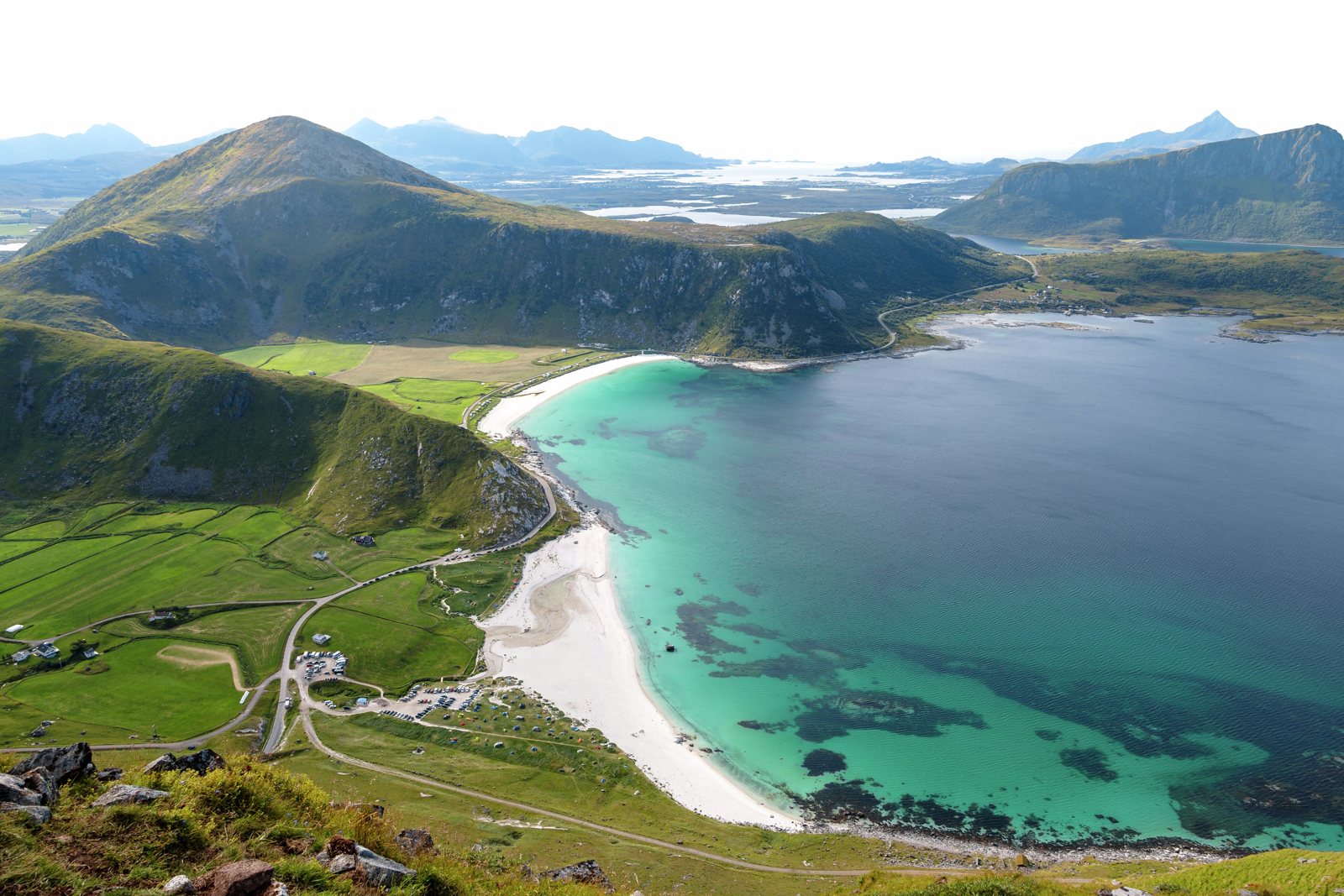
Take the E10 east to Hauklandstranda (about 30 minutes) — the sheltered white-sand bay that wins Norway's beach polls, with a seasonal café and facilities that make it the easiest full beach day on the islands. From its northern end, the coastal path rounds the headland to Uttakleiv — about 2 km each way at sea level, one of the finest easy walks in Lofoten — where the mood flips from gentle bay to open, boulder-strewn coast.
Swim if you dare: the sea is at its least cold in late summer, roughly 9–15 °C at its warmest, and a real dip is genuinely possible. In rough weather this day-shape gets better, not worse — storm-watching from a safe distance up the sand at Uttakleiv is a Lofoten experience of its own.
Temporary: the Nappstraumen tunnel works (until December 2027)
The undersea Nappstraumtunnelen — the E10’s only link between Leknes and the west of Lofoten — is being upgraded through the end of 2027. During work periods, daytime traffic passes in convoys behind a lead car, and the tunnel closes at night (roughly 23:00–06:00) with only limited let-throughs; queues can add up to an hour. The works pause around Christmas and for a period each summer. Check current convoy and closing times in the Statens vegvesen traffic app when you plan late or early drives.
Day-shape 5 — The slow day: Nusfjord, the boat, or nothing at all
The fifth shape is deliberately soft, because every good Lofoten week needs one — and because it doubles as your weather buffer.
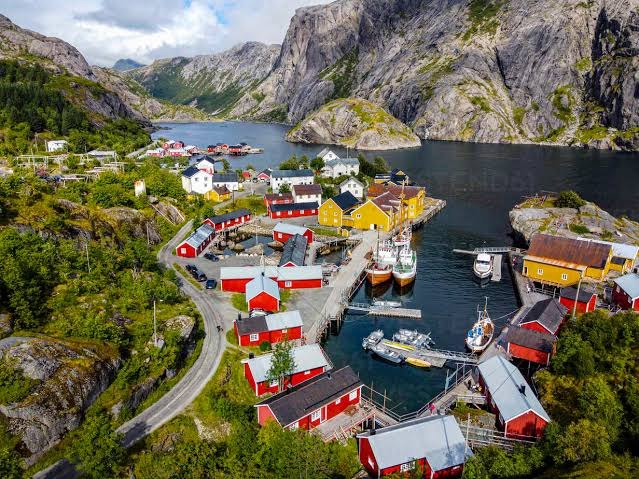
- Nusfjord (20–30 minutes) is a preserved fishing village on its own side road, with a seasonal visiting fee and an atmosphere the busy villages have traded away. Our favourite version pairs it with the low coastal walk from Nesland — and a booked dinner in Nusfjord afterward. Ask for the window table. One honest logistical note: the walk back after a long, good dinner is heavier than it sounds — a taxi home, or having someone move the car to Nusfjord, is the experienced move.
- The Bunes boat day is the upgrade if the week has gone smoothly: the small passenger boat from Reine (about 20 minutes up the Reinefjord), an easy 3 km walk from roadless Vindstad, and the biggest sweep of sand in the west. Book the boat ahead in season, and never lose track of the return departure.
- Or: do nothing much. A village coffee, the beach below, the sauna, the dock. Some of the best Lofoten days do not photograph well at all.
If you only have 3 days
We will be honest with you, because that is the house style: 3 days is the absolute minimum for Lofoten, and it buys you the famous pictures — not the trip. Most visitors take three or four flights to get here; if there is any way to add days, add them. But if three days is what you have, spend them like this:
- Arrival + the nearest beach (day-shape 1, unchanged — this shape was built for short trips).
- One summit — pick a single mountain and give it the clearest day. Volandstind or Ryten from the west; Reinebringen early or late if the season is right.
- The Reine day, compressed: Reine, Sakrisøy, Hamnøy and Å in one westward sweep, with the best light saved for the village you liked most on the way out.
What you cut is exactly what makes five days better: the beach day, the slow day, and every buffer. With three days you must take the weather you are dealt; with five, you get to negotiate.
Adjusting for season
- Summer (June–August): all five shapes work as written; the long, light nights mean the "evening" parts have no closing time. Book restaurants and the Bunes boat ahead in July–August.
- Autumn (September–October): September is the overlap month — hiking by day, the first aurora by night. From late September, expect the storm shapes: more beach-in-weather, more village days.
- Winter (December–March): Reinebringen is closed; Volandstind can be walked year-round with proper boots and spikes and poles — if there is a lot of snow, consider snowshoes. The Reine day becomes about light and the villages, the evenings about the aurora, and the sauna moves from luxury to infrastructure.
For the full season logic, see our guide to the best time to visit.
Frequently asked questions
Can we really see Lofoten from one base — don't we need to move?
The west, yes, comfortably: everything in this itinerary is 0–40 minutes from a base around Ramberg. Moving bases costs the better part of a day in packing and re-settling per move; on five days, that is a price we would not pay. Trips of a week or more that also cover the east are a different calculation — see our longer itinerary.
Which day-shape should get the best weather?
The summit day, without question. The beach day and village day degrade gracefully in poor weather; a summit in cloud is a staircase to nothing.
Is this itinerary doable without a car?
Honestly, no — the shapes depend on moving with the weather, and buses here cannot do that. See our car guide.
What about the northern lights — where do they fit?
From mid-September to early April they fit every evening the sky is clear, and the best viewpoint is usually right outside where you stay — somewhere dark, with the ability to pop in and out. See the northern lights guide for the how.
Is five days enough for Lofoten?
Five to seven days is enough to do the west of Lofoten properly — which is this itinerary. Enough for all of Lofoten? No trip length ever quite is; that is why people come back for a different season.
Where should we stay to follow this plan?
Anywhere in the west puts you inside the itinerary rather than commuting to it — the area around Ramberg and Flakstadøya is the natural centre of these five shapes. Our honest reasoning about bases, including our own, is in the where-to-stay guide. One planning note: the best places go first, in every season, and the accommodation is usually a fraction of the whole journey's cost.
Five days, one base
Every day-shape in this itinerary starts and ends at the same door — ours, if you like: sauna, beach, and the west around you.