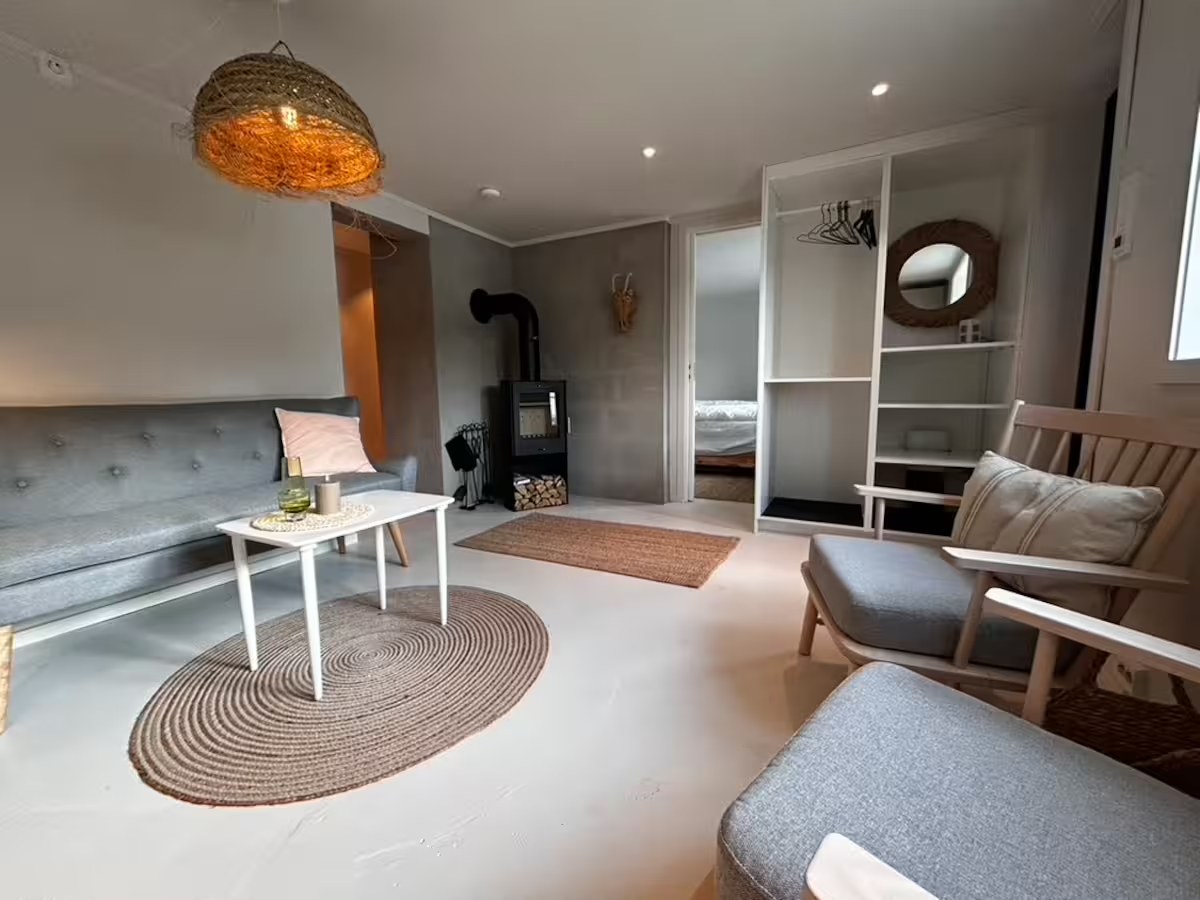
What to look for in your Lofoten accommodation
When people compare places to stay, they compare location and photos. But the facilities decide what your days actually feel like — and Lofoten asks different questions of a house than a city apartment ever would. Here are the nine things to think through before you book.
Nine things visitors only discover matter once they are here
Where do wet hiking boots dry overnight? Where does the electric rental car charge? Can you see the midnight sun from the terrace — or does a mountain stand in the way? Our guide to where to stay covers the location question in full; this one covers everything else.
The car, the kitchen, the wet gear
1. An EV charger
Rental fleets in Norway are increasingly electric — you will quite likely be handed an EV at the airport, perhaps as your first one ever. The difference between relaxed and fiddly electric driving here is simple: charging where you sleep. A house with its own charger means leaving every morning with a full battery and never planning around public chargers at all.
Ask before booking: Is there a charger at the property? Does it fit standard rental cars (Type 2)? Is charging included or metered? Do you need a car covers the driving itself.
2. A kitchen equipped like the one at home
Self-catering is how most visitors eat most meals here, so the kitchen carries more of the trip than in almost any other destination. The difference between functional and good sits in the details. Wine tastes best in wine glasses, espresso belongs in espresso cups — and a waffle iron turns a slow morning into a properly Norwegian one.
Know also what comes as standard, because the differences between properties are large. Bed linen, towels, shampoo and shower soap are usually included; where there is a kitchen, dishcloths, washing-up liquid and dishwasher tablets normally follow. But spices, coffee, tea, sugar and other basic staples are the exception rather than the rule — some houses keep a stocked base pantry, many provide nothing at all, and unless you ask, you find out on arrival.
Ask before booking: Is the kitchen fully equipped — and are basics like spices, coffee, tea and sugar provided, or do you shop from zero?
“We were mightily impressed by how well equipped the house is.”
“There was even a waffle iron.”
3. A drying cabinet for wet gear
This is the one first-time visitors never think of — and the one they thank us for most. Lofoten weather is honest about being weather. Hiking clothes, rain shells and boots come home wet, and tomorrow’s hike does not wait. A drying cabinet (or a proper drying room) turns soaked gear into warm, dry gear overnight. Without one, you are draping jackets over chairs and starting day three in damp boots.
Ask before booking: Is there a drying cabinet or drying room — and space for boots?
The sauna, the outdoors, the light
4. A sauna — and a way into the sea
A sauna in Lofoten is not a spa luxury. It is infrastructure. It is what hiking legs want after a summit. It is what a storm day is for. And paired with a cold plunge in the Arctic sea — sauna, sea, repeat — it becomes the experience guests describe long after the trip. Houses near a beach or with their own access to the water make the ritual effortless.
Ask before booking: Is there a sauna, is it private, and how far is the nearest place to get into the sea?
5. Outdoor spaces
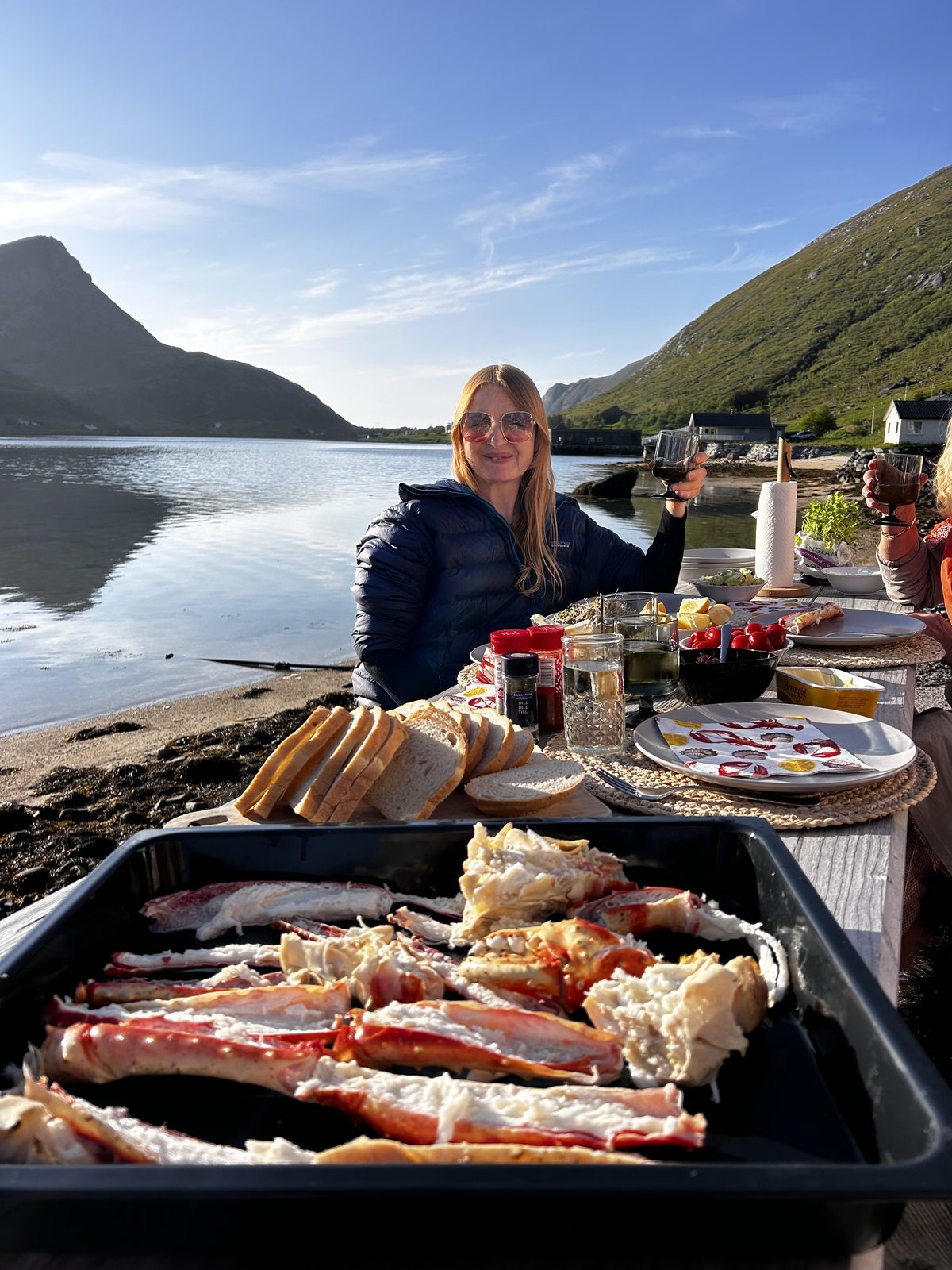
The long, light evenings from May to September are lived outdoors — dinner outside at ten, coffee on the terrace at midnight. A house with real outdoor spaces multiplies those hours. One local detail worth checking: shelter. Lofoten’s wind has opinions, and a good property offers more than one outdoor spot, so there is somewhere to sit whichever way it blows.
Ask before booking: What outdoor seating is there — and is any of it sheltered?
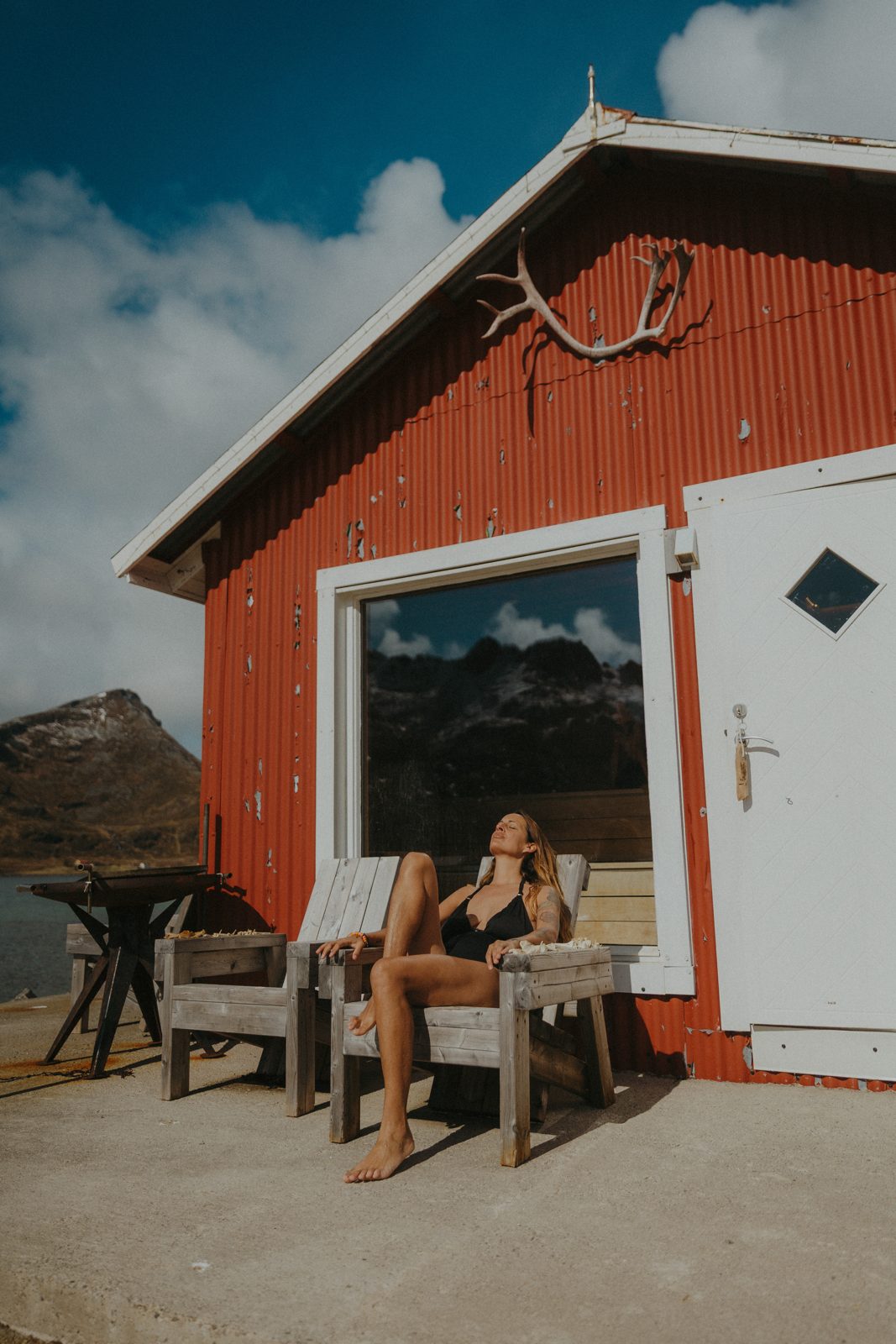
“The private sauna next to the beach was so cool! We used it every day and would then jump right into the fjord.”
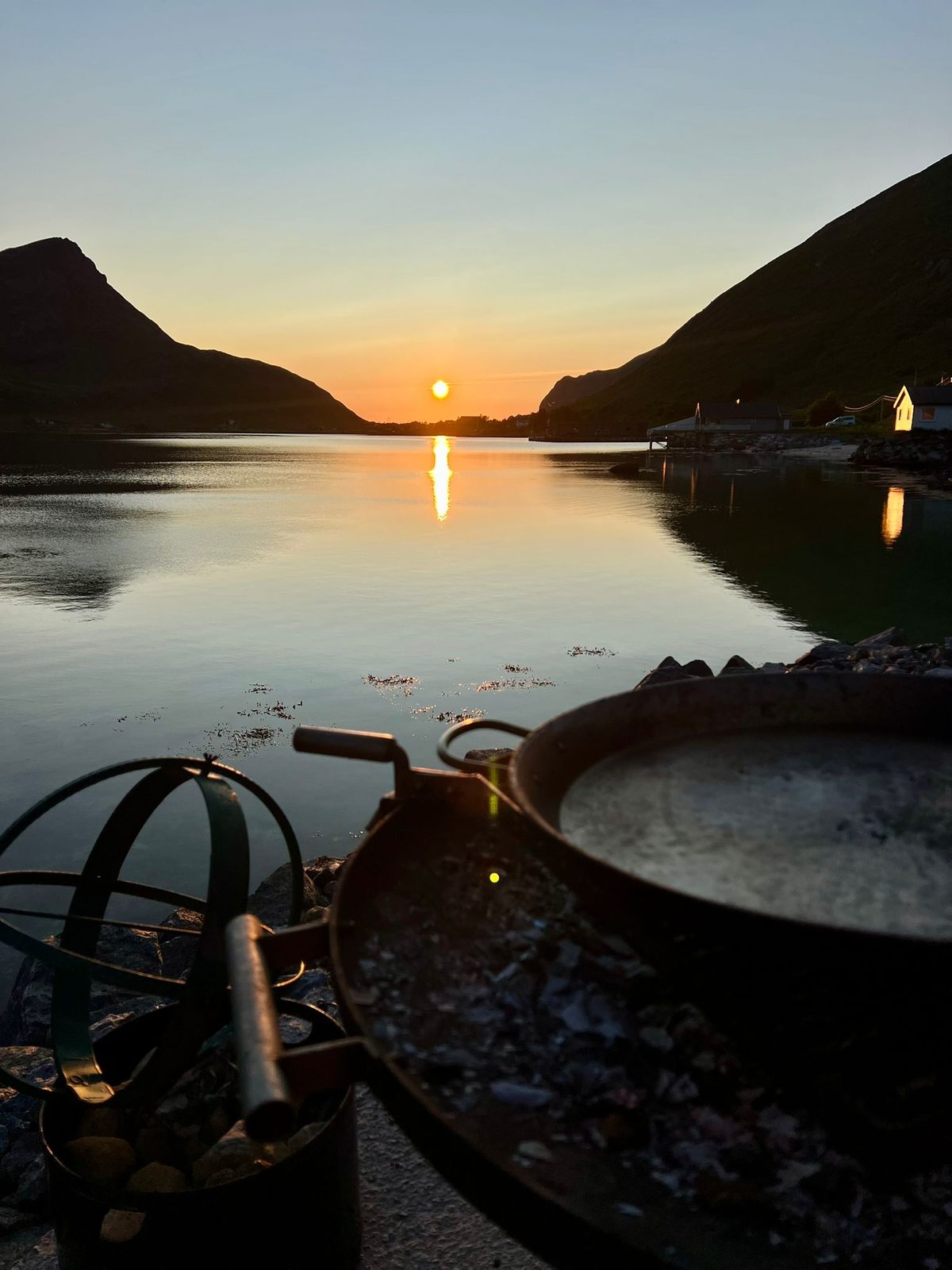
6. The midnight sun — or a mountain in the way
From late May to mid-July the sun never sets — but that does not mean every house sees it. The midnight sun stands low in the northern sky, and in an island chain made of mountains, plenty of properties sit in a peak’s shadow exactly then. A house with an open horizon to the north — over the sea, from a dock, from the terrace — gives you the midnight sun with your evening tea. A house behind a mountain gives you bright sky and a drive to see the sun itself.
And the point is broader than the midnight-sun weeks: mountains take the evening sun all year. On the inner side of the islands, the shadow of a peak can arrive long before sunset — the sky stays light while the terrace goes cold. Where the property sits in relation to its mountains decides how much of the evening you actually get.
Ask before booking: Can you see the midnight sun from the property — and how long does the property keep the evening sun? (A host who can answer precisely is a good sign in itself.)
The dark, the fire, the catch
7. Darkness — light pollution and the northern lights
From mid-September to early April, the opposite question takes over: how dark is it where you sleep? The aurora is a waiting game, and waiting works best from home. In a brightly lit village centre, a faint aurora disappears into the streetlights, and every alert means dressing and driving into the night. From a dark-sky property, you step outside, look up, and know within a minute.
Ask before booking: How much artificial light surrounds the property at night — and can the northern lights be seen from the house itself? The northern lights guide covers the whole hunt.
Did you know? — from Casa Lofoten
The house sits away from village lighting, with its own northern-lights benches on the mountainside behind it and chairs on its own dock — set up for waiting out a northern-lights night without leaving home, and for the midnight sun from the dock in summer. Northern lights from our doorstep →
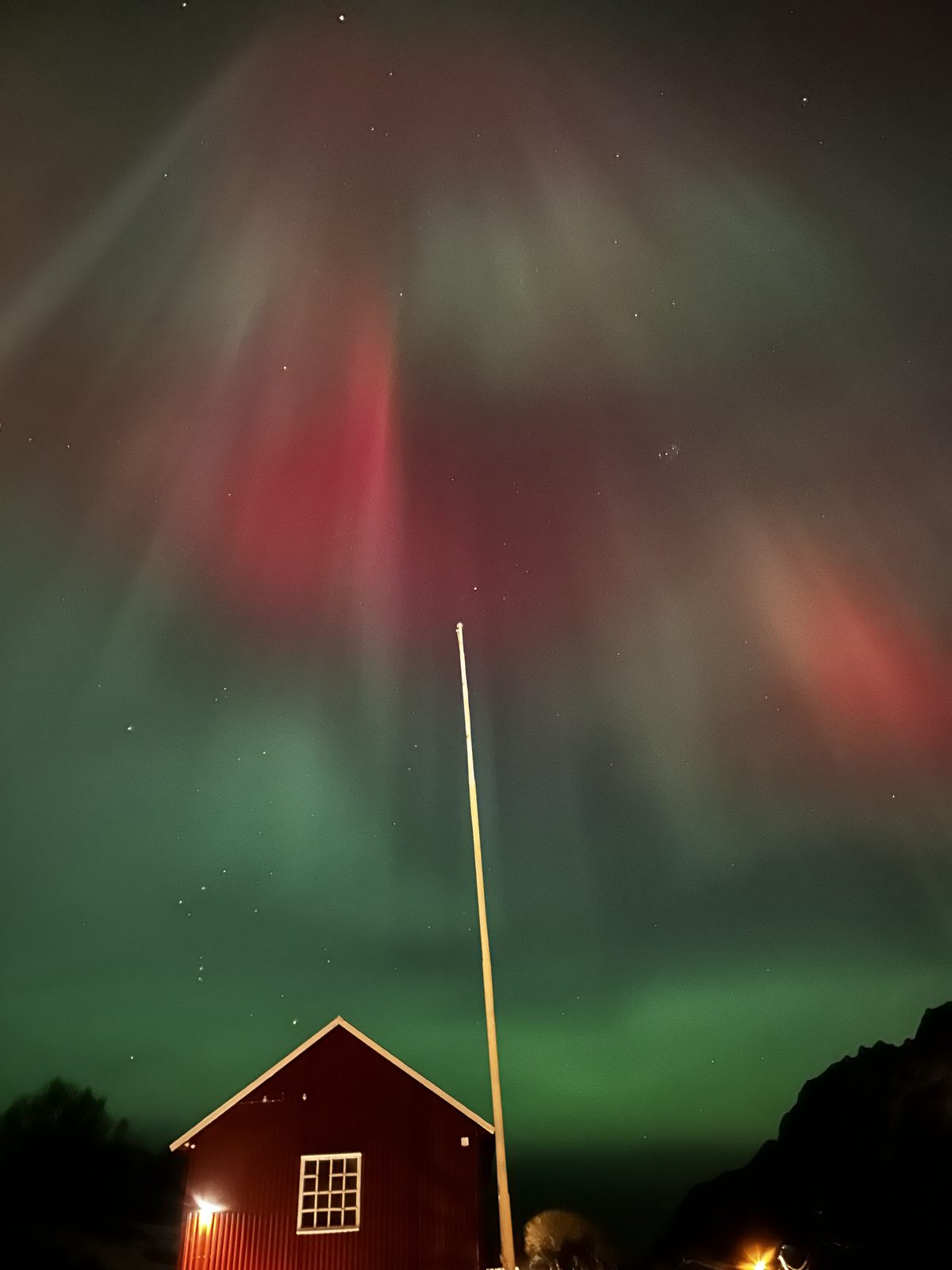
8. A fire pit — for those who like it
Not essential. But for many guests, the fire pit is where the trip’s best hours happen: the light nights of summer, the long aurora waits of autumn, the storytelling hours in between. If evenings around a fire sound like your holiday, make it a criterion — and check that firewood is provided or available.
Ask before booking: Is there a fire pit, and is firewood included?
9. A freezer — for the fish you catch
Sea fishing with a rod is free for everyone in Norway, and many guests end up with more cod than one dinner needs. A proper freezer turns a good fishing day into dinners for the rest of the stay.
Taking fish home is a different matter, and the rules are strict: fish may only be exported if it was caught through a tourist-fishing business registered with the Fisheries Directorate, with a personal quota of 15 kg per person (2026 — falling to 10 kg from 2027), at most twice a year, with individual export documentation. Fish caught on your own from the shore or a rented boat outside such a business cannot be taken out of the country — exceeding the rules is treated as smuggling and fined accordingly.
The practical summary: freeze it, cook it, enjoy it here — and if bringing fish home matters to you, book your fishing through a registered operator and ask them for the export paperwork.
Ask before booking: Is there a freezer with room for a catch?
And the ordinary checklist underneath
None of the above replaces the ordinary checklist — it sits on top of it. A washing machine is worth having on most trips — hiking clothes need washing along the way, not just everyday clothes at the end of a longer stay. Reliable wifi and straightforward parking are worth confirming rather than assuming.
And two criteria so self-evident they are often forgotten: a view, and quiet. The view you can judge from the photos. The quiet you have to ask about — in Lofoten, that mostly means how close the house stands to the busy E10. Where should you stay explains that check.
Before you book, ask the host
Before you book, answered
Is a drying cabinet really necessary?
Necessary, no. The difference between a good trip and a slightly damp one, often yes — especially outside midsummer, and always if hiking is the point of your visit.
Do most Lofoten rentals have EV chargers?
No — chargers are common at hotels and present at some private houses, but far from universal. If your rental car is electric (increasingly the default), a property charger is the single most comfort-adding facility on this list.
Can I see the northern lights from a village?
Strong displays, yes. Faint and medium ones — the majority — drown in village lighting. Dark surroundings are the difference between watching the aurora from the doorstep and driving out to find it. The northern lights guide covers the whole hunt.
How do I know if a property sees the midnight sun?
Ask directly — the sun stands low in the north, so what matters is the property's horizon in that direction. Hosts who know the answer precisely usually have the view; vague answers usually mean a mountain. Ask about the evening sun in general too: on the inner side of the islands, mountain shade can arrive long before sunset, in every season.
Is a sauna common in Lofoten accommodation?
More common than it was, and still far from standard. If the sauna-and-sea ritual appeals to you, filter for it — it is the facility guests most often say they would not travel without again.
Can I take home the fish I catch in Lofoten?
Only if it was caught through a registered tourist-fishing business: the export quota is 15 kg per person in 2026 (10 kg from 2027), at most twice a year, with personal documentation. Fish caught on your own cannot legally leave the country — which is the best argument for a freezer and a frying pan.
We wrote this list from our own house
The nine questions are the ones we answer about Casa Lofoten every week: the free Type 2 charger, the sauna a few steps from the beach, the fire shelter and fire pans, the benches under dark sky — and the freezer in the laundry room for the catch.