Lofoten in Autumn: September, October and November, HonestlyLofoten in Autumn: September, October and November, Honestly
What Lofoten is really like in September, October and November — hiking, first aurora, storm days — from local hosts in the west.What Lofoten is really like in September, October and November — hiking, first aurora, storm days — from local hosts in the west.
Ask when to visit Lofoten and you will hear two answers: summer for the light, winter for the aurora.
Almost nobody recommends autumn.
So is autumn actually worth it?
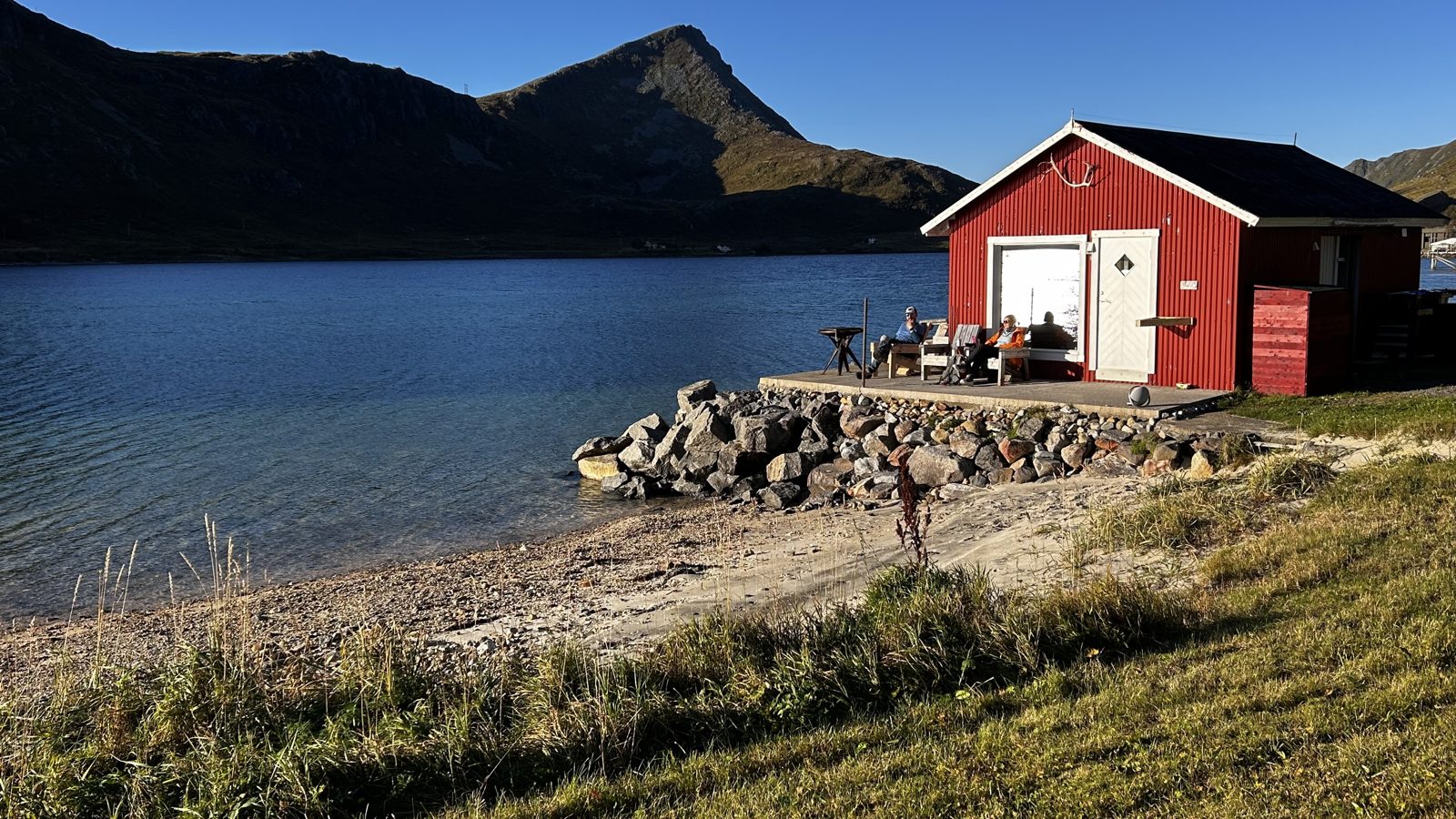
We are going to — carefully, and with both eyes open. Because autumn here is a trade. You give up guaranteed conditions, and in return you get the islands closer to themselves than at any other time: golden hillsides, the year's first northern lights, empty trails, storm light that changes by the minute — and prices and availability that summer visitors would not believe.
But it is a trade, and this guide is honest about both sides. Autumn can hand you the best week of your travelling life, or it can rain sideways for five days. What separates a great autumn trip from a miserable one is not luck. It is planning for the season you are actually in — and that is what this guide is for.
The one idea that makes autumn work
Here it is, and everything else in this guide follows from it:
In autumn, the weather decides your schedule — so come with a list, not an itinerary.
In July you can plan "Tuesday: hike Ryten." In October you plan "this week: hike Ryten on the best day, and on the wild days, watch the storm, take the sauna, drive the coast, cook something slow."
Visitors who arrive with a fixed day-by-day program fight the season and lose. Visitors who arrive with a flexible list — two or three hikes, a couple of drives, a beach walk, a photography wish — take the good windows when they open and genuinely enjoy the rough days in between. The forecast on yr.no becomes your morning ritual, and the season starts working for you: the same instability that brings the rain also brings light that summer never produces.
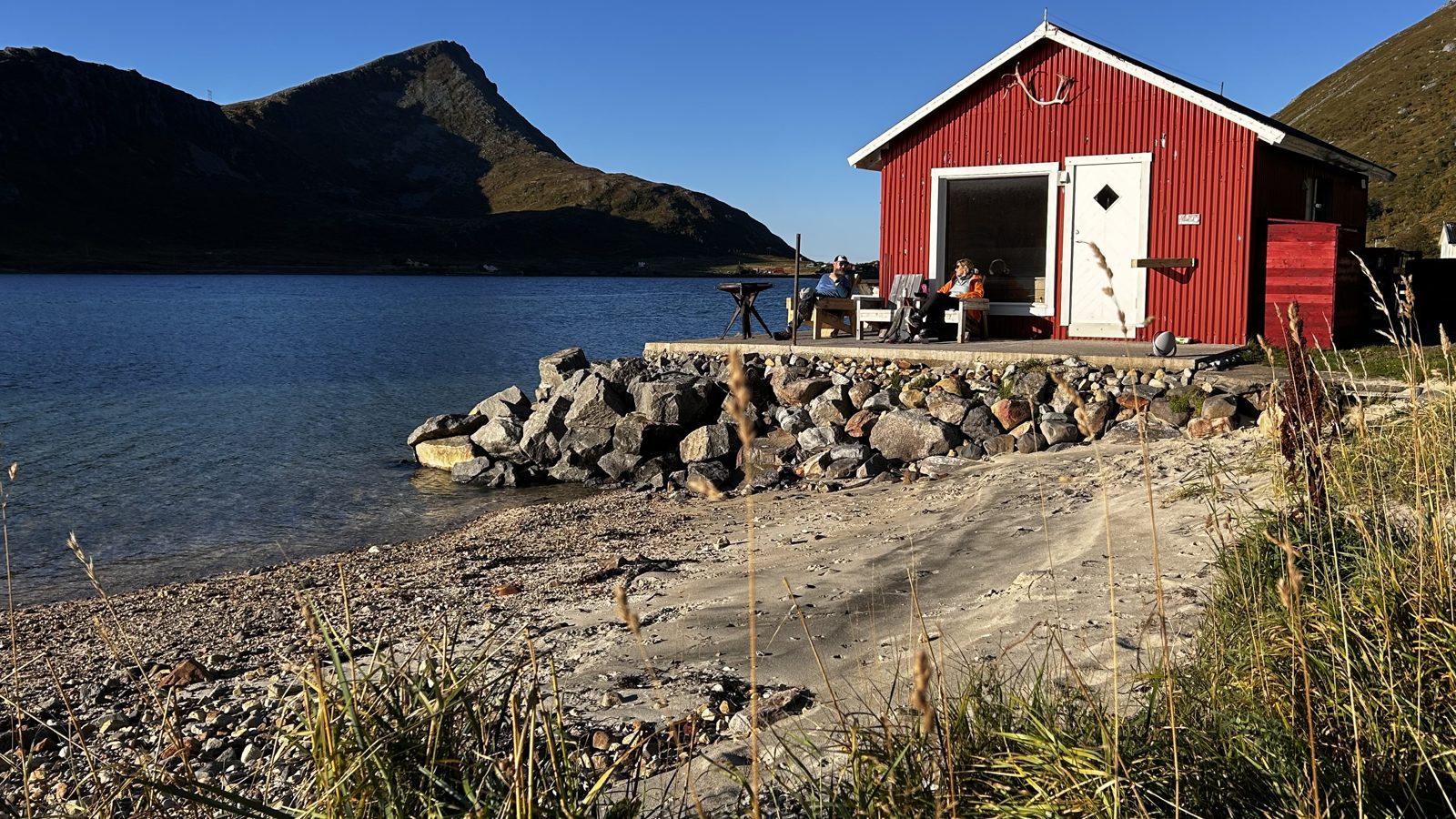
This is also why autumn rewards staying in one comfortable base rather than moving every night. Changing accommodation on a storm day is the worst version of this season. Watching that same storm from a warm house is one of the best.
Month by month: what actually changes
Autumn here is not one season. It is three distinct months, and choosing between them matters more than most guides admit.
September — the overlap month
September is our honest answer to a question we are often asked: "When can we hike AND see the northern lights?"
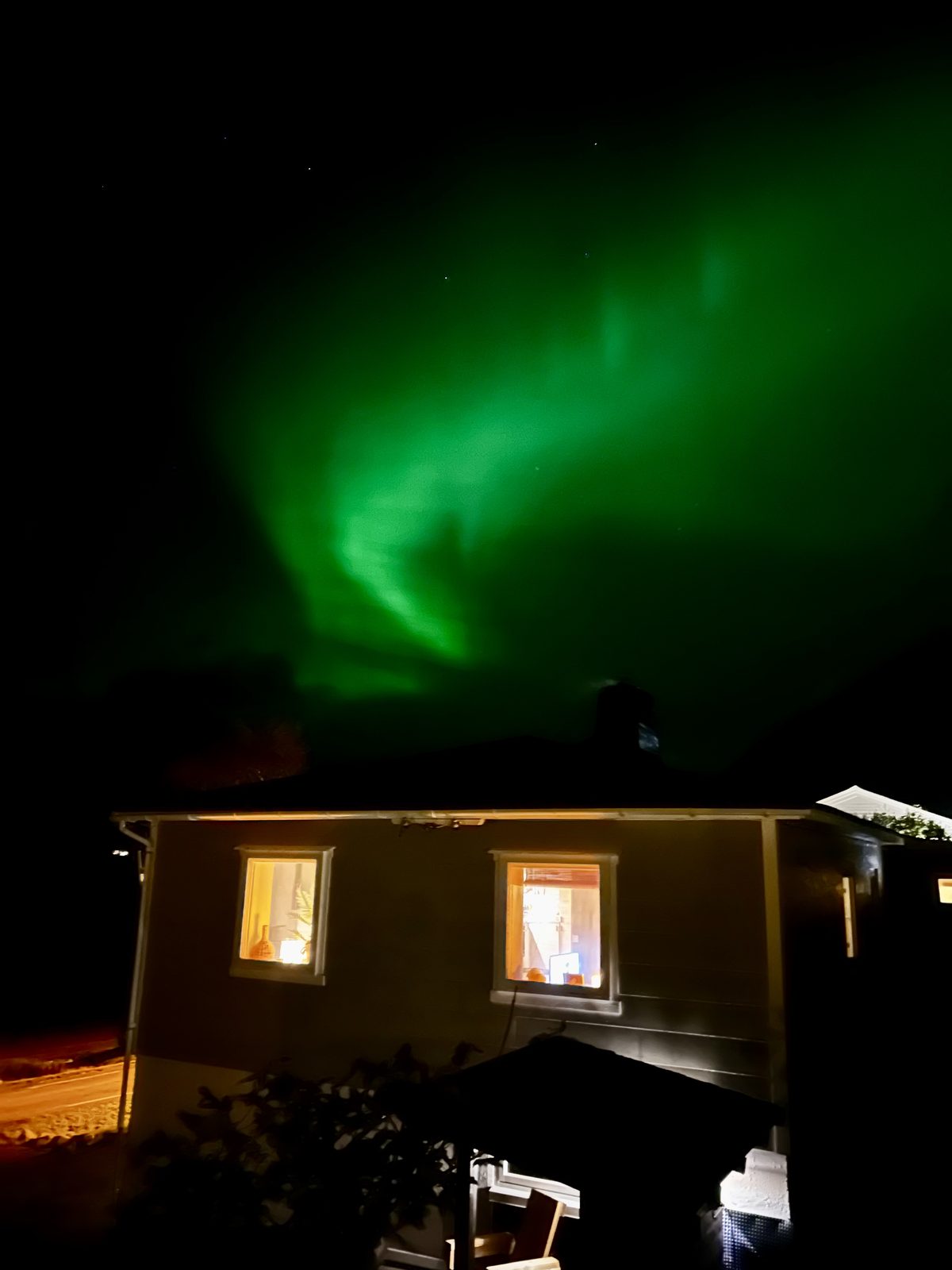
It is the only month that fully delivers both. The hiking season is still on — trails are snow-free, days are long enough for summit days — and the nights are finally dark enough for aurora again. From mid-September onwards, northern lights are a realistic possibility on any clear night, and September auroras come with a bonus: the nights are mild enough to watch them in comfort.
The hillsides turn gold, the birch woods go bright yellow, and the summer crowds are gone — real crowding here means late June to late August, and September falls outside it. Early in the month can still feel like late summer; by the end, the first storms are testing the islands and snow is dusting the peaks.
September in one line: the most complete month of the autumn — hiking, aurora, colour and calm in the same week.
October — the dramatic one
October drops the pretence. It is often the wettest month of the year, the storm season is fully awake, and daylight shrinks noticeably week by week.
So why do photographers and returning visitors love it? Because between the fronts, October produces the most dramatic light of the year: low sun under torn clouds, rainbows over dark sea, fresh snow on the summits above golden shorelines. The beaches — see our beach guide — are at their wildest and most impressive. Nights are long and dark, so when the sky clears, aurora conditions are excellent.
Hiking narrows rather than closes: our mountain rule of thumb is that the ordinary hiking season runs until sometime in October, ending when the first proper snow and ice arrive on the trails. Low coastal walks stay honest all month; exposed summits become a "best-day-only" plan. Reinebringen's stairs close for the season and stay closed through winter — do not plan around them.
October in one line: for flexible travellers who want drama and dark skies, and accept that some days belong to the weather.
November — the quiet threshold
November is the islands exhaling. The last leaves are down, the first lasting snow usually arrives, daylight shrinks toward the winter minimum, and many visitor businesses have closed for the season. Some years it is white and crisp; some years it is dark and wet.
We will be straight with you: November is not the month for a first visit. It is a month for a certain kind of traveller — the one who wants long dark nights for aurora, total quiet, time indoors with books and good food, and short, sharp outings into whatever the day offers. If that describes you, November delivers something no busy month can.
November in one line: the connoisseur's month — come for darkness, aurora and stillness, not for a full activity program.
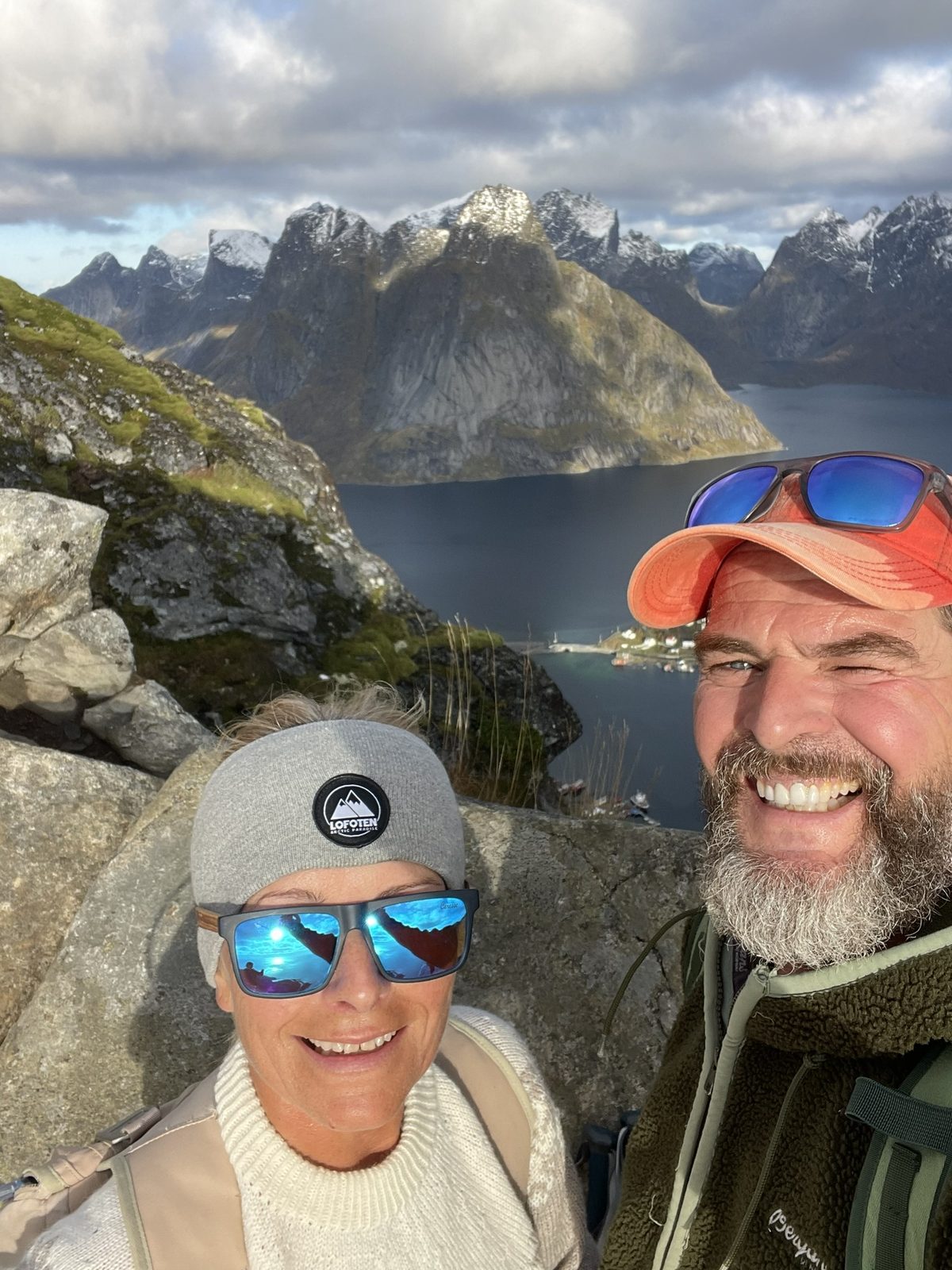
“The view is fantastic, and the sauna by the fjord is just perfect.”
What works in autumn — and what doesn't
Works, all autumn:
- Northern lights. From mid-September, every clear night is a chance, and it improves as the nights lengthen. Read our northern lights guide for the two-condition rule (darkness + clear sky), how to read the yr forecast, and why the best viewpoint is usually right outside where you stay.
- Beach walks and storm-watching. The drive-to beaches are open, empty and at their most impressive. Watch big surf from a respectful distance up the sand — never turn your back on it.
- Scenic driving. Reine, Hamnøy, Nusfjord and Å do not close. On rough days, the drive itself is the activity — with the E10's usual character (narrow stretches, sheep, full stops for oncoming motorhomes) plus autumn wind. Drive gently.
- Food. Slow cooking on dark evenings is not a consolation prize here; it is half the point of the season.
Works with judgement:
- Hiking. Full season in September, narrowing through October, low-level only from late October/November. Pick your day by the forecast, wear wool next to the skin, and carry a headlamp from September onwards — it earns its place in every autumn daypack.
- Photography. The light is the year's best; the tripod-in-wind skills are on you.
Doesn't work:
- Reinebringen after the seasonal closure — the stairs are chained off outside the season for good reasons, and rescues happen every year for people who ignore it.
- Fixed itineraries. See the one idea above.
- Packing light. See below.
Did you know? — from Casa Lofoten
Autumn is when a well-equipped house stops being a nice-to-have and becomes the trip. Wet gear goes into the drying cabinet in the evening and comes out ready by morning; the sauna by our beach turns a grey, windy day into the day everyone remembers; and the fjord outside the windows performs all season. Our house sits on a quiet side fjord, off the E10 — as one September guest put it: "Located on a side fjord and therefore not directly on the E10 … calm." (translated) → The house
What to pack (the short version)
Autumn packing is layering plus honesty about rain. Wool base layers (our local rule: on sweaty hikes, carry a second wool top and change out of the wet one at longer breaks — that is how you stay warm), a real waterproof shell and waterproof footwear, hat and gloves from September, a headlamp, and one outfit you do not mind sacrificing to a horizontal-rain beach walk. Our packing guide covers the full list; the mistake to avoid is bringing summer gear plus one umbrella. Umbrellas do not survive here.
Is autumn right for you?
Choose autumn if: you have been here in summer and want the other Lofoten; you care about aurora but want milder nights than midwinter; you photograph; you value quiet over certainty; you are happy building days around a forecast.
Choose another season if: this is a once-only trip built around guaranteed summit hikes (come in summer), or around deep snow and white landscapes (come in late winter — see our winter guide).
And whichever month you choose: the good places to stay still fill in autumn — the idea that the islands are empty off-season is a myth. The best bases are booked by people who know exactly why they are coming. Book ahead; the accommodation is a fraction of what the whole journey costs you, and in this season, where you wait out the weather is the holiday.
Frequently asked questions
Can we see the northern lights in September?
Yes — from mid-September onwards, any clear, dark night is a real chance, and the mild temperatures make September one of the most comfortable aurora months. See our full northern lights guide.
Is October too stormy to visit?
Not if you come with the right expectations. October gives you the year's most dramatic light between fronts — but you must be willing to let the forecast order your days. If a fixed program matters to you, choose September.
Can we still hike in autumn?
September: yes, fully. October: on the good days, until the first snow and ice end the ordinary mountain season sometime in the month. November: keep to low coastal walks. Reinebringen's stairs are closed from autumn through winter.
Is it cold?
Less than you fear. Autumn is a wind-and-water season more than a deep-cold season; the serious cold belongs to winter. Dress in wool and windproofs and you will be comfortable outside all day.
Are restaurants and attractions open?
The essentials — shops, fuel, the villages themselves — run all year. Some visitor businesses reduce hours from late September and more close in November. Self-catering is the reliable autumn strategy; our food guide (coming) covers where to buy what in the west.
Is autumn cheaper?
Generally, autumn is the value season for flights and accommodation compared with summer. But the well-located places still book up — quality is in demand all year here.
The overlap season, from the west
Open trails, returning darkness and the first aurora nights — September to December is when the house is at its quietest and darkest.