Getting Around Lofoten: Driving & FerriesGetting Around Lofoten: Driving & Ferries
What driving in Lofoten is really like — the narrow E10, honest driving times, winter driving explained calmly, ferries and boats, and why the car is your weather freedom.What driving in Lofoten is really like — the narrow E10, honest driving times, winter driving explained calmly, ferries and boats, and why the car is your weather freedom.
One question sits behind more booking hesitation than any other we hear — especially for autumn and winter stays: what is it actually like to drive here?
We drive these roads every week of the year, so let us answer it properly: the honest character of the E10, real driving times, winter driving explained calmly rather than dramatically, and how the ferries and boats fit in.
One road, and what it is like
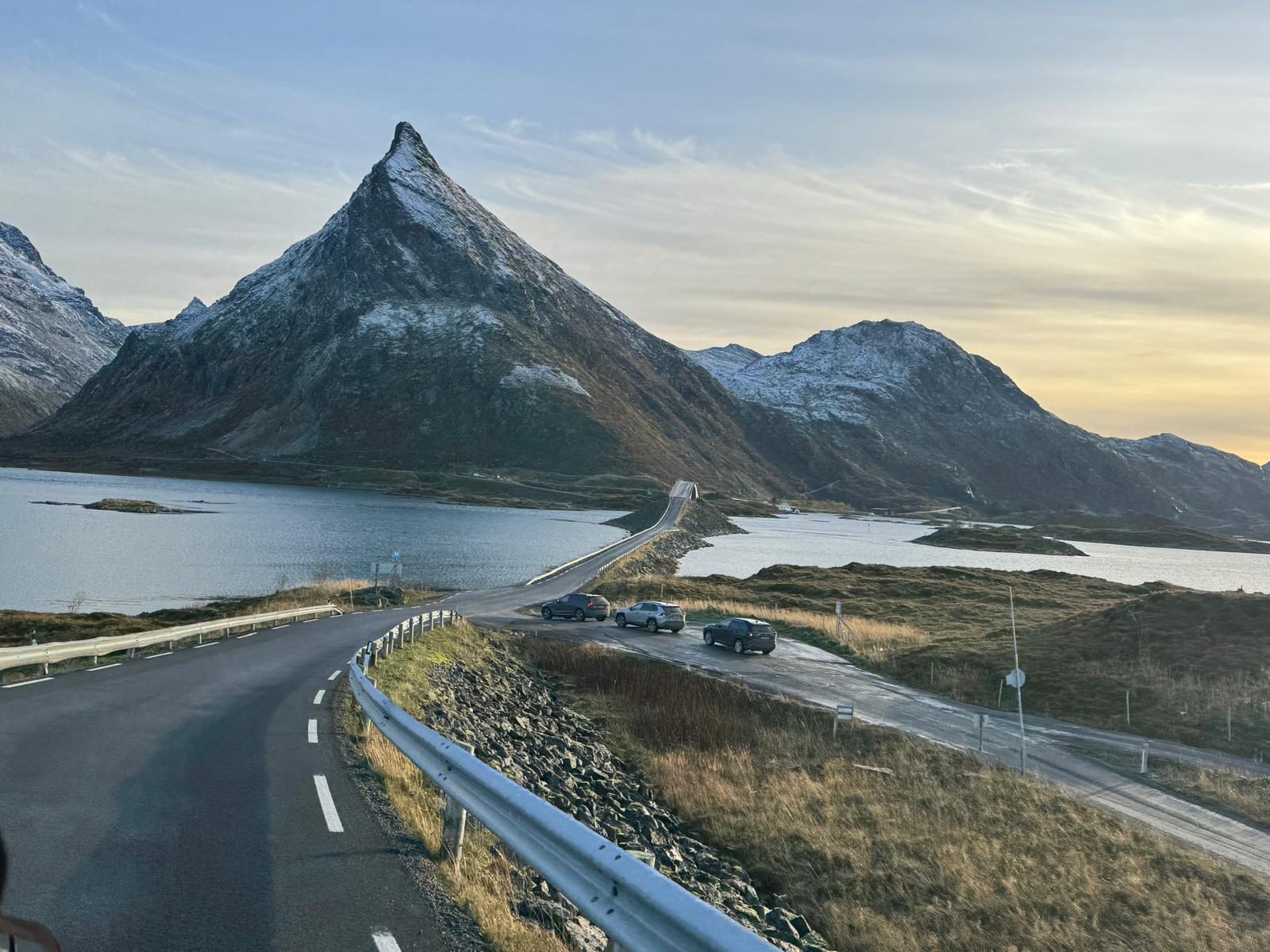
Lofoten is essentially organised along a single road: the E10, running the length of the islands and ending at Å in the west. Everything else branches off it.
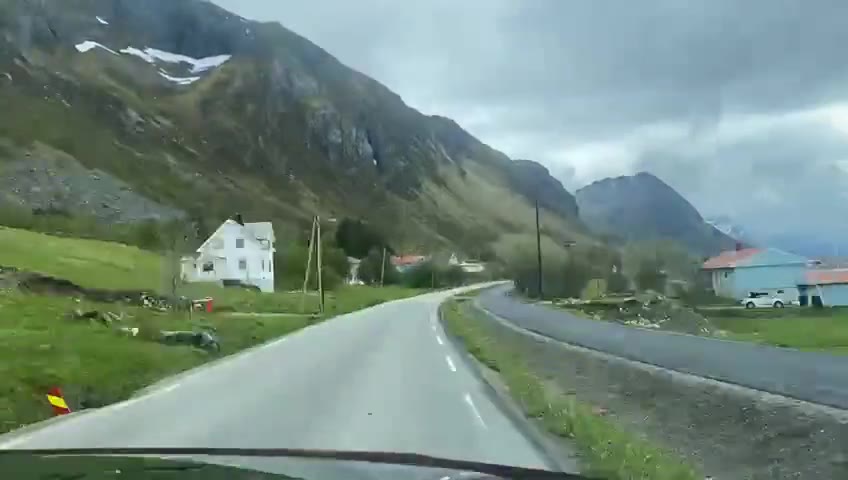
The E10 is often very narrow. Meeting a campervan or a truck can mean slowing right down, and sometimes stopping completely while you pass each other. Sheep graze along the road and are sometimes in the road. None of this is a problem — it is simply the rhythm of driving here, and you adjust to it within a day.
What it does mean is that distances lie. The kilometres are short, but the times are longer than a map app suggests, because you will drive slower than the number on the sign, and because you will stop — for sheep, for oncoming traffic, and for views you did not plan to photograph.
Temporary: the Nappstraumen tunnel works (until December 2027)
The undersea Nappstraumtunnelen — the E10’s only link between Leknes and the west of Lofoten — is being upgraded through the end of 2027. During work periods, daytime traffic passes in convoys behind a lead car, and the tunnel closes at night (roughly 23:00–06:00) with only limited let-throughs; queues can add up to an hour. The works pause around Christmas and for a period each summer. Check current convoy and closing times in the Statens vegvesen traffic app when you plan late or early drives.
Honest driving times
These are our verified times under normal conditions, without stops — and this is Lofoten, so there will be stops:
| From → to | Time without stops |
|---|---|
| Svolvær → Henningsvær | 25–30 min |
| Svolvær → Leknes | 1–1½ hours |
| Svolvær → Reine | 2–3 hours |
| Leknes → Reine | about 1 hour |
| Ramberg → Reine | 25–30 min |
Two planning rules fall out of this table.
First: where you stay decides how much of your holiday you spend in the car. From a base in the west, the western highlights are minutes away; from the east, they are a day trip. We have written about this at length in Where to Stay.
Second: plan one direction per day, not a loop. Out and back along the E10 with two or three stops is a full, good day. Trying to "do" the whole road in a day means seeing all of it through a windscreen.
Rules of the road worth knowing
A few things catch international drivers out — none of them difficult, all of them worth knowing before you turn the key:
Headlights on, always. Norwegian law requires dipped headlights day and night, all year. Rental cars usually handle this automatically, but check.
Speed limits are low and taken seriously. The general limit outside built-up areas is 80 km/h, dropping to 50 or lower through villages — and on much of the E10 you will naturally drive below the limit anyway.
The alcohol limit is 0.02 % — effectively zero, and stricter than most countries. The local habit is simple: the driver does not drink.
Fuel stations are often unstaffed card machines. There is a station in Ramberg, one in Reine, and full-service options in Leknes and Svolvær. Cards work everywhere; Norway is close to cashless.
Give the sheep the right of way. They use it anyway.
Winter driving — the calm version
This is the section that decides whether people book September to December, so we will be precise rather than reassuring.
The roads are maintained for winter. The E10 is the islands' main artery and is ploughed and gritted through the season; short closures can happen in the worst storms, but a snowed-in Lofoten is not the normal state of a winter week here.
Rental cars come equipped for the season with proper winter tyres — this is standard in northern Norway, not an extra you need to arrange.
You do not need a 4x4. A normal car on winter tyres is what locals drive. What replaces the equipment is behaviour: slower speeds, longer following distances, gentle braking, and letting the locals past when they catch up with you.
The real adjustment is light, not grip. In November and December much of your driving happens in twilight or dark. Plan the day's longest drive for the middle of the day, and treat the E10's narrowness with the same patience as in summer — just at a lower speed.
Here is the eight-second version of what winter driving actually looks like here. Notice what it is not: it is not drama. It is a quiet road, snow banks, and a car moving at a sensible speed.
And when a real storm blows through? You do what locals do: you don't drive. The useful thing about Atlantic storms is that they move — a system that makes the morning undriveable has often cleared by mid-afternoon. Wait it out with coffee and a window seat, check the road authority's traffic app before you leave, and take the drive when the weather hands it back. A storm hour is not a lost day; it is a postponed one.
And this is where the car earns its place in winter: it is your weather freedom. Winter days here often contain both a storm hour and a clear hour. With a car outside the door, you use the clear one — drive to the light, to the beach where the sky has opened, to the aurora forecast's best gap in the clouds. Without one, you use whatever weather happens to be outside your window. Our 5-day itinerary is built entirely around this idea.
Did you know? — from Casa Lofoten
From the house, Reine and the Reinebringen parking are 20–30 minutes away, Nusfjord 20–30, Hauklandstranda about 30, Å 30–40 and Leknes 30–40. Short drives are what make weather-flexible days possible — you can change plans at breakfast and lose nothing. → Everything within 30 minutes of the house
The ferries and boats
Bodø → Moskenes is the car ferry into the west: about 3 hours 15 minutes across open sea. It is the budget route — cheaper than flying, slower, and honest weather: in rough conditions you will feel that this is the open Atlantic. Book the car deck in advance in summer; it fills. And know before you sail that Moskenes has no car hire and no taxi rank, and buses from the quay are rare — the ferry works best with your own car on board, or someone meeting you at the quay.
Reine → Vindstad is the small passenger boat up the Reinefjord — the only way to Bunes beach. It takes about 20 minutes, and the one rule that matters is: know your return departure. Miss the last boat and you are staying in Vindstad.
For all ferries and boats: check the current timetable before you build a day around one. Schedules change with the seasons, and we deliberately do not print departure times or fares in these guides — they would be wrong within a year.
The full picture of getting to the islands — flights, the 39-seat Bodø–Leknes propeller planes, and the book-your-base-first rule — is in How to Get to Lofoten.
Photograph to come — the Bodø–Moskenes ferry on open sea (next crossing)
Buses, and life without a car
Public buses exist along the E10, but they are built for local life, not sightseeing: departures are sparse, and the trailheads and beaches that make Lofoten worth visiting mostly sit away from the stops. It is possible to visit without a car; it is not possible to visit flexibly without one. We have made the full argument — including the honest exceptions — in Do You Need a Car.
If you drive electric: fast chargers are concentrated in Leknes and Svolvær, fuel is expensive in Norway either way, and the relaxed solution is charging where you sleep — check what your accommodation offers before you book.
FAQ
I have never driven on snow. Is winter driving here realistic for me?
For most people, yes. Winter tyres are standard on rentals, the main road is maintained, and the required skill is patience rather than technique: drive slower than feels necessary, brake early and gently, and skip the day's drive if a storm is actually blowing through — it rarely lasts long.
Do I need a 4x4 or an SUV in winter?
No. A normal car with proper winter tyres is what the islands run on. Choose the car for luggage space, not for drivetrain.
Automatic or manual?
Whichever you are used to. On snow, an automatic is one less thing to think about, and most rental fleets are automatic anyway.
How early should I book the Bodø–Moskenes ferry with a car?
In summer: as soon as your dates are fixed — the car deck fills. Off season there is usually room, but booking ahead costs nothing.
Is the ferry rough?
It crosses open sea, so in bad weather, yes — it moves. If you are prone to seasickness, sit midship, watch the horizon, and consider the flight instead in the stormier months.
Are the roads closed often in winter?
The E10 is kept open through the season; short closures can happen during the worst storms, and the mountain passes on the mainland approach (if you drive in via Evenes) are more exposed than the islands themselves. Check the road authority's traffic app on storm days.
Can I rely on my phone's map app for driving times?
For the route, yes. For the time — add margin. The app does not know about sheep, campervans, or the fact that you will stop at the first white beach you see.
Where do I fill up in the west?
Ramberg has an unstaffed card-machine station a few minutes from us, Reine has a station, and Leknes has full-service options. Card only is fine everywhere.
Short drives, calm days
From the house, Reine, Nusfjord and Haukland are all within about half an hour — short drives are what make weather-flexible days possible.