Lofoten in Winter: An Honest Guide from Local HostsLofoten in Winter: An Honest Guide from Local Hosts
Winter in Lofoten from people who live it: the two winters, northern lights, driving, what closes, and why the season rewards staying put.Winter in Lofoten from people who live it: the two winters, northern lights, driving, what closes, and why the season rewards staying put.
Most winter guides to Lofoten are activity checklists written from a summer state of mind: see this, do that, drive there.
Winter here does not work that way — and that is exactly why people fall in love with it.
Winter in Lofoten is not a list of sights with snow on them. It is a different relationship with the islands: shorter days you plan around, light you stop for, northern lights you wait for, and long dark evenings that are not a problem to solve but the actual reward. Visitors who understand this have the trip of their lives. Visitors who arrive with a summer-style program spend the week frustrated by the clock and the weather.
We live here through every winter. This guide is what we tell friends who ask us the question directly: should you come to Lofoten in winter? It is our full answer — including the parts other guides leave out.
First truth: there are two winters
"Winter" here means two seasons that feel completely different. Choosing between them is the most important decision in this guide.
The deep blue winter — late November to early January
Around the 7th of December the sun stops rising, and it stays below the horizon until early January. This is the polar night — and the biggest misconception about it is that it is pitch dark.
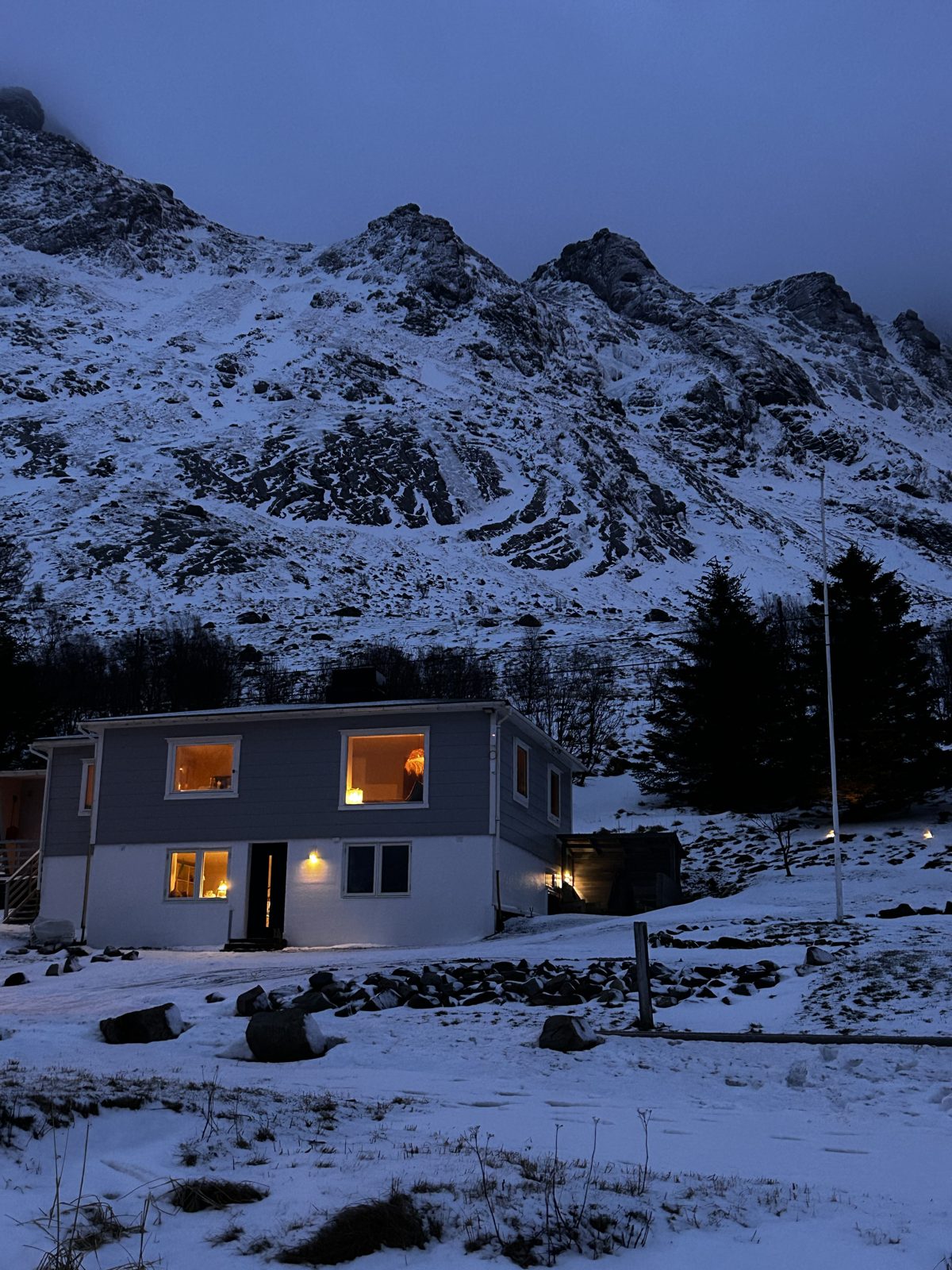
It isn't. For a few hours in the middle of each day, the islands sink into a deep blue twilight — a slow, hours-long dusk where snow, sea and sky share the same palette. Photographers travel here for precisely this light. Outside those hours: darkness, stars, and on clear nights, the aurora — which in this season can appear remarkably early in the evening.
This is the winter for travellers who want atmosphere: quiet villages, candle-lit evenings, northern lights without late nights, and a kind of stillness that no other season produces. It is not the winter for an outdoor activity program — the usable light is short and the weather is at its most restless.
The white winter — late January to March
Through January the light returns at astonishing speed, and by February the islands are transformed: full snow cover, lengthening days, and the collision that defines Lofoten in photographs — white peaks rising straight from dark blue sea.
This is the winter most people imagine, and the season we recommend for a first winter visit. February and March combine reliable snow, real daylight for being outside, and the strongest part of the aurora season — statistically, late winter gives the best odds of the whole year. March in particular can feel almost generous: bright, longer days, winter landscape at full strength, aurora at night.
And late winter has a bonus the brochures undersell: this is skrei season. From roughly February to April, the migrating Arctic cod arrive, the fishing villages work the way they have for a thousand years, drying racks fill along the shores, and the best thing on any menu is the freshest cod you will ever eat.
In one line: come in December for the blue stillness; come in February–March for snow, light and the strongest aurora odds.
Photograph to come — stockfish racks with skrei (Feb–Apr) — own photo planned
The northern lights — the honest version
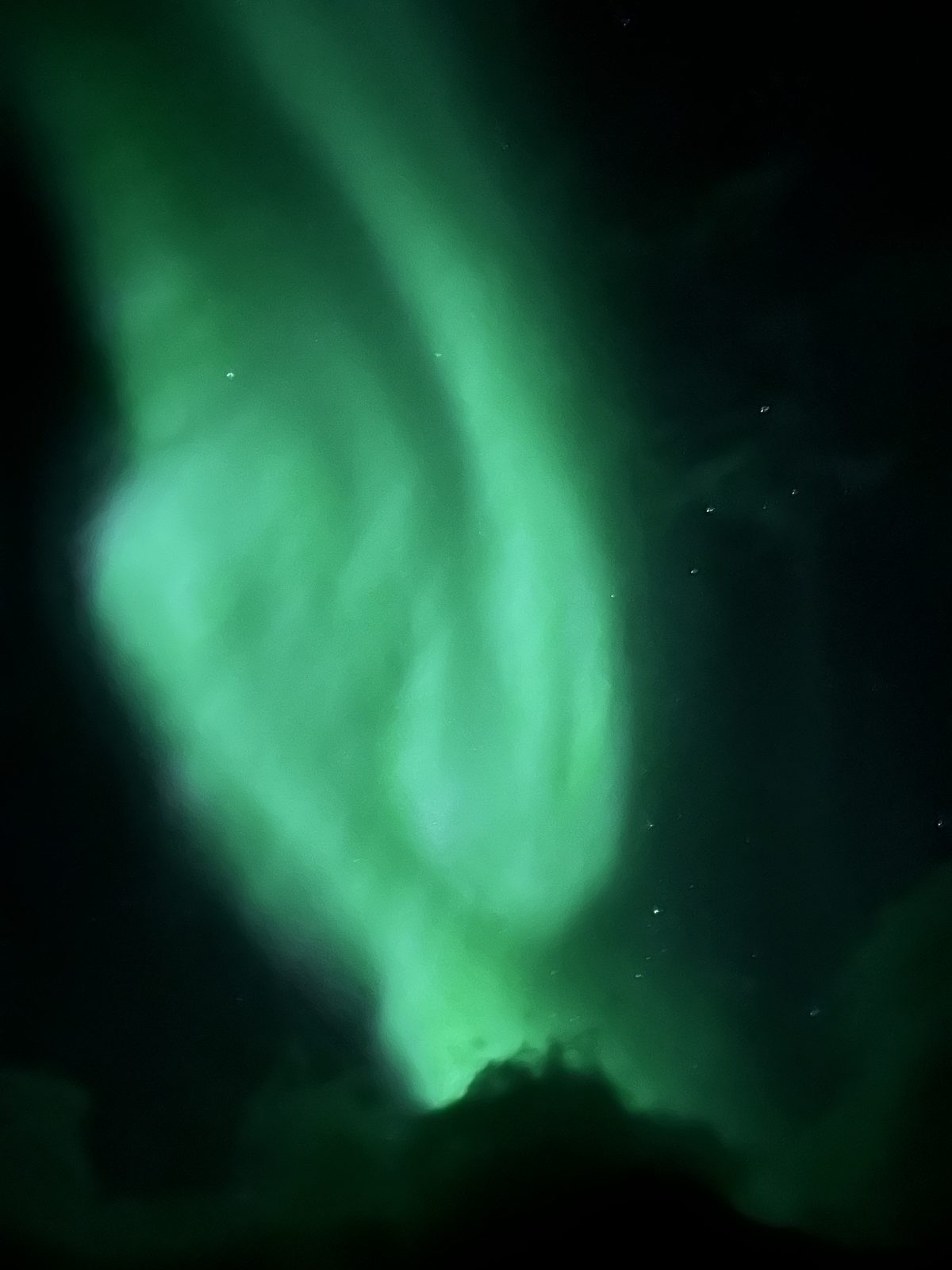
Lofoten sits under the auroral oval, which means even modest activity is visible here on a clear, dark night — you do not need a rare solar storm. From September to early April the lights are possible; the long nights of winter simply give them the most stage time.
The full method is in our dedicated northern lights guide — the two conditions (darkness and clear sky), how to read the yr forecast, and why chasing by car is usually worse than choosing dark accommodation and stepping outside. The winter-specific points:
- In December, aurora can appear early in the evening — check the sky before dinner, not just before bed.
- Cloud is the enemy, not the calendar. A week's stay beats a weekend because it buys you more clear-sky lottery tickets.
- Choose where you sleep for darkness. The best aurora viewpoint of your trip should be right outside your door, so you can watch in comfort and go back inside to warm up — the in-and-out rhythm is how locals do it.
Did you know? — from Casa Lofoten
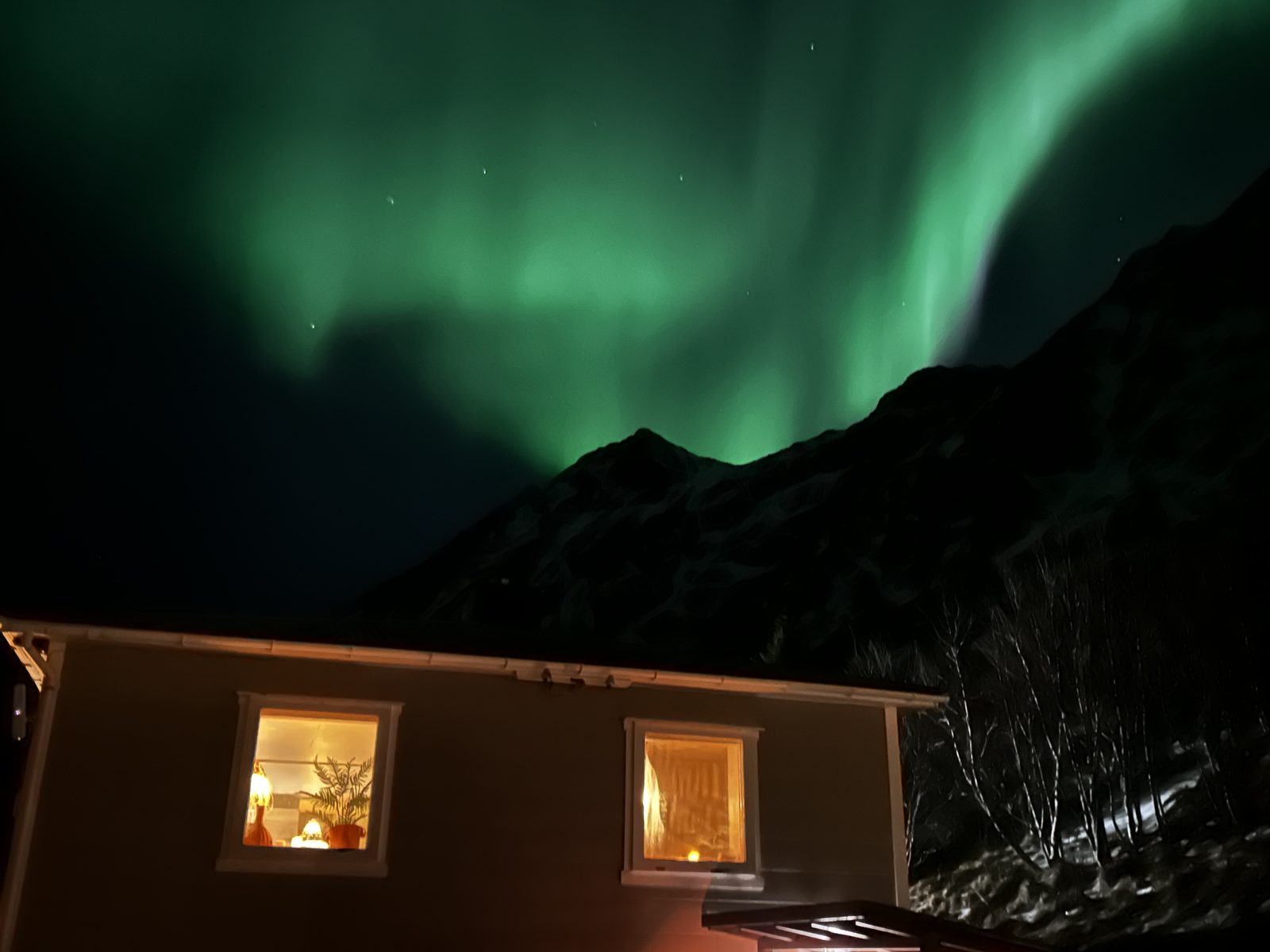
Our house sits on a quiet side fjord with little light pollution, and we have set benches on the hillside behind the house specifically for aurora nights. One January guest wrote: "We have seen the most enchanting northern lights." (translated) → Northern lights at Casa Lofoten
What a winter day here actually looks like
Plan around three phases, and winter stops feeling short:
The light hours (late morning to mid-afternoon in midwinter, stretching fast from late January): this is when you are out — a beach walk in snow, a drive to Reine or Nusfjord, photography, sledding with children, a low hike where conditions allow.
The blue hour into darkness: the transition is the day's second show. Be somewhere with a view — a beach facing the last light, or simply home with the kettle on.
The evening: cooking, sauna, games, and the aurora watch on clear nights. In winter, the evenings are not what is left of the day. They are half the holiday.
This rhythm is also the strongest argument for renting a whole house in winter rather than a room: you are going to spend real, wonderful hours indoors, and the quality of those hours depends entirely on where "indoors" is.
What works in winter: northern lights; snow-covered beaches (see the winter section of our beach guide); the scenic drives (Reine, Hamnøy, Nusfjord and Å are open, photogenic and quiet); winter surfing at Brunstranda and Unstad — winter brings the biggest swells, strictly for experienced surfers in full winter wetsuits, while the rest of us watch with coffee; sledding and snow play; photography everywhere.
What works with judgement: low mountain walks. Our local mountain, Volandstind, can be walked year-round by hikers with good boots, spikes and poles — snowshoes on some days — but winter summits are for people who know what they are doing in snow. When in doubt, choose coastal walks and save the peaks for the fine, settled days.
What does not work: Reinebringen — the stairs are closed and chained off for the winter after serious accidents; rescues happen every year for people who ignore the closure. And rigid day-by-day itineraries — in winter, the forecast writes the schedule, and the travellers who accept that have the best trips.
“We had a lovely stay. The location near Ramberg was perfect for exploring Lofoten.”
Winter driving — respect, not fear
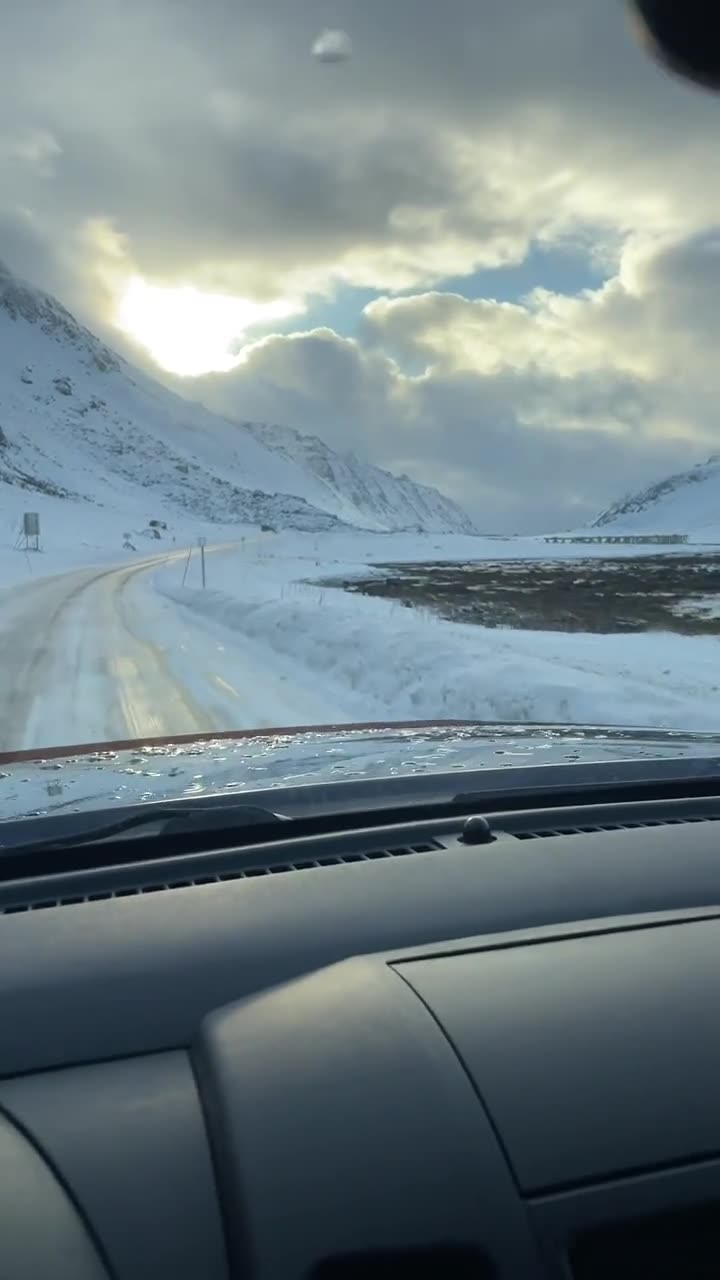
This is the question that stops most winter bookings, so here is the honest local answer: thousands of ordinary visitors drive Lofoten every winter without drama. The roads are maintained and ploughed, rental cars come equipped for the season with proper winter tyres, and the E10 is a normal road that locals drive daily, all winter.
What it asks of you is respect:
- Drive slowly and gently. Winter driving here is about smooth inputs — gentle braking, gentle steering, longer following distances. The E10's usual character (narrow stretches, stopping fully for oncoming trucks and motorhomes) simply gets a winter layer on top.
- Let the weather move your plans. On a storm day, the correct itinerary is the sauna, not the mountain pass. Fronts pass; the road will be better tomorrow.
- Add margin to every journey — for conditions, for light, and for the Nappstraum tunnel roadworks (convoys in the daytime, closed at night roughly 23:00–06:00, through the end of 2027 — check current times in the Statens vegvesen app before airport or ferry runs).
- If you have never driven on snow at all, say so when booking your car, take the first day gently on short local drives, and build up. It is a skill you acquire faster than you fear.
Our Getting Around guide (coming) covers this in full detail, including our own winter-driving video from these exact roads.
What to pack — and what your house must have
The packing rule is wool first: wool base layers top and bottom, then insulation, then a windproof and waterproof shell. Add proper insulated boots, hat, mittens (warmer than gloves), a headlamp for every person, and ice grips/spikes that slip over boots — the cheapest comfort upgrade of the whole trip for icy village lanes and viewpoints. Our packing guide (coming) has the full winter list.
Just as important, and almost never said: check what your accommodation actually offers in winter. You will live indoors more than in any other season. A fireplace or wood stove plus proper heating throughout, a drying cabinet or drying room for wet gear, a real kitchen for slow cooking, and — if you can get it — a sauna: in winter these are not luxuries, they are the infrastructure of a good trip. Ask before you book, whoever you book with.
Is winter right for you?
Come in winter if: the northern lights matter to you; you love snow landscapes and dramatic light; you are happy with one or two outdoor experiences a day, taken slowly; long cosy evenings sound like holiday rather than downtime; you can be flexible with weather.
Choose another season if: you want long days packed with hiking (summer), or you want maximum activity infrastructure and city evenings — in which case read our honest comparison with Tromsø before you decide.
One more thing, because it surprises people: winter is not the empty season. The well-located places to stay are booked all year by travellers who know exactly why they are coming — and the aurora weeks of February and March go first. The stay is a fraction of what the whole journey costs; book the place that will carry your winter evenings, and book it early.
Frequently asked questions
How cold does it get?
Milder than the latitude suggests: thanks to the Gulf Stream, typical winter temperatures range roughly from −5 to +5 °C. The real factor is wind and changeability, not deep cold — dress for weather, not for Siberia.
Is the polar night completely dark?
No. From about the 7th of December to early January the sun stays below the horizon, but the middle of each day brings hours of deep blue twilight — one of the most beautiful lights of the year. From late January, daylight returns fast.
When are the northern lights best?
Any clear, dark night from September to early April can deliver; the long nights of December give early-evening aurora, and late winter (February–March) offers the best overall odds. See our full northern lights guide.
Can we hike in winter?
Low, sheltered walks: yes, with proper footwear and spikes. Summits: only for experienced winter walkers, on settled days — locally, Volandstind is walkable year-round with the right gear. Reinebringen is closed for the season.
Do we need a car in winter?
Realistically yes, for the same reasons as always here — and winter rental cars come with proper winter tyres. Drive gently, add margin, let storms pass. Full details in our car guide.
Is anything open?
Shops, fuel and daily essentials: yes, all winter — this is a living community, not a summer resort. Some visitor businesses close or reduce hours; self-catering is the reliable winter strategy, and the skrei season from February makes it a delicious one.
Winter, from a warm base
Fireplaces on both floors, underfloor heating downstairs, the sauna by the beach — and the aurora from the benches behind the house.