Hiking Safety in Lofoten: Trail Etiquette & Visiting ResponsiblyHiking Safety in Lofoten: Trail Etiquette & Visiting Responsibly
How to hike safely and considerately in Lofoten — weather rules, the Norwegian Mountain Code, winter closures, right to roam, and what locals wish every visitor knew.How to hike safely and considerately in Lofoten — weather rules, the Norwegian Mountain Code, winter closures, right to roam, and what locals wish every visitor knew.
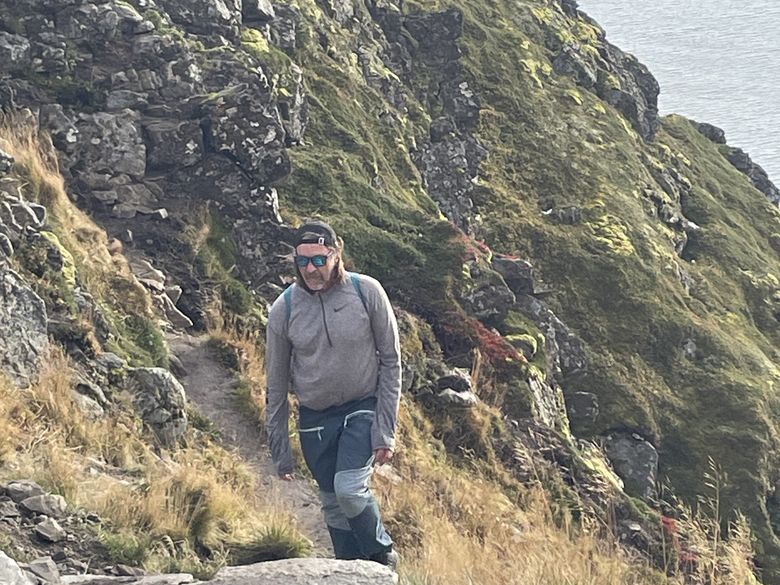
We live at the foot of one of these mountains, and we walk them in every season. So the question we want to answer here is a simple one: how do you hike safely in Lofoten — and leave the place as good as you found it?
The honest answer is that Lofoten is not a dangerous place to hike. But it is an easy place to underestimate. The trails start at sea level and go straight up. The weather arrives from the open Atlantic with very little warning. And the things that keep locals safe here are habits, not equipment.
This guide is those habits, written down.
“The private beach and the sauna were fantastic after a long day of hiking.”
Rule one: the weather decides, not the plan
Everything else in this guide follows from this.
A forecast here is a probability, not a promise. Wind and rain can move in during the hours you are on the mountain, and a warm, clear morning does not guarantee a clear summit.
So we plan the opposite way around from most itineraries: we hold a shortlist of hikes, check the sky and the forecast at breakfast, and let the day pick the trail. If you have read our 5-day itinerary, you will recognise this as "day-shapes, not dates".
Two habits make this work:
Check the forecast the morning of the hike, not the night before. We use yr.no, and we look at wind as much as rain.
Keep a plan B that stays low. A coastal walk or a beach day is a good mountain day that happens to be horizontal. The Nesland–Nusfjord coastal path and the beaches are what we do when the tops are in cloud.
One more thing about fog, because it worries people more than it should: fog in the fjord does not always mean fog on the top. Some of the best mountain days here start grey — you climb through it, and from the summit you see only peaks above a sea of cloud. But if the fog is on the mountain, there is no view to earn and navigation gets hard. That is a plan-B day.
The Norwegian Mountain Code, translated into Lofoten
Norway has had a formal mountain code — fjellvettreglene — since 1952, written by the trekking association and the Red Cross and revised since. It is nine rules. Here they are, compressed into what they actually mean on these islands:
Tell someone where you are going. Even for a two-hour hike. A message to your host or your travel partner is enough: which trail, when you expect to be back.
Match the trail to the group, not to the photo. The pictures from Reinebringen are taken by people of every fitness level — but over 2,000 steps is over 2,000 steps. Our best hikes guide sorts the trails by effort precisely so you can choose honestly.
Dress for the mountain, not the car park. It can be calm at sea level and cold and windy 400 metres up. Wool next to the skin, wind layer in the pack, hat — year round. On sweaty climbs we carry a second wool top and change into the dry one at longer breaks. A headlamp lives in the pack outside the midsummer weeks. The full list is in What to Pack.
Bring food and something to drink, even on short trips. Energy is warmth.
Do not rely on your phone alone. Coverage is decent along the road and in the villages, but do not count on it on every ridge — and cold drains batteries fast. Know your route before you start.
Turn around in time. This is the rule locals actually use. Turning around is free; it costs you nothing but a summit you can collect on a better day. On Reinebringen there are benches and resting spots along the steps for exactly this reason — there is no shame in turning.
The trails themselves — what to expect
Lofoten trails are steeper, wetter and more direct than most visitors expect. There is little switchbacking; paths tend to go straight at the slope. Rock is slippery when wet, and above the treeline you are exposed to whatever the wind is doing.
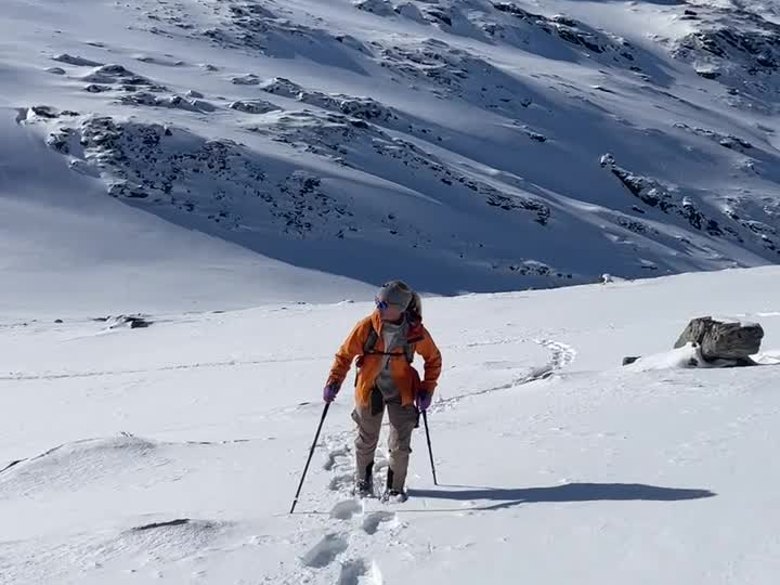
Season matters more than fitness. The comfortable mountain season is roughly April or May to October. Outside that, the same trails demand winter judgement and winter kit: spikes and poles — and if there is a lot of snow, consider snowshoes. Some trails should simply wait for summer.
Reinebringen is formally closed in winter. The municipality chains off the sherpa steps outside the May–September season, after fatal accidents — and rescue crews are still called out every year for people who ignore the chain. Please do not be one of them. The mountain is there in June.
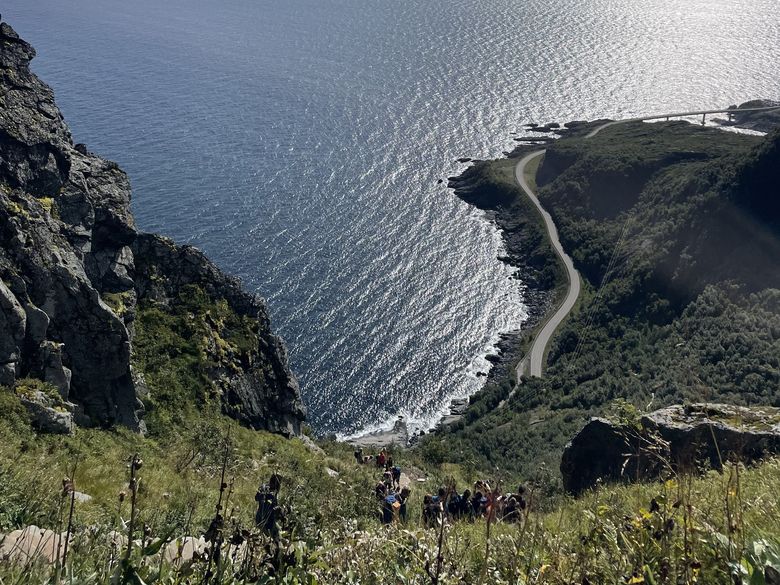
Popular trails move at queue pace in high season. On the sherpa steps in July, you walk at the speed of the person in front of you. Going early or late in the day is both the safer and the better experience — sunrise from Reinebringen is often the finest version of it.
Stay on the path. The scars on these mountains heal slowly. Reinebringen's steps exist because the original path eroded into a hazard; the vegetated slopes beside today's trails will do the same if enough boots cut the corners.
Did you know? — from Casa Lofoten
The Volandstind trailhead is a 20–25 minute walk from our door — no driving, no commitment. When the weather gives you a two-hour window, you can simply take it. → Everything within 30 minutes of the house
The right to roam — and what it asks in return
Norway's allemannsretten — the right to roam — lets you walk, rest and camp on uncultivated land regardless of who owns it. It is one of the best things about this country, and it survives because people hold up their end. The short version:
Camp considerately. Pitch tents at least 150 metres from inhabited houses and cabins, and move on after a night or two in the same spot. Leave nothing — and that includes toilet paper, which does not disappear in this climate. Carry it out or bury it properly, well away from water.
Respect the campfire ban. From 15 April to 15 September, open fires are banned in and near forest and open land across Norway. Whoever lights a fire is responsible for it, in every season.
Mind the sheep. They graze freely here, including along and sometimes on the roads. Give them space, never chase them for a photo, and keep dogs on a leash — it is the law during grazing season, and around livestock it is common sense all year.
Close every gate you open, and cross fences at stiles where they exist.
Park like a local. Use real parking areas — rates change, so pay by app or machine — and never park on road shoulders or in passing places. On a road as narrow as the E10, a badly parked car is a genuine hazard, not just an annoyance. More on the roads themselves in Getting Around Lofoten.
Drones have their own rules, including a flight ban over Lofotodden National Park — our photography and drone guide has the full, dated rundown. We cover them separately in our photography guide.
Photograph to come — sheep on the road in the west
If something goes wrong
The emergency numbers in Norway are 112 (police and rescue) and 113 (medical). The free Hjelp 113 app is worth installing before you hike — it shares your exact position with the dispatcher when you call.
Rescue here is professional and fast by the standards of remote places — but the best rescue is the one that never gets called. Tell someone your plan, watch the weather, and turn around early. That is the whole system, and it works.
FAQ
Is hiking in Lofoten dangerous?
Not if you treat it as mountain hiking rather than sightseeing. The trails are steep and the weather changes fast, but with the right clothing, an honest choice of trail and the willingness to turn around, it is a safe place to walk.
Do I need a guide?
For the established summer trails in this library — no, they are walkable on your own with normal care. A guide earns their fee in winter, on snow, or if you want to go beyond the marked routes.
Can I hike in winter?
Yes, on the right trails with the right kit: spikes and poles, and snowshoes if there is a lot of snow. Some mountains can be walked all year — Volandstind is one of them. Reinebringen cannot: it is chained off outside the May–September season.
Is there mobile coverage on the trails?
Along the road and in the villages, generally yes. On the mountains, do not rely on it — ridges and hollows have dead spots, and cold shortens battery life. Tell someone your plan before you go.
Can I camp anywhere?
On uncultivated land, mostly yes, under the right to roam — at least 150 metres from inhabited houses, a night or two per spot, and leave no trace. Respect the open-fire ban from 15 April to 15 September.
What about the sheep?
They were here first. Give them room, keep dogs leashed, and slow right down when they are near the road — they step out without looking.
What if fog rolls in while I am on the mountain?
If you can see the path, descend calmly the way you came — this is why you noted the route on the way up. If visibility drops badly, stop, put on your warm layer, and wait; coastal fog often moves as fast as it arrives.
The weather decides — and that’s fine
Short drives to every trailhead mean you can change plans at breakfast and lose nothing — and the sauna is waiting either way.