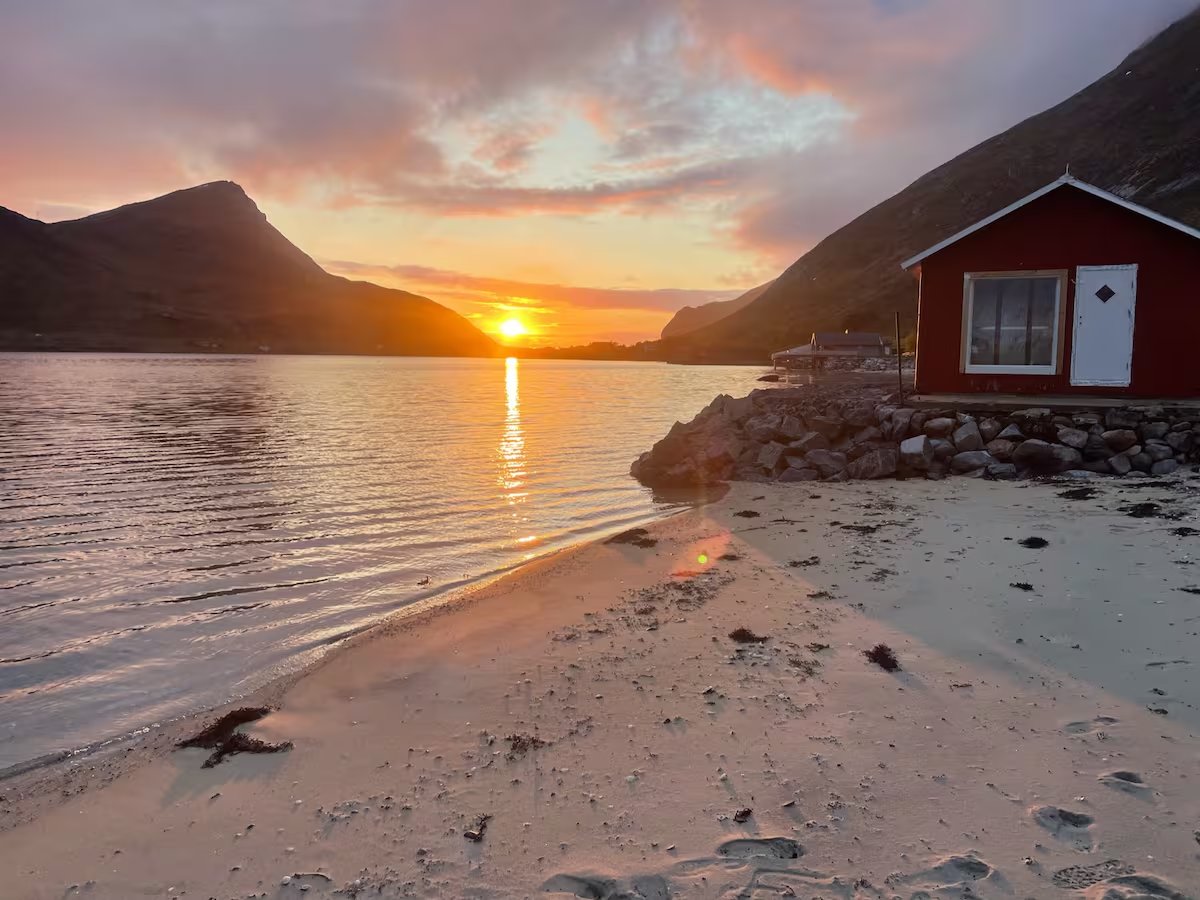
Midnight Sun in Lofoten: What It Is Actually Like — and How to Experience It BestMidnight Sun in Lofoten: What It Is Actually Like — and How to Experience It Best
The midnight sun in Lofoten, explained by locals: the real dates, why the sun is lowest around 1 a.m., where to watch it — and how to sleep afterwards.The midnight sun in Lofoten, explained by locals: the real dates, why the sun is lowest around 1 a.m., where to watch it — and how to sleep afterwards.
Of all the reasons people come north, this is the one that is hardest to imagine in advance. So the question we want to answer is: what is the midnight sun actually like here — and how do you experience it well?
We watch it every summer from our own dock, so this is the practical, local version: the real dates, the one timing detail almost every visitor gets wrong, where to stand, and how to sleep afterwards.
The dates — and the weeks around them
In Lofoten, the sun stays above the horizon from roughly 26–28 May to 14–17 July, varying slightly with where you stand and what your horizon looks like.
But do not treat those dates as a hard window. From May well into September the islands have long, light nights — the sun dips below the horizon for a few hours, but it never gets properly dark. Practically speaking, the "light season" is three months longer than the midnight sun itself, and a late-July or August evening here still glows past midnight. If your dates fall just outside the official window, you have lost very little.
The detail everyone gets wrong: it happens at one o'clock
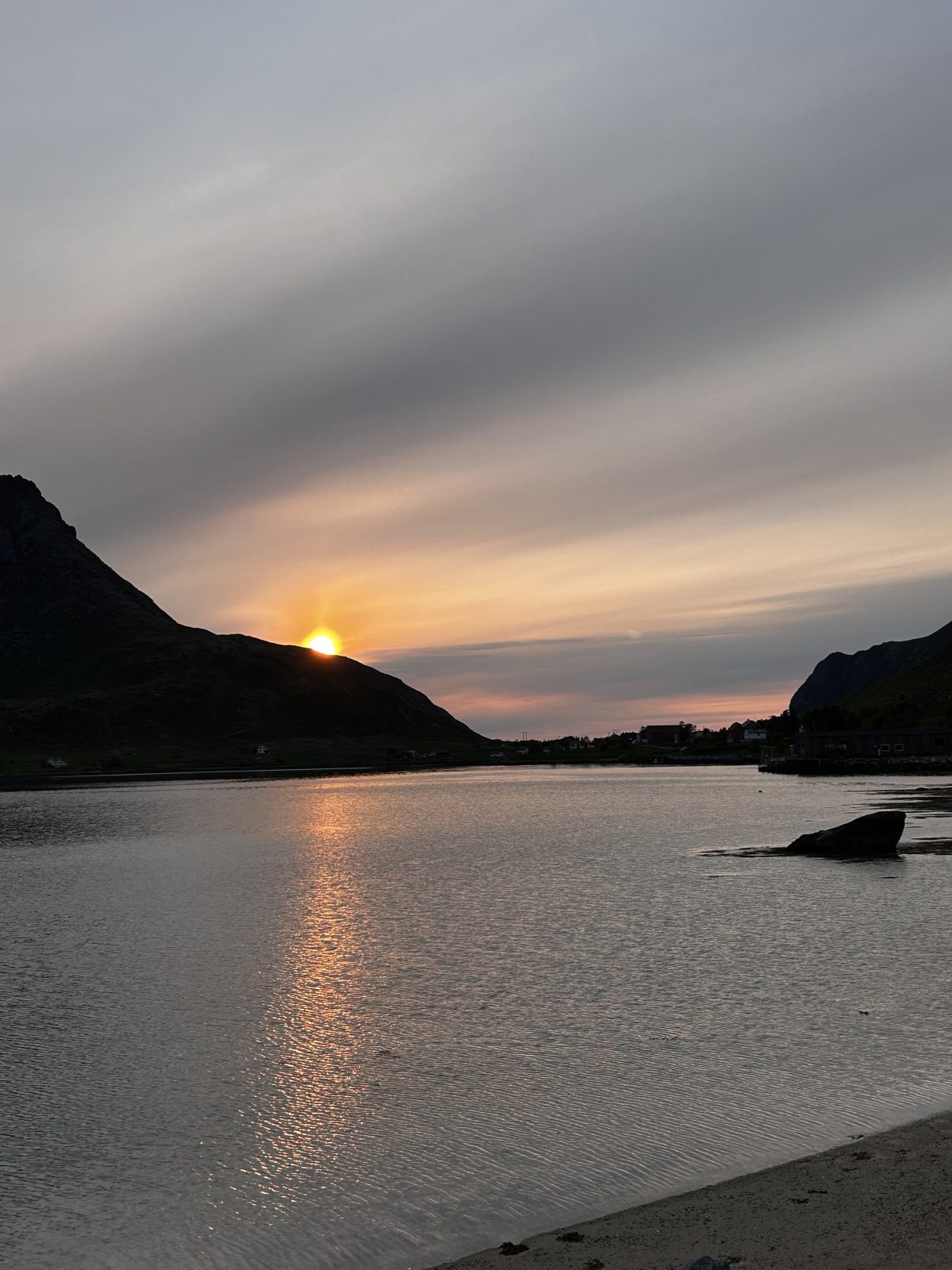
Here is the thing no one tells you: because Norway is on summer time, the sun does not reach its lowest point at midnight. It reaches it around 01:00.
This matters for planning. If you walk out at 23:30, watch for twenty minutes and go to bed, you have seen good light — but not the low point, where the sun sits closest to the sea and the light is at its warmest. The full experience runs later than the name suggests.
The good news: nothing about it is sudden. This is not an event like the northern lights; it is a slow arc. The light turns golden through the late evening, stays that way for hours around the low point, and lifts again towards morning. You cannot miss it by being ten minutes late. Photographers talk about golden hour — this is golden hours.
Where to look: the sun swings over the west
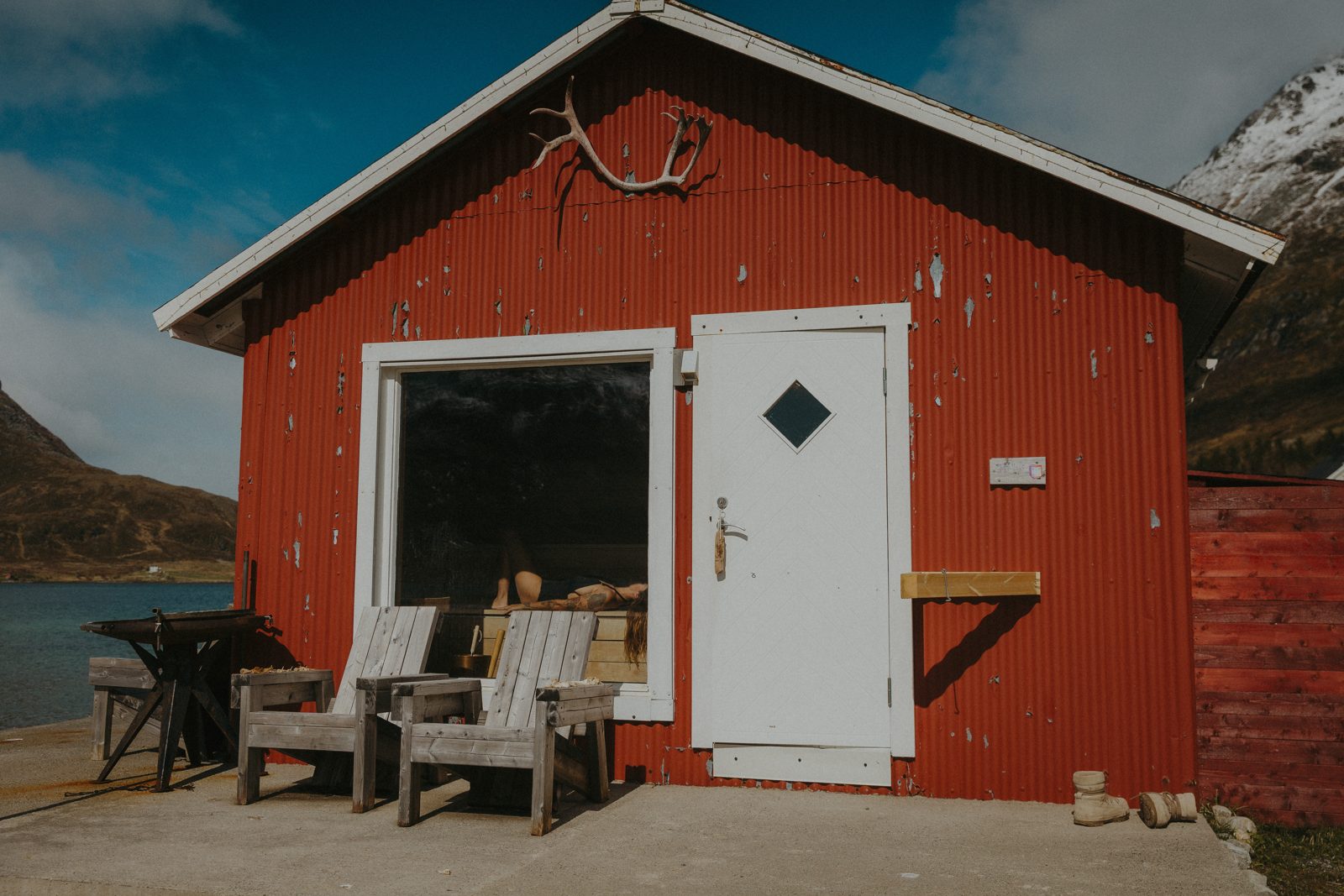
Through the evening, the sun moves right along the horizon — from the west around towards due north, where it sits lowest around 01:00, before climbing away to the east.
That single fact tells you where to stand: you need an open horizon to the west and north. Stand on the inside of the islands, with mountains between you and the open sea, and the sun can disappear behind a ridge long before its official "midnight" — a detail worth checking about any accommodation, in any season, and one we have written about in our accommodation checklist.
The west of Lofoten faces the open Atlantic, which is why it is such natural midnight sun country: nothing but sea between you and the horizon.
Rambergstranda faces west — which makes it one of the best midnight sun beaches in Lofoten. A white, crescent-shaped beach right by the village, with the evening sun coming straight in off the sea. You can park, walk onto the sand, and watch the whole slow arc with the car a hundred metres away.
The other classic way to do it is from a summit. Volandstind is superb for the midnight sun, and so are Offersøykammen and Hoven — small mountains with big horizons. In the light weeks you can start a hike after dinner in complete safety, stand on top through the low point, and walk down in morning light. Just tell someone your plan, as always — our hiking safety guide applies at 01:00 exactly as it does at 13:00.
And Reinebringen? In high summer, early or late beats midday anyway — the queue thins and the light improves. If conditions allow, sunrise from the top is often the finest version of that mountain.
Did you know? — from Casa Lofoten
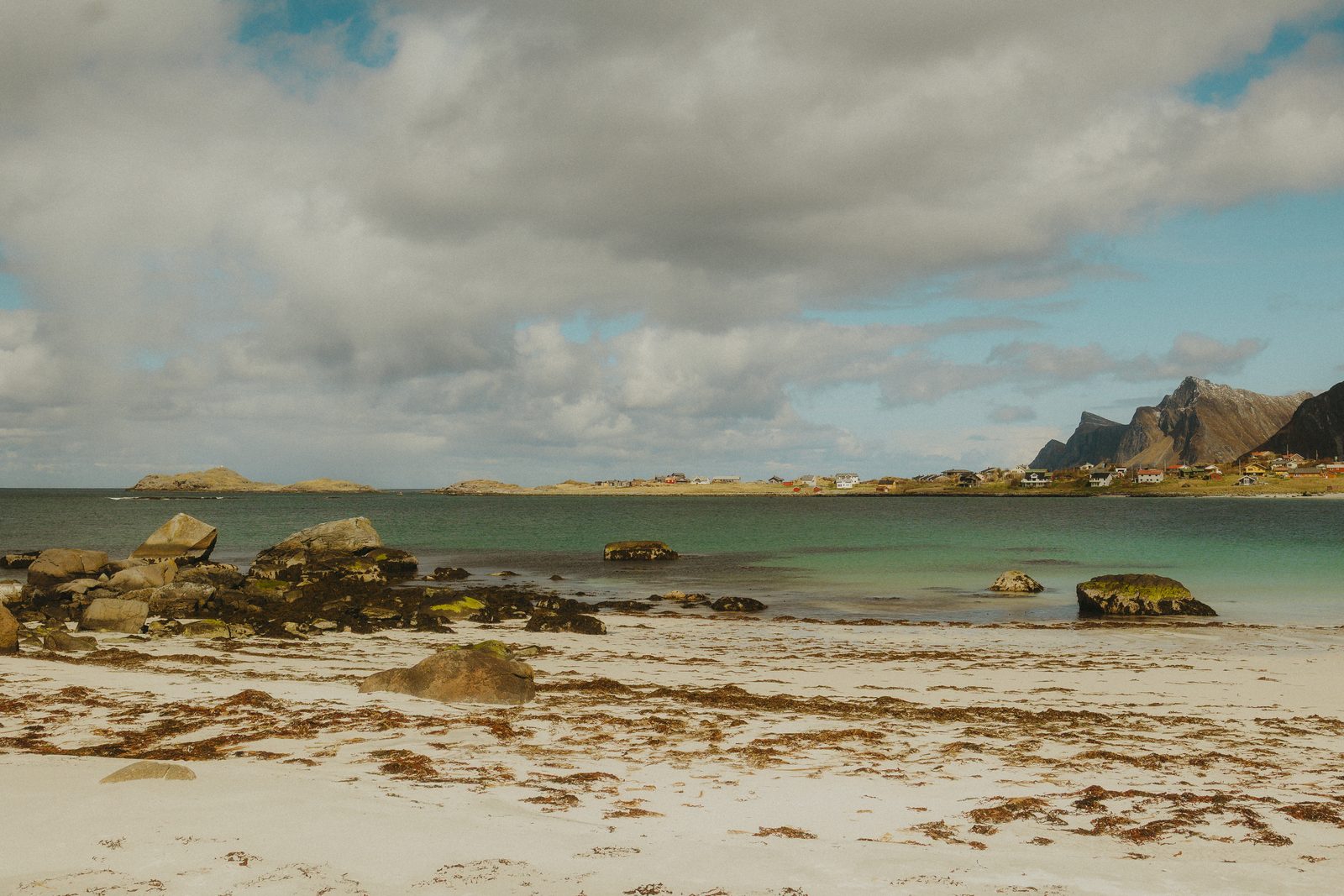
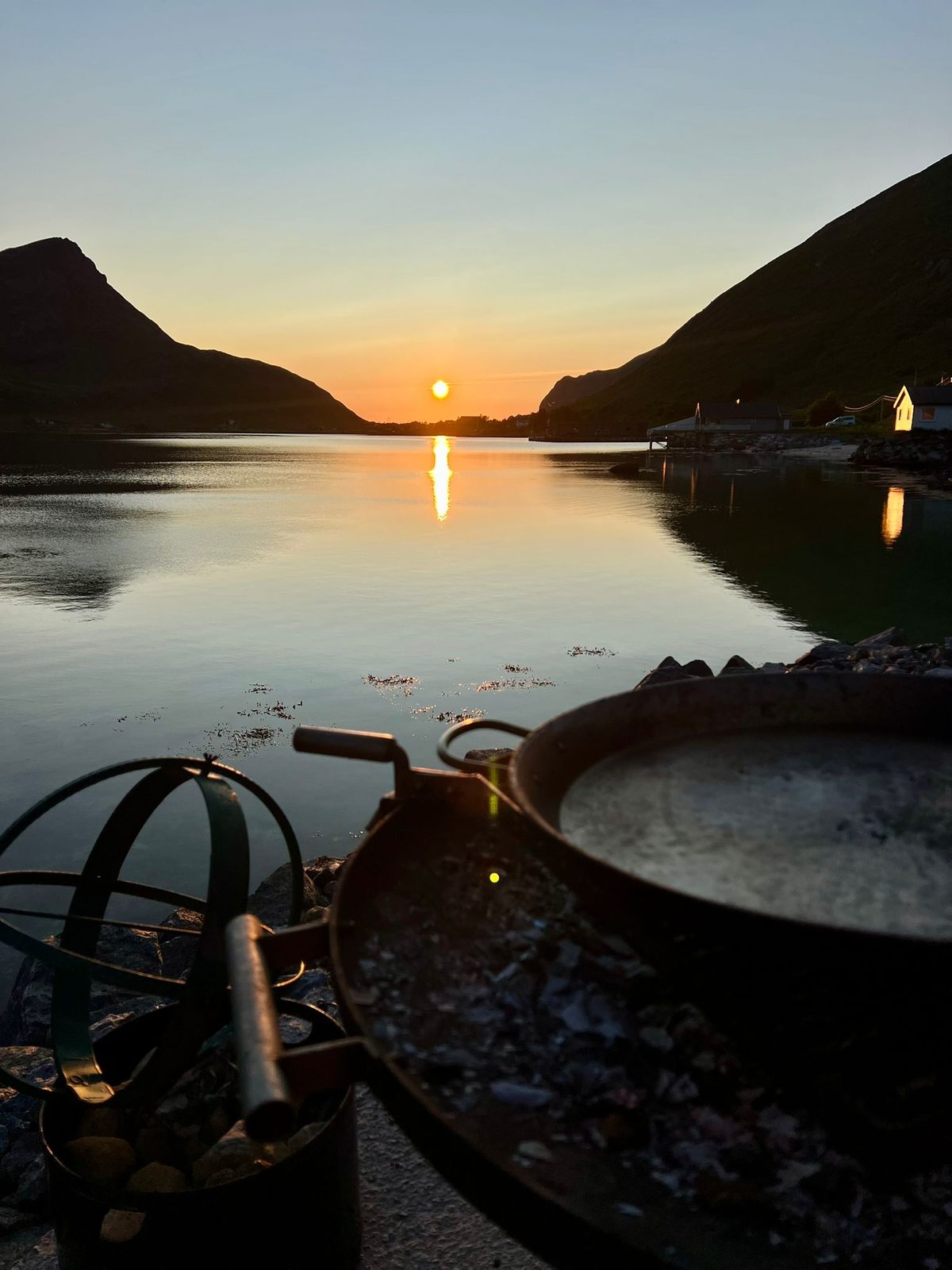
The house looks out over Skjelfjorden with the midnight sun visible from our own dock — where the chairs are already waiting. Some guests hike for it; most just carry their evening coffee down to the water. → The house
How it actually feels — and the honest trade-offs
The strangest part is not the light itself. It is what it does to time. Dinner drifts late. You look up from a conversation and it is half past eleven and the sky is gold. A walk after midnight feels completely reasonable, because it looks like early evening.
Two honest cautions belong here.
Clouds do not read the brochure. The midnight sun needs a clear north-western horizon, and this is the Atlantic — some evenings are simply grey. If the low sun matters to you, give yourself several nights, not one, and treat a clear evening as the priority when it arrives, whatever the original plan said.
The light stretches the days — not your legs. It is easy to pack three days of activity into one endless day and arrive at day three exhausted. Our rule stands in every season: one or two experiences a day, done properly. The midnight sun rewards slowness more than any other reason to visit; its whole point is that nothing needs to be rushed.
Late June to late August is also the islands' genuinely crowded period — more on what that means (and does not mean) in Lofoten in Summer.
Sleeping when it never gets dark
The practical question behind every midnight sun trip: yes, you will sleep — with two small preparations.
Bring a sleep mask. It weighs nothing and solves the problem completely; it is a fixture on our packing list.
And check what your accommodation offers — proper curtains or blackout blinds make the difference between a novelty and a nuisance. It is a fair question to ask before you book anywhere in the light season.
Give your body a day or two. Most guests find their rhythm shifts later rather than breaks — dinner at nine, bed at one, up at nine. On holiday, that is not a problem. It is arguably the point.
FAQ
Do I have to stay up until midnight to see it?
Until about one, actually — that is when the sun is lowest. But the golden light runs for hours either side, so from around 21:00 onwards you are already in the good part. Stay up late once, properly, rather than half-heartedly every night.
Can I see the midnight sun in August?
Not formally — the sun sets again from mid-July. But August evenings still have long, light nights and a slow, low sunset; the difference is smaller than the calendar makes it look.
Which beach is best for it?
Rambergstranda faces west and is one of the best — sand, open sea horizon, and the village right there. More beach-by-beach detail in our beaches guide.
Can I hike at "night"?
Yes — in the light weeks the mountains are as walkable at midnight as at midday, and far quieter. Volandstind and Offersøykammen are made for it. Tell someone where you are going, exactly as you would by day.
Is it warm, since the sun never sets?
No — this is still the Arctic's cool, maritime summer. The sea reaches roughly 9–15 °C at its warmest, and evenings ask for a wool layer even in July. Golden light, down jacket: a very Lofoten combination.
Does the midnight sun mean no northern lights?
Correct — it is too light for aurora from mid-April into September. They are opposite seasons of the same sky. If the lights are your priority, that is a different trip: see Northern Lights in Lofoten.
The sun from your own dock
Our dock has chairs facing the evening sea for exactly this — the midnight sun watched from your own shore, kettle within reach.