Where should you stay in Lofoten?Where should you stay in Lofoten?
The question we receive more than any other — and the honest answer is that there isn't one perfect place. There is only the place that fits the holiday you want to have. This guide helps you find it.In winter the base matters even more: storms decide your days, and the question becomes which house you want to watch them from. This guide helps you choose it.
First, understand the shape of Lofoten
Lofoten is not one place. It is a chain of islands, connected by bridges and tunnels, threaded together by a single main road: the E10. Svolvær sits at the eastern end. Å sits at the western end, where the road simply stops at a car park and the sea takes over. There is no faster inland route. No motorway. No shortcut. Wherever you sleep, the E10 is how you reach everything else.
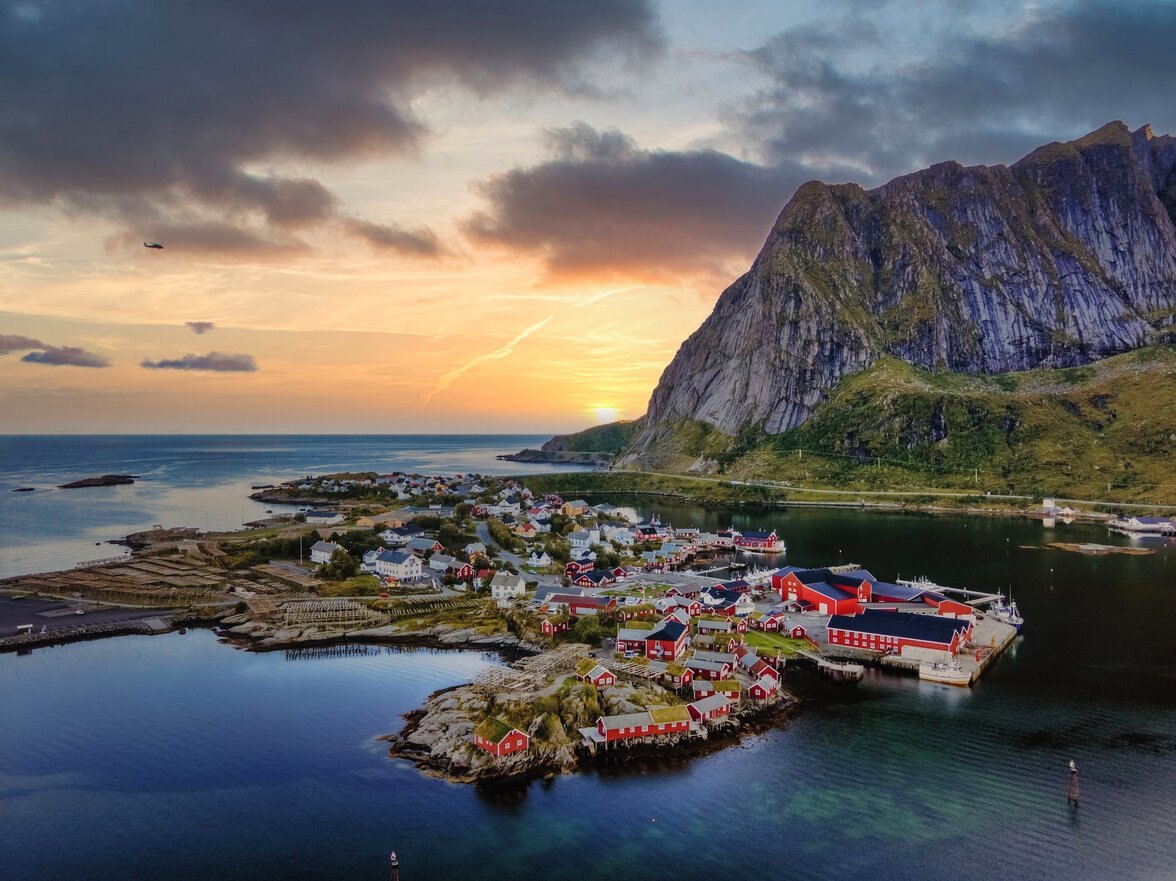
Now the observation that should shape your whole decision: the places most first-time visitors come to Lofoten to see are concentrated in the west.
Reine. Hamnøy. Sakrisøy. Å. The Reinebringen hike. Kvalvika Beach. Volandstind. The Fredvang bridges. Rambergstranda. Hauklandstranda.
Open your phone and look at the Lofoten photos you have saved. The odds are high that most of them were taken in the western third of the islands. Svolvær and Henningsvær, in the east, are genuinely worth your time — but for most itineraries, they are a smaller share of the trip than their fame suggests.
This east–west imbalance is the quiet logic behind everything that follows. Every place named here has its own page — and its own pin — on our map of the west.
Most people book their accommodation before they understand this geography. It is the single most common planning mistake we see — and by the end of this guide, you won’t make it.
How long does it really take to drive?
On the map, 130 kilometres end to end looks trivial. It isn’t. The E10 curves along fjords, narrows over one-lane bridges, and passes through village speed zones. Long stretches are simply narrow: two cars pass each other slowly, and when a motorhome or truck comes the other way, you may need to stop completely and wait. This is also farming country — expect sheep grazing along the verge, and sometimes standing on the road itself. In summer, the whole road moves at the pace of the slowest motorhome ahead of you — and you will also stop by choice, because the road keeps presenting views that demand it.
These are realistic times in normal conditions, based on years of driving these stretches ourselves:
| Route | Realistic driving time |
|---|---|
| Svolvær → Henningsvær | 25–30 min |
| Svolvær → Leknes | 1–1.5 hours |
| Svolvær → Reine | 2–3 hours |
| Leknes → Reine | about 1 hour |
| Leknes → Hauklandstranda | 15–25 min |
| Ramberg → Hauklandstranda | 25–30 min |
| Ramberg → Kvalvika/Ryten trailhead | 15–20 min |
| Ramberg → Reine | 25–30 min |
| Reine → Å | 10–15 min |
Read that table twice. It is most of this guide’s argument, made by the road itself.
From a base in the west — say the Ramberg–Fredvang area — everything from Hauklandstranda to Å sits within roughly 30–45 minutes. From Svolvær, the same list sits two to three hours away. Each way.
Stay in the east with plans in the west, and you can easily spend four to six hours of a day in the car. Do that daily for a week, and you have spent more than a full day of your holiday driving the same road back and forth.
Where you sleep is not a detail. It decides what your days look like.
Temporary: the Nappstraumen tunnel works (until December 2027)
The undersea Nappstraumtunnelen — the E10’s only link between Leknes and the west of Lofoten — is being upgraded through the end of 2027. During work periods, daytime traffic passes in convoys behind a lead car, and the tunnel closes at night (roughly 23:00–06:00) with only one or two let-throughs. At busy times, the convoy queue can add up to an hour to the Leknes–west drive. The works pause around Christmas and for a period each summer. If your plans include a flight from Leknes, the Moskenes ferry or any late-evening crossing, check the current convoy and closing times in the Statens vegvesen traffic app — and, when the closures are active, simply plan your east–west drives for the daytime.
Four assumptions that lead people astray
After years of welcoming first-time visitors, we hear the same four assumptions again and again. Usually at check-in. Often phrased as “we wish we had known this before we booked.” So here they are — before you book.
“Lofoten is small, so it doesn’t matter where we stay”
You have just seen the driving table. Lofoten kilometres are slow kilometres. The islands are small on a map and large on a clock. Choose your base as if every drive takes half again as long as the navigation app promises — because in summer, it usually does.
“Svolvær is the best base because it’s the biggest town”
Svolvær is Lofoten’s commercial centre. The most restaurants, the biggest hotels, a cinema, a lively harbour front. If your ideal evening is choosing between several restaurants on foot, it delivers. But “biggest” is not “best located.” Svolvær sits at the far eastern end of the chain. Reine is two to three hours away. Choosing Svolvær as a base for a west-focused trip means commuting to your own holiday. It is a fine base for the eastern third of Lofoten. It is a poor base for the rest.
“We should change accommodation every night to see everything”
It sounds efficient. In practice, it converts a holiday into a sequence of check-outs. Every move costs a packed-up morning, an 11:00 checkout, an afternoon check-in, and the quiet stress of never unpacking. Worse: it removes flexibility. Lofoten weather decides your plans day by day. When the one clear evening of the week arrives, you want to be free to chase it — not committed to a check-in three villages away. One well-placed base beats five hotels in five nights. Every time.
“A rorbu by the E10 is the idyllic Lofoten experience”
The rorbu — the fisherman’s cabin on stilts over the water — is the image of Lofoten. Staying in a good one is genuinely worth doing. But the booking photos hide something. Many rorbu clusters, and many other rentals, sit directly beside the E10 — because the road and the old harbours share the same narrow strip between mountain and sea.
And the E10 is not a country lane. It is the only road. Everything crossing Lofoten passes your window: tour buses, delivery trucks, motorhomes, every single car. In high season, that is a steady stream from early morning until late evening. The photos are taken facing the water. The road is behind the photographer.
None of this makes roadside accommodation wrong. It makes it something to check deliberately: open the map, find the property, and see how far it actually sits from the E10. A base a few hundred metres off the main road — still close to everything, but quiet at night — is a different holiday from one where the road is your soundtrack. It costs nothing to check. Almost nobody does.
Which area fits the holiday you want?
An honest tour of the realistic base areas, east to west. For each: what it is like to wake up there, who it suits, and the trade-off nobody mentions.
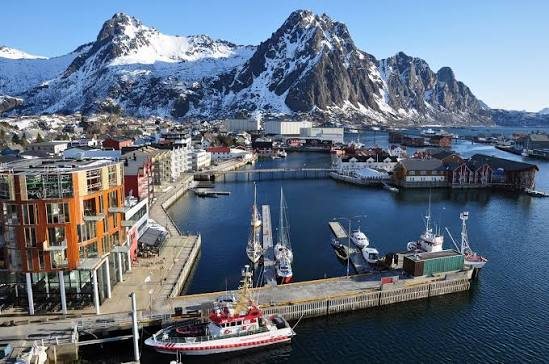
Svolvær and Kabelvåg
Lofoten’s biggest town, which locally means a compact centre around a working harbour. Restaurants to choose between. Hotels. Supermarkets, a Vinmonopol, services found nowhere else on the islands. Kabelvåg, ten minutes west, is its older and calmer neighbour with a pretty wooden square.
It fits you if: you want dinner within walking distance, you prefer hotels to self-catering, or your trip focuses on the eastern islands — Trollfjorden boat trips, museums, climbing.
The honest trade-off: location. Every western highlight becomes a long day trip of two to three hours each way. For a first visit built around Reine, the beaches and the classic hikes, Svolvær means the most driving of any option in this guide.
Henningsvær
A cluster of islets at the end of its own side road, 25–30 minutes from Svolvær. Small, dense, genuinely charming: galleries, cafés, the famous football pitch on the rocks, a working fishing harbour.
It fits you if: village atmosphere matters more than practical range. Overnight guests get Henningsvær in the quiet morning and evening hours — the day-trippers never see it that way. That is the best argument for sleeping there.
The honest trade-off: Henningsvær is a place you stay in, not a place you explore from. The side road adds time to every journey, on top of the eastern position.
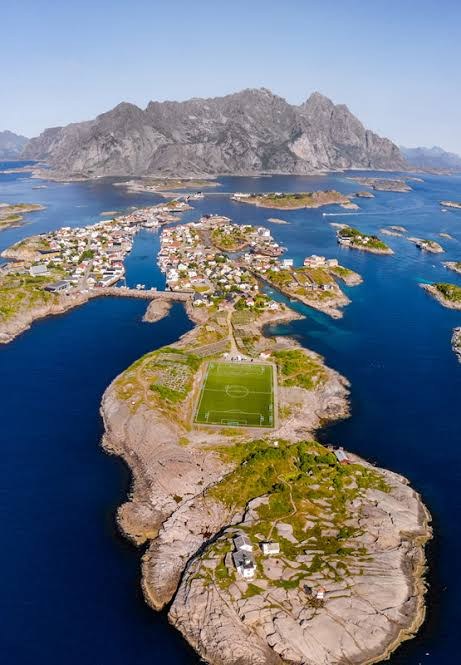
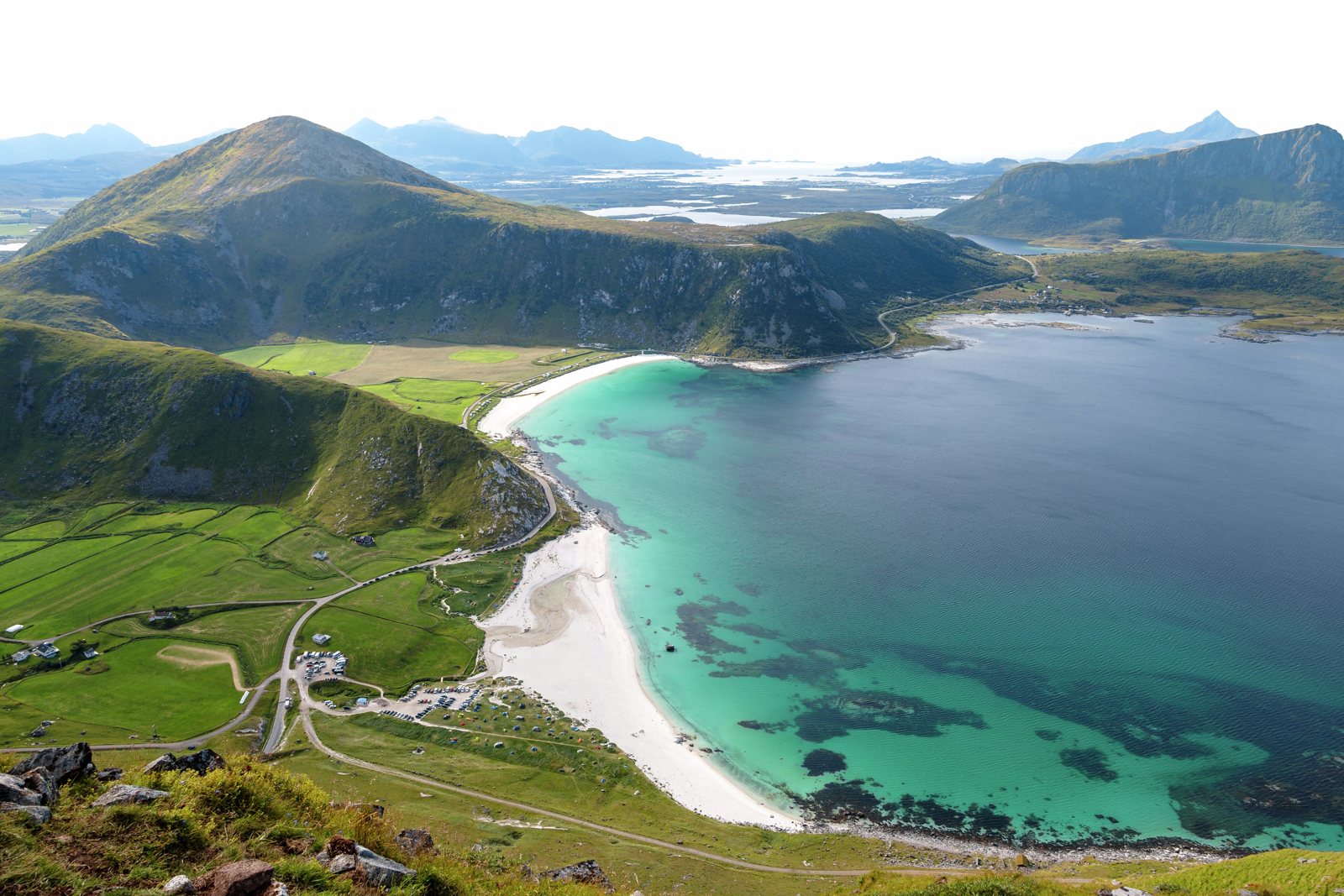
Leknes and central Vestvågøya
Leknes will never appear on your saved photos, and it doesn’t pretend to. It is Lofoten’s everyday centre: the airport, the largest supermarkets, pharmacies, a Vinmonopol. But central Vestvågøya holds more than errands: Hauklandstranda and Uttakleiv — two of Lofoten’s finest beaches — are twenty minutes away, and the Viking museum at Borg is just north.
It fits you if: you want a central compromise and easy logistics around flights into Leknes.
The honest trade-off: central also means commuting in both directions — one to two hours to most of what you came for, once real driving and stops are counted. And the immediate surroundings of the town are ordinary by Lofoten standards.
Flakstadøya: Ramberg and Fredvang
Cross onto Flakstadøya and the landscape opens into what most people picture when they picture Lofoten. White beaches below steep peaks. Scattered farms. Small, quiet villages.
Ramberg is the main village, with Rambergstranda — the white, west-facing beach — directly below it, and a Bunnpris supermarket that is open even on Sundays. A few minutes on, the twin Fredvang bridges arc over the sound towards Kvalvika Beach and the outer coast. Skagsanden Beach, loved by surfers and photographers, lies by Flakstad church. And above the Skjelfjord side rises Volandstind, one of the finest short summit hikes in Lofoten.
It fits you if: you want to wake up already inside the scenery, with the entire western list — Reine, Hamnøy, Sakrisøy, Å in one direction, Hauklandstranda in the other — within about 30–45 minutes, and beaches and trailheads at your doorstep. This is the area where a base stops being a compromise between places and starts being a position among them.
The honest trade-off: fewer restaurants and services than the towns. You will cook more, plan your shopping lightly, and drive a little for some dinners. If you want nightlife, it is the wrong area. If you want Lofoten, it is arguably the right one.
Did you know? — from Casa Lofoten
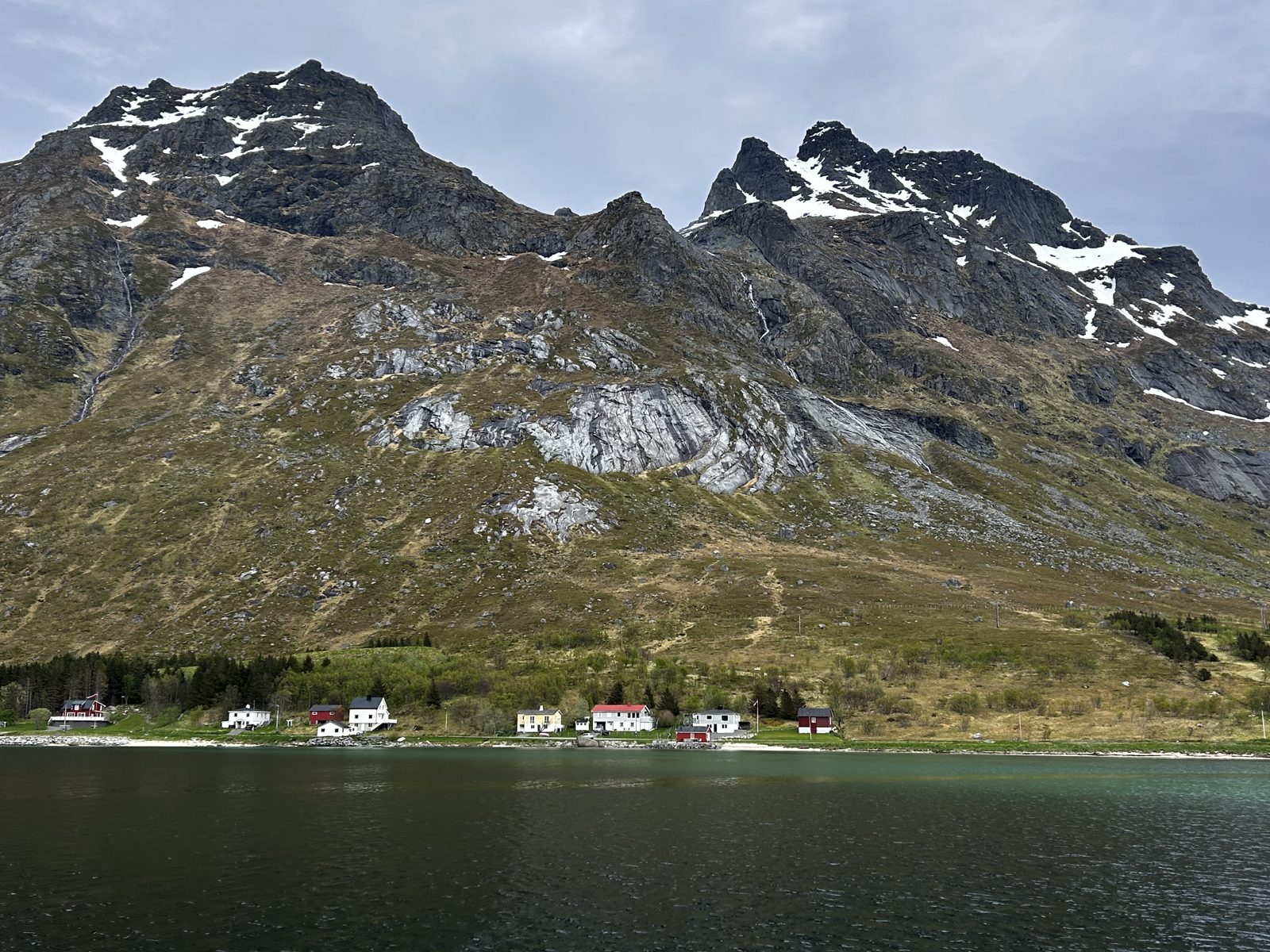
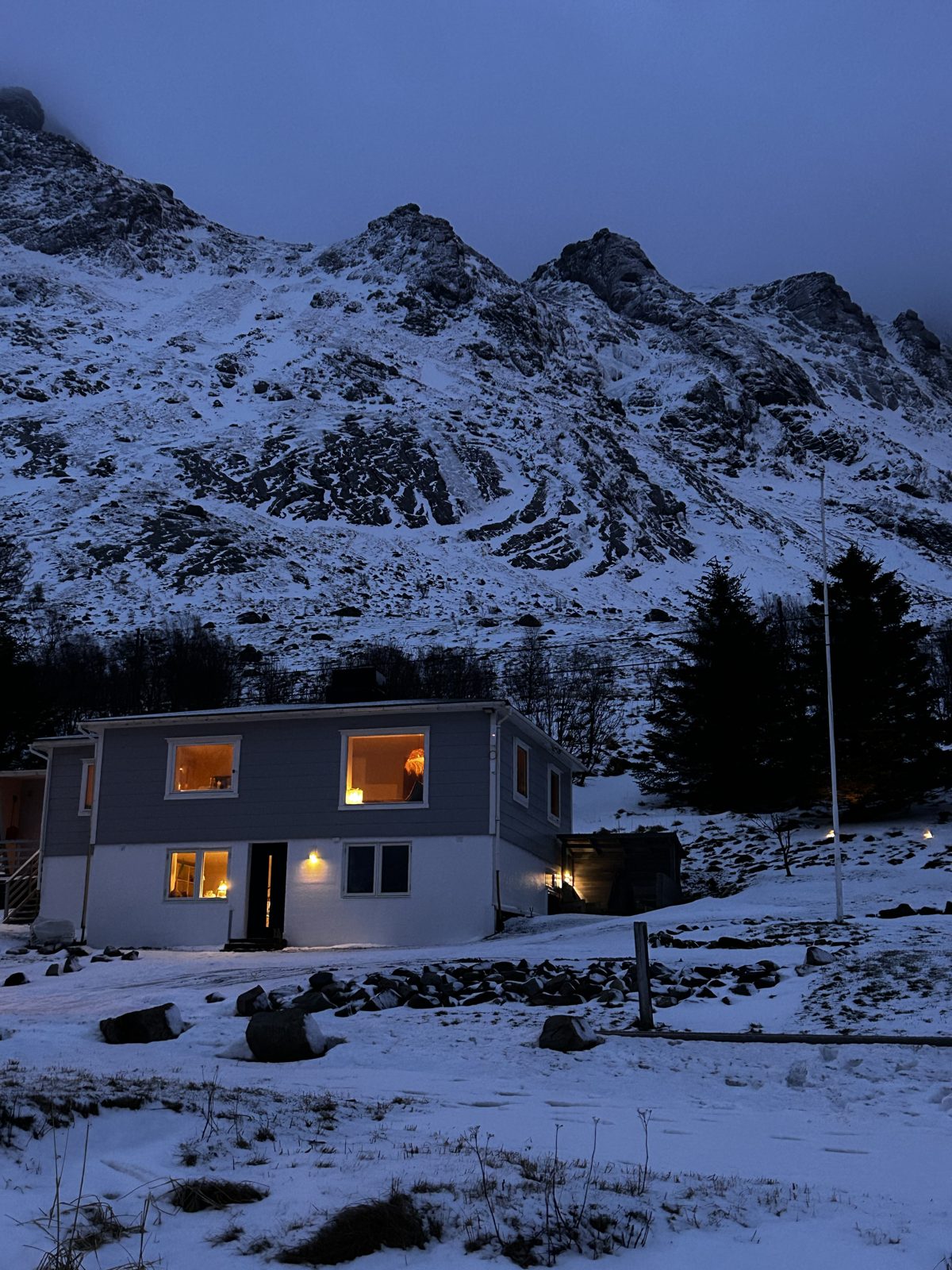
This is our area. The house sits on the quiet Skjelfjord side of Flakstadøya — five minutes from Ramberg, four minutes off the E10, with the Volandstind trail starting up the road. The property shows what that position looks like.
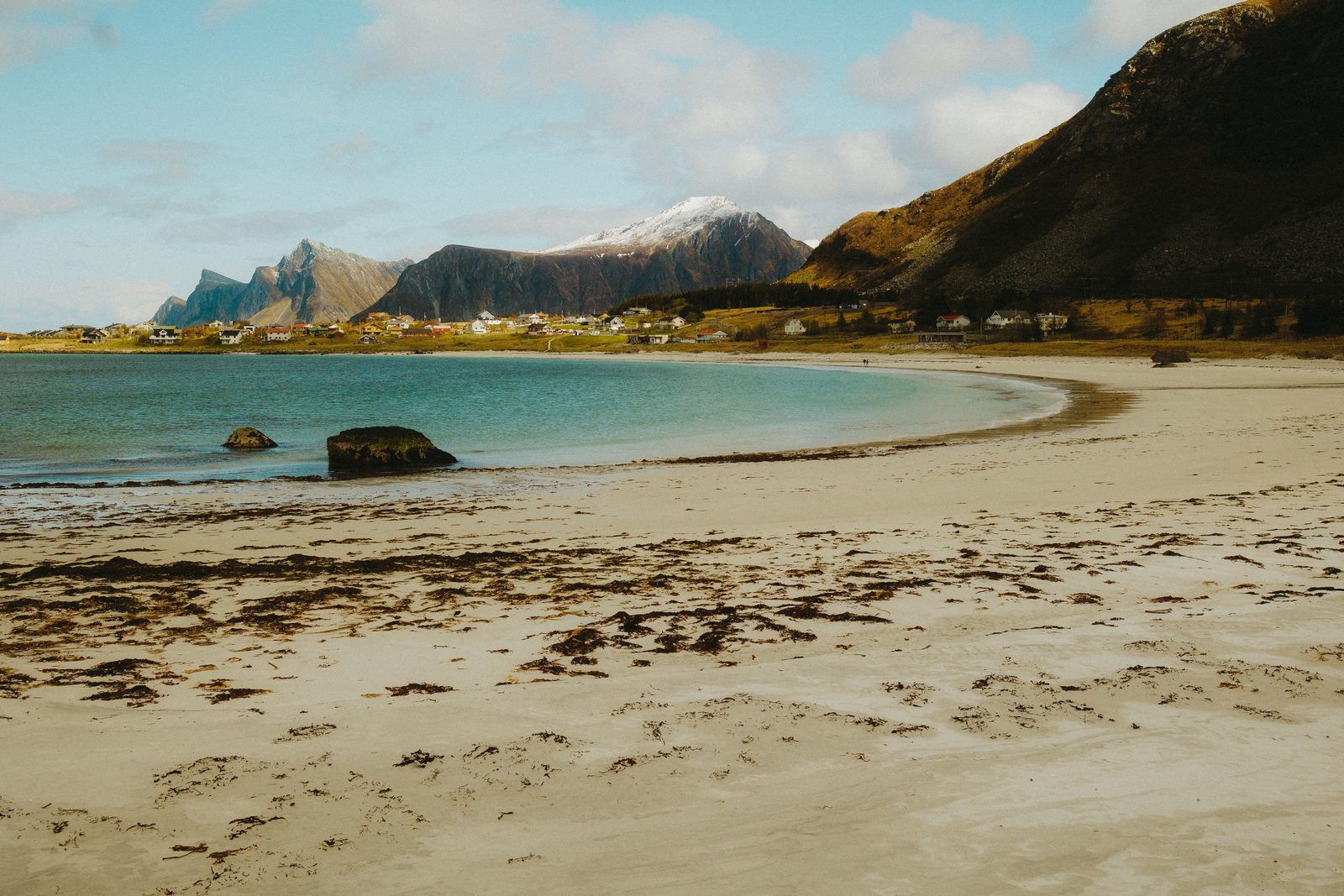
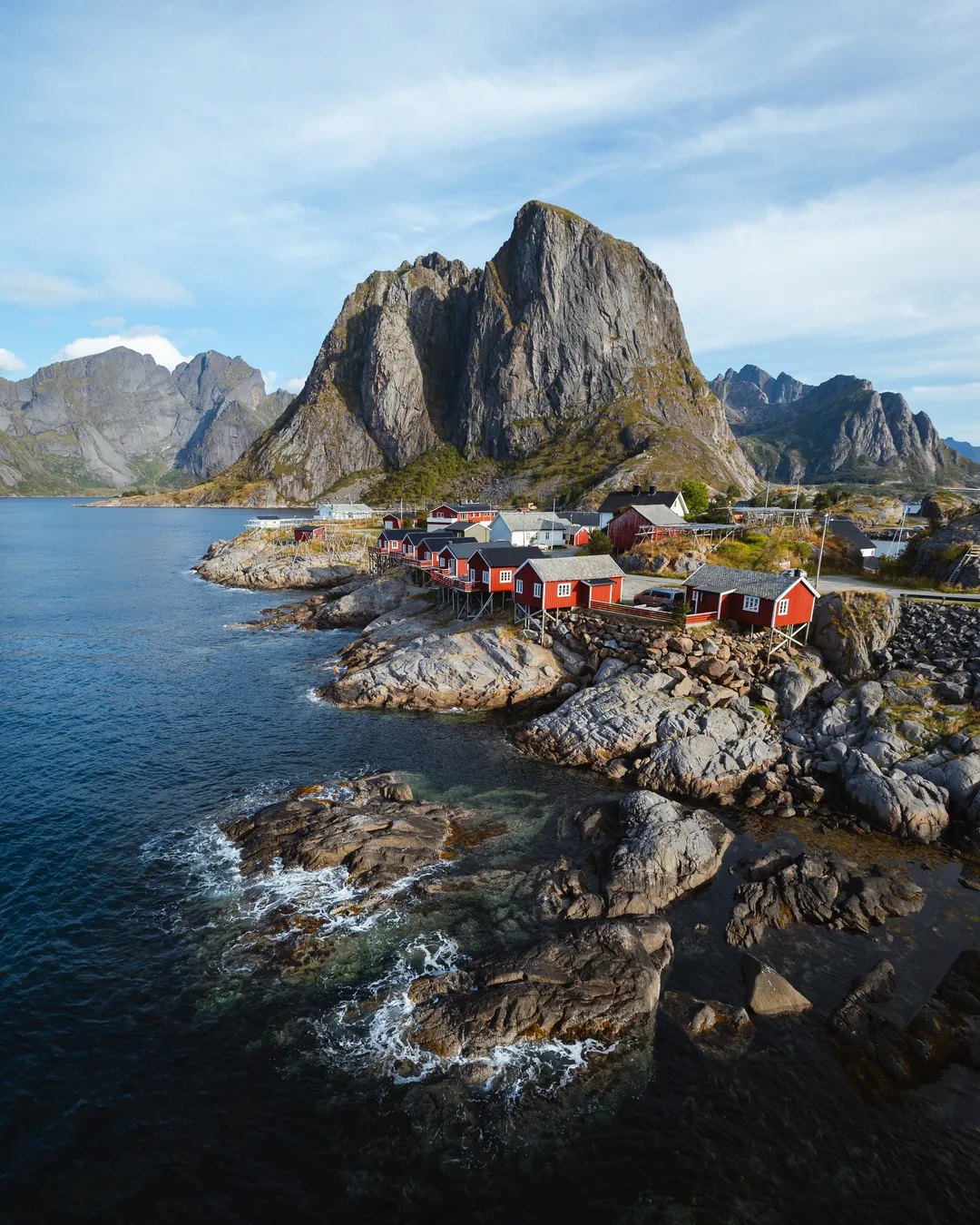
Moskenesøya: Hamnøy, Sakrisøy, Reine and Å
The final island before the road ends holds Lofoten’s most photographed kilometres. Hamnøy’s red rorbuer on the rocks. Sakrisøy’s ochre-yellow houses. Reine spread across its islets beneath the peaks. And Å, the museum village at the literal end of the E10.
It fits you if: you want to see Hamnøy at midnight light, or Reine before the day traffic arrives. Overnight guests get those hours. Day-trippers do not.
The honest trade-off: this is Lofoten’s busiest corner in high season. The villages are small, and the E10 runs directly through or beside most of the accommodation — so the roadside check from earlier applies here more than anywhere. Waterfront rorbu prices are the highest in Lofoten. Services are simple: shops in Reine and Sørvågen, restaurants that fill early.
What kind of place should you book?
Once you know where, the second half of the decision is what. Three types, three different holidays.
The rorbu — for the building itself
At their best: atmospheric, simple, unforgettable. Falling asleep to water under the floorboards is a real experience, not a marketing line. What the photos don’t show: rorbuer vary enormously. Some are rustic with minimal kitchens; others are modern apartments in rorbu costume. Sound insulation in clustered resorts can be thin. And many clusters sit directly on the E10. A rorbu is a style of building, not a guarantee of peace. Read the map, not just the photos. Best for: couples, short stays, and anyone for whom the building is part of the trip.
The hotel — for the services
Concentrated in Svolvær, with a handful elsewhere. Hotels buy you breakfast, cleaning, a restaurant downstairs, a reception that answers questions. In winter, a warm breakfast before a northern-lights evening is a genuine comfort. What to weigh: choosing a hotel largely means choosing the east — with the location trade-off this guide keeps returning to. And after an outdoor day, a room offers little space to cook, dry gear and spread out, while eating out for every meal in Norway adds up fast. Best for: short stays, town-based trips, travellers who don’t want to self-cater at all.
The rental house — for the holiday around the highlights
A full house: kitchen, living room, laundry, outdoor space. For independent travellers staying three to four days or more, this is usually the right answer — and here is why, rather than just our say-so.
Weather. Lofoten weather changes by the hour, and every trip here includes indoor hours. A house makes them pleasant instead of endured: cook properly, dry your boots, watch the weather cross the fjord from a sofa.
Economy. Self-catering most meals in Norway saves serious money over a week.
Position. This is the point visitors underrate most. A house lets you choose your spot deliberately — off the E10, near a shop, near trailheads, with parking that is simply yours.
The best houses in the west manage a balance that sounds contradictory: secluded, but not isolated. Away from the road. Quiet at night. Dark enough to watch the northern lights from the doorstep. Yet minutes from a shop, with neighbours in sight and trailheads close. That balance — more than any amenity list — is what to look for. The booking photos rarely reveal it. The map always does. Our accommodation checklist walks through the rest, item by item. Best for: stays of 3–4 days or more, families and groups, self-caterers, northern-lights trips, anyone who values space and quiet.
“An ideal starting point […] Å, Nusfjord, Uttakleiv — all within a short drive.”
“Located on a side fjord and therefore not directly on the E10 […] quiet.”
The everyday details that quietly shape your stay
Small practical facts that surprise almost every international guest — and that are worth checking before you choose your base.
Shops, alcohol, pharmacies, fuel
One base, or two?
After years of watching guests’ itineraries succeed and fail, our advice is simple.
3–4 days: one base, in the west. You cannot afford to spend this little time relocating or commuting. From the Ramberg–Fredvang area or Moskenesøya, the entire priority list sits within short drives. If Svolvær and Henningsvær matter to you on a trip this short, visit them as one long day — or let them wait for a second visit.
5–7 days: still one base, still in the west. This is the sweet spot: settle in, follow the weather, and cover the east with one relaxed day trip.
8–10 days: two bases work well. Five to seven nights in the west as the heart of the trip, plus two or three nights in Svolvær or Henningsvær at the start or end — aligned with how you arrive and leave.
Notice what is never recommended: a new bed every night. The maths never favours it. Every move costs half a day. A well-placed base costs nothing. How many days do you need takes the length question from here.
The places you came for
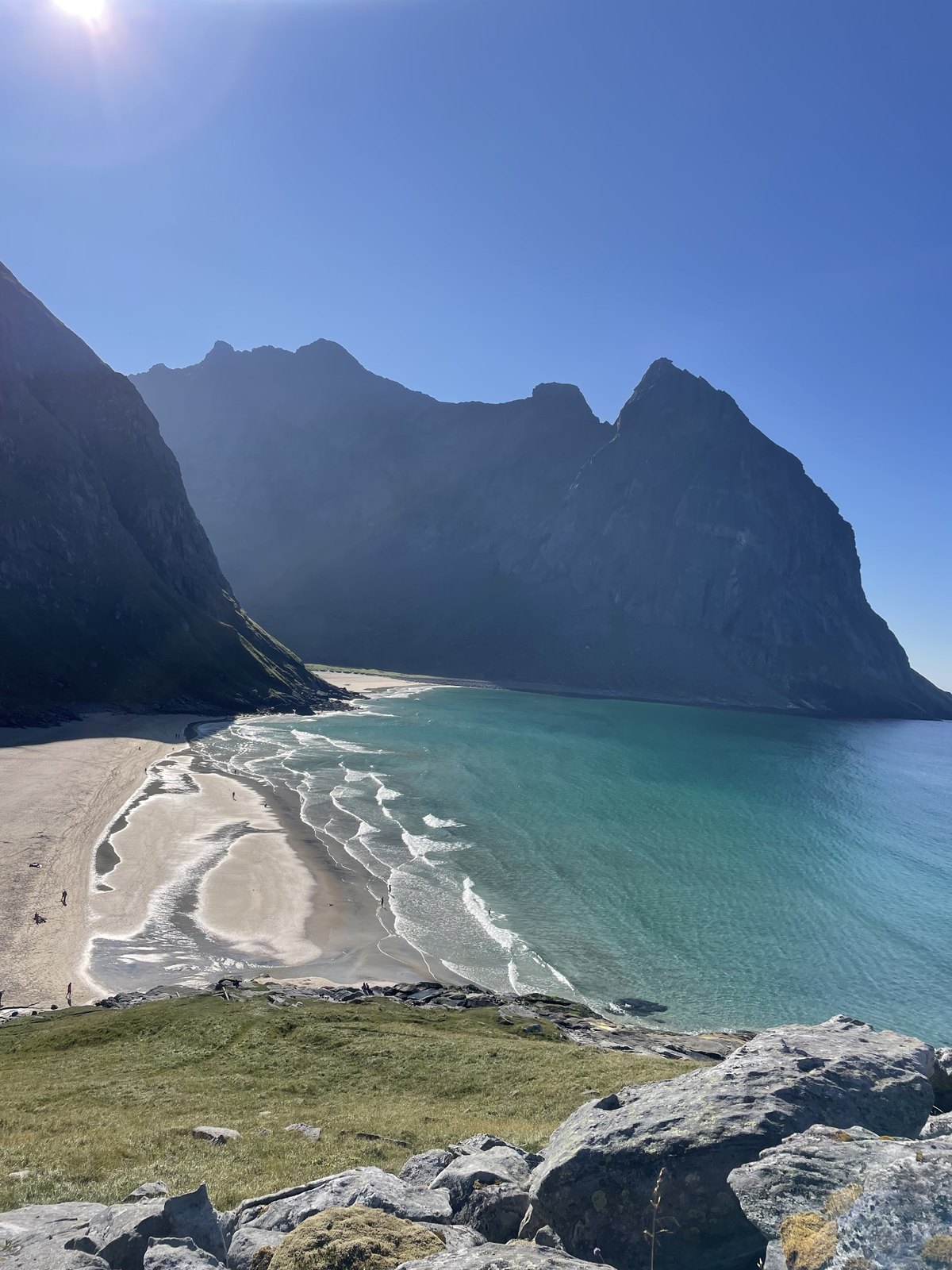
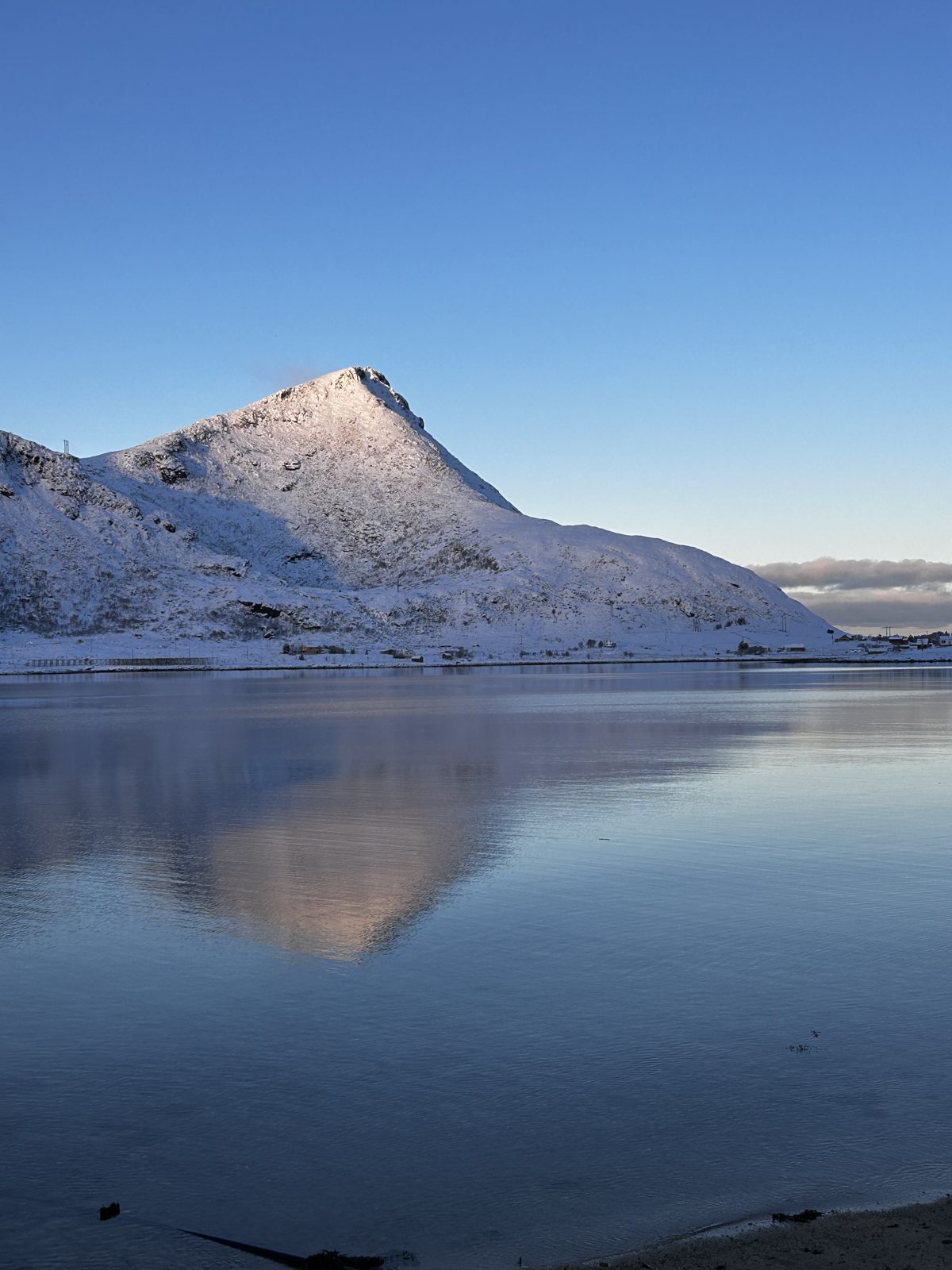
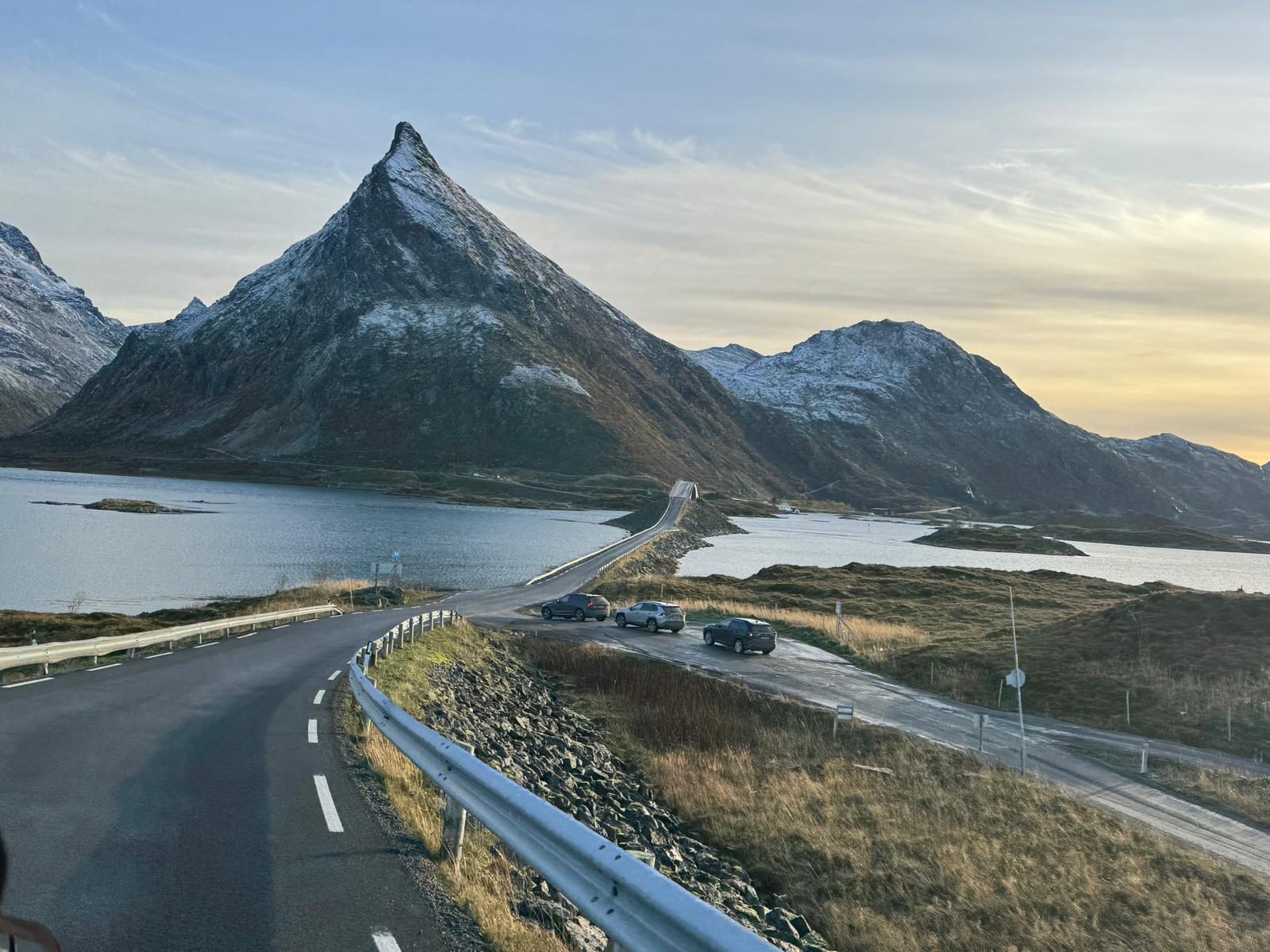
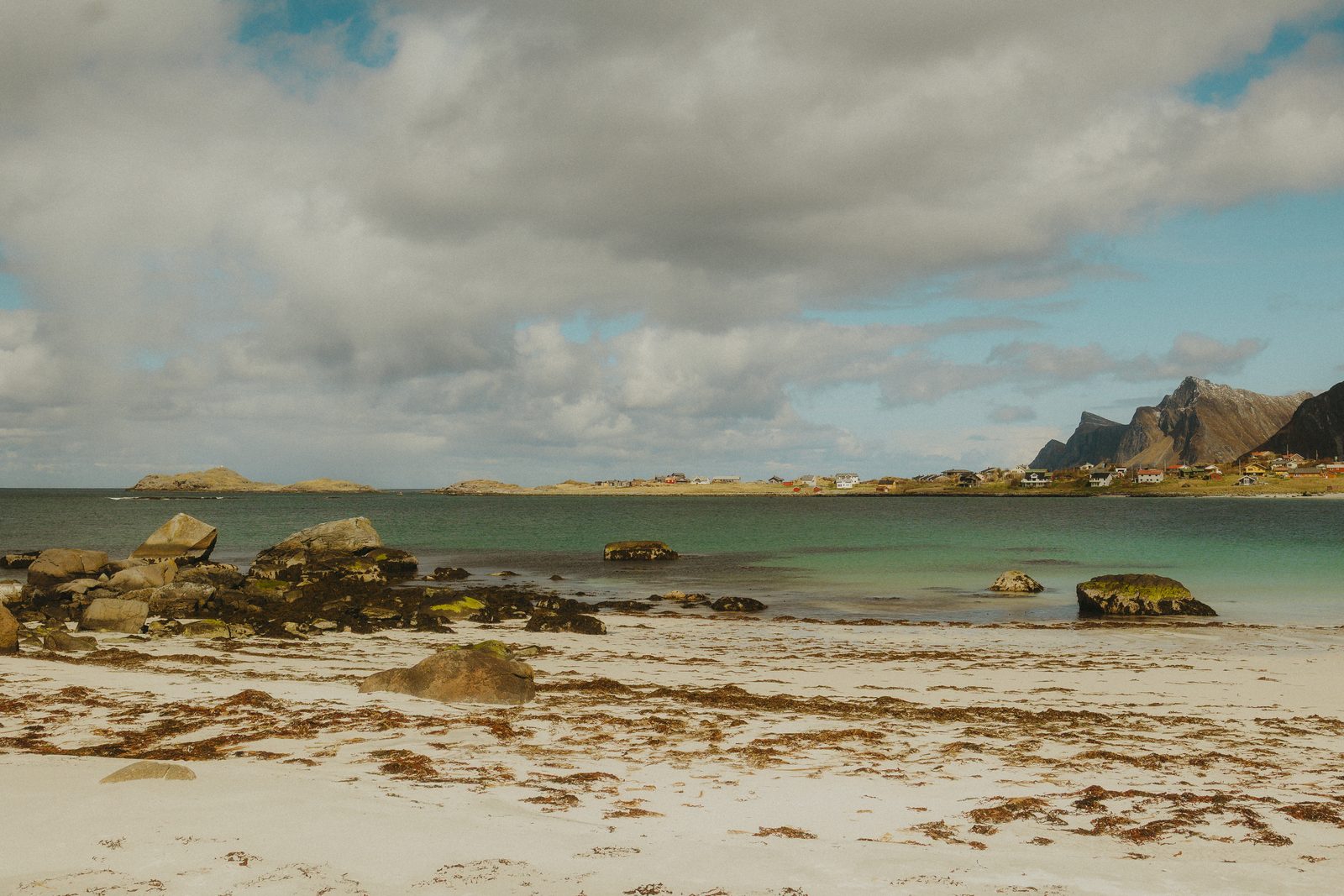
The western list most first-time visitors carry. From a base in the Ramberg–Fredvang area, everything below is between a short walk and about 45 minutes away. Every photograph is our own; every place has its own page on the map.
File list, in reel order
Reine
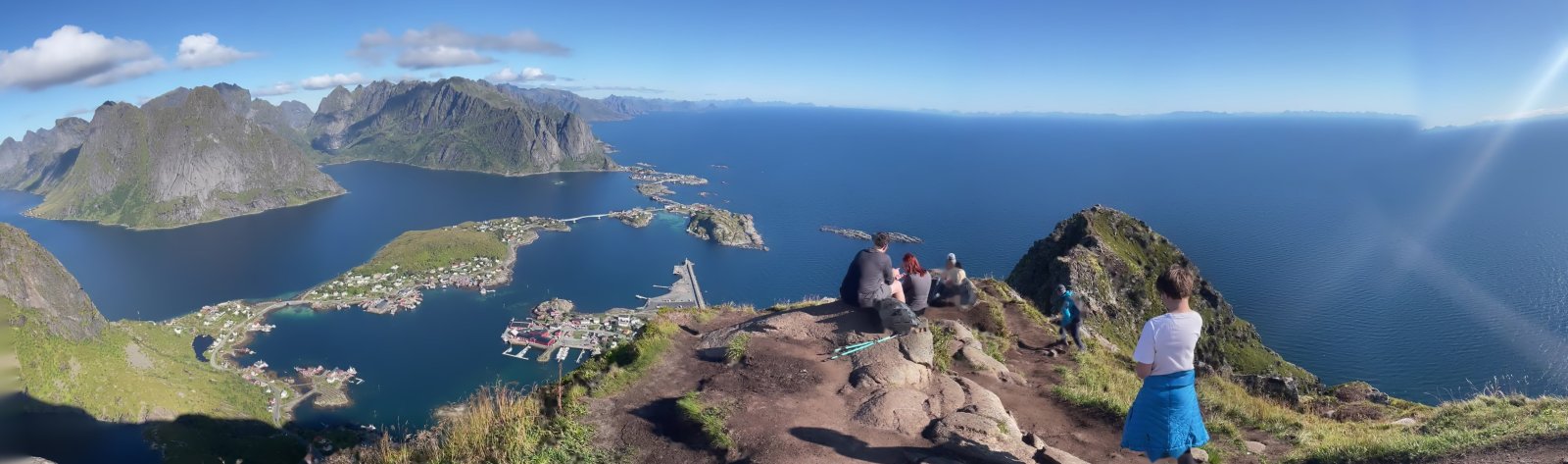
The defining view of Lofoten. Go early or late; between mid-morning and late afternoon in summer, you share it with every day-tripper in Lofoten. Sleeping in the west is what makes the quiet hours possible.
Reinebringen
The sherpa-built stone staircase to the ridge above Reine — short, genuinely steep, and the most famous viewpoint in northern Norway. Go in the evening in summer: better light on Reine, emptier steps. The full route, measured →
Hamnøy and Sakrisøy
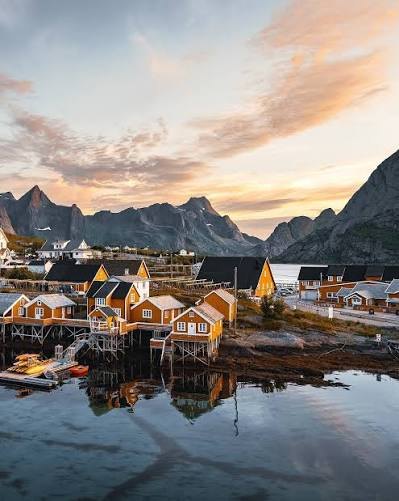
Red rorbuer and yellow houses, five minutes apart, photographed from the bridges between them. An hour to see; a lifetime to photograph well.
Å
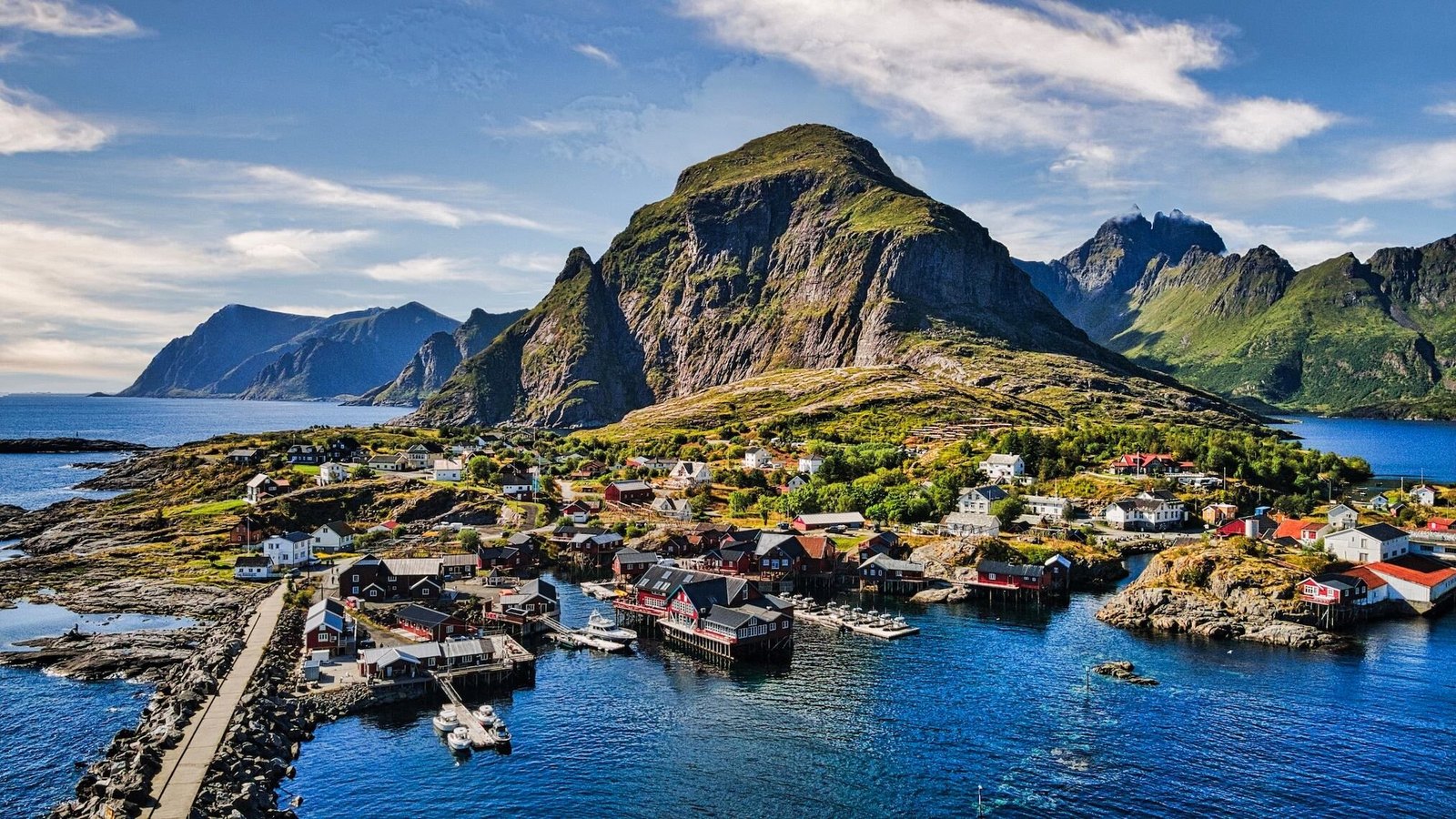
The end of the road, literally — and the best single stop for understanding the fishery that built every rorbu you have been photographing.
Nusfjord
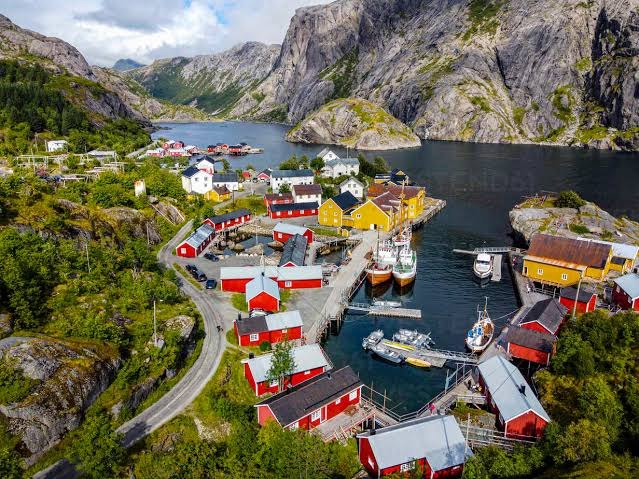
One of Norway’s best-preserved fishing villages, at the end of its own quiet side road on Flakstadøya. A working harbour turned living museum, and an easy half-day from anywhere in the west. A visitor fee applies in season.
Kvalvika Beach
The roadless beach below the cliffs, reached on foot from the Fredvang side. The walk that turns Lofoten from scenery into experience.
Volandstind
The summit above the Skjelfjord side of Flakstadøya — the trail starts from Skjelfjordveien. A real peak rather than a staircase, a fraction of Reinebringen’s crowd, and a view across the bridges, beaches and the wall of Moskenesøya. Many locals prefer it. So do we. The route from our door →
The Fredvang bridges
The twin arcs over the sound — a landmark in themselves and the gateway to Kvalvika.
Rambergstranda
The white crescent below Ramberg, facing west — straight into the midnight sun in June, and towards dark open sea in aurora season. Its point is nearness: the beach you visit for twenty minutes because you live nearby, at whatever hour the light turns good.
Hauklandstranda
Widely considered Lofoten’s finest beach, with the shoreline walk to Uttakleiv as its natural extension. An easy half-day from a western base.
Decide the geography first and the building second
If you are planning a first visit of four days or more around the classic western highlights — and most first-time visitors are — base yourself in the west of Lofoten.
Choose a quiet position set back from the E10, with a shop within a few minutes. The Ramberg–Fredvang–Flakstad area offers the best balance of position, calm and practicality. Moskenesøya offers maximum postcard immersion, at the cost of high-season crowds and roadside locations.
Choose a rental house for stays of three to four days or more. Choose a rorbu if the building itself is the experience. Add two or three eastern nights in Svolvær or Henningsvær only if your trip runs eight days or longer. And if your trip is genuinely town-based — restaurants every evening, hotel service, the eastern fjords — choose Svolvær, and accept the western drives with open eyes.
In Lofoten, where you sleep decides what your days look like — and what the weather turns them into. On the rough days, a good base absorbs the indoor hours instead of wasting them: a proper kitchen, space to spread out, the storm crossing the fjord outside the window. And on the good evenings, it pays you back — sitting outdoors through the long, bright summer nights, or watching the northern lights arrive right outside your door.
The base questions, answered
Is Svolvær or Reine a better base for first-time visitors?
For four days or more focused on the classic sights, the west — Reine's area, or Ramberg–Fredvang just east of it — is the better base, because most of the famous places sit within short drives. Svolvær suits town-centred trips or itineraries focused on the eastern islands.
How far is Svolvær from Reine, really?
Two to three hours of driving each way in normal conditions. Plan it as a day trip, never a casual outing.
Should I stay in one place or move around?
One base for trips up to a week; two bases (west + east) for eight days or more. Every move costs roughly half a day and removes the weather flexibility Lofoten trips depend on.
Is it worth staying in a rorbu?
Yes, at least once — but check two things the photos hide: how close that specific rorbu sits to the E10, and whether the interior matches your needs. Kitchens and sound insulation vary widely.
Is the west of Lofoten too remote?
Quieter than the towns, but not remote in practice: Bunnpris in Ramberg is open even on Sundays, there are shops in Reine and Sørvågen, an in-store medicine outlet and a fuel station in Ramberg, and restaurants in season. Self-catering most meals is the normal western rhythm.
Where can I buy wine or spirits?
Only at Vinmonopolet, in Leknes or Svolvær. Supermarkets sell beer only — and only until 20:00 on weekdays, 18:00 on Saturdays, never on Sundays. Buy ahead of the weekend.
Where should I stay for the Reinebringen hike?
Anywhere on Moskenesøya or Flakstadøya puts the trailhead within about half an hour — close enough to climb on the first clear evening, when the light is better and the steps are quieter. The Reinebringen guide has the route, measured.
Where should I stay to see the northern lights?
Darkness matters more than east versus west. Choose accommodation away from street lighting and road traffic, with open sky. A quiet base off the E10 in the west lets you watch from the doorstep instead of driving to find dark sky. The northern lights guide covers the rest.
What about charging an electric rental car?
Fast chargers are concentrated in Leknes and Svolvær. In the west, the relaxed solution is home charging where you sleep — ask your accommodation before booking.
Is Leknes a good base?
A practical, central compromise: the airport, the biggest supermarkets, and Hauklandstranda twenty minutes away. But central means commuting in both directions — one to two hours to most of what you came for, once real driving and stops are counted. For a west-focused trip, a western base serves better.
Should I stay in Henningsvær?
If the village itself is a priority, yes — overnight guests get the quiet hours day visitors never see. As a base for exploring all of Lofoten, its eastern position works against it.
Do I need a car?
For an independent trip as described here, yes. Buses follow the E10 but run infrequently, and the beaches, trailheads and viewpoints mostly sit beyond walking distance of any single village. Do you need a car covers the exceptions.
What are the Nappstraum tunnel roadworks, and will they affect my trip?
The E10 tunnel between Leknes and the west of Lofoten is being upgraded until the end of 2027. During work periods: daytime convoy driving, night closure around 23:00–06:00 with limited let-throughs, and queues that can add up to an hour. The works pause around Christmas and in summer. Check the Statens vegvesen traffic app for current times, and avoid planning tight late-night connections across Nappstraumen while the closures run.
Where does the Bodø ferry arrive?
At Moskenes, ten minutes from Reine, at the western end — a strong argument for starting your stay in the west if you arrive by ferry. Getting to Casa Lofoten covers the arrival routes in detail.
Is it cheaper to stay outside the famous villages?
Generally, yes. Waterfront rorbuer in Hamnøy, Sakrisøy and Reine carry Lofoten's highest prices. Houses a short drive away typically offer more space for less money — plus the quiet the harbour-front locations cannot.
When should I book?
For June–August, six to nine months ahead for the best-located places; the west sells out first. September–December pairs far better availability with dark skies for the aurora. Best time to visit helps you choose the season first.
What should I check on the map before booking anything?
Three things. Distance from the E10 — that's noise. Distance to the nearest grocery shop — that's daily ease. Driving time to your top three sights — that's the shape of your days. Those three checks predict a happy stay better than any photo gallery. Our accommodation checklist goes through the rest.
Secluded, but not isolated
That balance is exactly what we built Casa Lofoten around: a private shoreline on the quiet Skjelfjord side, four minutes off the E10, five minutes from the Sunday-open shop in Ramberg, with the Volandstind trail up the road and dark sky over the beach. If this guide describes the holiday you want, the house is the short version of it.