What Does a Lofoten Trip Cost? An Honest Guide to the BudgetWhat Does a Lofoten Trip Cost? An Honest Guide to the Budget
Is Lofoten expensive? An honest look at how the budget actually behaves — what is fixed, what you control, and what is completely free.Is Lofoten expensive? An honest look at how the budget actually behaves — what is fixed, what you control, and what is completely free.
Let us answer the real question first, plainly:
Is Lofoten expensive?
Yes. Norway is one of the more expensive countries you can visit, and Lofoten is Norway. If you have read otherwise, someone was averaging the wrong numbers.
But here is what the budget sites — with their suspiciously precise daily figures — do not tell you, and what actually matters: a Lofoten budget has a shape. Some costs are fixed the moment you book. One cost swings enormously depending on choices you make every day. And the main thing you are coming for costs nothing at all.
You will not find price tables in this guide. Prices here change with season, year and currency, and a table written today would quietly mislead you next year. What does not change is the structure — and once you see the structure, you control the budget. That is worth more than any number.
The shape of the budget
Nearly every Lofoten trip is built from four blocks:
- Getting here — flights (or the ferry), largely fixed once booked.
- The car — for almost everyone, a given.
- The roof — your accommodation.
- Food and drink — the swing item, the one you steer daily.
Everything else — activities, parking, the odd museum — is loose change by comparison, because the landscape itself is free. Let us take them in order.
Block one: getting here — where early booking is the real discount
The flight is usually the largest single line, especially from outside Europe — and it is also where timing does the most work.
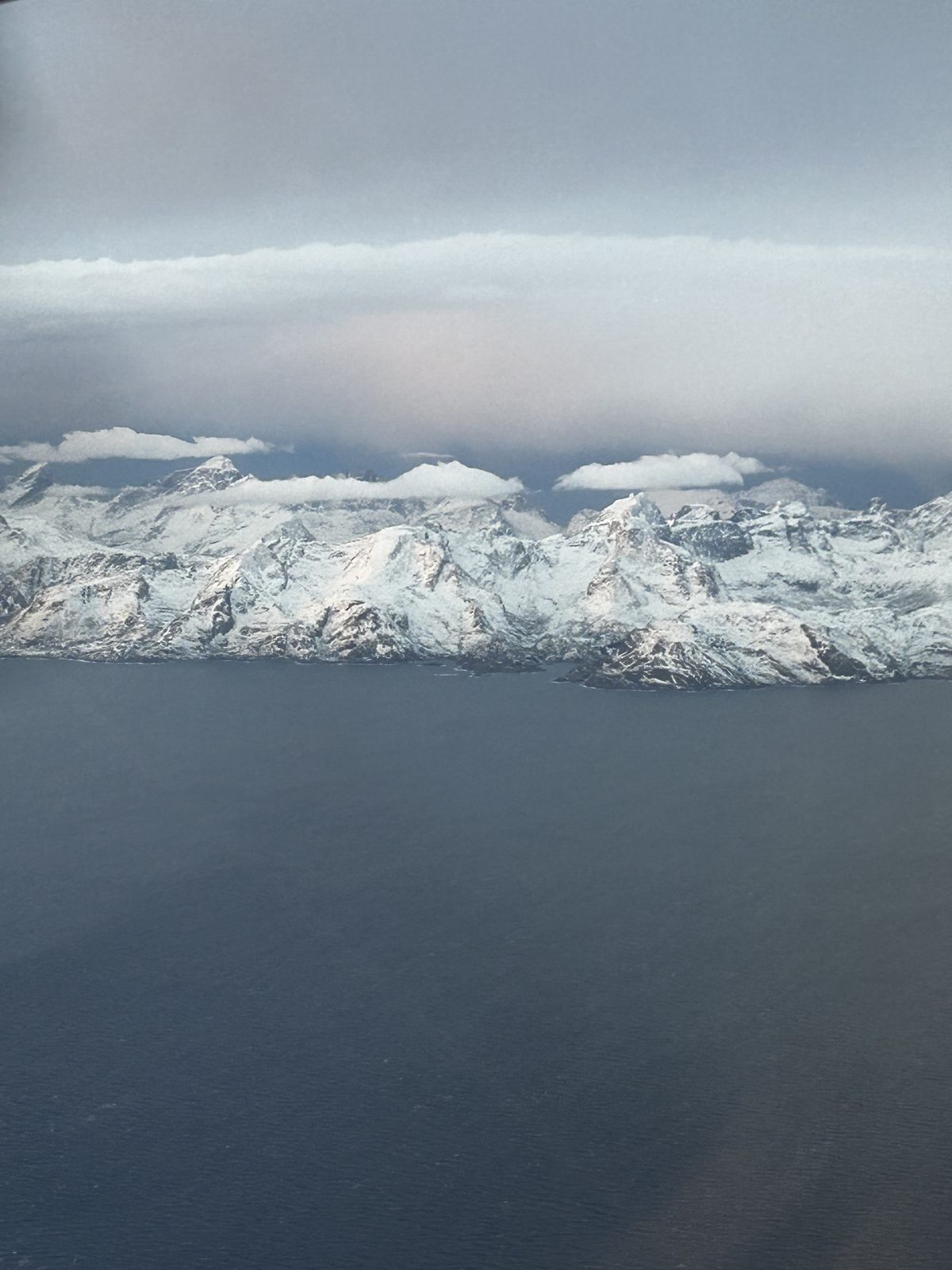
The standard route into the west runs through Bodø, where a small 39-seat propeller aircraft carries you to Leknes. Thirty-nine seats is not a figure of speech: the plane fills, and this short leg behaves like scarce goods — book it early, and book it before you finalise the long-haul legs, not after. Our full arrival guide explains the routes and the reasoning, including the ferry from Bodø — the slower, cheaper, scenic route for those with more time than budget — and why a single through-ticket from your starting city is worth its modest extra cost in winter, when weather delays are most likely and the airline's rebooking obligation becomes your insurance.
One structural saving hides in plain sight here: the flights cost the same whether you stay four days or eight. Every extra day divides the fixed travel cost across a longer trip. The most expensive Lofoten trip per day is the short one — which is also, as it happens, the most common planning mistake.
Block two: the car — non-negotiable, but steerable
You will want a car; we have made that argument honestly elsewhere. Within the car budget, three levers:
- Book early, especially for summer. The island fleet is finite; late summer bookings pay scarcity prices.
- Consider electric. Fuel is genuinely expensive in Norway; electricity is the cheap way to move here, and the charging question is mostly about where you sleep (below).
- Check the one-way fee if you plan to arrive and leave through different airports — sometimes worth it, never free.
Did you know? — from Casa Lofoten
Guests at Casa Lofoten charge their EV at the house, free. In a country where fuel is a real budget line, driving the E10 on your accommodation's electricity is the quietest saving of the whole trip. → Do you need a car in Lofoten?
Photograph to come — the EV charging by the door (photo requested)
Block three: the roof — optimise the right line
Here is the principle we ask guests to weigh before hunting for the cheapest bed: for most visitors, the accommodation is a fraction of what the whole journey costs once flights, the car and food are counted. Trimming that fraction hard — while the fixed blocks stand — rarely changes the total much. What it reliably changes is the trip.
The honest mathematics of it: a base with a real kitchen feeds the swing item (next block). A base in the right place cuts daily driving, which is paid in both fuel and holiday hours. And the drying room, the freezer for the catch, the view you do not have to drive to — these do not show up as savings on paper, but they show up every single day. Our checklist guide lists what to actually compare.
One timing rule, which applies in every season because the good places are few: the best go first. Booking early does not just secure the price — it secures the option.
Block four: food and drink — the swing item
This is where Norway startles visitors, and where you hold the controls. The same day can cost wildly different amounts depending on one decision: restaurant or kitchen.
Eating out here is a real expense — everywhere in Norway, not just Lofoten. Alcohol out is more startling still. Self-catering, by contrast, brings costs down toward normal European grocery levels, and in Lofoten it happens to be the better trip, not the sacrifice: the fish is superb, the evenings are long, and the table with the best view in the west is the one where you are staying.
The pattern that balances budget and pleasure, from our full food guide:
- Cook most nights; eat out on purpose. Two or three chosen dinners out beat seven defaulted ones — for the wallet and the memory.
- Pack every lunch. On mountains and beaches there is nothing to buy anyway; the packed lunch is not thrift, it is logistics.
- Plan alcohol like freight. Wine and spirits come only from the state monopoly in Leknes or Svolvær, with restricted hours — buy on arrival day, calmly, once.
- Drink the tap water. It is excellent and free; bottled water is the most avoidable line on any Norwegian receipt.
What is free — which is to say, the point
Now the part the budget sites bury: the reason you are coming costs nothing.
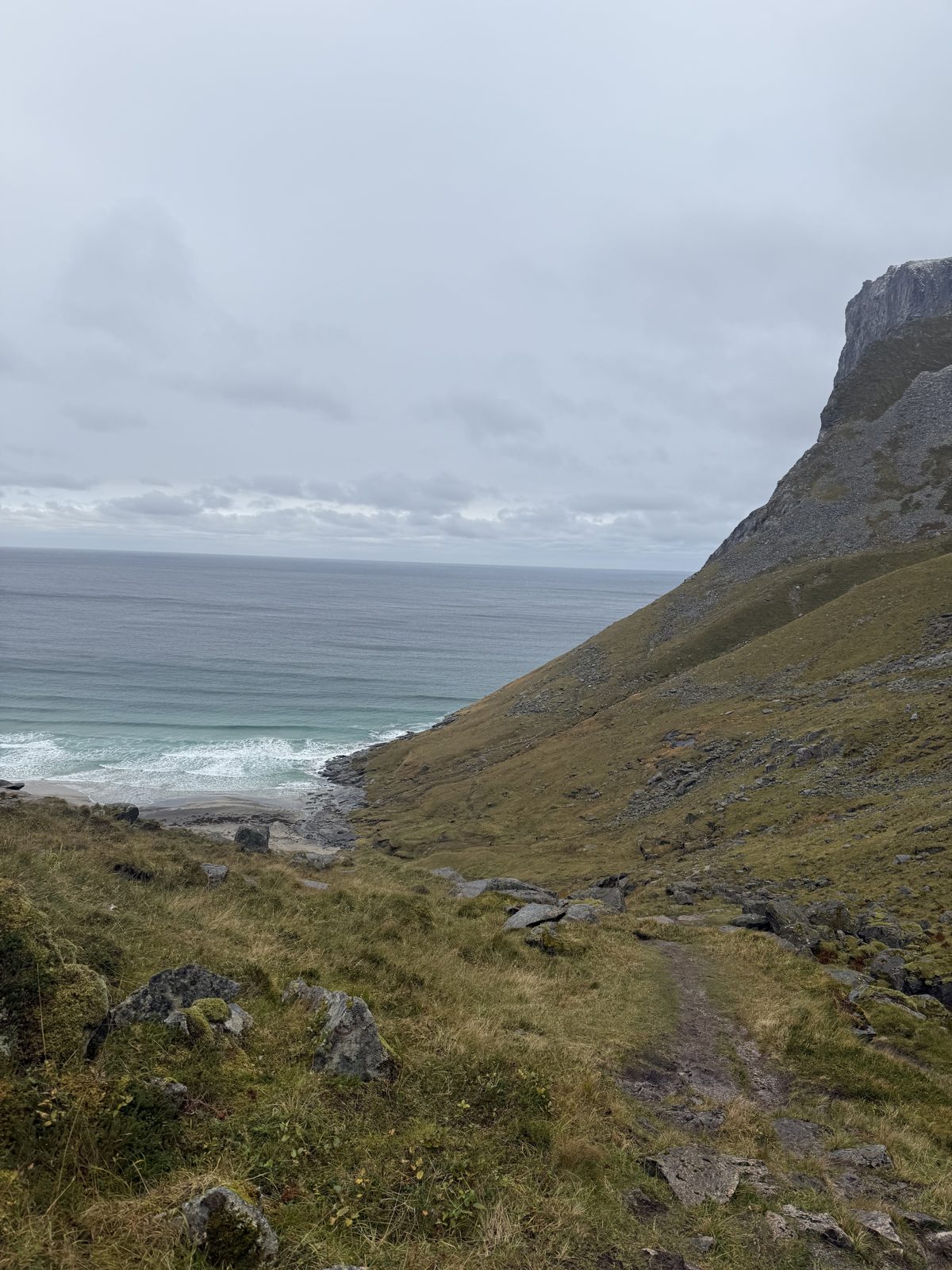
The beaches have no gate. The trails have no ticket. The midnight sun and the northern lights do not invoice. Norway's right-to-roam tradition makes the landscape itself open to everyone who treats it well — the whole country works this way, and Lofoten is its showcase. A day here of world-class walking, a swim you will describe for years, and an evening of extraordinary light can cost precisely the sandwiches you carried.
What you will meet are parking fees at the popular beaches and trailheads — a normal part of how small communities manage many visitors. Rates change; pay by the app or machine at the site and think no more of it. Boat trips, museums and guided activities cost what they cost, and a few are worth every krone — but note that none of them is the backbone of a Lofoten trip. The backbone is free.
Where to save — and where saving backfires
Saves that work:
- More days, not fewer — spreads the fixed costs and, as a bonus, solves the weather.
- The kitchen — the single biggest daily lever, and the nicer trip anyway.
- Early booking of the scarce things — the 39-seat leg, the car, the good bases. Early is the only "discount code" this place has.
- The season question, held lightly. Outside the late-June-to-late-August peak, the islands are quieter and travel generally gentler on the budget — but choose a season for its light and character first (here is the honest comparison); every season here earns its keep.
Saves that backfire:
- Cutting days. The per-day cost rises and the weather margin disappears. The three-day Lofoten trip is the most expensive way to see the islands per hour of actual experience.
- Skimping on clothing. Bad rain gear does not save money; it converts weather days into lost days. Pack properly — it is the cheapest insurance the trip has.
- Choosing the base on price alone. You pay the difference back in driving — fuel, hours and the daily energy of being far from everything you came to do. Location first, then price.
FAQ
Is Lofoten more expensive than the rest of Norway?
Broadly it is simply Norwegian-priced. What tightens the budget here is fewer cheap alternatives — the villages are small, so there is less of everything, including budget options — rather than higher price tags on the same goods.
Do I need cash?
No. Norway is effectively cashless; card and phone payment work everywhere, including parking machines and the smallest kiosks. Many visitors complete the whole trip without touching a banknote.
What about tipping?
Relax about it. Service is included in Norwegian prices; tipping is not expected. Rounding up or leaving a little for genuinely good service is appreciated and entirely optional.
What are the biggest free experiences?
The honest answer: the entire headline reel. Beaches, mountains, the coastal walks, midnight sun, northern lights, the villages' streets and harbours. Lofoten is one of the rare famous places where the top ten costs nothing.
What is the most common budget mistake?
Booking the long-haul flights before choosing where to stay — then paying for it all week in driving. Base first, then flights. (A close second: the trip so short that the fixed costs dwarf the experience.)
When is Lofoten cheapest to visit?
Travel and stays are generally gentlest outside the late-June-to-late-August peak — but we would not choose a season on price. Choose the light you want; the seasons are different trips, not different grades of the same one.
The backbone is free
Beaches, trails, the light itself — the spine of a Lofoten trip costs nothing. The base decides most of the rest; ours charges your car for free.