How to get to LofotenHow to get to Lofoten
There are several right ways to reach Lofoten. Which one is right for you depends on three things: how much time you have, your budget, and — above all — where on the islands you will be staying.The routes are the same in winter — what changes is the value of slack: the small planes fly in most conditions, but Arctic weather occasionally reshuffles schedules.
Rule one: know where you’ll stay before you buy flights
Lofoten has two airports of its own — Leknes in the middle of the islands, Svolvær at the eastern end — plus a ferry port at Moskenes in the far west and a mainland gateway airport at Harstad/Narvik (Evenes). They sit hours of driving apart.
Choose the wrong entry point for your base, and you add two long transfer drives to a trip that is already short. Choose the right one, and you step almost straight into your holiday. That last point is where most booking mistakes happen.
So settle your accommodation first — where should you stay in Lofoten covers that decision. Then buy the flights that land you nearest to it. For a base in the west — where most first-time visitors stay — that means Leknes, or the Moskenes ferry.
The 39-seat bottleneck
The flight from Bodø to Leknes — the last hop for most visitors — is flown by Widerøe’s small Dash 8 aircraft, with 39 seats. That is not a typo. Thirty-nine.
In high season, those seats go early. The single most useful booking habit we can give you: check availability on the Bodø–Leknes leg before you buy your long-haul and connection flights — and book it first, or in the same sitting.
Travellers who book the intercontinental flights first, assuming the last hop will sort itself out, are the ones we see arriving a day late, or by a long improvised detour.
Two more quirks of the small plane worth knowing: there is no seat reservation on this aircraft type — you choose a seat as you board — and the checked-baggage allowances are ordinary, but the cabin is compact. Pack accordingly.
The main routes, honestly
Via Bodø, then the small plane to Leknes — our default recommendation
For shorter trips, this is the route we recommend to almost everyone. Fly to Bodø (from Oslo or via your connection), then the short Widerøe hop to Leknes — around 20–25 minutes, often flown low with the islands filling the windows. You land in the middle of Lofoten, roughly an hour from the Reine area and 30–40 minutes from the Ramberg–Fredvang area.
Choose it if: your trip is on the shorter side and you want the most Lofoten per travel hour.
The trade-off: the 39-seat bottleneck above, and the weather — the small planes fly in most conditions, but Arctic weather occasionally reshuffles schedules. Build slack around tight onward connections. One way to de-risk the joints: book the journey from Oslo as one connected ticket rather than separate bookings — then delays and cancellations along the way are the airline’s responsibility to fix. It usually costs somewhat more, and it is worth most in winter, when the bad weather is strongest and most frequent.
The Bodø–Moskenes ferry — the budget route
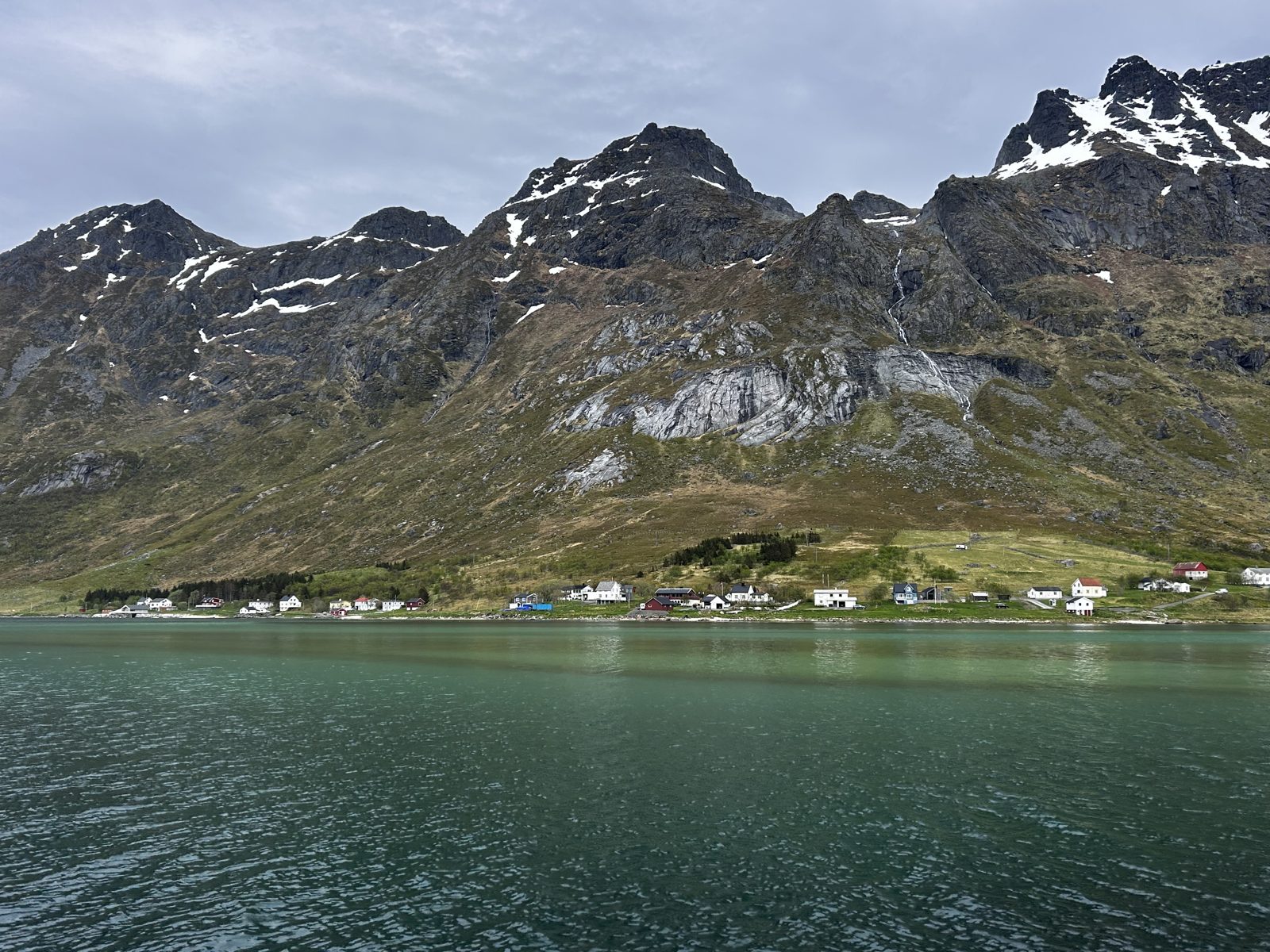
The car ferry from Bodø crosses to Moskenes, at the far western end, in about 3¼ hours — landing you ten minutes from Reine.
Choose it if: you are watching the budget, you are bringing a car or motorhome from the mainland, or you simply want to arrive by sea, watching the wall of Lofoten grow on the horizon.
The trade-off: time. The crossing itself, plus waiting and boarding, consumes the better part of a travel day. In summer, the car ferry must be booked well in advance — turning up and hoping is not a plan in July. And the Vestfjord is open sea: on rough days, the crossing is felt. One practical warning if you plan to arrive on foot or by bicycle: there is no car rental and no taxi rank at Moskenes, and buses from the port run very infrequently. The ferry works best with your car on board — or with someone meeting you on the quay.
Fly to Svolvær — entering from the east
Svolvær’s airport works the same way as Leknes — via Bodø, on the same small aircraft — but lands you at the eastern end of the chain, two to three hours’ drive from the west.
Choose it if: you have good time — seven days or more — and you are planning the classic east-to-west journey: a night or two around Svolvær and Henningsvær first, then the drive west with short stops along the way.
The trade-off: for a shorter, west-based trip, Svolvær is simply the wrong end of the road.
Fly to Evenes and drive — the road-trip entrance
Harstad/Narvik Airport (Evenes) is the region’s mainland gateway, served by direct jet flights from Oslo — and by direct routes from elsewhere in Europe — often the cheapest and simplest flights of all, with none of the small-plane capacity worries.
The price is paid on the road: roughly 2.5–3 hours’ drive to Svolvær, and about four hours to the west of Lofoten — before you have seen a single famous village.
Choose it if: you have seven days or more, you want the full drive-in experience along the E10, and you plan to work your way westward with overnight stops.
The trade-off: with less than a week, those transfer hours come straight out of your Lofoten days.
Coming from Tromsø or Senja — fly, don’t drive
If Lofoten is one chapter of a longer northern Norway trip, resist the map’s suggestion to drive from Tromsø or Senja. It is a full day behind the wheel each way. Fly instead: Tromsø connects to Leknes — landing you in the middle of the islands — or to Svolvær if you have extra time for the drive west. How many days do you need covers this mistake in full.
Consider an open jaw
Here is an option many visitors never think of: you don’t have to leave the way you came.
Rental cars in the region can often be delivered at a different location than where you collected them, and the entry points combine well. A pattern that works, especially for longer stays: fly into Evenes or Svolvær, travel west through the islands at your own pace, and fly home from Leknes — no backtracking, every kilometre new. Check the one-way fee when comparing rental offers; when it is reasonable, an open jaw buys you a trip with no repeated roads.
Did you know? — from Casa Lofoten
The last leg has its own guide: Getting to Casa Lofoten — the Leknes route, the tunnel, the ferry option and the final kilometres along Skjelfjorden, with the whole drive from Napp to the door filmed and compressed to under a minute.
Temporary: the Nappstraumen tunnel works (until December 2027)
The undersea Nappstraumtunnelen — the E10’s only link between Leknes and the west of Lofoten — is being upgraded through the end of 2027. During work periods, daytime traffic passes in convoys behind a lead car, and the tunnel closes at night (roughly 23:00–06:00) with only limited let-throughs; queues can add up to an hour. The works pause around Christmas and for a period each summer. If your arrival or departure involves a Leknes flight or a late crossing to or from the west, check current convoy and closing times in the Statens vegvesen traffic app — and avoid planning tight late-night airport runs across Nappstraumen while the closures are active.
The booking order
Book in this order
What the arrival actually looks like
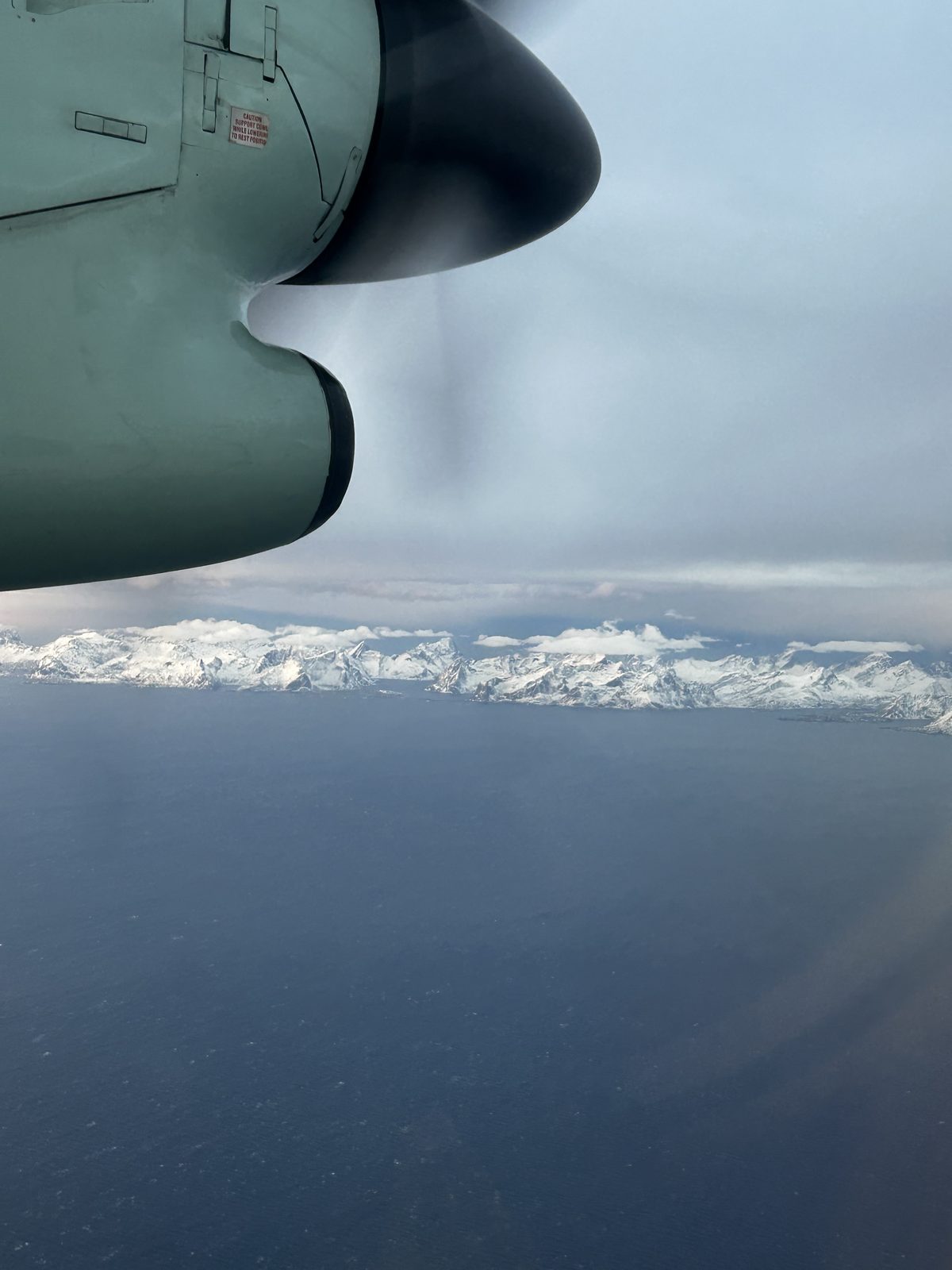
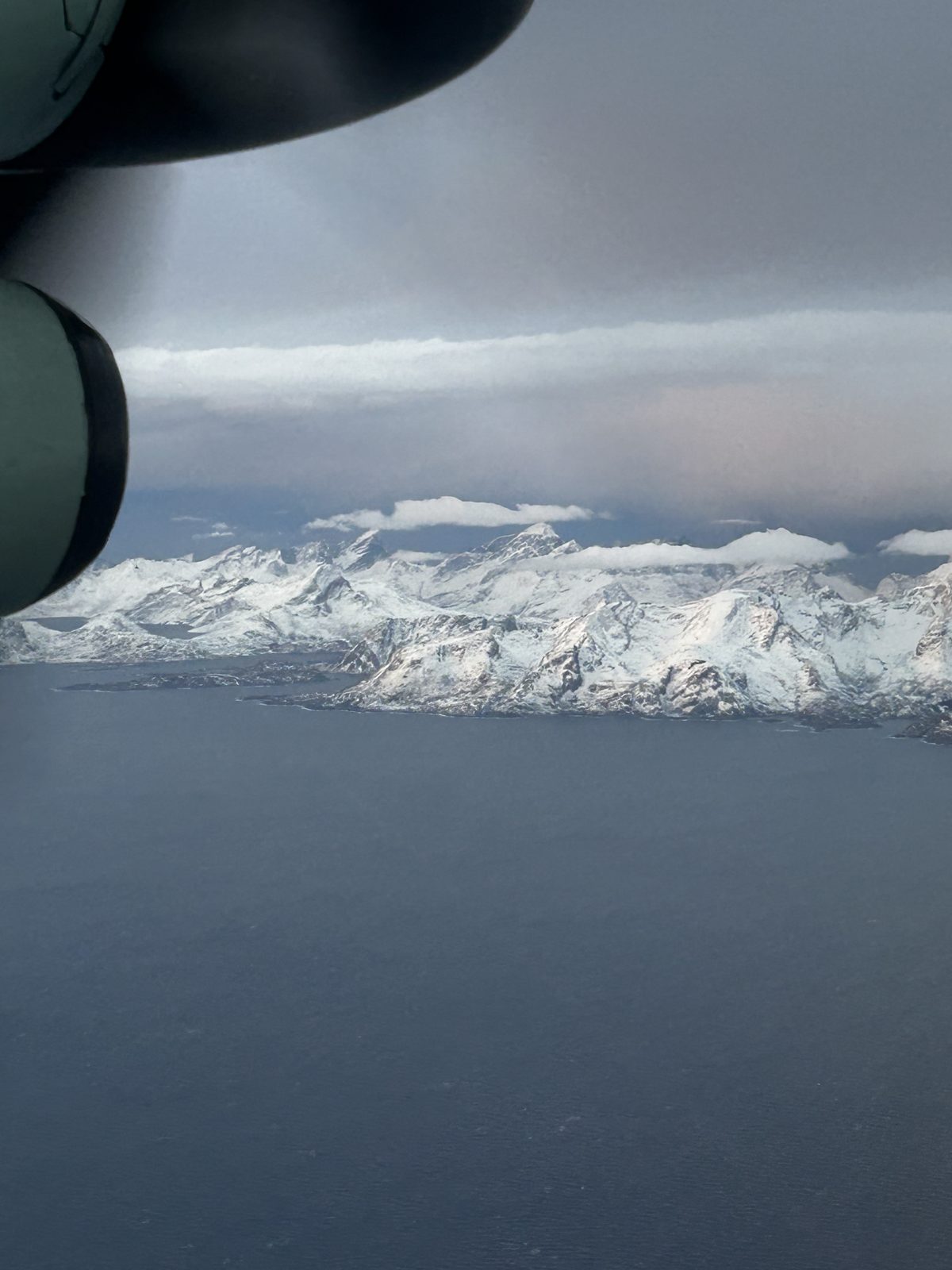
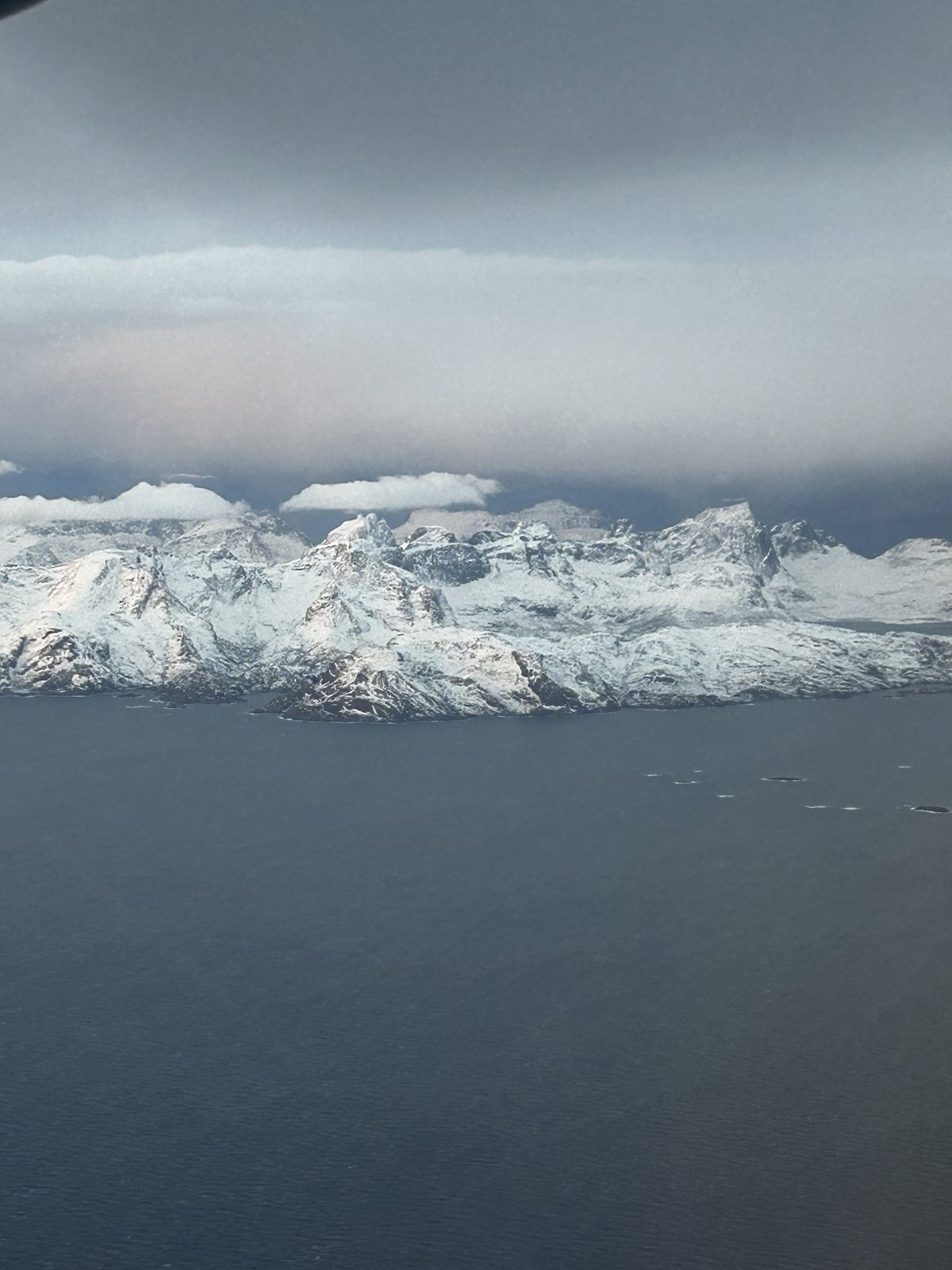
From the plane window on the way in — in January snow, at April dawn, and in June light.
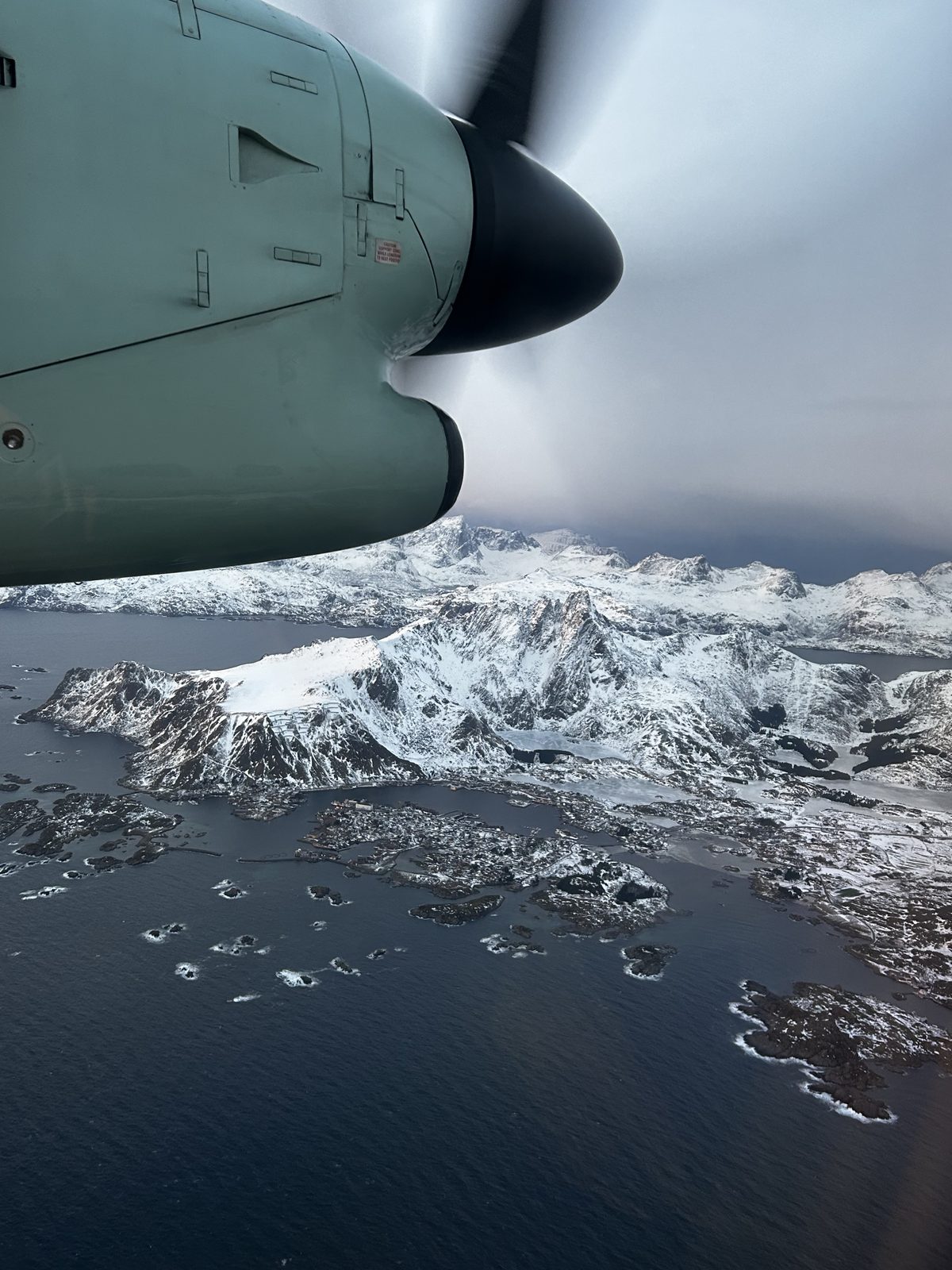
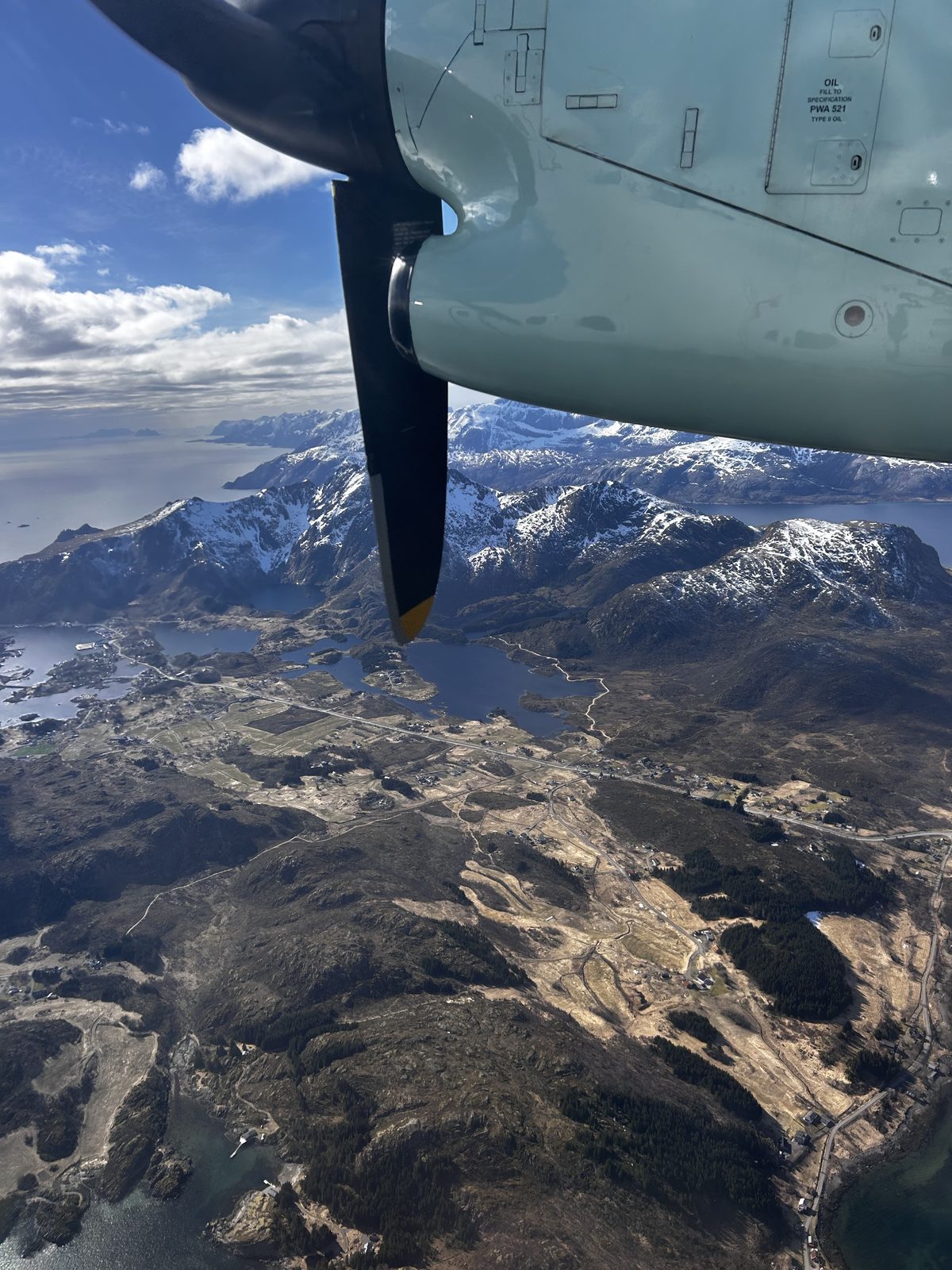
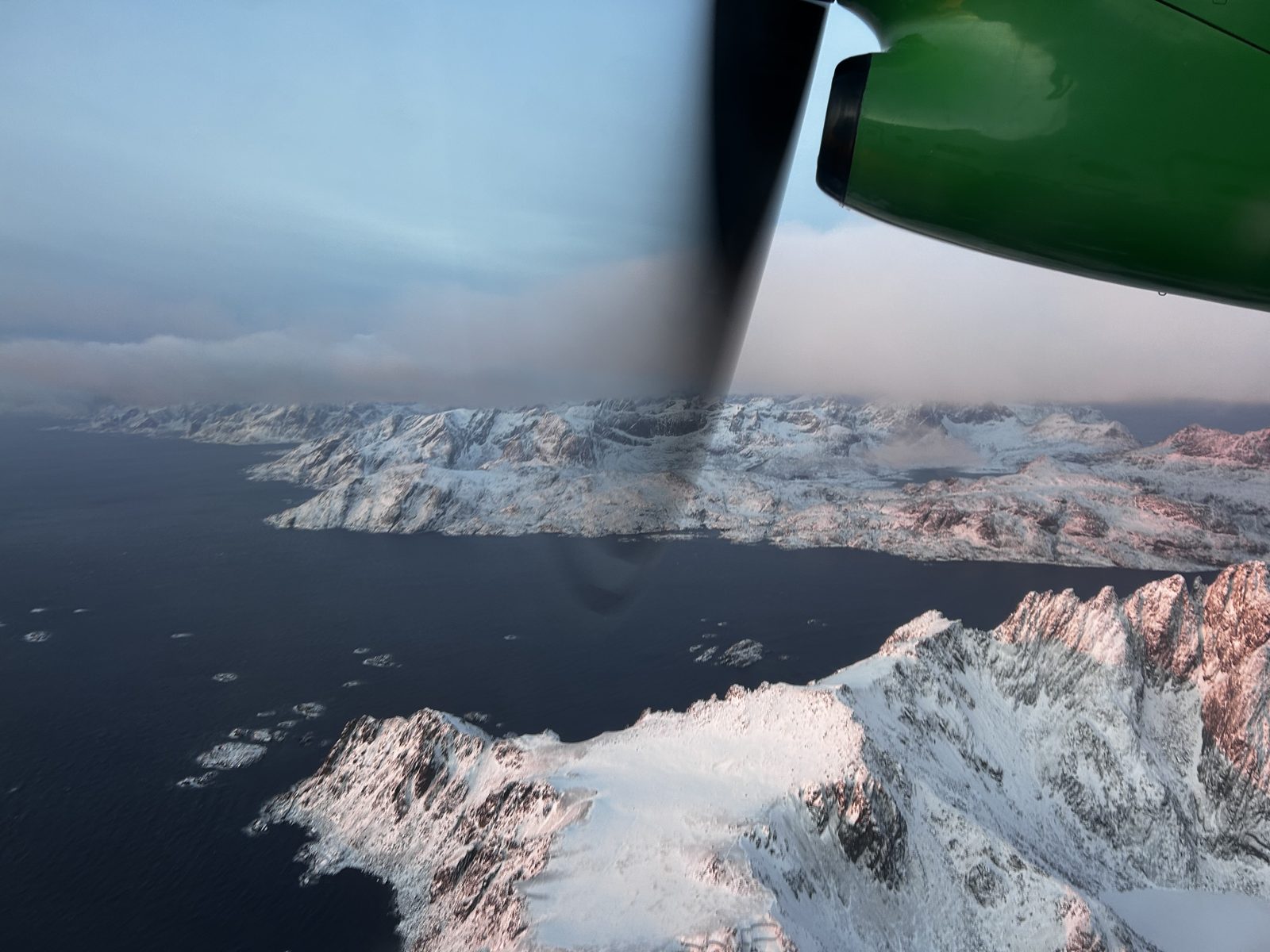
File list, in reel order
Getting here, answered
What is the easiest way to get to Lofoten?
For most visitors: fly to Bodø, then the short Widerøe flight to Leknes, which lands you in the middle of the islands. It is the route we recommend for nearly all shorter trips.
Which airport should I fly into — Leknes or Svolvær?
Match the airport to your base. Staying in the west, as most first-time visitors do: Leknes. Starting in the east with a longer east-to-west plan: Svolvær. Where to stay settles that question first.
Why do the flights to Leknes sell out so early?
The aircraft has only 39 seats. Check and book this leg before your long-haul flights, not after — it is the tightest link in the whole journey.
Can I choose my seat on the small plane?
No — there is no seat reservation on the Dash 8; you take a seat as you board. Sit on the side facing the islands if you can; the approach is part of the trip.
Is the Bodø–Moskenes ferry worth it?
For the budget-minded, or if you are bringing your own car: yes — it lands ten minutes from Reine. Budget the better part of a day for it, and book the car ferry well ahead in summer. Arriving on foot or by bicycle needs a plan, though: there is no car rental and no taxi rank at Moskenes, and buses from the port run very infrequently.
Is flying to Evenes a good idea?
With seven days or more, yes: cheap direct jets from Oslo, then a genuinely scenic drive in. With less than a week, the four hours to the west of Lofoten — each way — cost too much of your trip.
Can I fly directly to Lofoten from outside Norway?
Not to Lofoten's own airports — they are short-runway fields served by small aircraft from Bodø. International routes connect via Oslo; in addition, Harstad/Narvik (Evenes) has direct jet routes from elsewhere in Europe, about four hours' drive from the west of Lofoten.
Do I have to return the way I arrived?
No — and on longer trips you shouldn't. Rental cars can frequently be dropped at a different location, so combinations like Evenes in, Leknes out work well on longer trips and remove all backtracking.
How do I get from Leknes airport to the west of Lofoten?
By rental car, about 30–40 minutes to the Ramberg–Fredvang area and around an hour to Reine — during the Nappstraum tunnel roadworks, check convoy times for the crossing. Pick the car up at the airport; there is no practical alternative for an independent trip. Do you need a car covers the driving.
What happens if weather delays the small plane?
It occasionally does — Arctic weather reshuffles schedules a few times each season. Leave slack around tight connections, favour earlier departures on your travel days, and keep an eye on Widerøe's notifications. Consider also booking the journey as one connected ticket: then the airline covers rebooking — and, when needed, hotel nights — after cancellations or long delays. Often more expensive in total, but some travellers value the insurance, especially in winter.
Is the drive from Tromsø to Lofoten scenic?
It is — and it is also a full day each way. Unless the drive itself is a planned part of the trip, fly Tromsø–Leknes and spend those two days in Lofoten instead.
Landing in the west
From Leknes airport the house is about 35 minutes; from the Moskenes ferry, 20–30. Getting to Casa Lofoten walks the last leg turn by turn.