Food in Lofoten: Groceries, Cooking and Eating OutFood in Lofoten: Groceries, Cooking and Eating Out
Where to buy groceries in the west of Lofoten, how self-catering actually works here, and the small set of restaurants worth planning around.Where to buy groceries in the west of Lofoten, how self-catering actually works here, and the small set of restaurants worth planning around.
Somewhere between booking the flights and packing the bags, every group asks it:
"Where will we actually eat?"
And here is the honest local answer, which surprises people: mostly at home — and that is the good version, not the compromise.
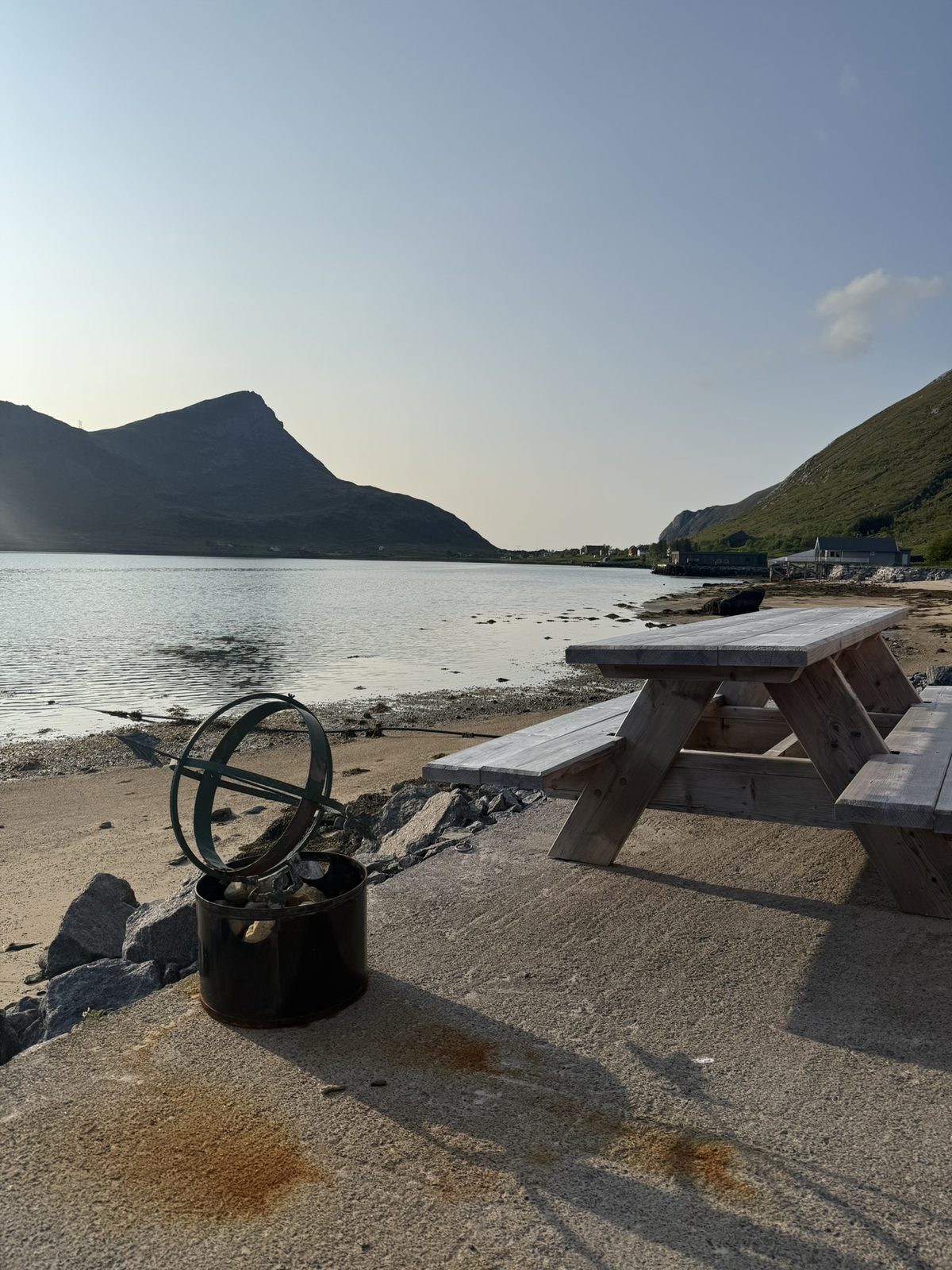
Lofoten is not a restaurant destination in the way a city is. Distances are real, opening hours are seasonal, and the villages are small. What Lofoten is — quietly, and better than almost anywhere we know — is a place to cook: fish that could not be fresher, a grill on a light evening, a long table with a view that no restaurant here can beat, and a handful of genuinely good places to eat out on the evenings you choose to.
This guide covers the whole of it: where the shops are, the alcohol rules that catch visitors out, how the cooking rhythm works, and the short, honest list of places worth planning a dinner around.
The shops: where to buy groceries in the west
The everyday grocery map of the west is short, and that is all you need:
- Ramberg — Bunnpris. The local shop for the Flakstad area, and the one fact about it that matters most: it is open on Sundays, which is rare in Norway and saves more trips than you would think. It also houses the local medicine outlet, and there is a fuel pump in the village.
- Reine — Coop Prix. The shop for the Moskenes end of the road.
- Sørvågen — Joker and Matkroken. Small shops near the end of the E10, useful when you are exploring the far west.
- Leknes — the full-size supermarkets. The regional town has proper full-range stores in and around the Lofotsenteret shopping centre. This is where you do the big shop.
The rhythm that works: one big shop, then top-ups. If you fly into Leknes, do the main grocery run before you drive west — you pass the supermarkets anyway, and it turns the local shop into a convenience rather than a lifeline. After that, the Ramberg shop covers the daily bread, milk and forgotten ingredients. (The drive between Leknes and the west has one temporary quirk worth knowing about — see Getting Around Lofoten.)
Two Norwegian grocery habits worth adopting: tap water is excellent everywhere — nobody buys bottled water here — and card or phone payment works at every till; you will not need cash once on the entire trip.
The alcohol rules — read this before the weekend
Norway regulates alcohol tightly, and this is the section of the guide that rescues the most dinners:
- Wine and spirits are not sold in grocery stores. At all. They are sold only at Vinmonopolet, the state wine monopoly — and in Lofoten that means Leknes or Svolvær. Nowhere in the west.
- Beer is sold in grocery stores, but only until 20:00 on weekdays and 18:00 on Saturdays — and not at all on Sundays or public holidays. After the cutoff, the shelves are physically closed.
- Vinmonopolet is closed on Sundays and keeps limited Saturday hours.
The practical translation: plan the wine like you plan the ferry. Buy it in Leknes on the way in, or on a Leknes errand early in the week — not at 19:45 on Saturday with guests arriving at eight. Restaurants serve alcohol as normal, so an evening out is always a fallback.
Cooking here: the fish, the freezer, and the long table
Self-catering in Lofoten has one ingredient the rest of the world envies: the fish. This is the coast of the skrei — the great Arctic cod that arrives every winter, roughly January to April, and built every village you will drive through. In season, cod here is not a dish; it is the calendar.
Fresh fish finds its way to a visitor easily. Fish counters and small delicatessens sell the day's catch (Sakrisøy's seafood house keeps a small gourmet counter with fresh fish and stockfish, alongside its lunch service). If anyone in your group fishes, dinner gets even more direct — and if you catch more than one meal, this is where a freezer in your accommodation earns its place on our checklist.
The rhythm most guests settle into within a day or two, and the one we use ourselves:
- A proper breakfast — slow, with the view. Nothing here opens early anyway.
- A packed lunch in the rucksack. On mountains and beaches, the café is the one you carry. (The packing guide treats food as gear, because here it is.)
- One real dinner — the day's anchor. At home most nights: fish or the grill, a fire, no closing time. Out on the evenings you have planned for it.
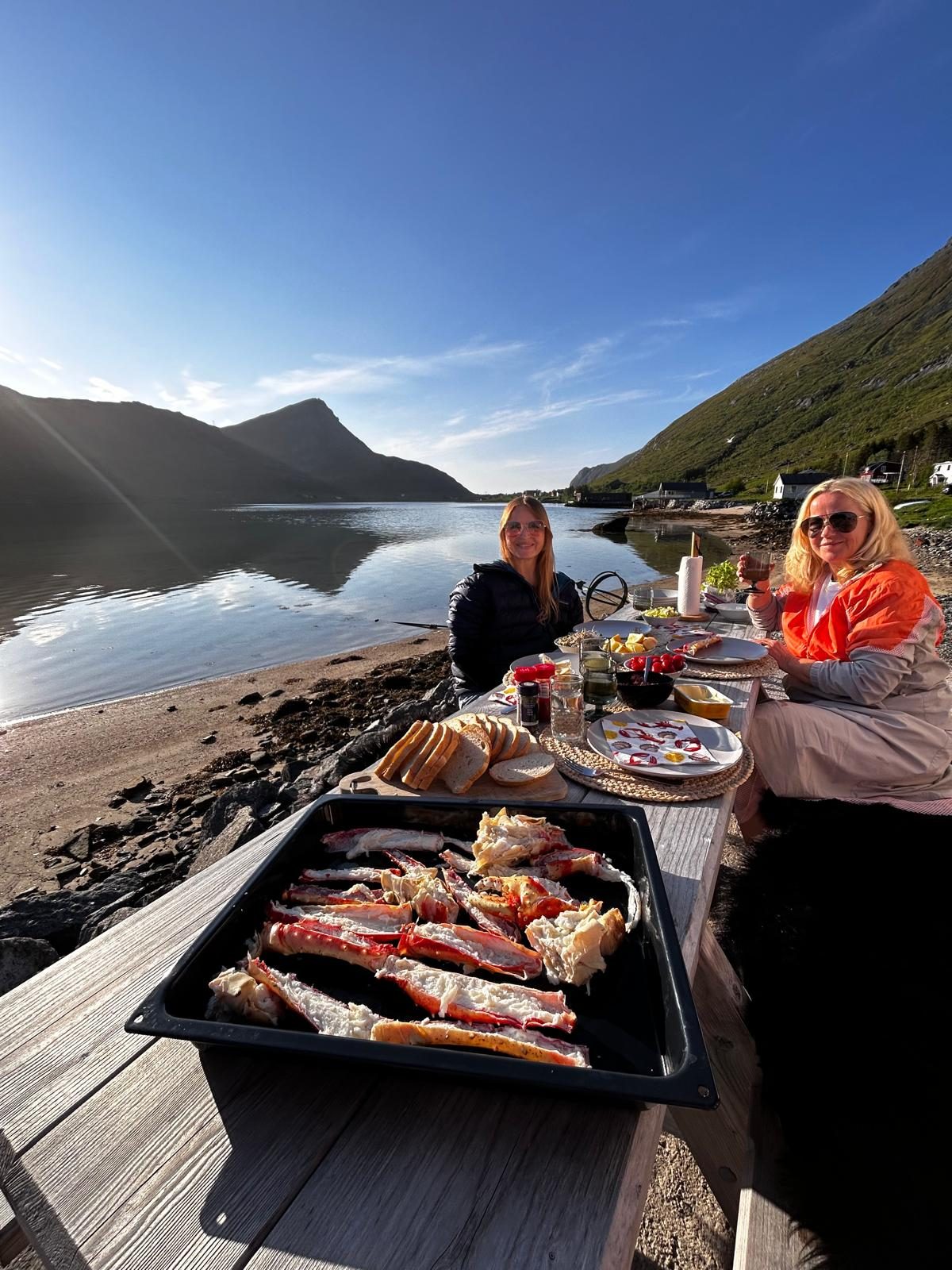
On light summer evenings the grill takes over — dinner at ten, midnight sun included, is a completely normal Lofoten arrangement. On weather days, the kitchen is the plan: the bake, the slow stew, the long game of cards. Our weather guide makes the full argument for the kitchen day as a feature of the trip.
Did you know? — from Casa Lofoten
Casa Lofoten is a few minutes from the Ramberg shop — self-catering here means "popping out for milk", not planning an expedition. The kitchen is stocked like a home you actually live in, and the dining table faces the fjord. → The house
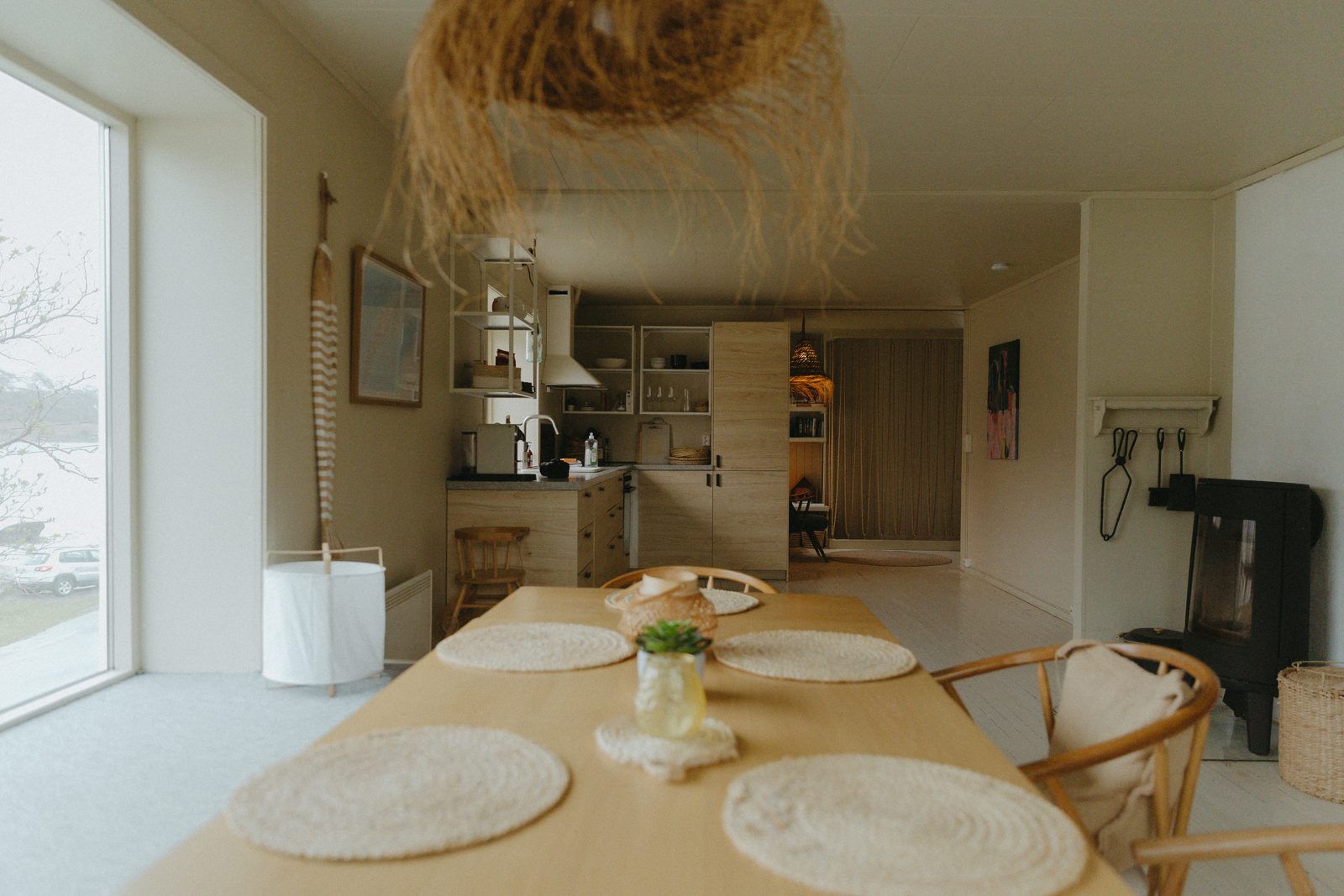
“An open living family space for cooking, eating and talking, simple, clean and purposeful.”
Eating out: the short, honest list
Now the restaurant question, answered the way we answer it for our own guests. Three ground rules first, because they shape everything:
- Distances decide. Nothing is "around the corner". An evening out is a small excursion — usually 20–40 minutes each way from a base in the west — so it pairs naturally with a day already spent in that direction.
- Seasonal hours are the rule, not the exception. Many places run full hours in summer and short or no hours in the off-season. Always check opening hours before you drive — especially September to May.
- Book in season. The good rooms are small and summer is busy. A same-day table is luck; a booked table is a plan.
With that said, the places we actually send people, west to east along the road:
- Ramberg — the closest option to a west base, with a beach-side restaurant and café by Rambergstranda serving local ingredients, and a village café. Useful exactly because it is near: the low-effort evening out.
- Vikten — the glassblowers' studio café on the outer coast: coffee and cake with the open sea in the window, seasonal. A stop, not a dinner — and a very good one.
- Nusfjord — the preserved fishing village, and our favourite dinner ritual in Lofoten: walk the Nesland–Nusfjord coastal path in the afternoon, then dinner in the village — and ask for the window table when you book. One honest logistics note: after a long dinner, the walk back is less charming than the walk in. Arrange a taxi home, or have someone drive the car around to meet the walkers.
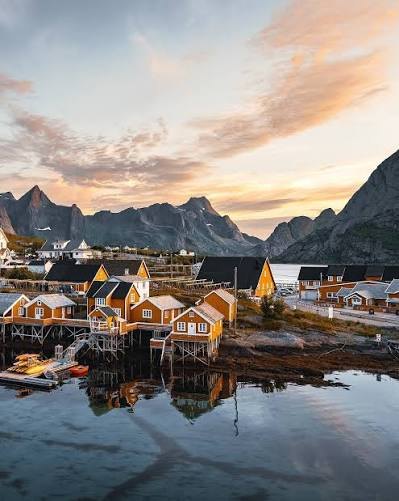
- Sakrisøy — the yellow fisherman's cabins between Hamnøy and Reine, home of the west's most famous lunch: the seafood house's fish soup and fish burger, eaten on the waterfront. Mostly a daytime place — plan it as the reward after Reinebringen, not as dinner. The island also has an evening restaurant in the rorbu cluster.
- Reine — the classic village dinner: a small, tradition-heavy restaurant in an old red timber house serving skrei, stockfish and the local repertoire, plus a more casual bistro. Pairs perfectly with an evening drive around the Reine fjord.
- Å and Sørvågen — at the end of the road: village restaurants with sea views, and in season the historic bakery in Å, whose cinnamon buns from the old oven are a destination in their own right.
That list is deliberately short. It is not everything that exists; it is what we would plan around. (Leknes and Svolvær add everyday town options — pizza, sushi, cafés — for errand days.)
A note on plates and prices: menus here lean heavily on fish, lamb and the local repertoire — glorious if that is what you came for, thinner if you eat plant-based, in which case the supermarkets will carry more of your trip than the menus will. And yes, eating out in Norway costs real money; we have written an honest guide to what a Lofoten trip costs rather than pretending otherwise here.
What to taste before you leave
A short field checklist, in rough order of obligation:
- Skrei (in winter) or fresh cod the rest of the year — simply cooked, as the locals do.
- Fish soup — every place has its own; comparing them is a legitimate hobby.
- Stockfish — the air-dried cod on the wooden racks you will photograph anyway. Tasting what the racks are for closes a circle.
- Fish burger at the Sakrisøy counter — the west's worst-kept secret.
- A cinnamon bun in Å — in season, from the 19th-century bakery.
- Whatever you catch yourselves — the shortest supply chain in European cooking.
FAQ
Are restaurants open in winter?
Some, with reduced hours — and some close entirely outside the summer season. The everyday shops stay open all year. Rule of thumb: from September to May, check hours and book before you drive anywhere for dinner.
Can I buy wine or beer on a Sunday?
No. No alcohol is sold in any shop on Sundays, and Vinmonopolet (the only source of wine and spirits) is closed. Restaurants serve as normal. Buy ahead.
Do I need to book restaurants?
In summer, yes — the rooms are small and the season is short. Off-season, booking is less about seats and more about confirming the place is open at all. For Nusfjord, book — and ask for the window table.
Is Lofoten workable for vegetarians?
Workable, with planning. Supermarkets (especially in Leknes) carry a normal Norwegian range including plant-based staples; menus in the villages are fish- and lamb-heavy, though most kitchens have an option. Self-catering tilts the trip strongly in your favour.
Is tap water safe?
Better than safe — it is excellent, everywhere. Bring a bottle to refill and skip the bottled water entirely.
What is skrei, exactly?
The migratory Arctic cod that returns to these waters every winter, roughly January to April, to spawn — leaner, firmer and more prized than ordinary cod. It is the reason Lofoten exists: the villages, the racks, the whole story. Eat it in season if you possibly can.
Dinner with a view of the catch
Two full kitchens, a grill and an outdoor kitchen on the dock — and the fish our guests eat is often caught a few hundred metres out.