How many days do you need in Lofoten?How many days do you need in Lofoten?
After “where should we stay” and “when should we come”, this is the question we hear most — and our honest answer fits in four lines.After “where should we stay” and “when should we come”, this is the question we hear most. In winter, the answer leans one way: add margin.
The four-line answer
Three to four days is the absolute minimum — that gets you some of the Instagram pictures.
Five to seven days is often enough — for the west of Lofoten.
But you took three or four flights to get here. So stay as long as you can.
And come back — in a different season.
The rest of this guide explains why those four lines are true, what each trip length actually gives you, and the one planning mistake that ruins more Lofoten trips than bad weather ever does.
The mistake that costs more than any storm
After years of hosting, we can tell you the most common misjudgment without hesitation: too little time, with too tight a programme.
Lofoten is a place for enjoying nature — not for stressing from sight to sight with a checklist. A trip planned like a city break, with every day assigned its attraction, breaks here for one simple reason: the weather decides the order of your days. Not your itinerary.
Say you planned Reinebringen for Tuesday. Tuesday arrives with fog sitting on the summit — you would climb two thousand steps to stand inside a cloud. Forcing the plan gets you a photograph of grey.
The right move is to swap, not push: walk the coastal trail from Nesland to Nusfjord instead — low, beautiful, and made for exactly this kind of day — and take Reinebringen on Thursday, when the summit is clear.
That swap is only possible if your plan has slack. A three-day trip with five fixed goals has none. A six-day trip with the same five goals has room to shuffle — and that room is the difference between a stressful trip and the one you came for.
So here is the planning rule this whole guide rests on: plan experiences, not days. Bring more days than experiences.

Why the first and last day barely count
For most visitors — coming from the USA, Canada, the UK, Germany, France, the Netherlands, Australia — reaching Lofoten takes three or four flights — and on some routes a ferry as well, though far from all. Even the last legs from Oslo often take half a day on their own.
Then add what no booking shows: jet lag and travel fatigue, unpacking, the first grocery run — and simply settling into the Lofoten rhythm, which takes an evening or two of its own.
A “five-day trip” is therefore often three and a half days of actual Lofoten. Count your days honestly: nights on the islands minus one is a fair estimate of your real, usable days. Plan with that number, not the one on the flight booking. Getting to Lofoten covers the routes themselves.
Coming from Tromsø, Senja or elsewhere in the north? Fly, don’t drive
A mistake we see often: travellers already in Tromsø or on Senja look at the map, see Lofoten as the neighbour, and plan to drive. The map misleads. From Tromsø or Senja, the drive to the west of Lofoten is a full day behind the wheel — and the same full day back. Even Harstad/Narvik Airport (Evenes), the region’s main gateway, lies about four hours’ drive from the west of Lofoten: roughly 2.5–3 hours to Svolvær, then the islands themselves on top.
The better move is to fly: Tromsø to Leknes lands you in the middle of the islands, minutes from where you actually want to be — or Tromsø to Svolvær if you have extra time for the drive west. Two full days reclaimed for Lofoten itself.
The honest trip lengths
One or two days: a glimpse from the car window
We will say this plainly, because nobody else will: if Lofoten is a one-or-two-day stop on a longer northern Norway route, you will spend most of it driving. You can cross the islands, stop at the viewpoints, photograph Hamnøy from the bridge. It is genuinely beautiful — and it is a drive-through, not a visit. You will leave having seen Lofoten and not having experienced it, with no slack for weather at all. If one or two days is truly all you have, keep the plan tiny: one area, one walk, one unhurried evening. And know that you are scouting for the real trip.
Three to four days: the absolute minimum
This is where a real visit begins — and it is the floor, not a recommendation. With a well-placed base in the west, three to four days gives you the classics — a couple of the famous villages, one of the great hikes if the weather cooperates, a beach evening. Treat names like Reine or Å as examples of what fits, not as a checklist. In other words: some of the Instagram pictures. Genuinely worth having.
Plan no more than one or two sights or experiences per day — depending on your energy, and on how much calm you came here to find. A long mountain hike is a full day’s effort on its own; legs that have climbed a summit rarely want a second one, however long the evening stays light. What you will not have is slack. One storm day — and they happen in every season — takes a third of your trip with it. If this is your window: base yourself in the west, keep the list short, and let the weather set the order. Where should you stay covers the base.
Five to seven days: often enough
This is the honest sweet spot — and what it covers is the west of Lofoten, where the famous villages, beaches and hikes are concentrated. Five to seven days gives you the west properly, with slack: two or three hikes taken on their best days rather than their scheduled days, the beaches at whatever hour the weather turns good, and real room for rest. Henningsvær and Svolvær at the eastern end are better left to a longer trip — or accepted as one long day if you must. This is the length where the trip stops being a checklist and starts being a stay.
Eight to ten days and beyond: the islands at their own pace
With more than a week, Lofoten opens properly. Two bases work well now — the heart of the trip in the west, two or three nights in Svolvær or Henningsvær at the start or end, aligned with your arrival. The lesser-known walks get their turn. You revisit: Reine in different light, the same beach in three moods. Weather stops being a risk and becomes scenery.
Almost no guest has ever told us eight days felt too long. Many have told us four did.
“An excellent base for exploring the Lofoten islands, from Vestvågøy all the way to Moskenesøya.”
Did you know? — from Casa Lofoten
The staying days are what the property is set up for: the sauna a few steps from the beach, the fire shelter, the benches on the mountainside — and a freezer in the laundry room for the fish you catch from the shore. The property →
Does the season change the answer?
Yes — in one direction.
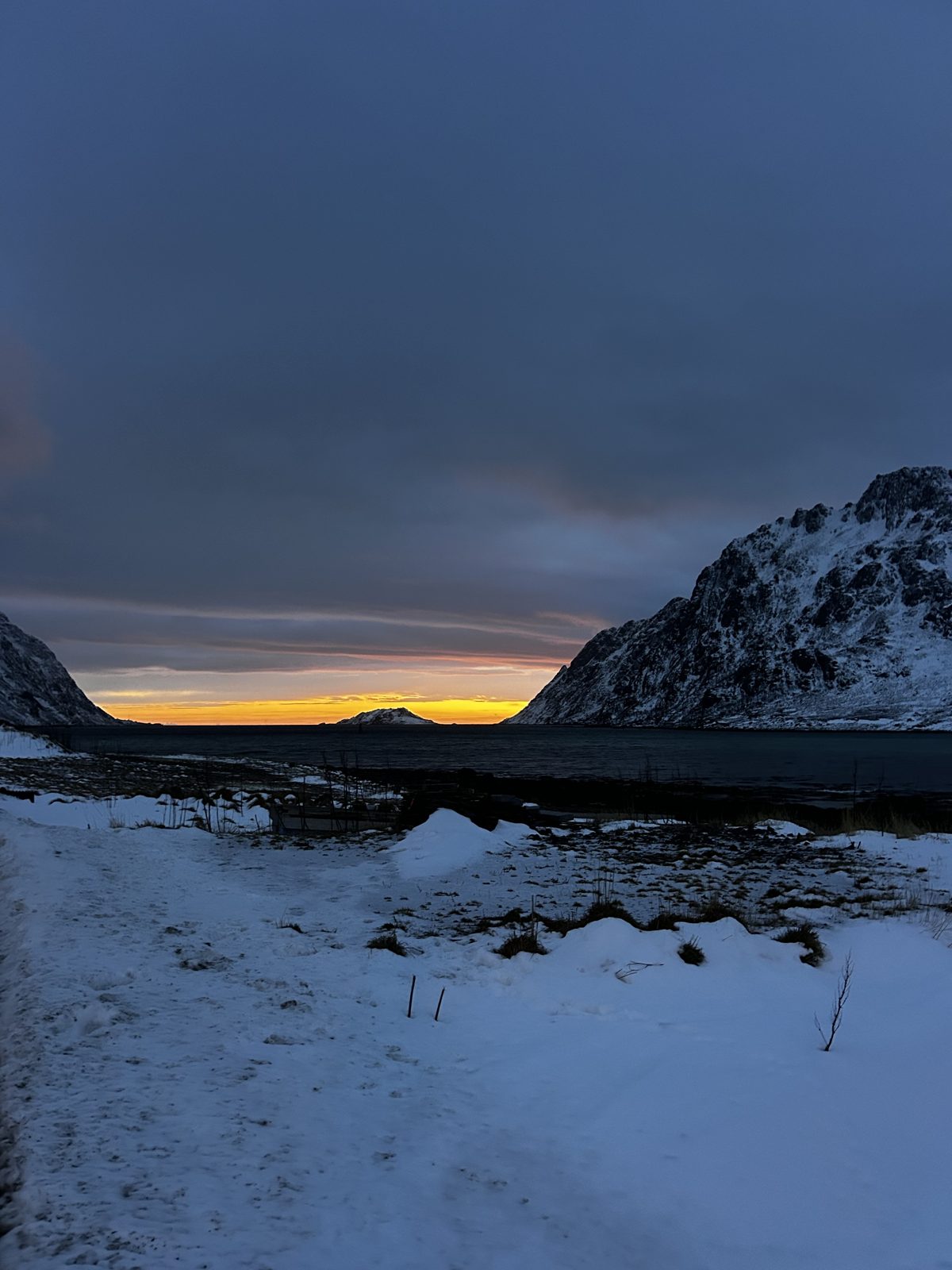
In winter, add margin. The usable windows are shorter: a few hours of daylight, weather that can park over the islands for a day or two, and the northern lights — which are a waiting game, where every extra night is another ticket in the draw. A winter trip needs a day or two more than the same ambitions would need in summer, and a base you genuinely enjoy being inside while you wait.
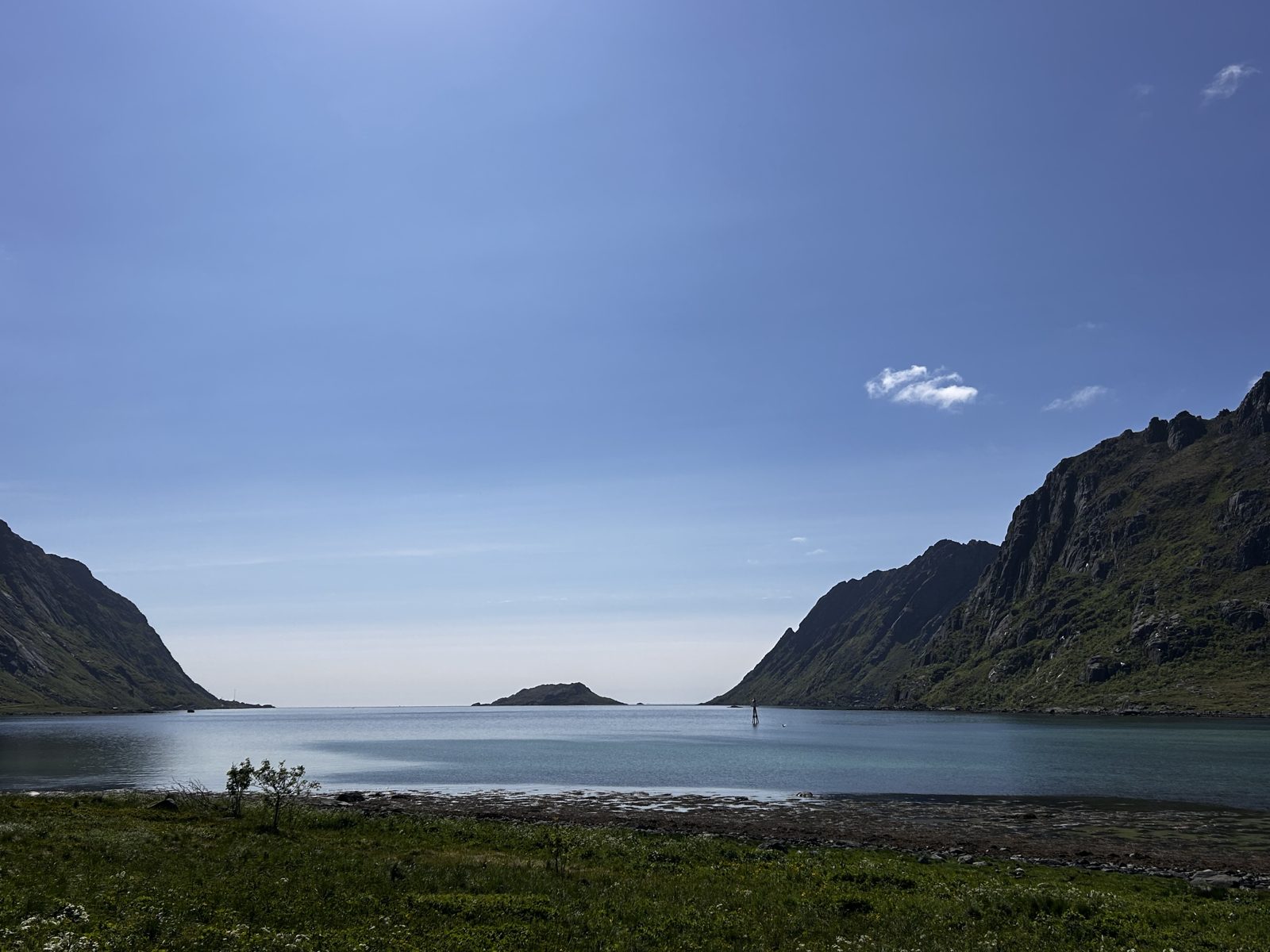
In summer, the light stretches your days — but not your legs. With brightness around the clock you can start a hike after dinner, and the crowds push the famous places towards early and late anyway. But a long mountain hike is a full effort under the midnight sun as at any other hour: one to two experiences a day is still the right budget, with the extra light spent slowly.
In the shoulder seasons, split the difference — and in September, count on swapping days more often as the weather turns livelier.
The four-line answer holds in every season. Winter just leans harder on “stay as long as you can.”
What a good Lofoten day looks like
Since “plan experiences, not days” is this guide’s rule, here is what it means in practice.

“The private sauna next to the beach was so cool! We used it every day and would then jump right into the fjord.”
A good day here has one headline: a summit, a coastal walk, a village morning, a boat on the fjord. Around it, space — a slow breakfast while you read the sky, an unplanned stop because the weather turned, a proper lunch, an evening that ends on a beach rather than in a queue.
Build in recovery. A sauna followed by a cold plunge in the Arctic sea does more for hiking legs than a second summit would. And make dinner part of the day, not an afterthought — grill the fish you caught yourself, or take a table for local dishes at a restaurant.
The weather check happens at breakfast: use yr.no or another forecast service, keep two or three alternatives ready, and remember conditions can shift again by midday. Clear tops send you up a summit like Reinebringen or Volandstind; fog on the peaks sends you along the shore towards Nusfjord; sideways rain sends you to the sauna — and nobody feels cheated.
Multiply that day by five or six, and you have the trip people come back for. Multiply a three-stop checklist by three days, and you have the trip people describe as “beautiful, but exhausting.”
The arithmetic of staying longer
Here is a way of thinking about trip length that we wish more visitors used. Getting to Lofoten is the expensive part — the long flights, the car, the crossing. Those costs are the same whether you stay three nights or eight. Each additional night, by contrast, is usually one of the cheapest parts of the whole trip — a fraction of what the journey cost you.
So the question is not really “how few days can we manage with?” It is: “having paid to cross the world to one of its most beautiful places, why would we leave in three days?” Stretch the stay, not the itinerary. The last days of a longer trip — when the famous stops are done and you are simply living here — are the ones our guests talk about when they come back.
One trip is one season
And they do come back. Because here is the final honest answer to “how many days do you need”: more than one trip.
As our guide to the seasons explains, Lofoten is several places wearing the same mountains. The green islands under the midnight sun and the white islands under the northern lights are different experiences entirely — different light, different silence, different days. No single trip, at any length, contains both. So plan the first visit knowing it is unlikely to be the last — and let the second one take a different season.
Trip length, answered
Is 3 days enough for Lofoten?
It is the absolute minimum for a real visit: the classic villages, one big hike if the weather allows, a beach evening — some of the famous pictures. It leaves no slack for weather, so keep the list short and stay flexible. Five to seven days is a far more comfortable first trip.
Is one day in Lofoten worth it?
As a scouting drive, yes — the road itself is remarkable. As a visit, no. You will spend most of the day driving, with no room for weather. If a day is all you have, choose one small area and walk, rather than trying to cross the islands.
How many days do I need to see the highlights?
The postcard highlights — Reine, Hamnøy, Sakrisøy, Å, one summit, one beach — fit into three to four days from a base in the west, weather permitting. “Weather permitting” is the operative phrase: add days for slack rather than more sights — and plan alternative activities for the days the summits close.
What is the ideal length for a first visit?
Five to seven days. Long enough for the classics, the hikes on their best days, a day trip east and the slow afternoons that make the trip — short enough to leave a season for next time.
Should I split my time between several bases?
Under a week: one base, in the west. Eight days or more: the west as the heart of the trip plus two or three nights in the east works well. Never a new bed every night — every move costs half a day. Where to stay covers the geography.
How many activities should I plan per day?
One — at most two, depending on your energy and how much calm you came for. A long mountain hike is a full day on its own. Plan experiences, not days, and bring more days than experiences.
What if the weather ruins my one chance at Reinebringen?
Then it wasn't the day — and this is exactly why trip length matters. With slack in the plan you simply swap: a low coastal walk like Nesland to Nusfjord shines in weather that closes the summits, and Reinebringen waits for a clear evening later in your stay.
Do the first and last days count?
Barely. Travel to and from the islands consumes most of both. Count nights minus one as your real days, and plan with that number.
Is a week too long for Lofoten?
We have yet to meet the guest who thought so. The second half of a longer stay — past the famous stops, into simply being here — is what people describe when they tell us why they came back.
Should I combine Lofoten with Tromsø or the rest of northern Norway?
If your total time is short, no — splitting a five-day trip across two regions gives you two drive-throughs instead of one visit. With ten days or more it can work well — and fly between the regions rather than drive: direct flights link Tromsø with Leknes (and Svolvær), while driving from Tromsø or Senja costs a full day each way. Give Lofoten five days at minimum within it.
Is it better to stay longer in one season or come twice in different seasons?
Both, ideally — but they answer different questions. Longer stays deepen one Lofoten; second visits reveal another one entirely. Summer and winter here are different places wearing the same mountains. Best time to visit walks the seasons.
Bring more days than experiences
Whatever number you land on, the base decides what those days feel like. Ours is set up for the good-day rhythm this guide describes — the summit up the road, the sauna by the beach, the slow evenings.