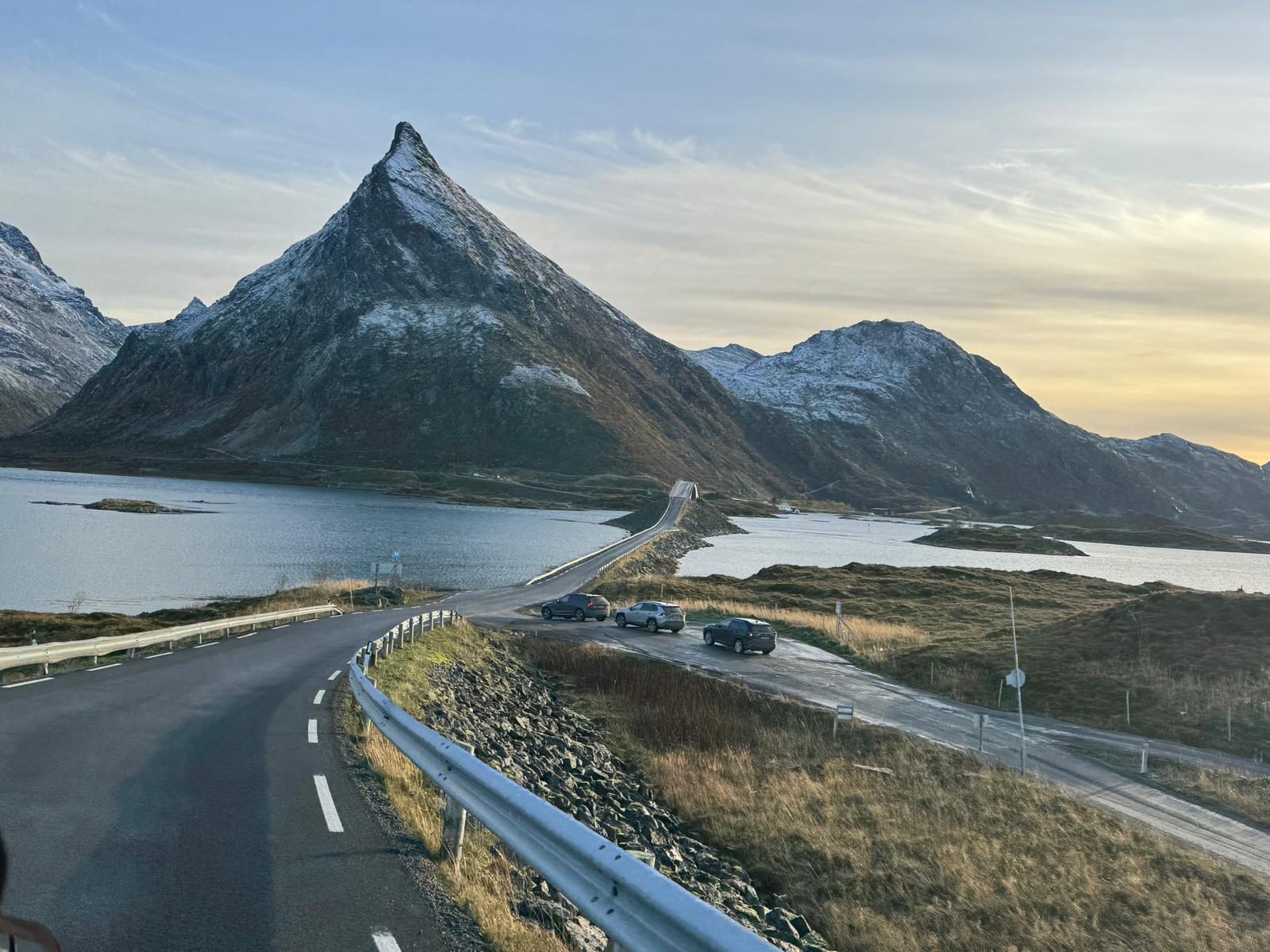
Do you need a car in Lofoten? An honest answer
For the vast majority of visitors, the answer is simply: yes. Rent a car — and enjoy it. The pages below explain why, and answer the practical questions about renting a car here — including the one more and more guests ask: what if the rental turns out to be electric?
Why the honest answer is yes
True, every summer some people cycle across Lofoten, and a few cross the islands on foot. We admire them — and they have no need for this guide. For everyone else:
The things you came for are spread along 130 kilometres of road — and mostly off it. The beaches, the trailheads, the viewpoints and the small villages sit down side roads and at road-ends that no bus route serves.
The buses are few. Public transport follows the E10 between the main settlements, with limited departures — fewer still on weekends and in winter. Reaching a trailhead for a morning start, or a north-facing beach at eleven at night for the midnight sun, is not something a timetable will do for you.
The weather runs your schedule. As our other guides explain, a good Lofoten trip swaps days around the weather — a summit on the clear morning, a coastal walk when fog sits on the peaks. That flexibility only exists with your own wheels; a tour bus cannot re-plan at breakfast.
And the arrival points are bare. If you land at Moskenes by ferry on foot, there is no car rental and no taxi rank waiting, and buses from the port are very infrequent. How to get to Lofoten covers the arrivals.
Can it ever work without a car?
Honestly: in a few narrow shapes, as a compromise.
A stay based inside Svolvær or Henningsvær, built on village life, boat trips and guided excursions, can work on foot — you will experience those two places well, and the rest of Lofoten barely.
Experienced cycle tourists cross the islands every summer, and with time, legs and weatherproof spirits it is a genuine way to travel — a different trip, not a cheaper version of the same one.
For the classic first visit — the western villages, the beaches, the hikes — there is no realistic substitute. Rent the car.
Renting a car in Lofoten: what to actually know
Book early for summer. Rental fleets on the islands are small, and July sells out the way the accommodation does. Book the car when you book the base. Airport pickup at Leknes (or Svolvær) is the practical norm, and one-way drop-offs at a different location are often possible — useful for open-jaw trips.
You will probably be handed an electric car — and that works fine. EVs now make up much of the rental fleet, and many guests drive one here for the first time. In practice it is uncomplicated: most hotels have chargers, some private rental houses have their own charger — ask your accommodation before booking, because charging where you sleep is the relaxed solution — and there are public chargers as well, with the fast ones concentrated in Leknes and Svolvær. Distances here are short; range worry belongs to bigger places than this.
In winter, the car comes prepared — you should too. Rental cars are delivered with proper winter tyres in season; that part is handled. What matters is the driver: winter driving on these narrow roads is genuinely different from summer driving. Wind, snow showers, icy stretches and short daylight ask for lower speed and larger margins. If winter driving worries you, plan the trip between May and October instead — best time to visit covers that choice.
Drive the road on its own terms. The E10 and its side roads are often narrow — expect to slow down or stop entirely for oncoming motorhomes and trucks, and expect sheep along the verge and sometimes on the asphalt. Use the marked parking at trailheads and viewpoints; verges here are passing room, not parking.
Did you know? — from Casa Lofoten
The house has its own Type 2 EV charger that fits all rental cars — free for our guests. Charging where you sleep is the relaxed way to drive electric in the west of Lofoten. Why we believe it’s the best base in Lofoten →
The car questions, answered
Can I visit Lofoten without a car?
Only in narrow shapes: a village-based stay in Svolvær or Henningsvær with boat trips and guided tours, or a committed cycle tour in summer. For the classic first visit — the western villages, beaches and hikes — rent a car.
Are there taxis and buses as a backup?
Fewer than you would hope. Buses follow the E10 with limited departures and rarely reach the beaches and trailheads; taxis are scarce, and Moskenes ferry port has no taxi rank at all. Plan around your own car, not around backups.
Is an electric rental car a problem in Lofoten?
No — it works fine, and many guests drive an EV for the first time here. Charge where you sleep when you can (ask your accommodation whether they have a charger), use the fast chargers in Leknes or Svolvær when needed, and enjoy the quiet drive.
Do rental cars come with winter tyres?
Yes — in season the cars are delivered with proper winter tyres. The equipment is handled; the caution is yours. Winter driving on narrow roads differs from summer driving: slower speeds, bigger margins, and respect for storm days.
Is driving in Lofoten difficult?
Not difficult — but particular. One narrow main road shared with motorhomes, one-lane bridges, sheep on the verges, and photo stops everywhere. Summer asks for patience; winter asks for experience. Both reward it.
How far in advance should I book the car?
For June–August: when you book your accommodation, months ahead — the island fleets are small. Other seasons are far more forgiving, but early booking still gets the better cars and prices.
Should I choose petrol or electric?
Either works. If your accommodation has a charger, an EV is the effortless choice — home charging removes the one genuine EV concern here. Note also that petrol and diesel are expensive in Norway, so the electric car is usually the cheaper one to run. Without home charging, petrol keeps things simplest in the darkest winter weeks; the rest of the year, take what the fleet gives you.
Where can I park for the famous hikes and beaches?
At marked parking areas at the trailheads and beaches — some with fees in high season. Never on the verges: the narrow roads need every metre for passing traffic.
Can I take the rental car on the ferries?
Yes — rental cars travel on the local ferries as normal cars do. If your plan includes the Bodø–Moskenes crossing with a car, reserve the ferry slot well ahead in summer.
“It was nice to be able to charge the car by the sauna.”
Charge where you sleep
The house has a free Type 2 charger that fits every rental car, marked parking by the door, and the E10 four minutes away — the relaxed version of driving in the west.