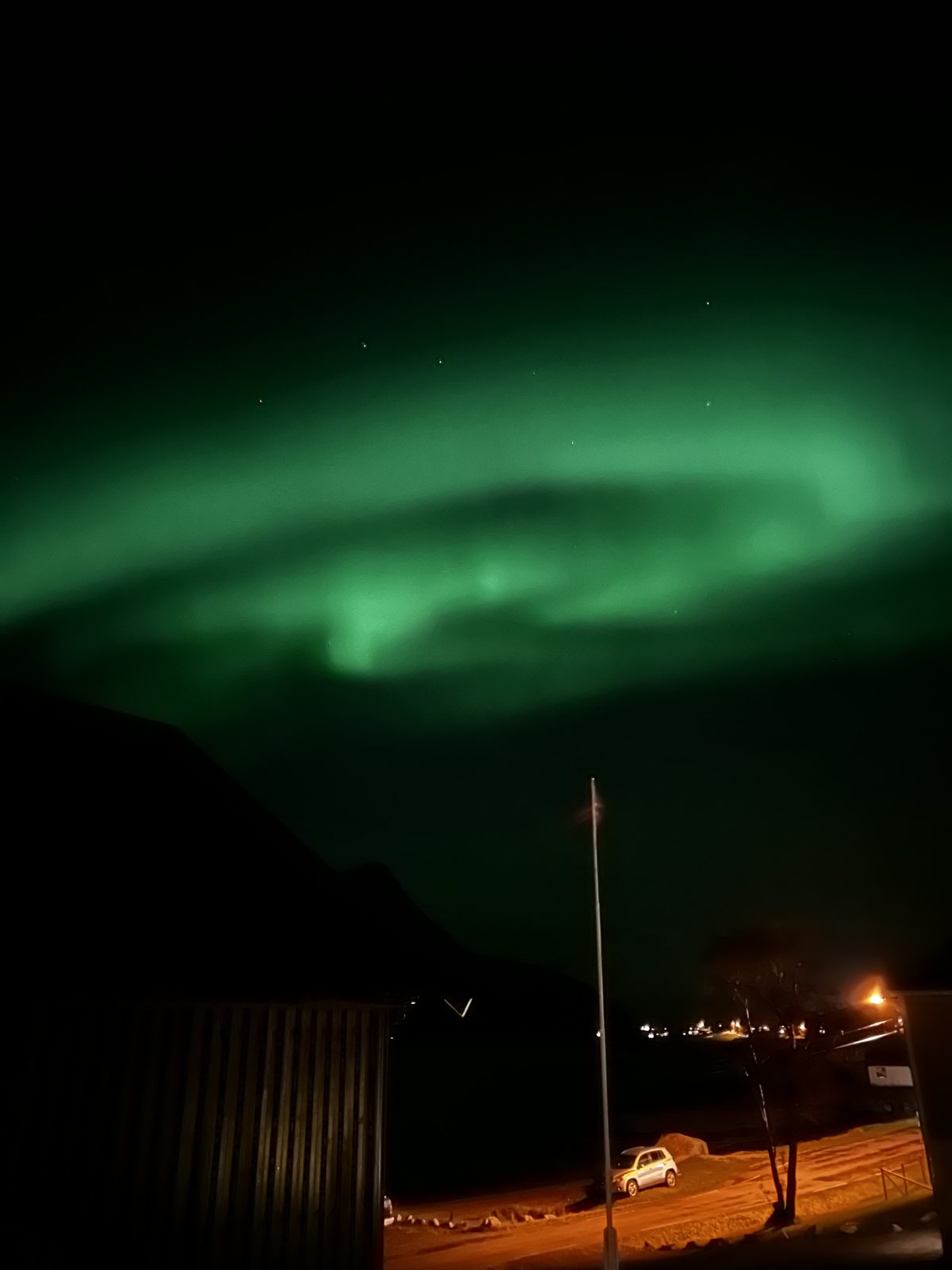
Northern lights in Lofoten
Everything about seeing the northern lights comes down to two conditions: darkness, and a clear sky. That is the whole secret. This guide covers both honestly — and how our guests actually catch the lights in practice, forecast apps and all.
The aurora is always there — you just can’t always see it
Here is the fact that reframes the whole hunt: there is northern lights activity essentially all the time — even in the middle of the day. You simply cannot see it against a bright sky.
The aurora is born on the sun. Solar storms throw charged particles into space, and when a stream happens to point our way, it collides with the Earth’s magnetic field and sets the upper atmosphere glowing. How intense the display gets depends on the strength of those solar storms and how directly they hit us — which is why some nights give a faint green arc and others fill the whole sky.
So the hunt is never about whether the aurora “shows up”. It is about removing the three things that hide it: daylight, light pollution and cloud.
One thing we will not do is promise you the aurora. Nobody honestly can. What we can promise is this: come in the dark season, stay enough nights, use the method below — and your odds are very good.
Darkness
The aurora season in Lofoten runs from about mid-September to early April — the months with real darkness in them. Some darkness returns already in early September; from October through March there is plenty. Here are the hours of darkness per night through the season:
| Month | Dark hours per night (approx.) | Notes |
|---|---|---|
| September | ~9 → 13 | Season opens mid-month; mild evenings, hikes by day |
| October | ~13 → 17 | Long nights arrive; first storms too |
| November | ~17 → 21 | Deep darkness; rawest weather weeks |
| December | ~22, twilight at midday | Polar night from ~7 Dec — maximum dark hours |
| January | ~22 → 18 | Light returning; snow settles |
| February | ~18 → 14 | Long nights and steadier weather |
| March | ~14 → 10 | Winter scenery, civilised daylight, dark evenings |
| Early April | ~10 and shrinking fast | Season closes in the first days |
Read the table both ways. December gives the most hours for the lights to appear in — and the least daylight for seeing the landscape you came to stand in. September and March give fewer dark hours, but longer days for the scenery — and late winter statistically leans clearer. Every month in the season is its own balance of darkness, daylight and clear-sky odds, and none of them is wrong. Best time to visit walks the whole year.
A clear sky
This is the condition no one controls — and the honest heart of this guide. The aurora happens far above the weather. A cloudy night hides everything, however strong the activity. And Lofoten’s weather is Atlantic: it changes fast, in every month, and it makes no promises. January can be stormbound for days — and January can serve a week of frozen, crystal-clear nights. Both happen every winter.
Three honest rules follow:
More nights beat better nights. You cannot order a clear sky, but you can give it more chances. This is the single strongest argument for a longer stay in the dark season — every extra night is another draw.
February and March lean clearer. As the season matures, the weather statistically steadies while the nights stay long — the classic reason photographers favour late winter. September–October trade some weather certainty for mild temperatures and open trails.
Thin, high cloud is not a verdict. A high cloud layer is often transparent enough to see the lights through. It is the low, dense cloud that closes the show — worth knowing on nights when the forecast says “partly cloudy”.
Why Lofoten is in exactly the right place
The northern lights are not spread evenly across the north. In its quiet state, the aurora forms a thin oval band sitting at roughly 67–68 degrees — and Lofoten lies at 68 degrees north, directly beneath it.
Two things follow, and both matter:
You do not need strong solar activity here. Further south, the aurora only appears when geomagnetic storms are powerful. Under the oval, even quiet nights can deliver — a low Kp forecast that would mean nothing in Oslo can still mean dancing lights over the fjord here.
You do not need to be anywhere else. Tromsø sits in the same auroral band as Lofoten — not a better one. What Lofoten adds is the setting: mountains rising from the sea, beaches facing the open north horizon, and dark villages far from city light.
How to actually catch it: the method our guests use
The rhythm of a northern-lights evening, as it works from a dark-sky base.
1. Check the forecast at dinner. We recommend the aurora forecast on yr.no — in our experience it is very good. It shows expected activity up to three days ahead (useful for planning which evenings to keep free), the Kp index on its 0–9 scale, and a short-term “nowcast” 30–90 minutes ahead. In the Yr app you can switch on push alerts that warn you when activity rises — so the phone watches the sky while you have dinner.
2. Check the cloud forecast alongside it. Activity means nothing under a closed sky. High activity + clear gaps = keep the evening free and the boots by the door.
3. Step out regularly — and give your eyes time. Displays often begin as a pale arc low in the north that strengthens in waves. Go out, look north, let your eyes adjust for a few minutes away from bright light. The lights are most active from evening into the night, and a display can build, fade and return several times.
4. Move into the dark — even twenty metres helps. Find the spot with the least light pollution around you. Often it takes no more than twenty metres into the darkness beyond the last light source before the display sharpens dramatically — the difference is far bigger than the distance suggests. And skip the fire: flames ruin the night vision your eyes just spent minutes building.
5. Dress for standing still. Watching the aurora is stationary work in winter air. More layers than a hike needs, and something warm to drink.
6. Be patient — and flexible. Some nights deliver at nine, some at one in the morning, some not at all. The guests who see the most are the ones who made waiting comfortable: a warm base, a view of the northern sky, and no need to drive anywhere.
Did you know? — from Casa Lofoten
The house sits away from village lighting, with chairs on its own dock, northern-lights benches on the mountainside behind it, and open dark sky — set up so a northern-lights night can be waited out, and watched, without leaving home. The property →
Darkness around you matters
The aurora competes with every artificial light near you. In a lit village centre, faint and medium displays — which is most of them — wash out; only the strong ones cut through. From genuinely dark surroundings, the whole range is visible, and the difference is bigger than most first-timers expect.
And because the wait can be long, the best viewing spot of all is the simplest one: right outside where you stay. Find accommodation with as little light pollution around it as possible — then you can drift in and out all evening: check the sky, warm up, check again. A dark-sky base turns every evening into a possible aurora evening, with no midnight driving involved. Our accommodation checklist covers what to look for.
Beyond the doorstep, look for darkness around you and an open view to the north — ideally over the sea, where no mountain and no streetlight interrupts the horizon. The west of Lofoten is rich in exactly this combination: sparse settlement, north-facing beaches, and very little light between you and the sky.
The beaches make thrilling aurora stages — open horizon, the sound of surf under the lights. Just remember a headlamp for the walk out and back; the darkness that makes the show is the same darkness you cross to reach it.
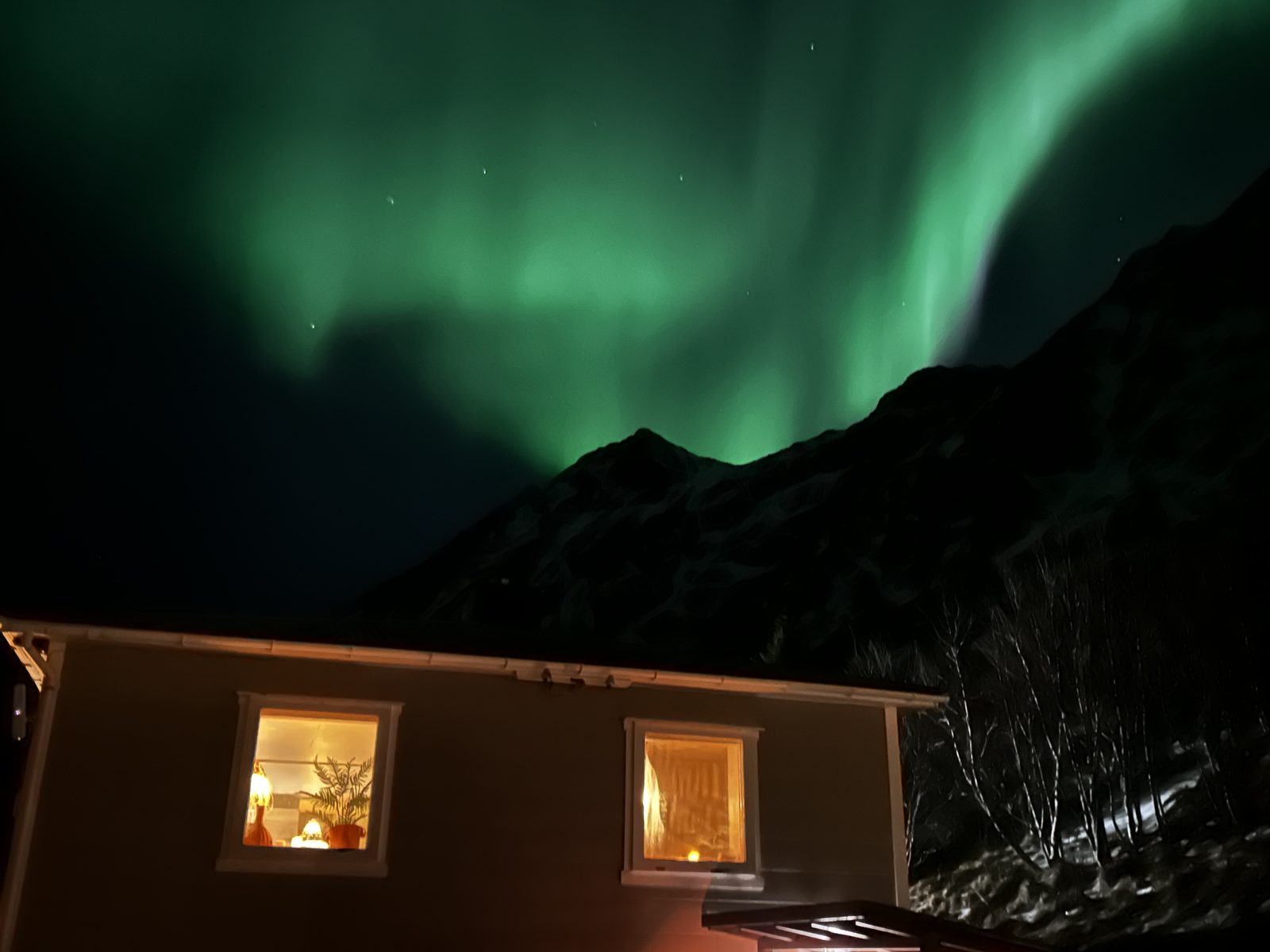
“We found no better place to watch the northern lights.”
Will it look like the photographs?
Honest answer: not always — and knowing this beforehand makes the real thing better, not worse.
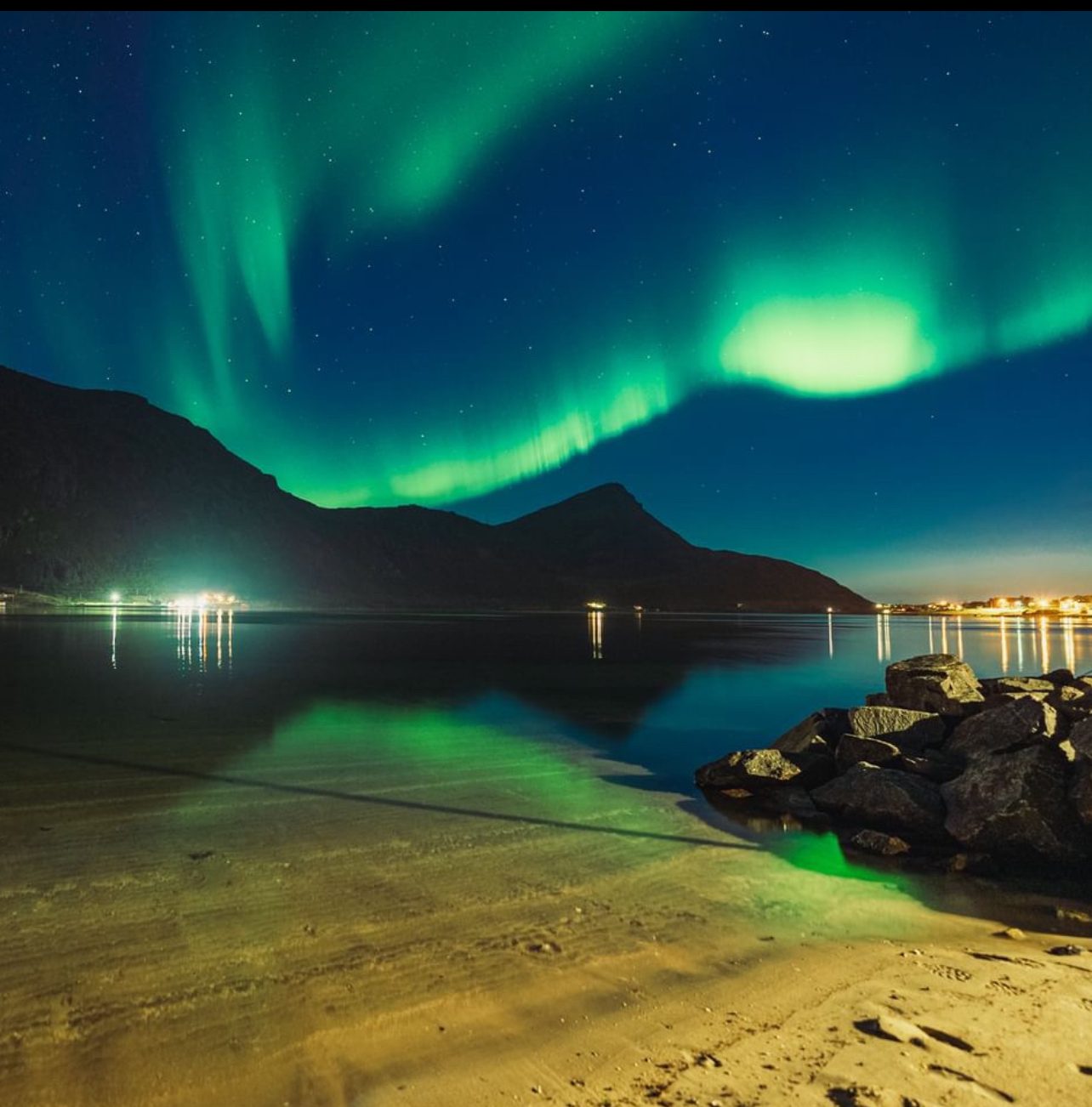
The camera will usually show more than your eye — especially at low activity: its optics and long shutter times gather light the eye cannot. Faint displays that photograph as vivid green can look grey-white to the naked eye — a pale, moving veil. Medium displays show clear green in person. And the strong nights need no caveats at all: colour, movement, the whole sky — nobody who has stood under one asks whether it counted.
Photographing it has never been easier: modern phones with night mode capture the aurora handheld, and any camera on a small tripod with a few seconds of exposure does it well. Our advice: take a few pictures, then put the phone away. The show is above you, not on the screen.
Common misconceptions, quickly:
“The northern lights are guaranteed in winter.” No. Darkness is guaranteed; clear skies are not. Plan more nights, not higher expectations.
“You can see them in summer.” You cannot — the sky never gets dark between roughly mid-April and into September. There is aurora activity up there in July; you are simply looking at it through daylight.
“You need a guided tour to see them.” Aurora tour operators exist, and they find the lights — but our honest advice is to find your own spot instead. The northern lights with a coachload of strangers is not the same experience as the northern lights with the people you came with. From a dark-sky base, the method above is the whole craft.
“You have to go to Tromsø.” Lofoten sits under the same auroral oval. Choose between them on other grounds — the trip you want around the lights — not on aurora odds.
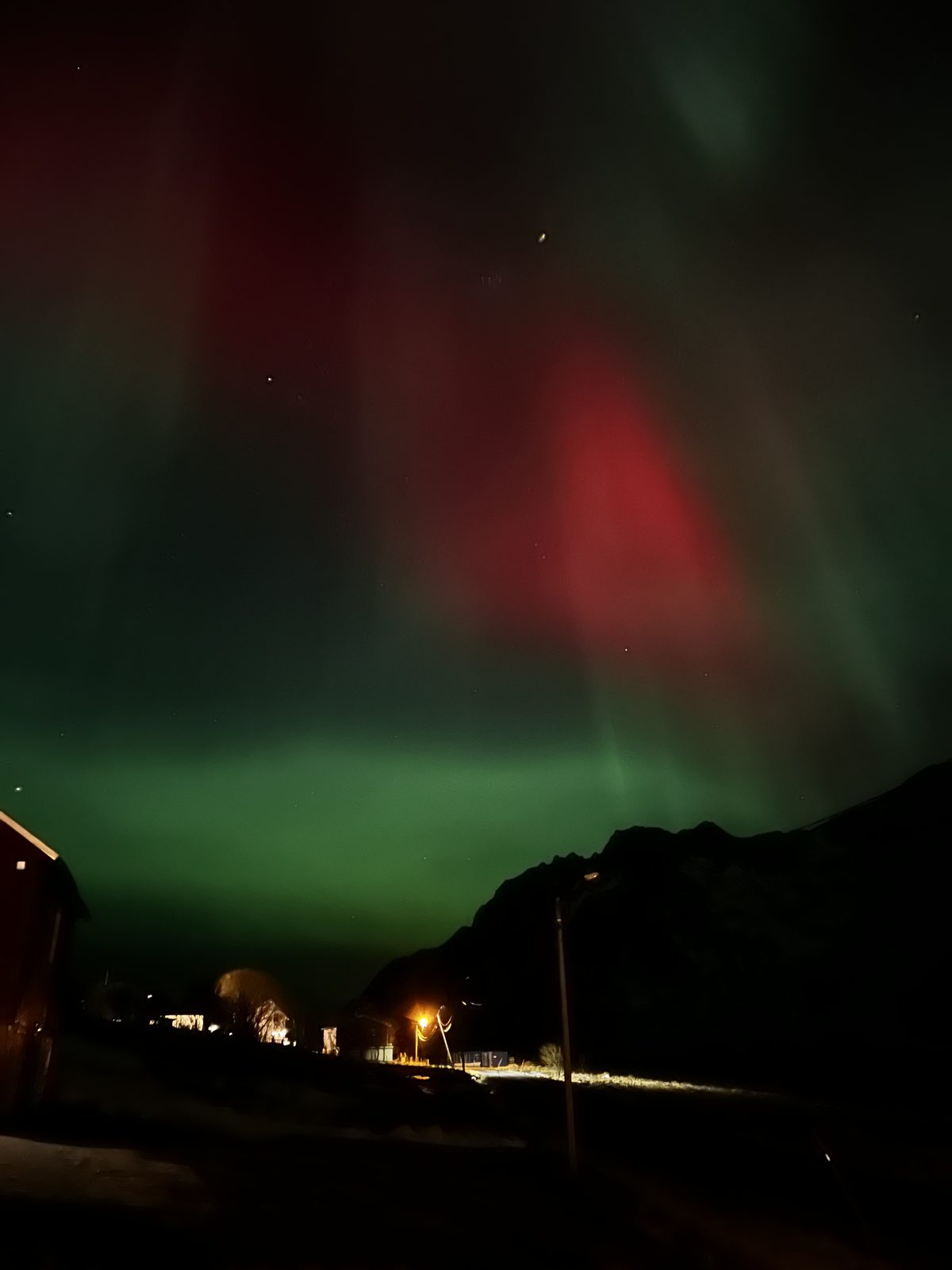
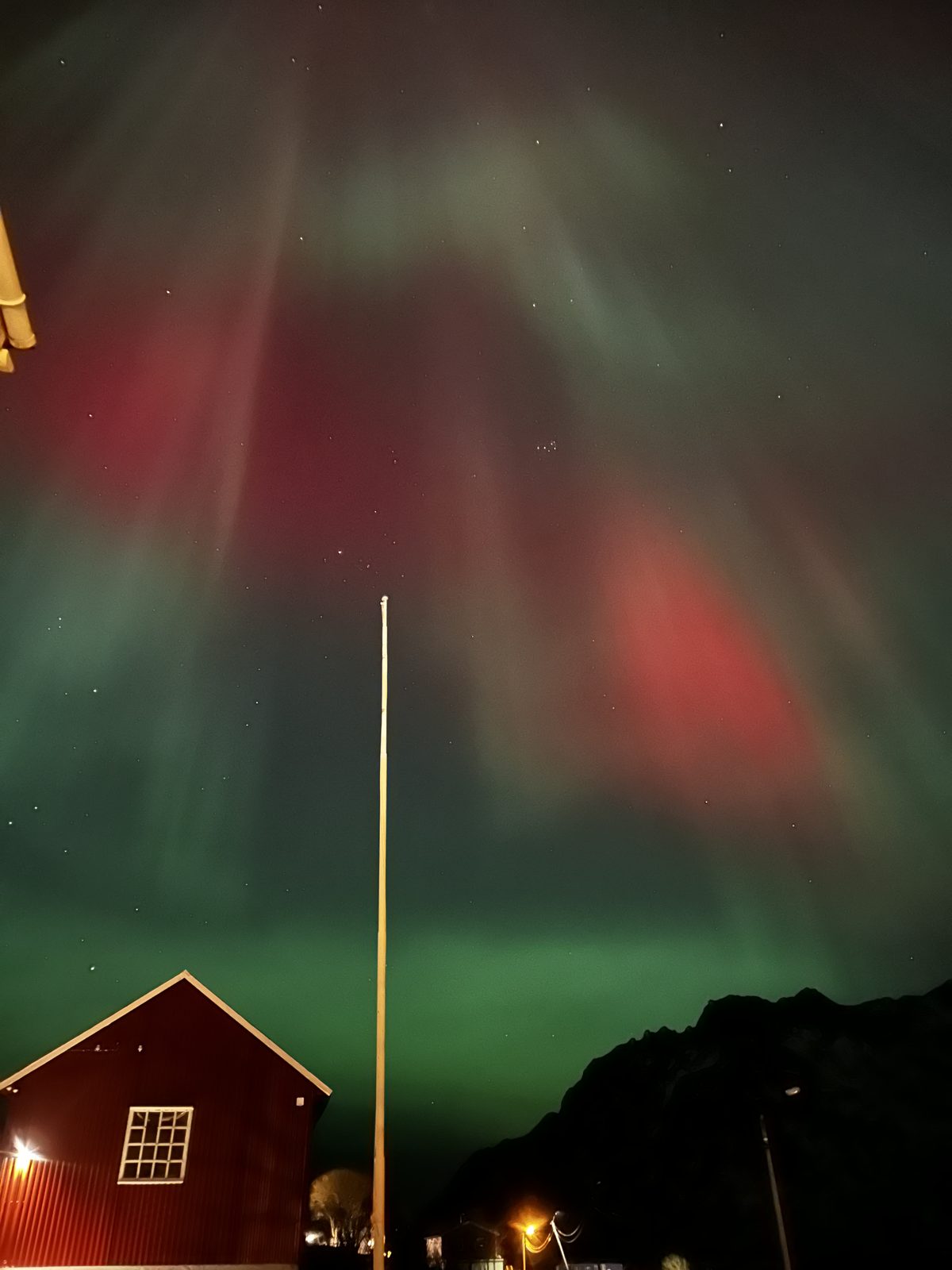
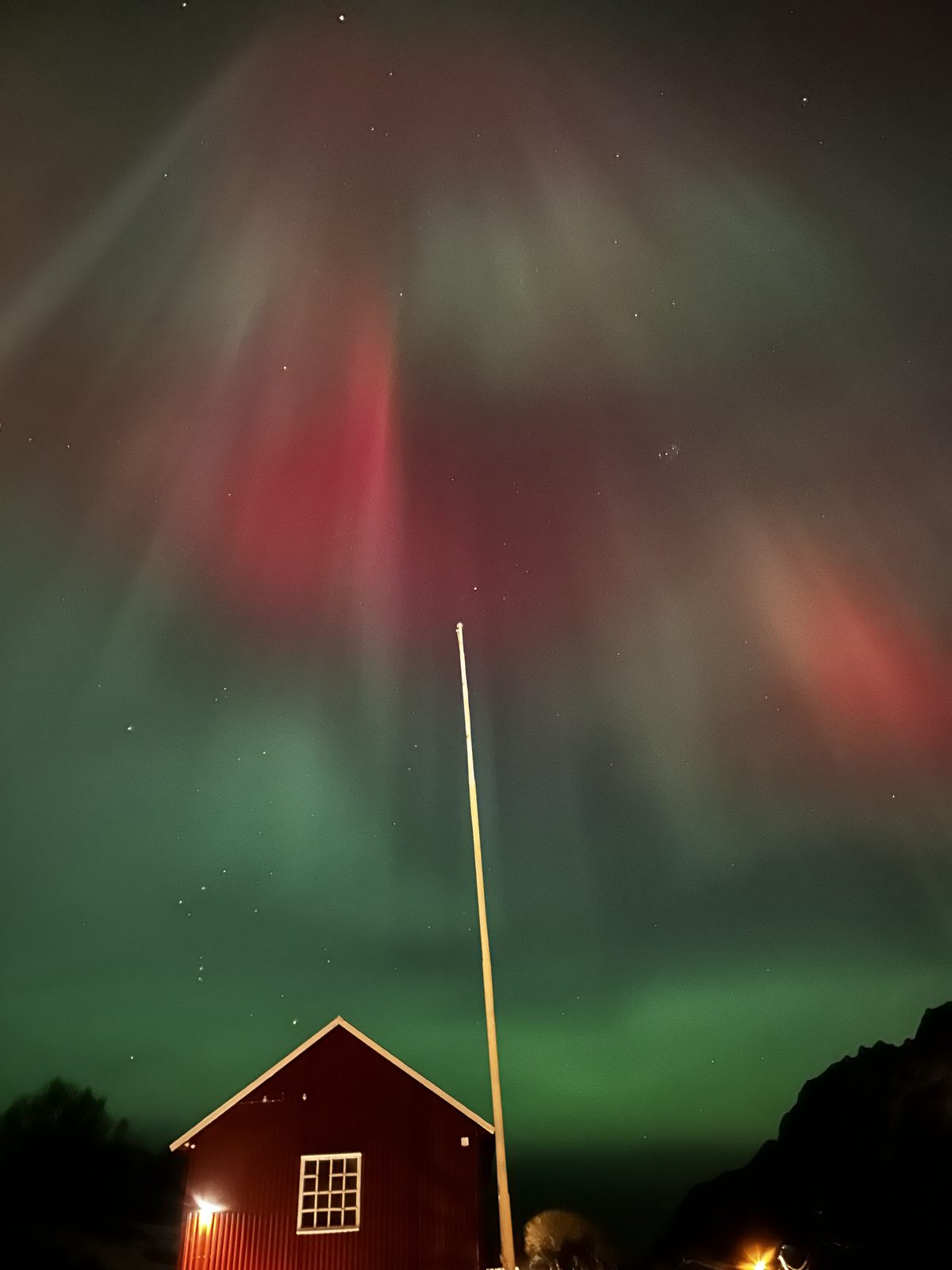
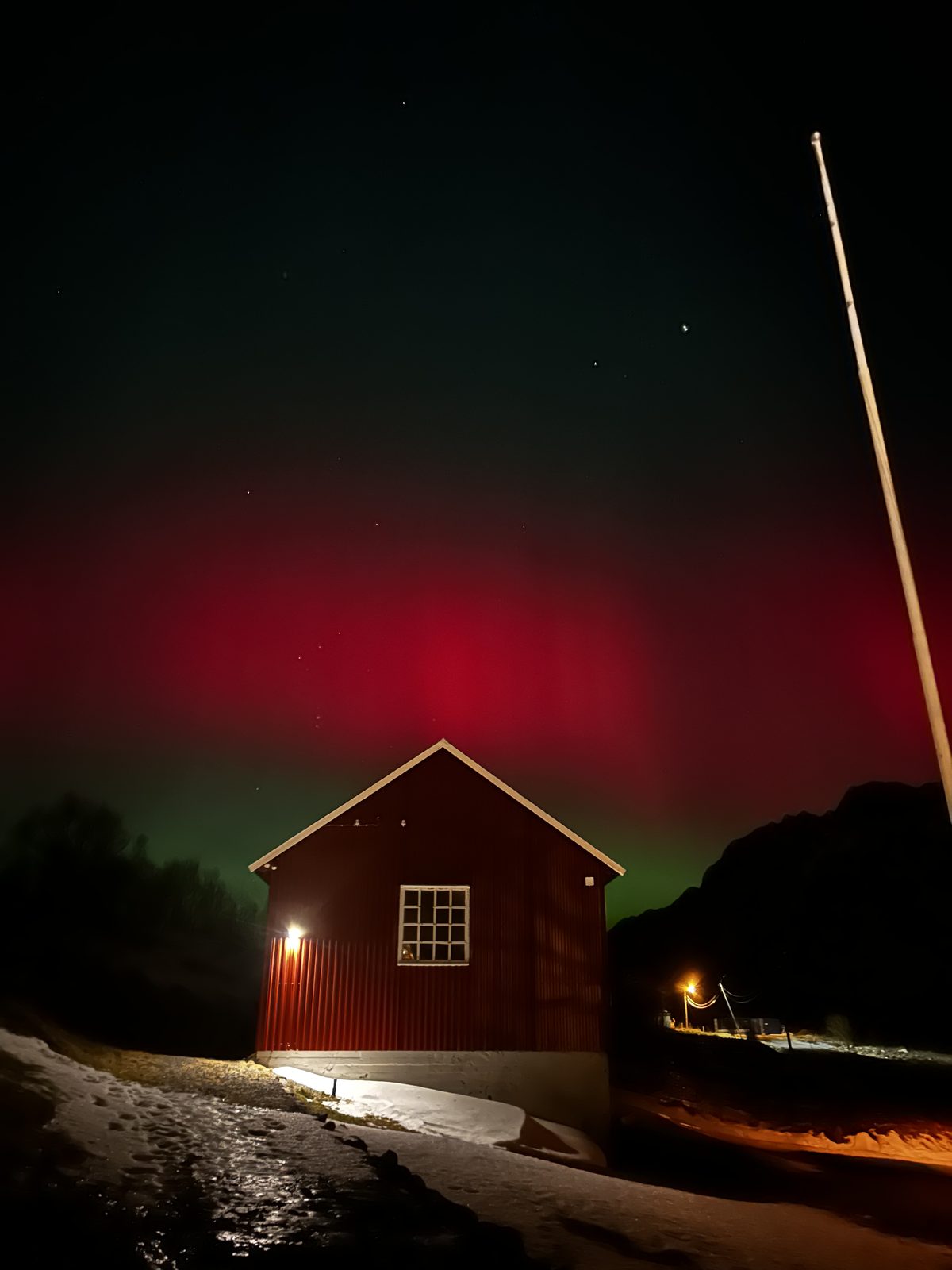
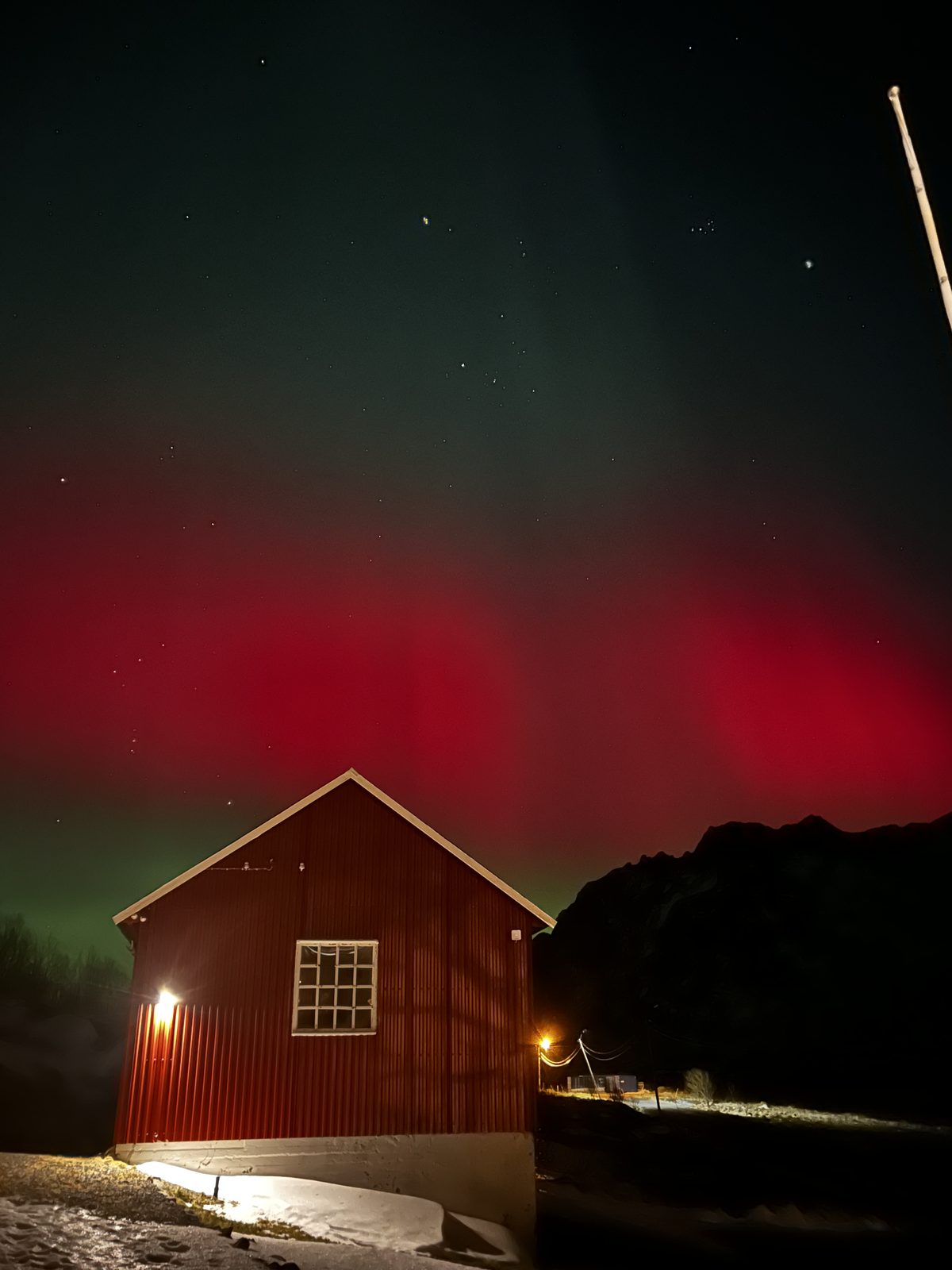
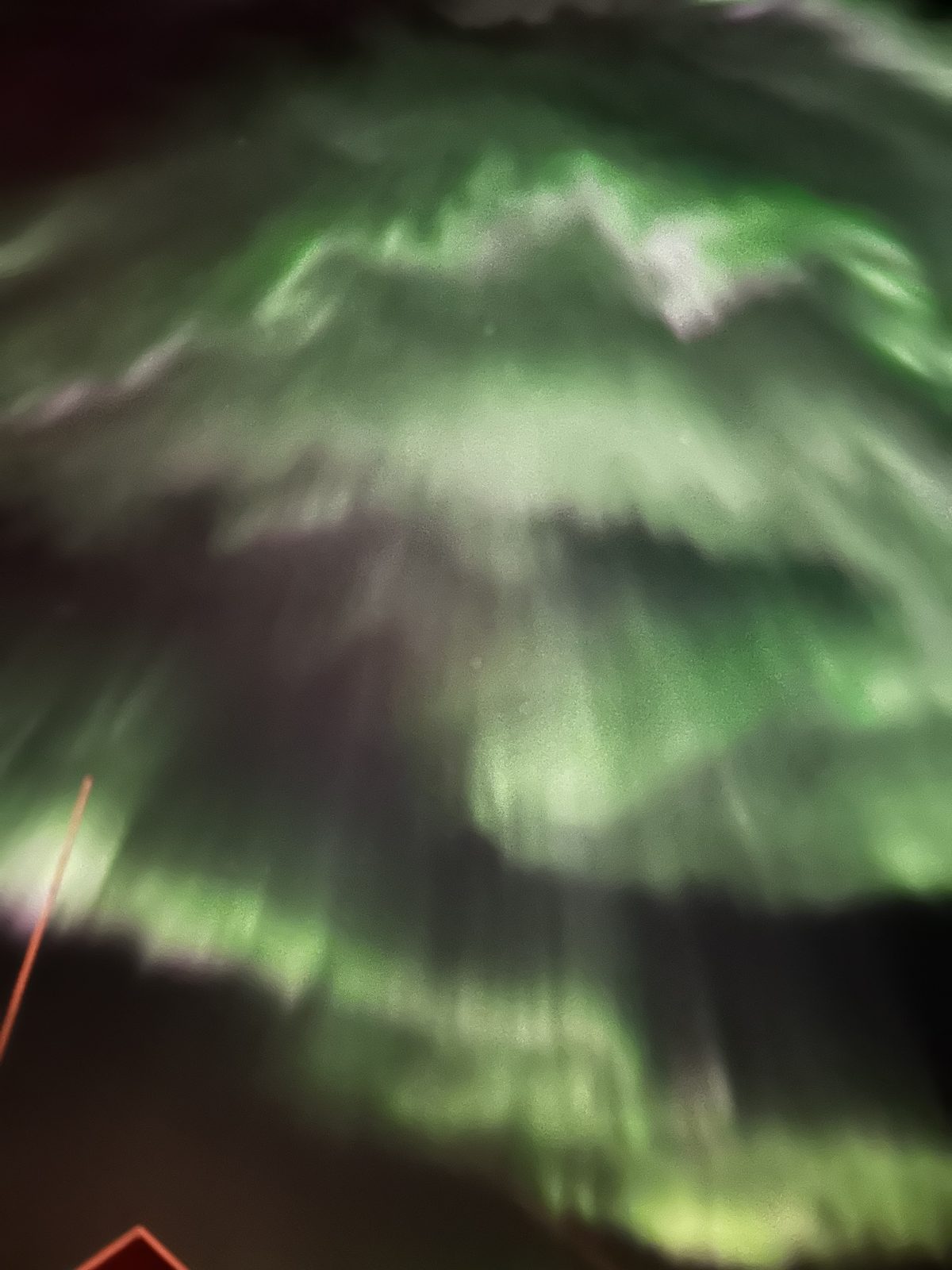
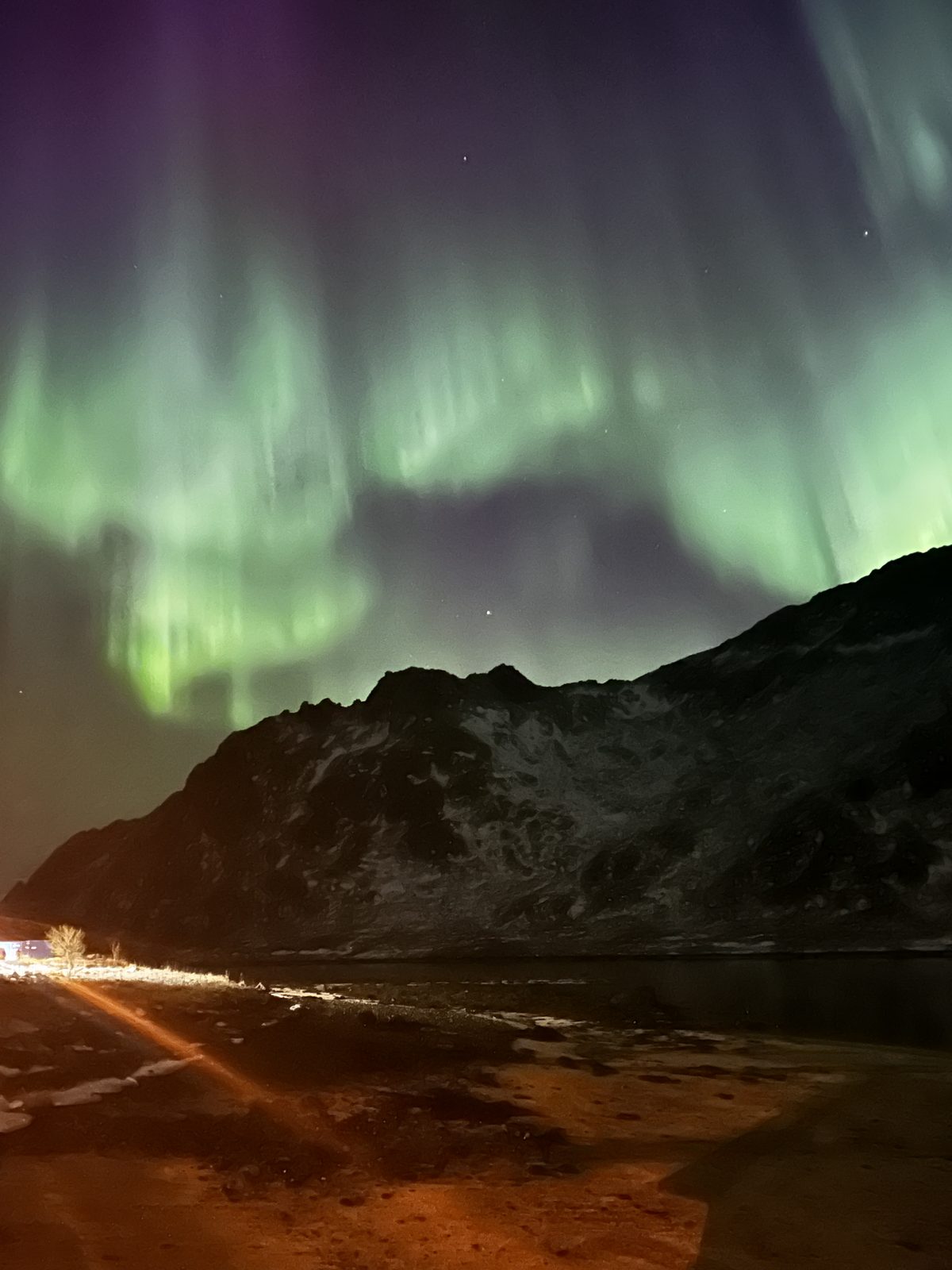
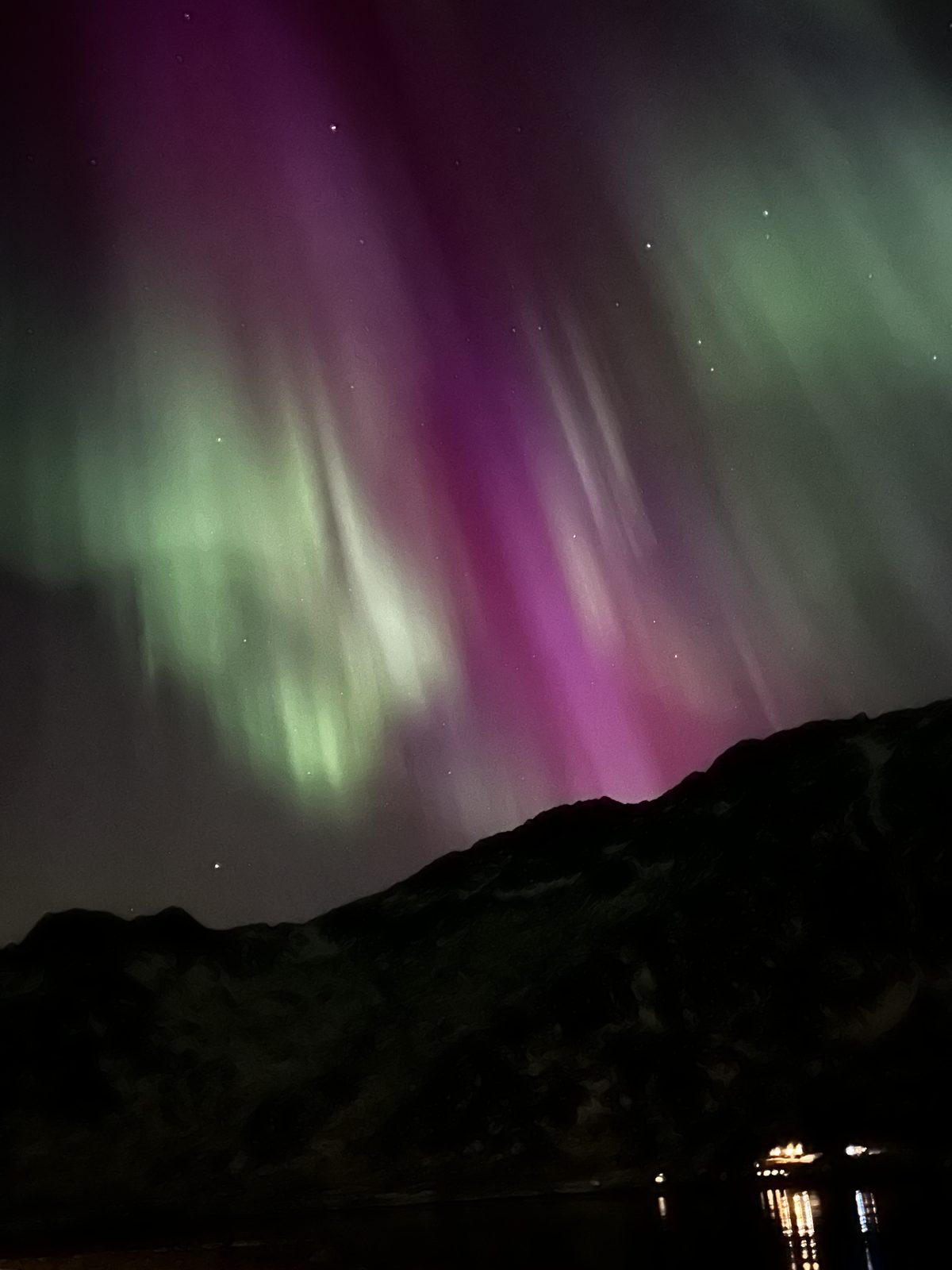
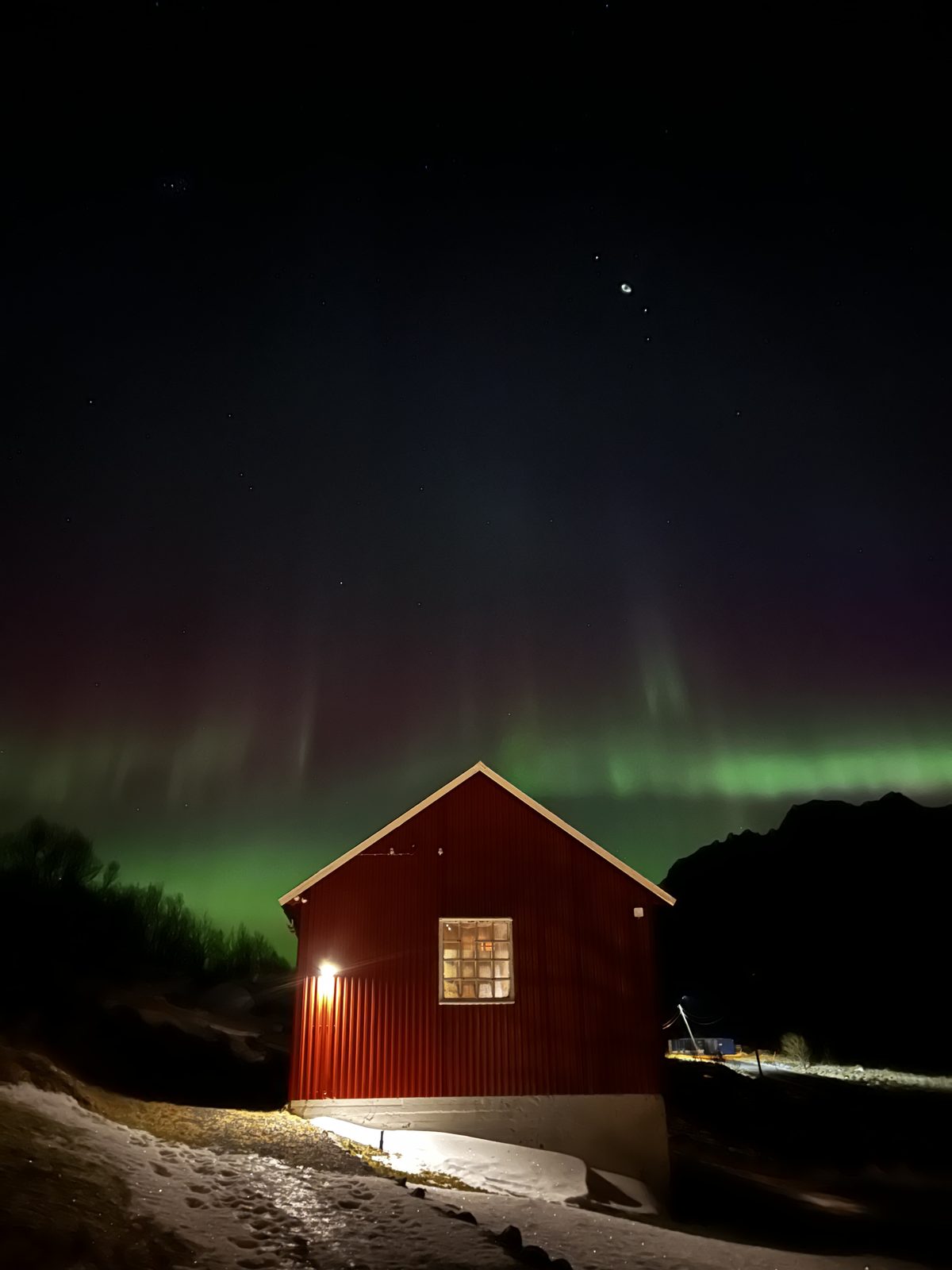
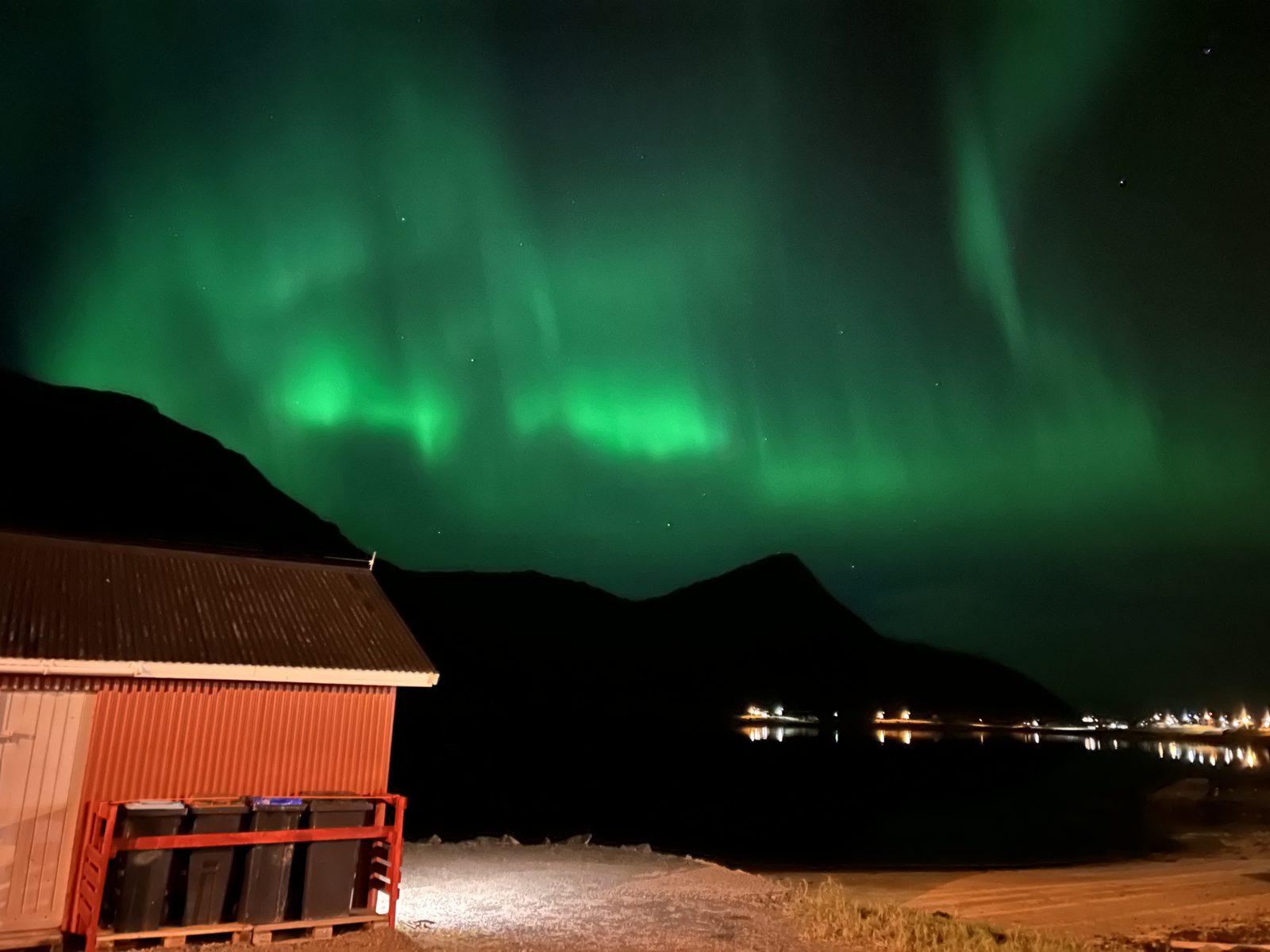
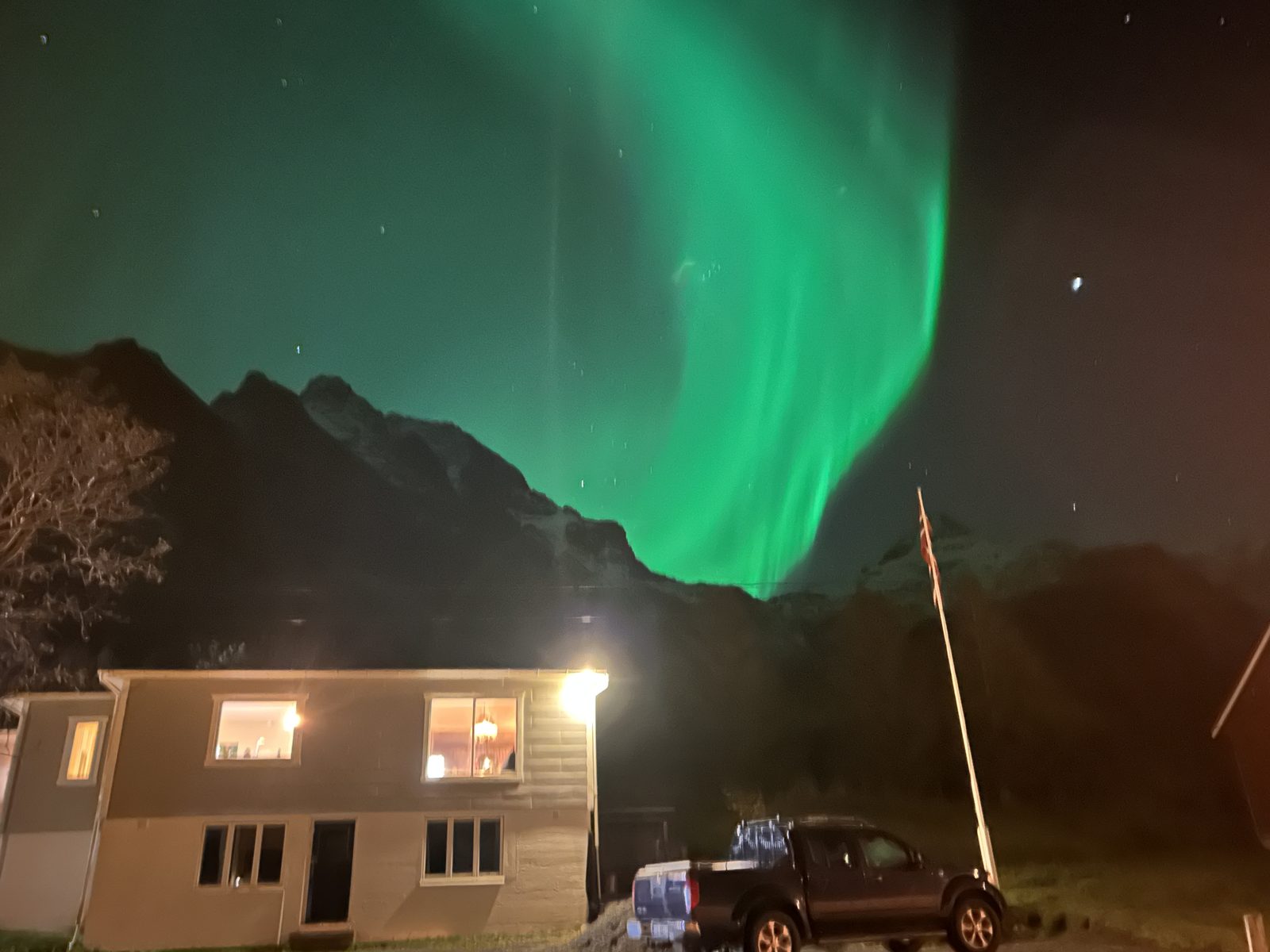
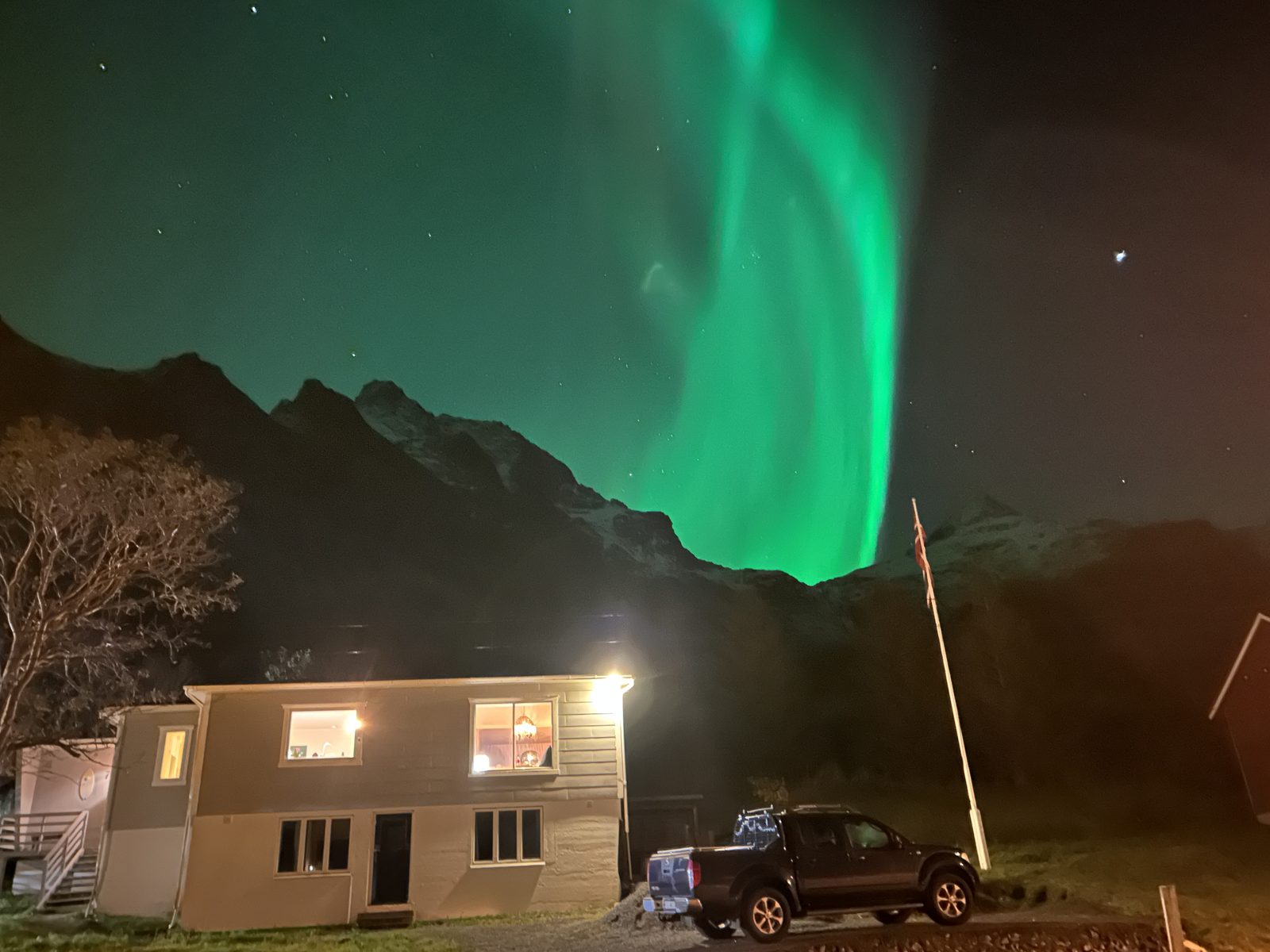
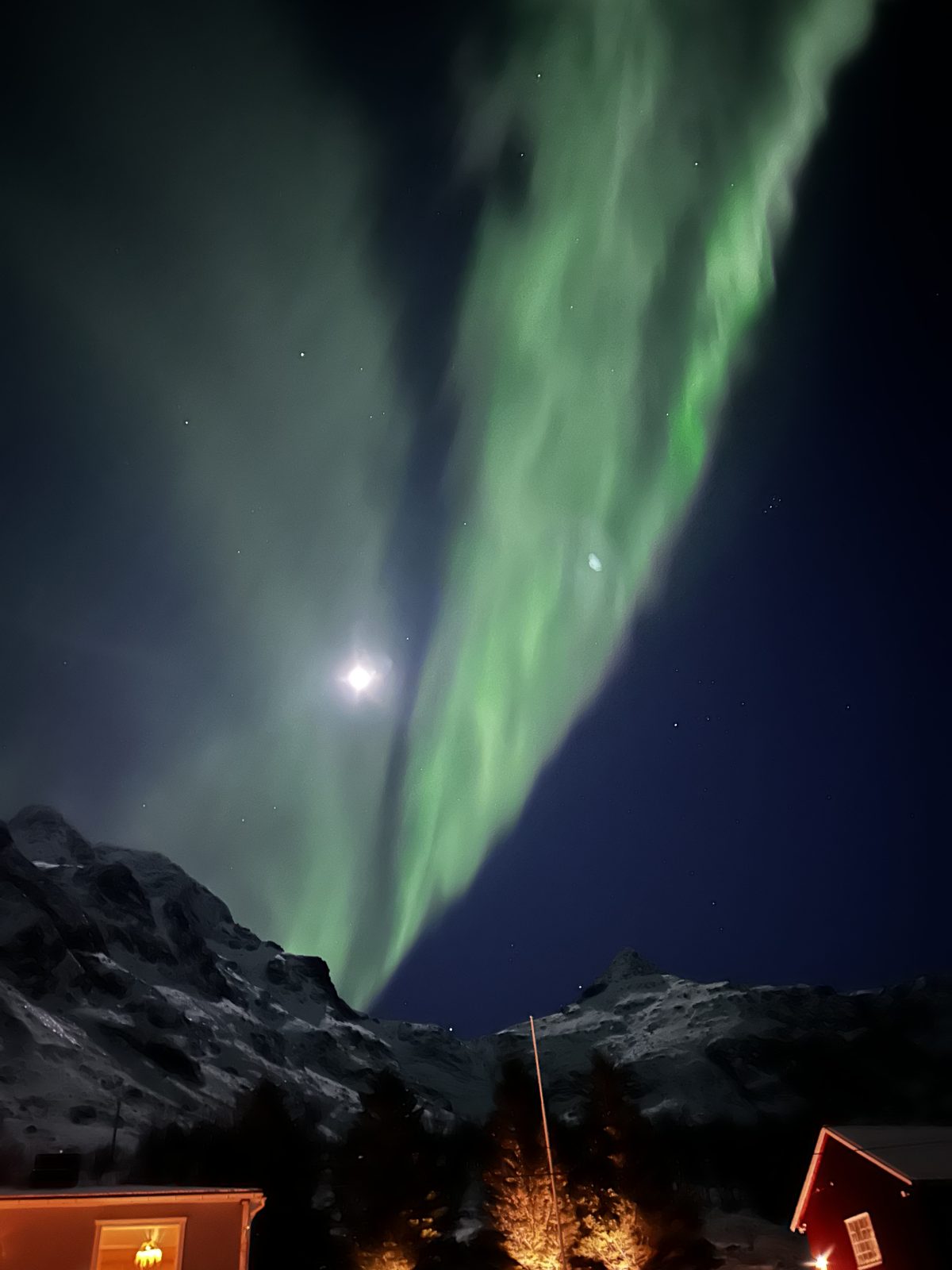
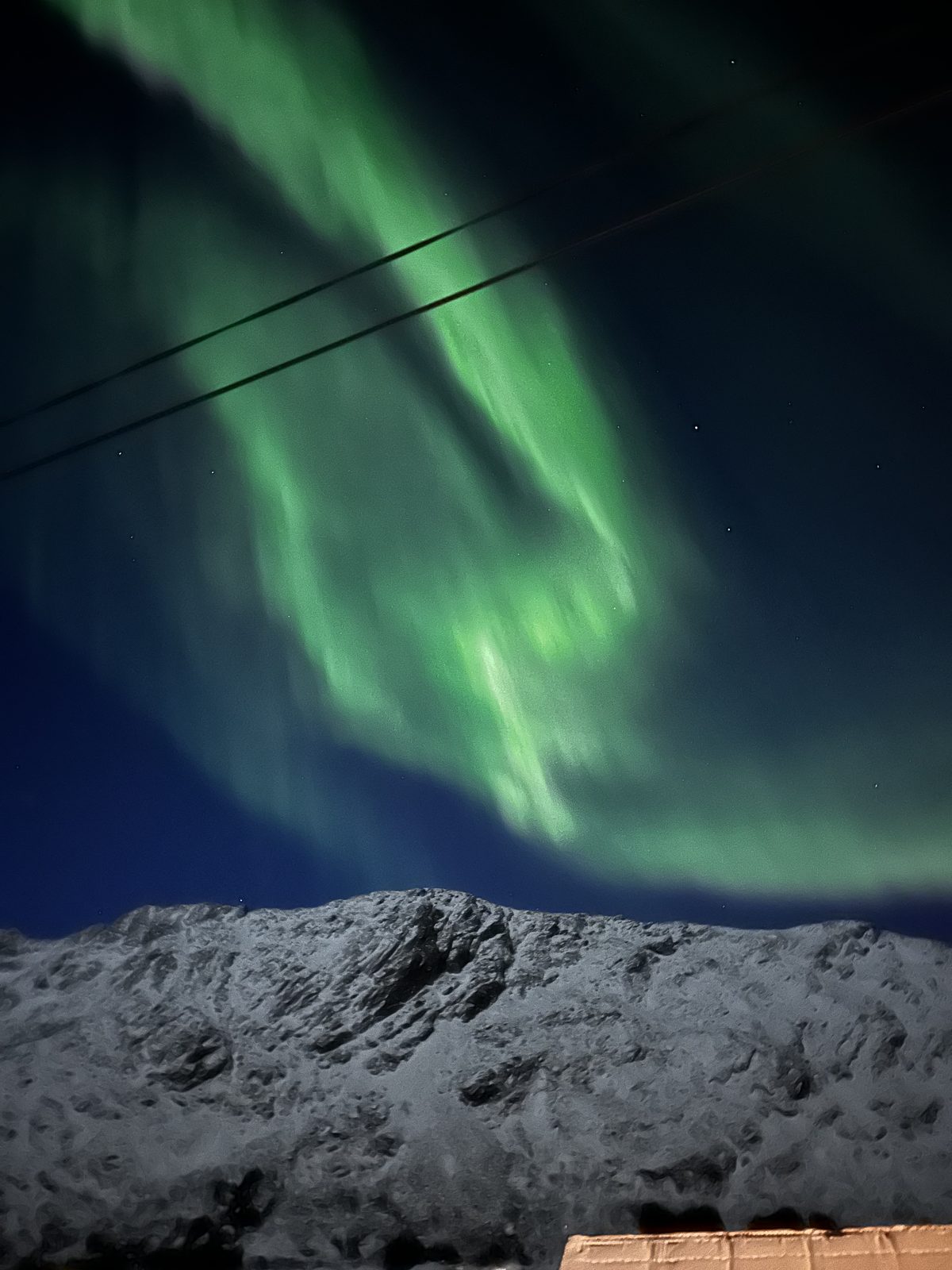
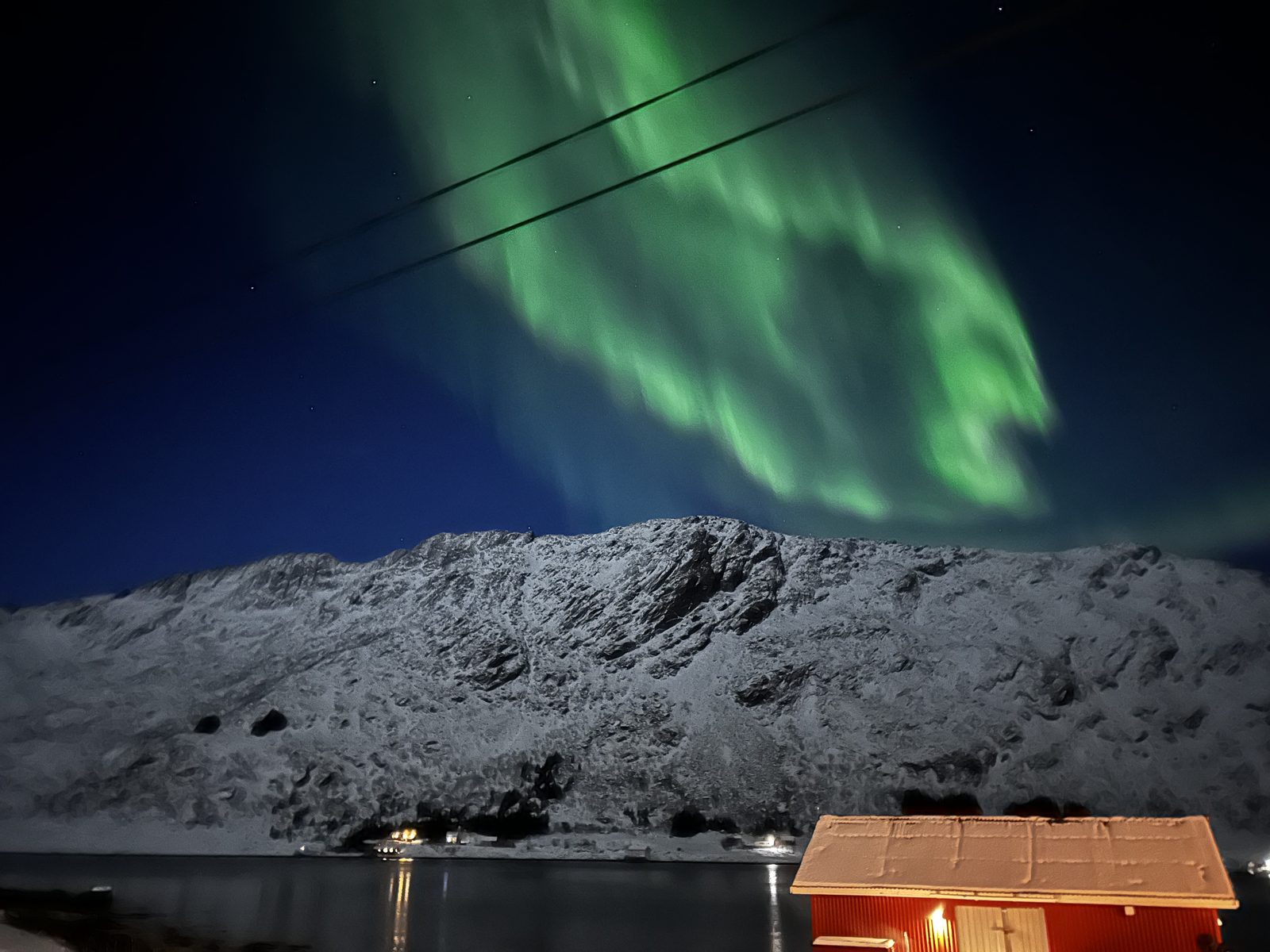
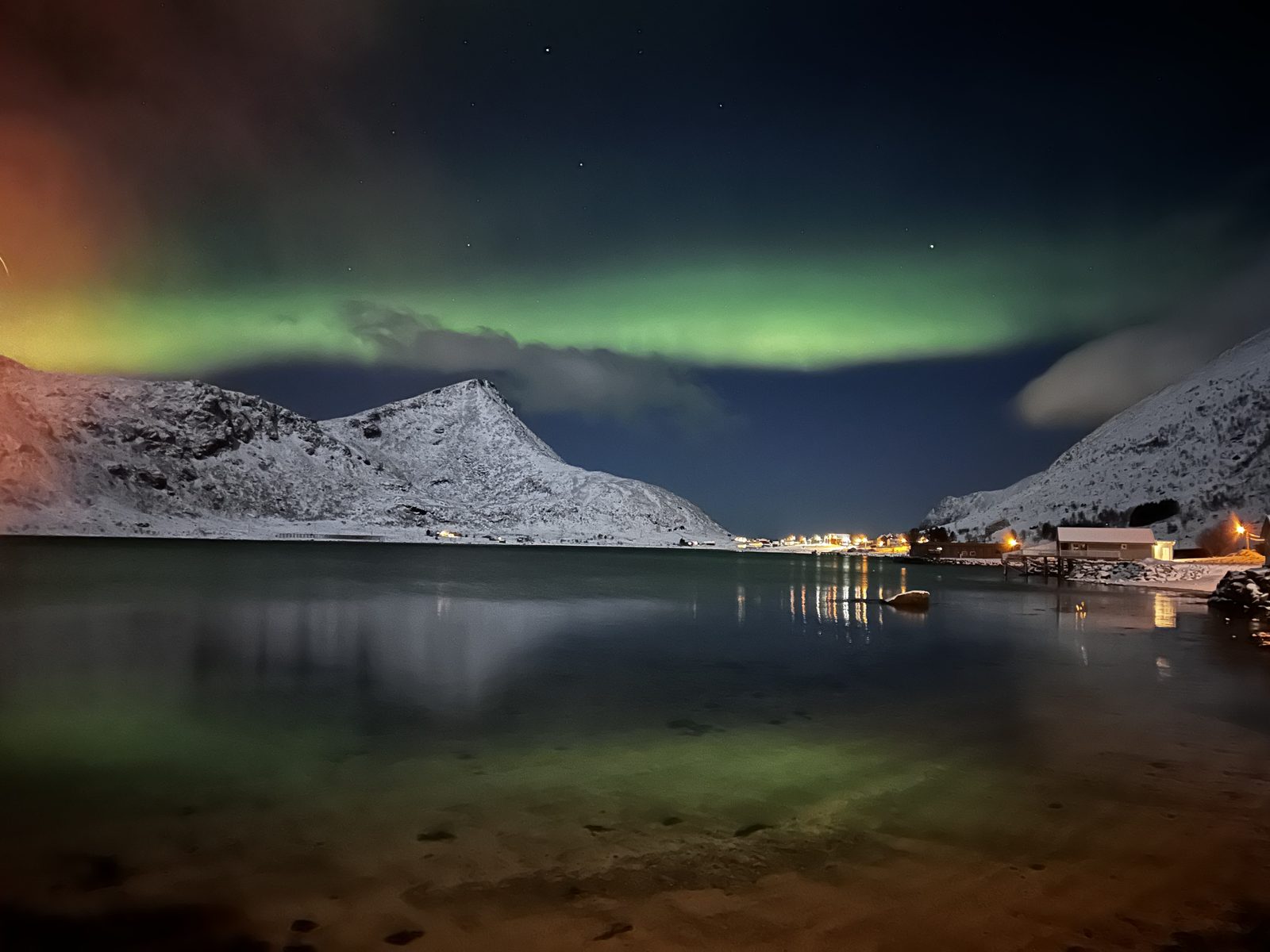
The aurora, photographed from the property
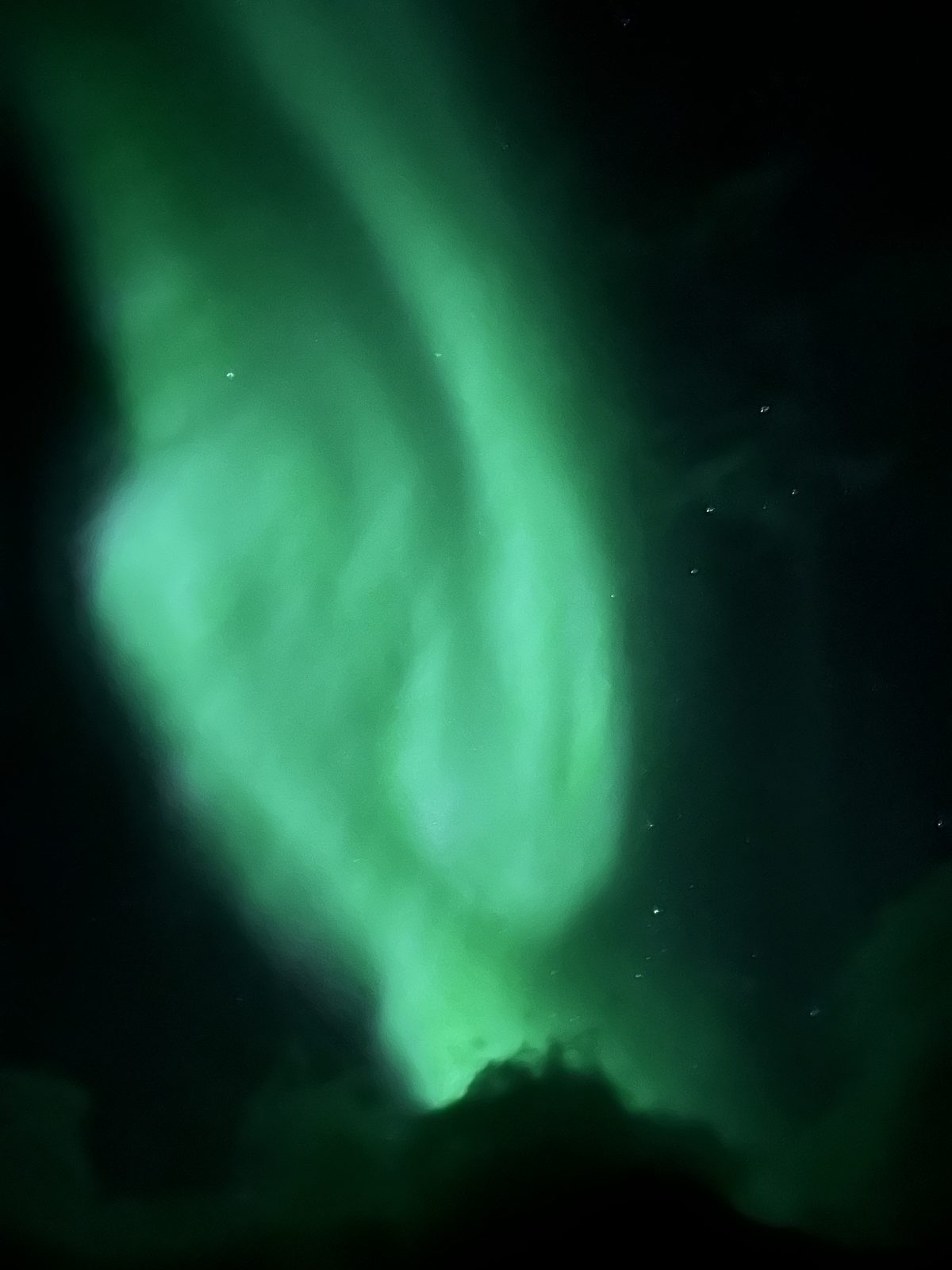
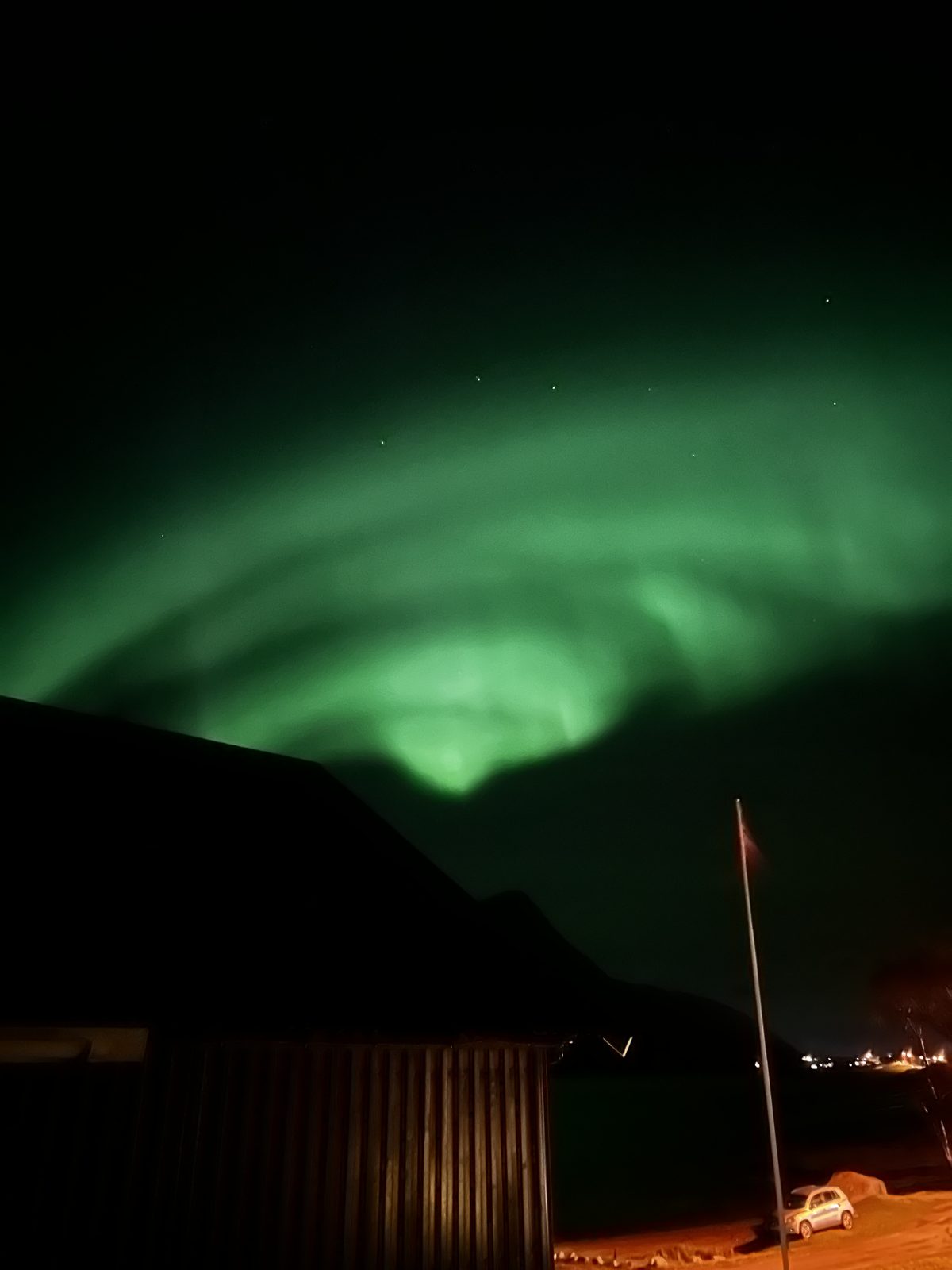
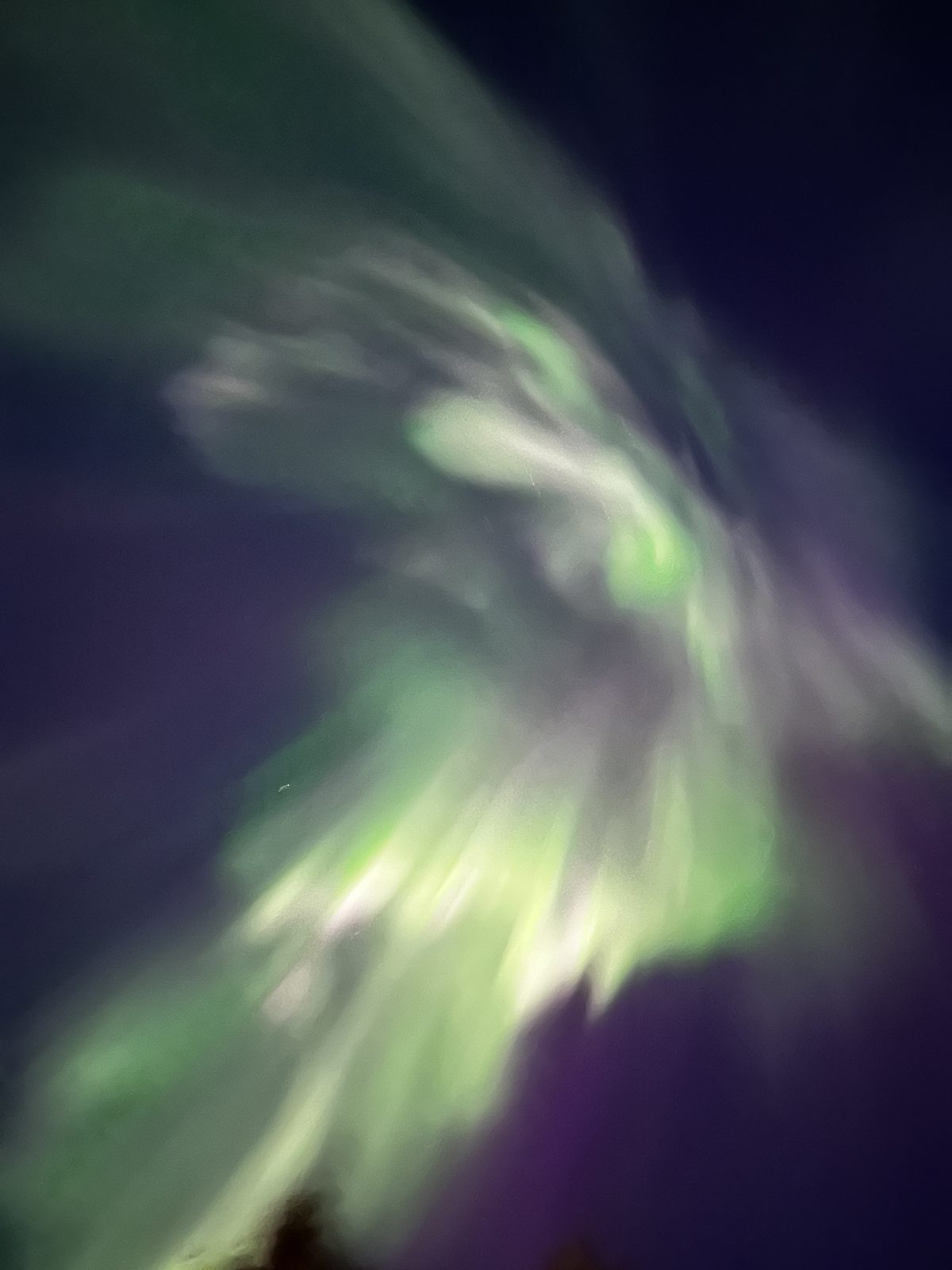
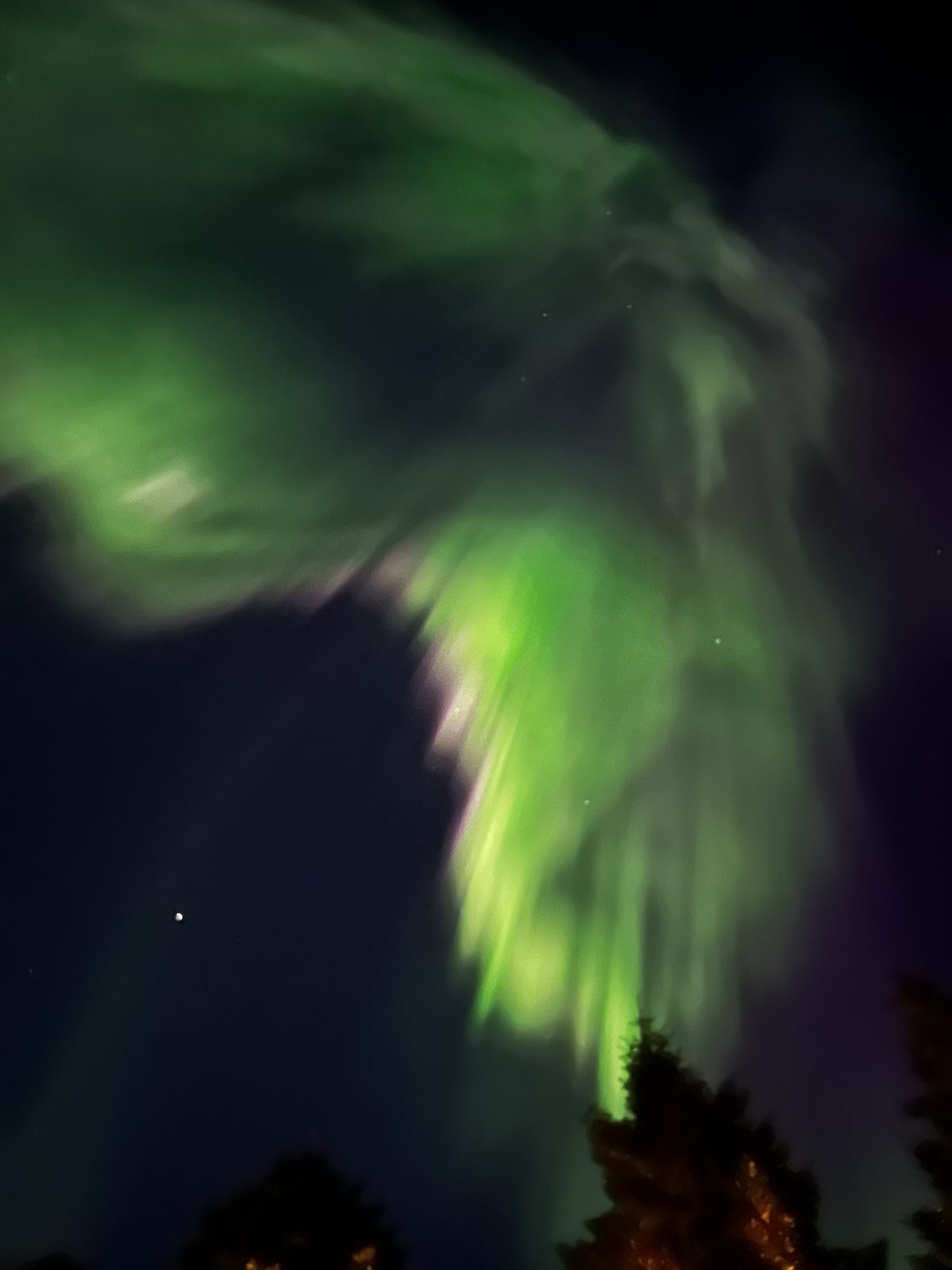
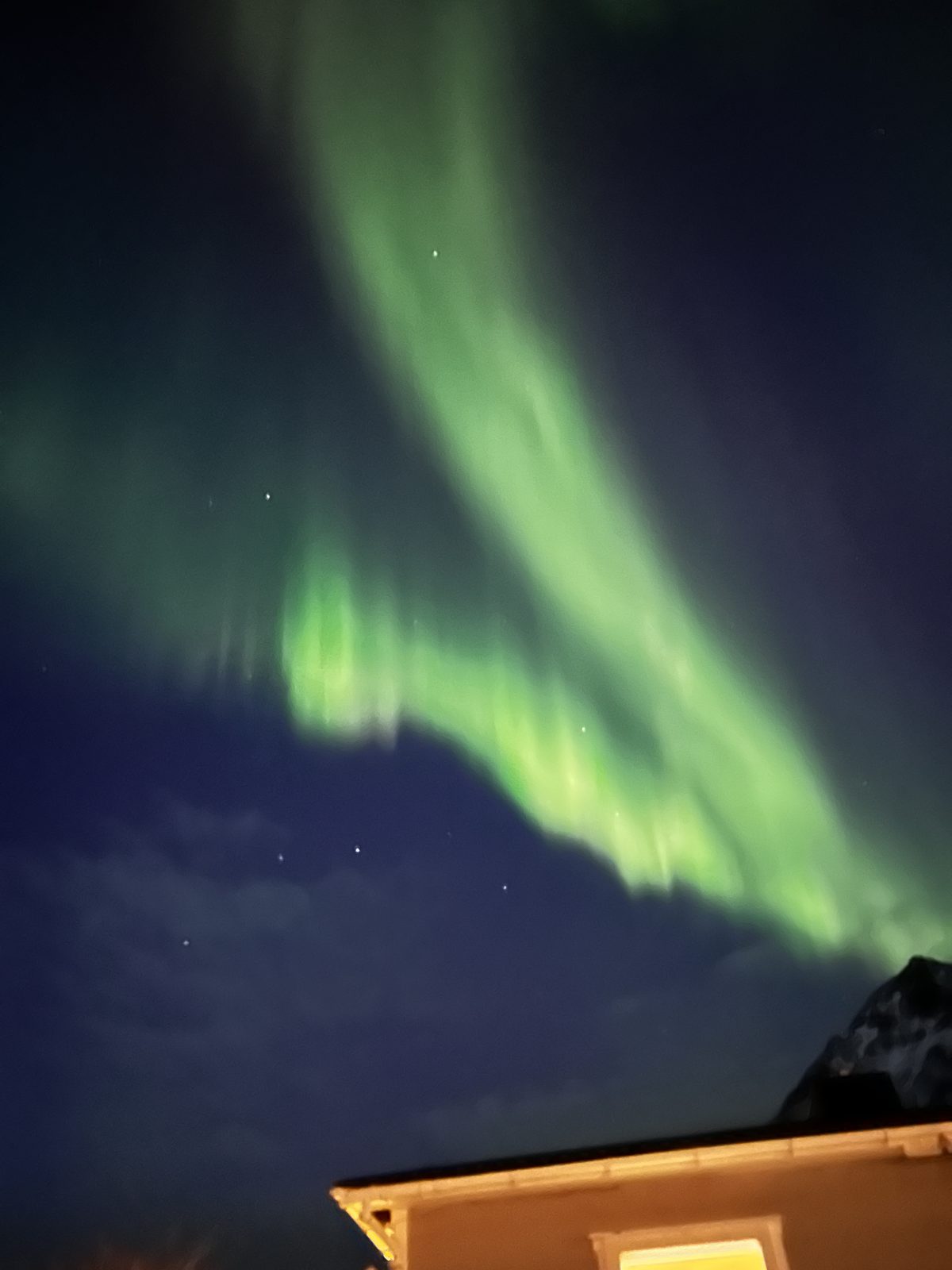
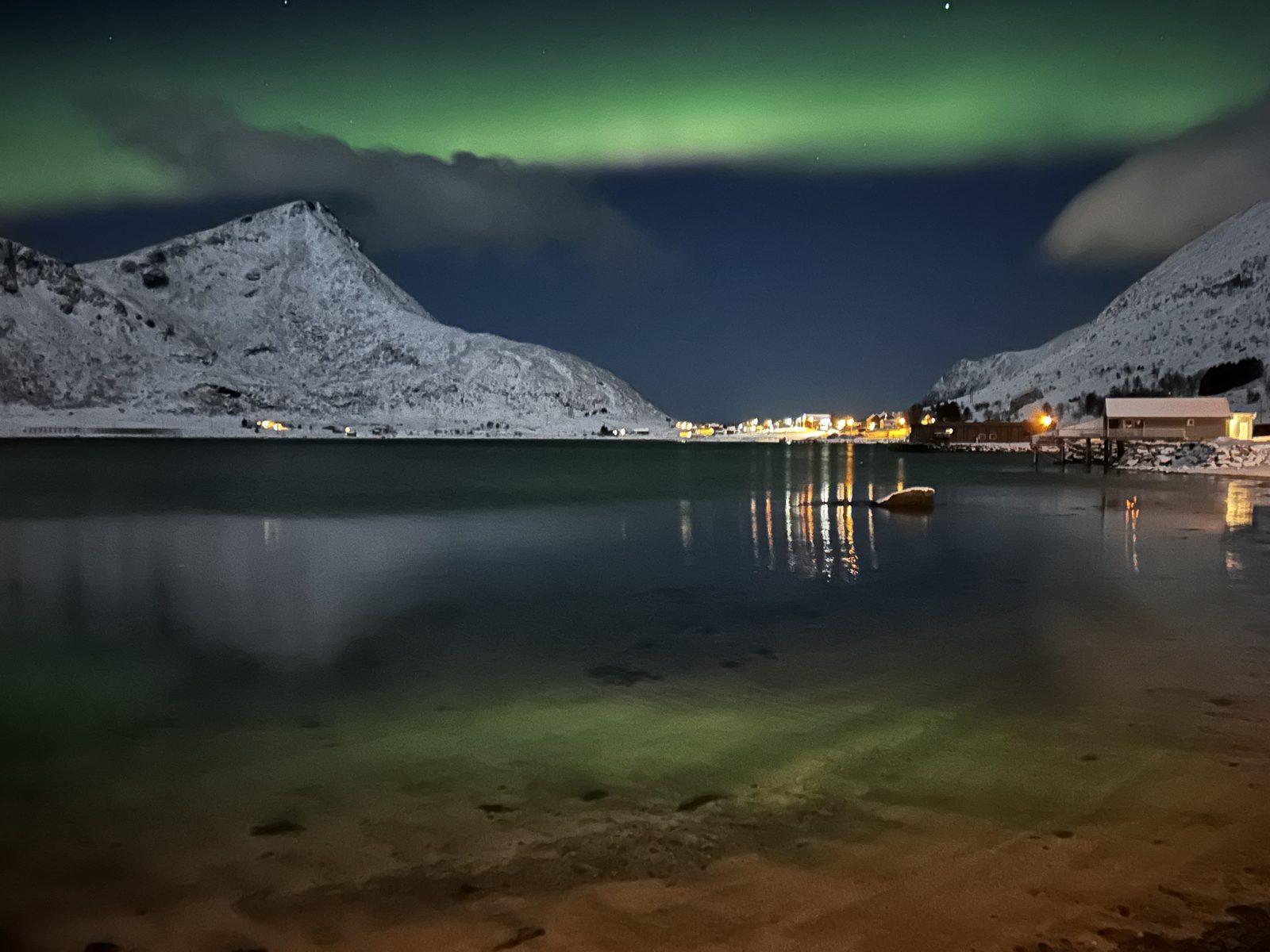
Every photograph below was taken at Casa Lofoten — over the boathouse, over the main house and the old barn, and out across the fjord with Volandstind beneath the lights. The first four are from 26 September, which is the mid-September point above, kept.
“We saw the most enchanting northern lights.”
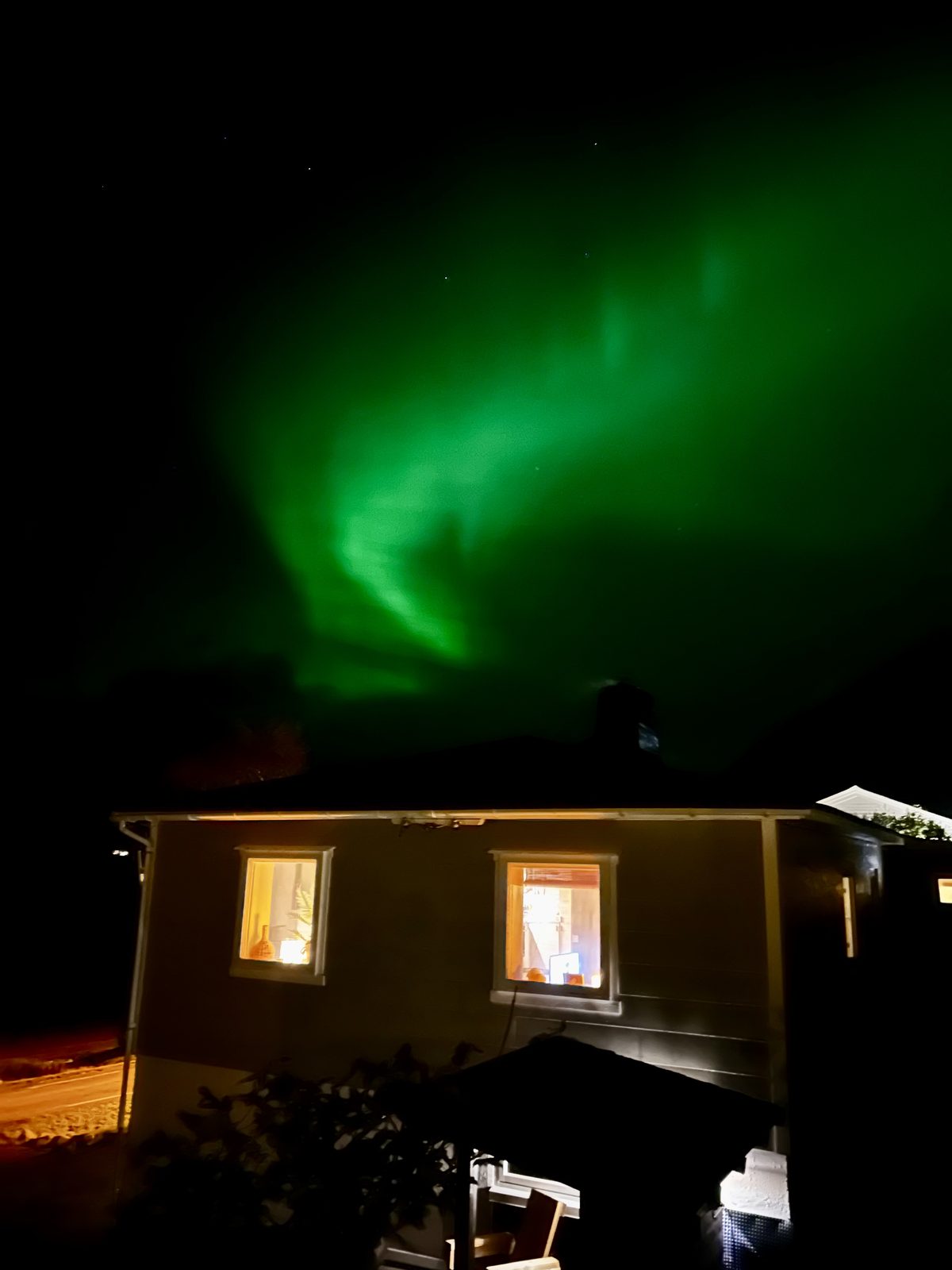
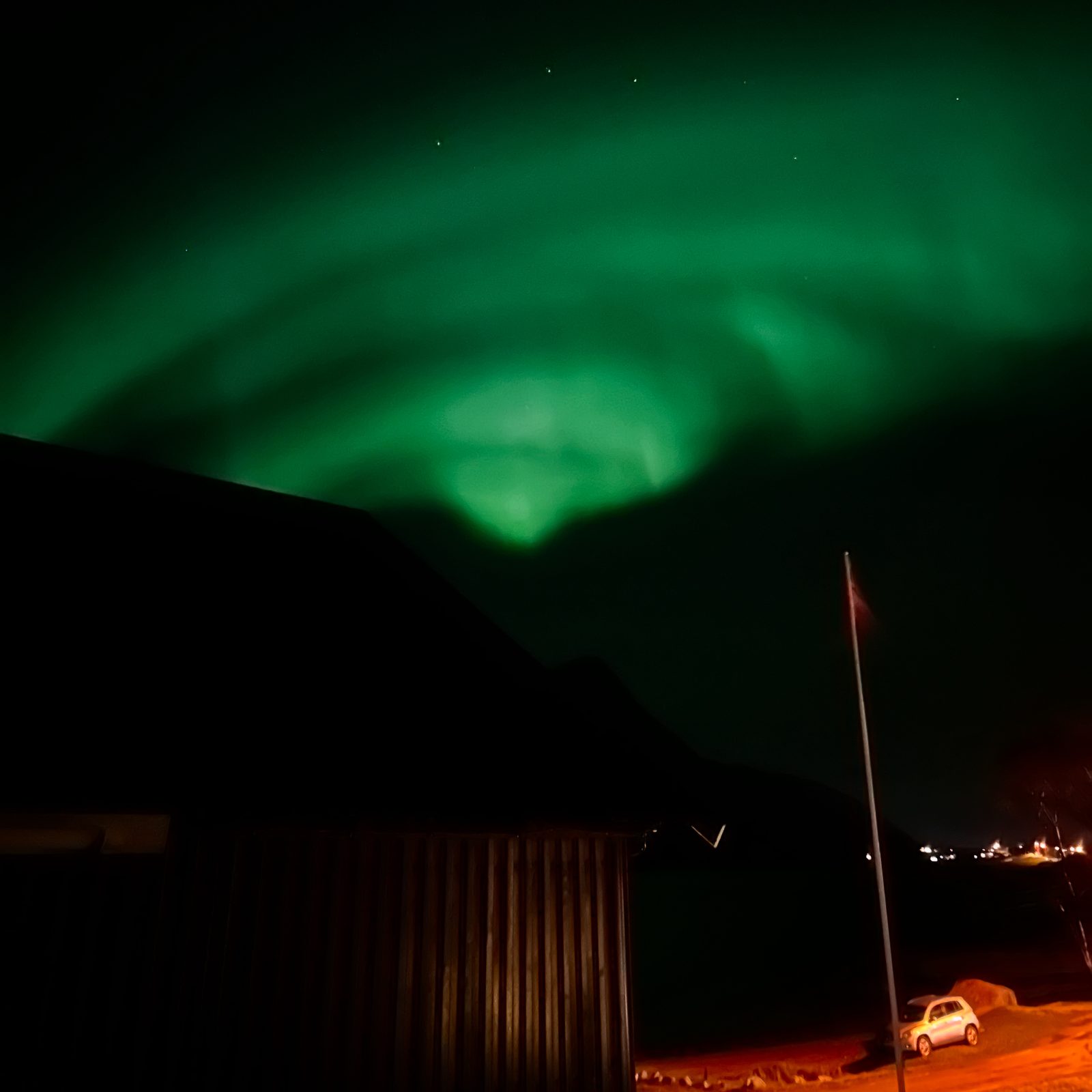
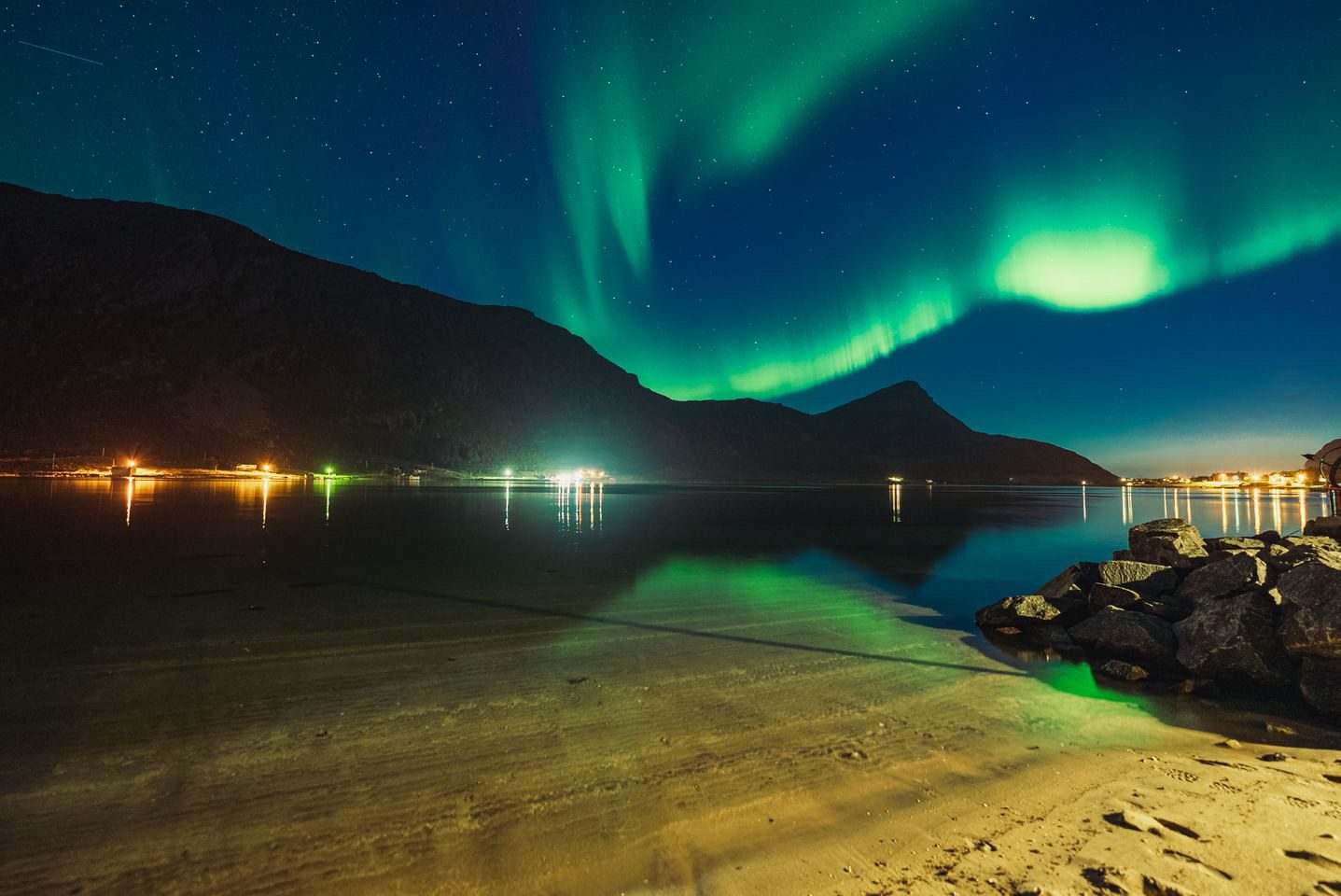
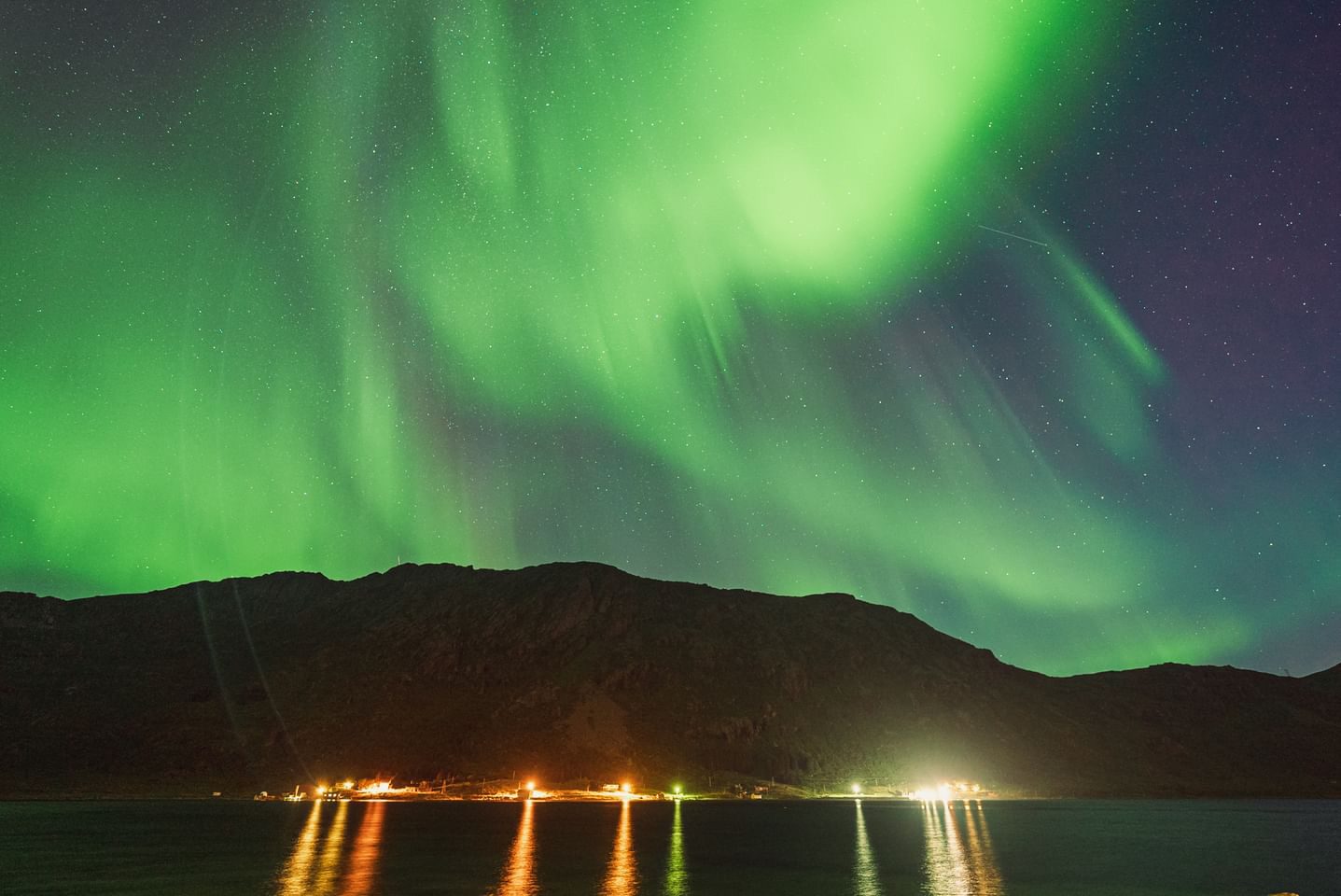
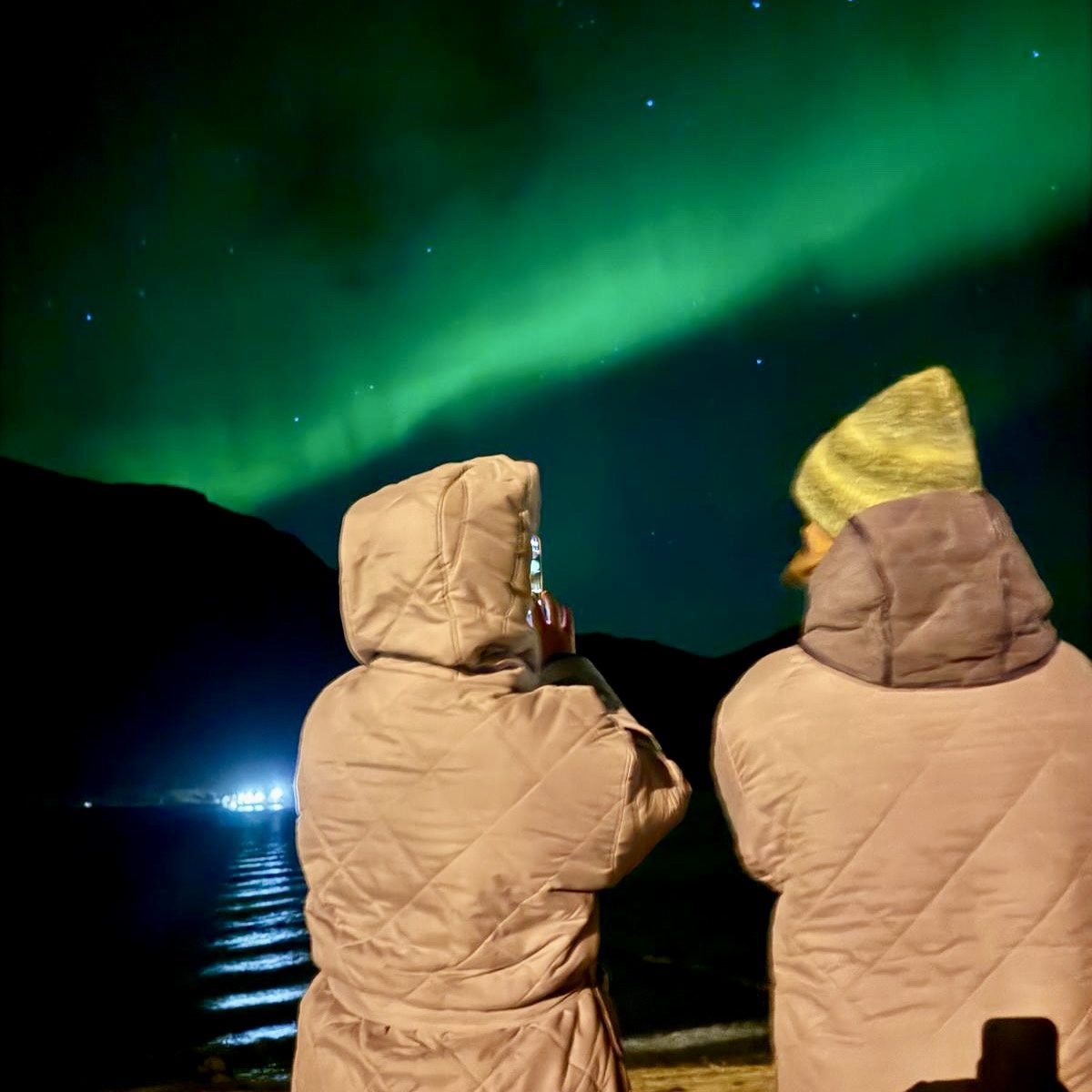
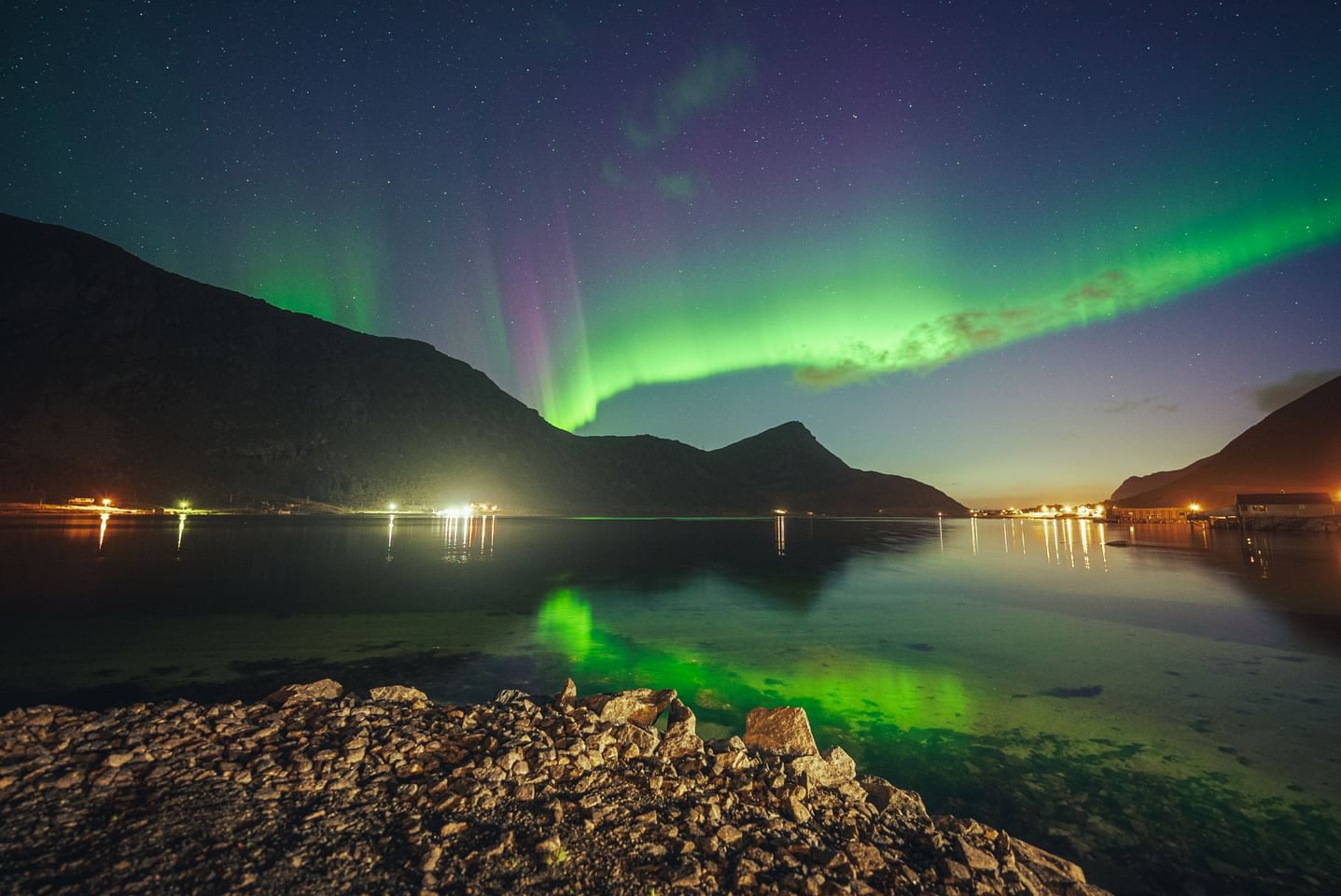
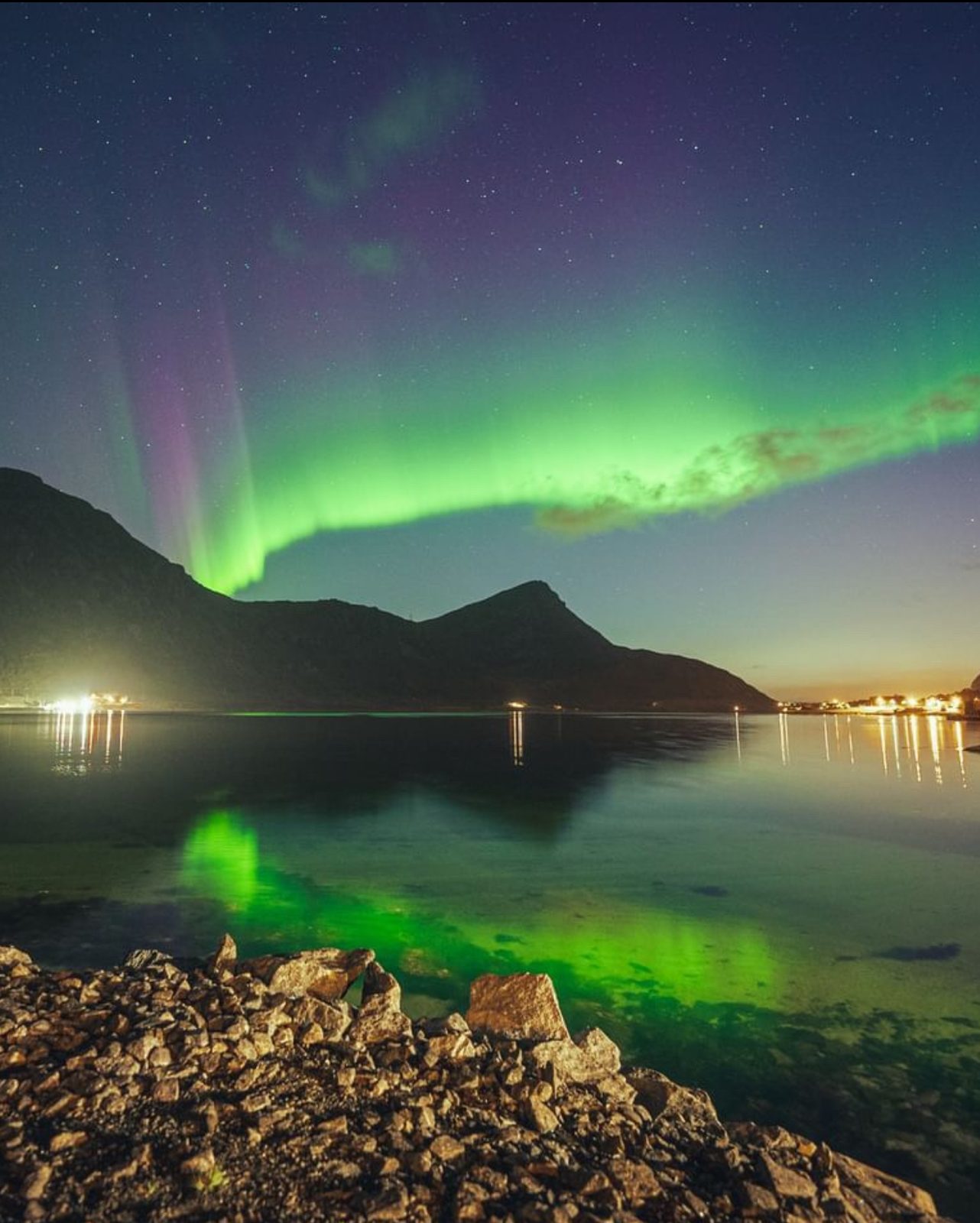
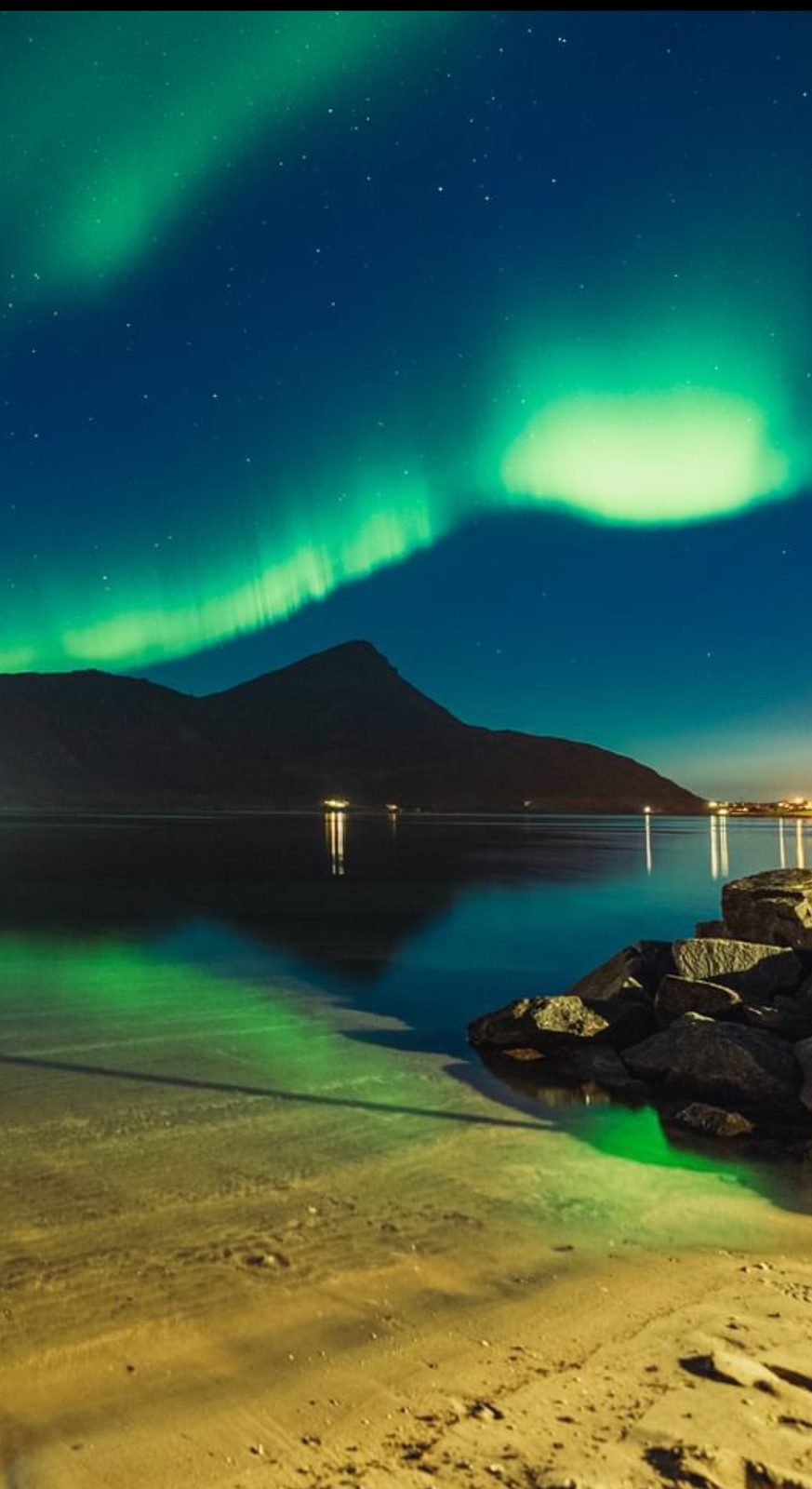
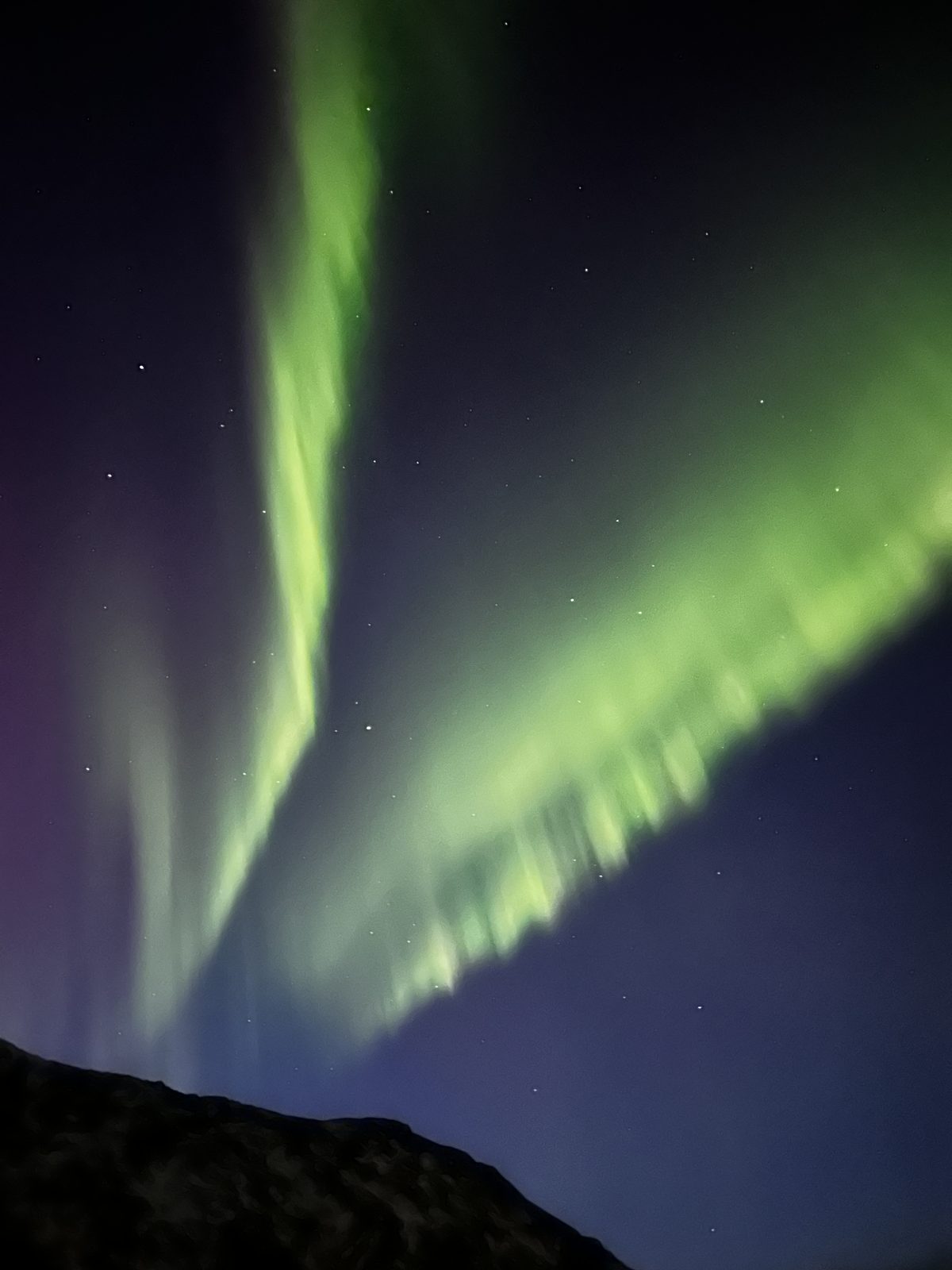
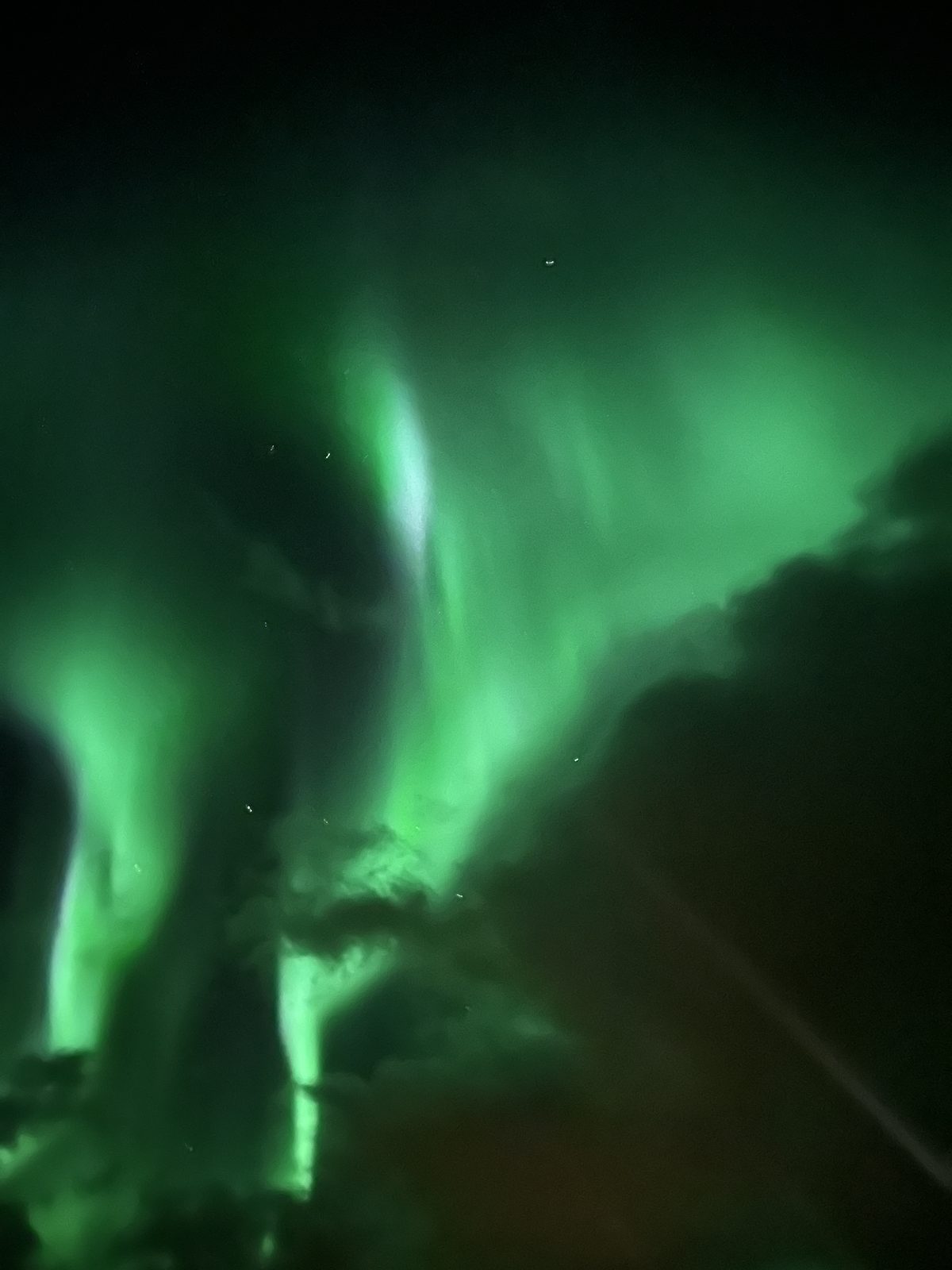
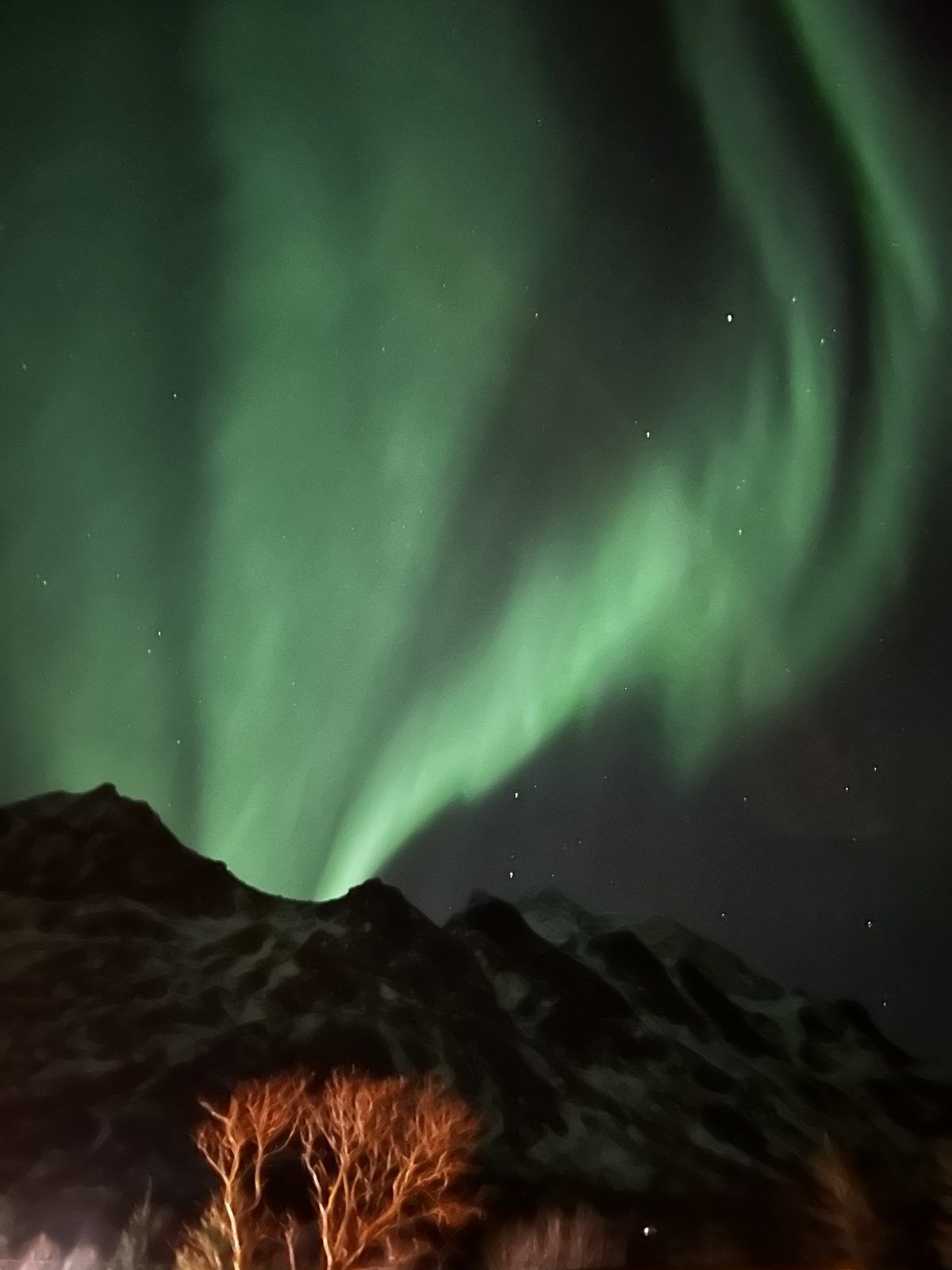
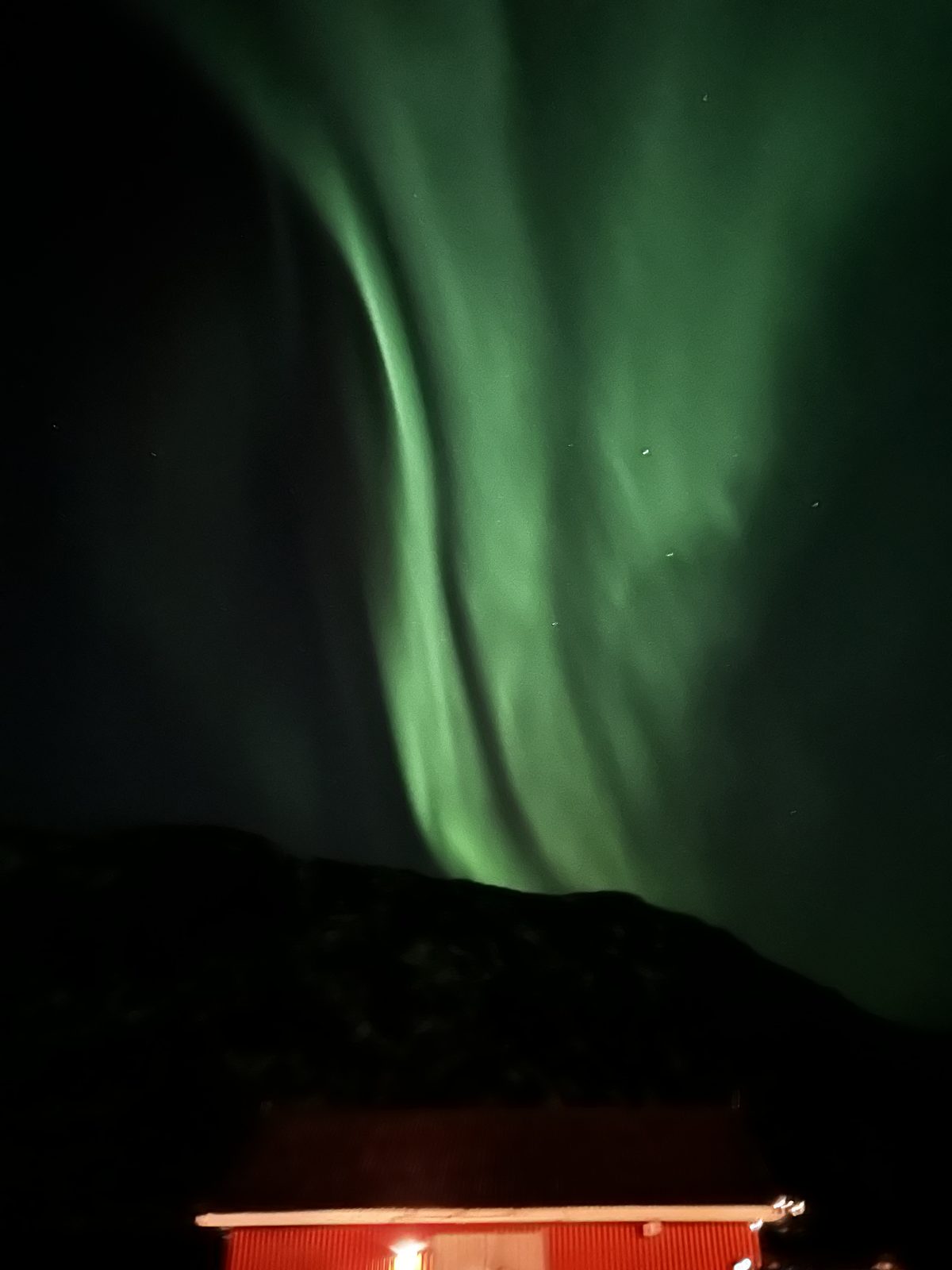
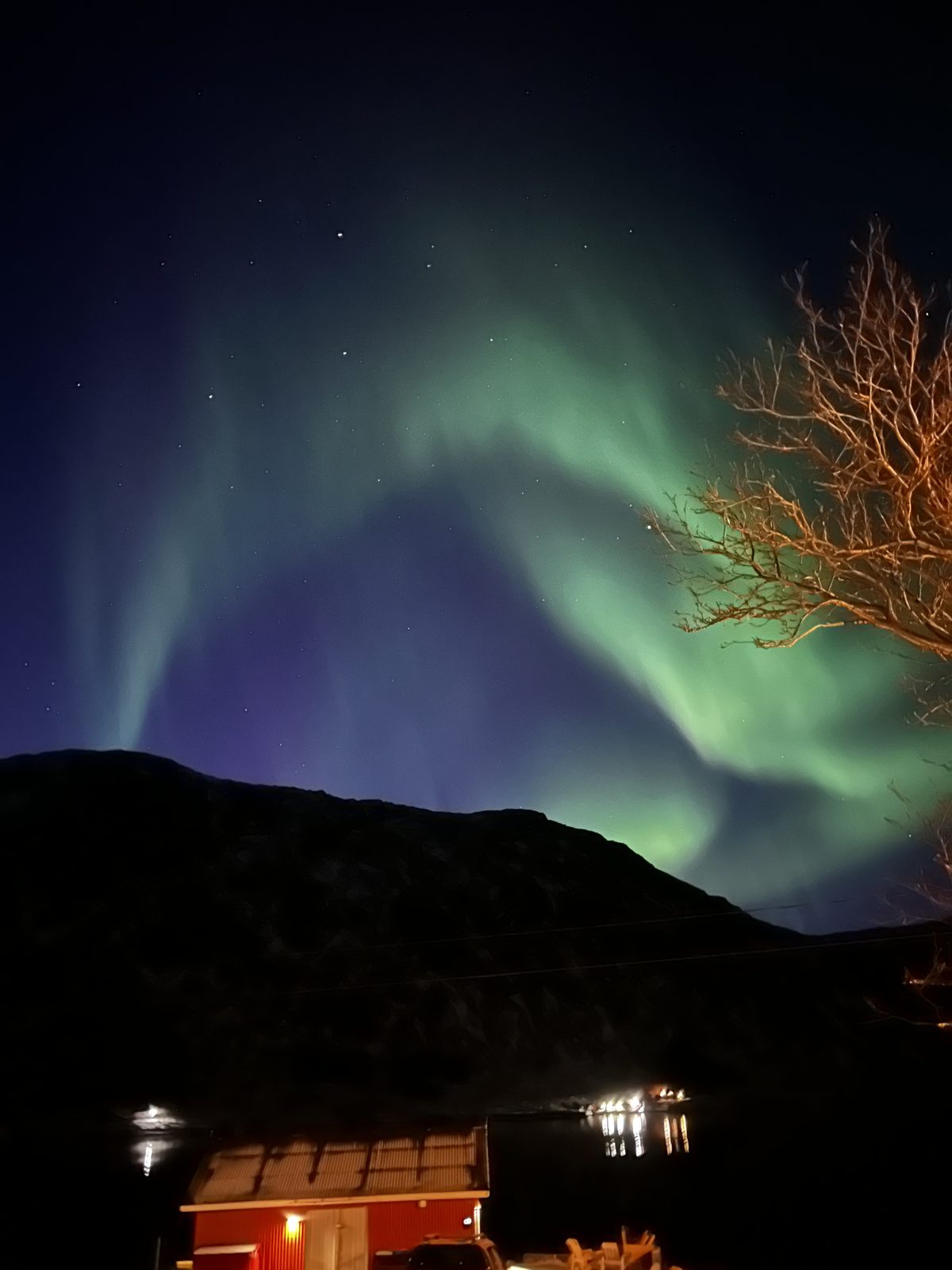
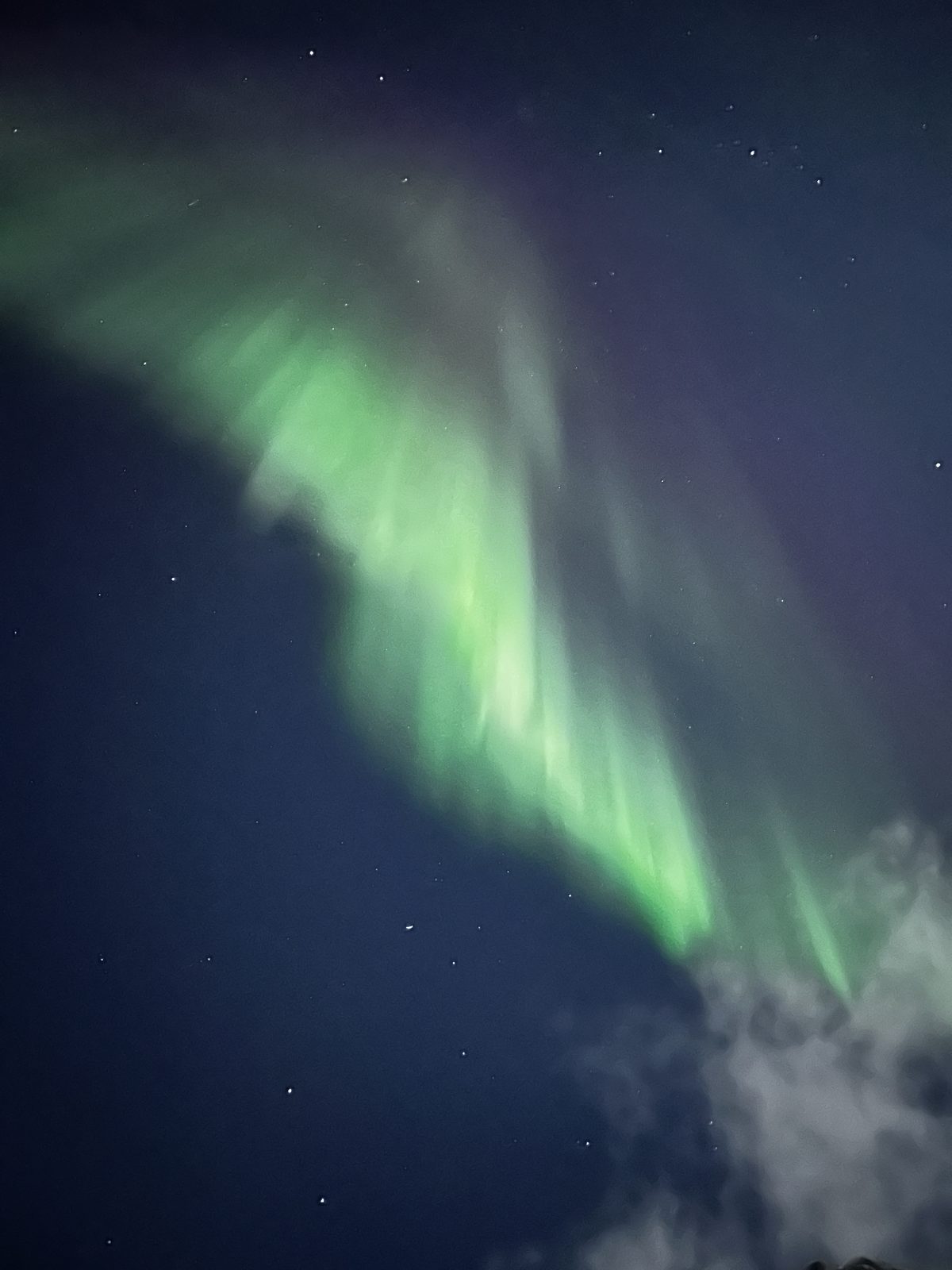
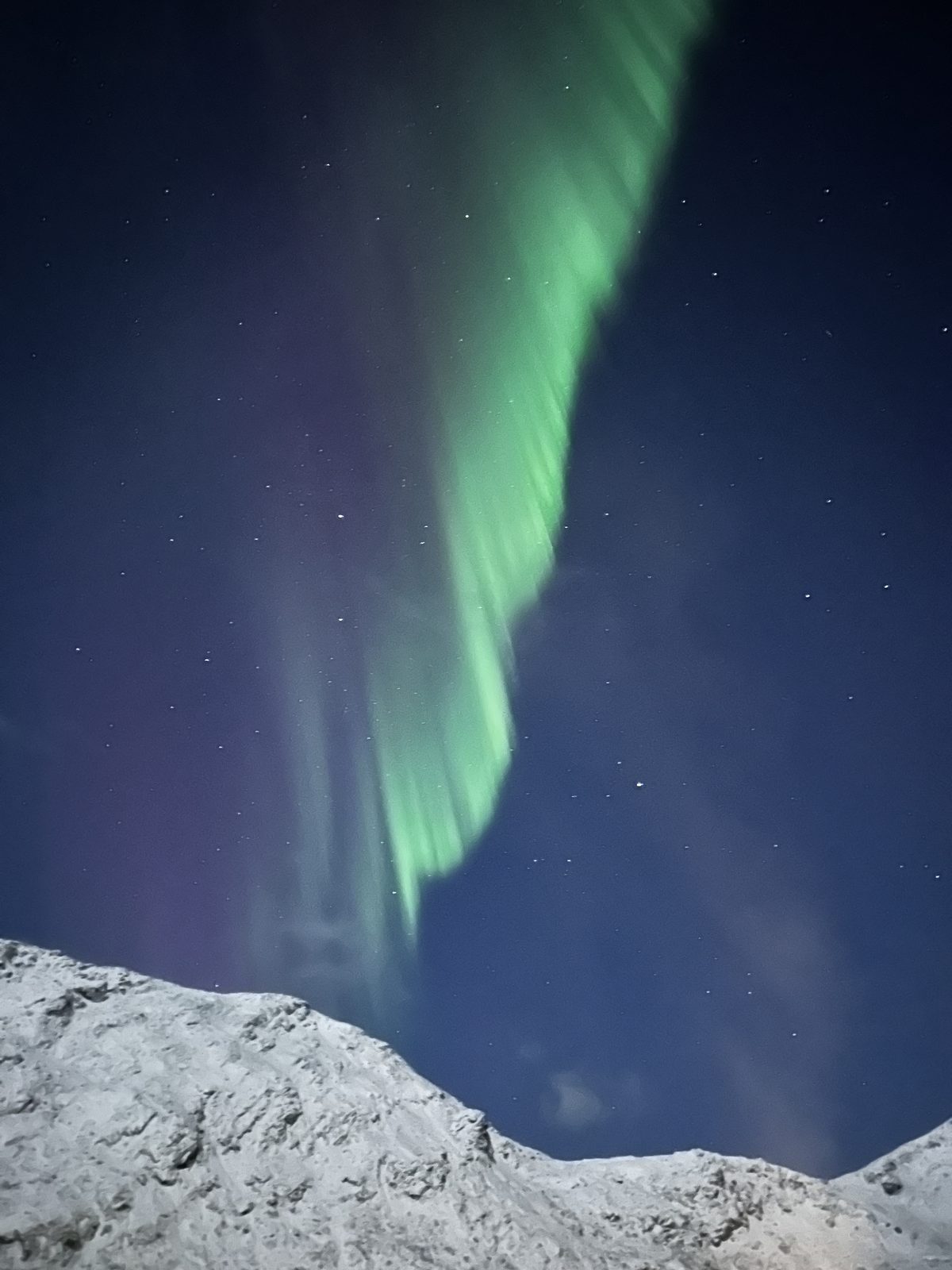
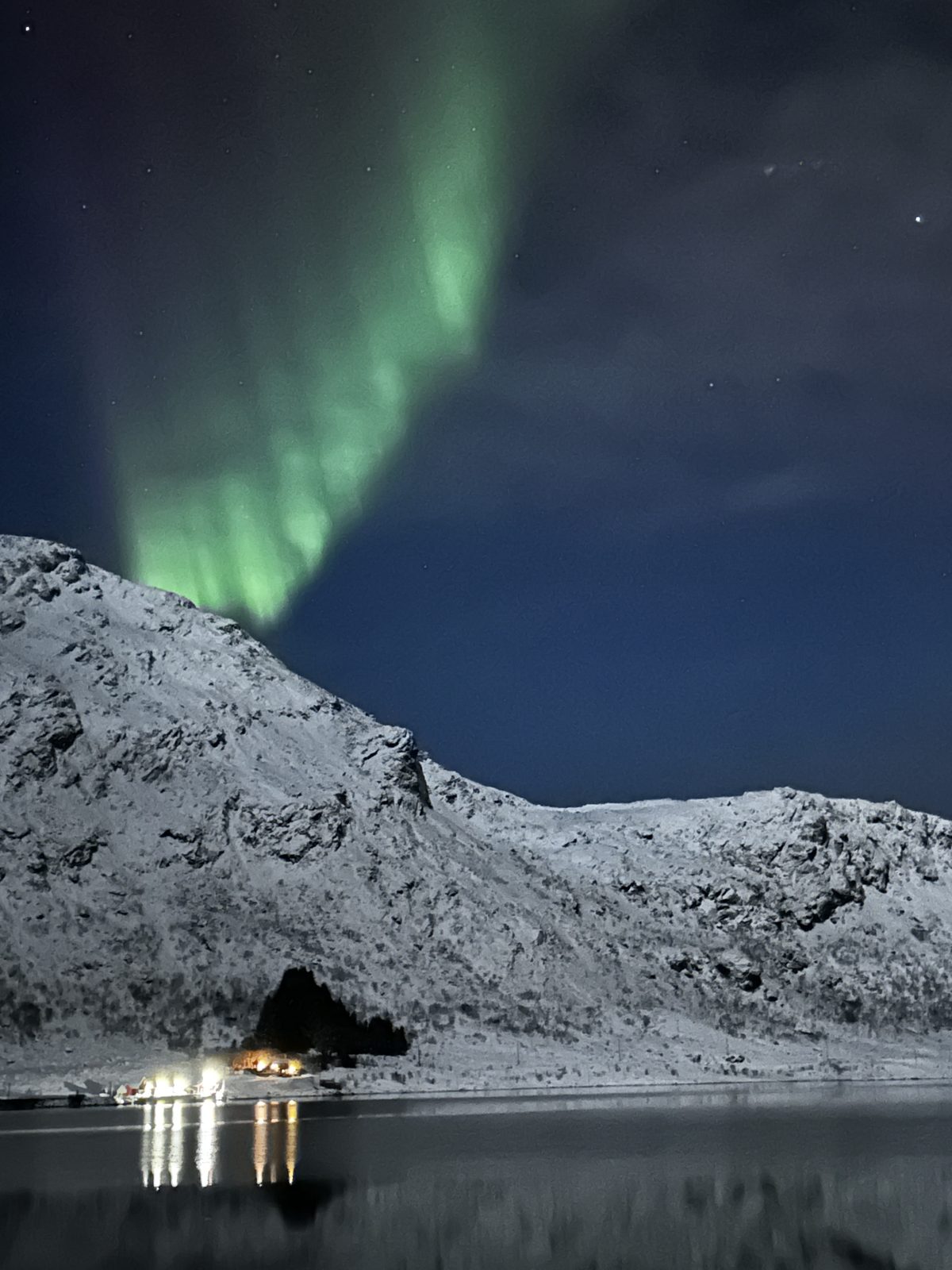
File list, in reel order
The aurora questions, answered
When can I see the northern lights in Lofoten?
From about mid-September to early April, on dark, clear nights. February and March combine long nights with statistically steadier weather; September offers milder evenings and open hiking trails alongside the returning darkness.
What time of night do the northern lights appear?
They can come at any dark hour, but activity is most common from evening into the night. Check the forecast at dinner, keep the evening flexible, and be willing to look again late.
How many nights do I need to have a good chance?
The more, the better — this is a weather game. A stay of five or more nights in the dark season, from a dark-sky base, gives genuinely good odds; a two-night visit is a coin toss with the clouds.
What Kp index do I need in Lofoten?
Less than almost anywhere you have read about. Lofoten sits directly beneath the auroral oval, where even low-Kp nights can produce visible displays. Treat high Kp as a bonus, not a requirement — though the higher the Kp, the greater the chance of strong activity.
What is the best app or forecast for the aurora here?
We recommend the aurora forecast on yr.no — activity up to three days ahead, the Kp index, and a short-term nowcast with optional push alerts in the app. Use it together with the cloud forecast; activity under low cloud is an unseen show.
Can I see the northern lights from where I am staying?
That depends on the accommodation more than the aurora: from a dark property with an open northern view, yes, routinely. From a lit village centre, only the strongest displays cut through. It is worth choosing your base with this in mind — our accommodation checklist covers what to look for.
Is the polar night good for the northern lights?
It offers the most dark hours of the year — up to around 22 per day in late December — balanced against winter's least settled stretch of weather earlier in the season. It is the deepest version of the aurora trip, best suited to travellers who want the full winter atmosphere.
Does the moon ruin the northern lights?
A bright moon washes out the faintest displays but leaves medium and strong ones very visible — and it lights the mountains and sea beautifully in return. Do not plan around it; the cloud forecast matters far more.
Are the coming years good for the aurora?
Yes. The solar cycle peaked recently, and the seasons on either side of a maximum are historically strong. There is no bad aurora year under the oval — only cloudy weeks.
Do the northern lights make a sound?
On rare, very strong nights, some observers report faint crackling — the science is still debated. What you will certainly hear in the west of Lofoten is the sea, which is its own kind of soundtrack.
Can children stay up for it?
The early-evening displays make it very possible — many of our guests' best family memories are a twelve-o'clock aurora in pyjamas and down jackets. A base where the lights are visible from the door makes it practical; a midnight drive does not.
Should I book a photography tour?
If you want photography instruction, a good guide earns the fee. But know what aurora tours actually do: they drive to dark places and read the same forecasts you can. They cannot find the lights better than you — from a dark doorstep with yr.no open, you are your own operator.
The aurora, from the doorstep
Every aurora photograph in this guide was taken at the house — no midnight drive, no tour bus, just the door, the dock and the benches on the hill. From mid-September the season is open; September to December is when our returning aurora guests book first.