A Week or More in Lofoten: How to Use 7–10 Days WellA Week or More in Lofoten: How to Use 7–10 Days Well
What a full week in Lofoten adds that five days can't: the east day, the second summit, weather immunity — and the day you do your favourite again.What a full week in Lofoten adds that five days can't: the east day, the second summit, weather immunity — and the day you do your favourite again.
Five days in Lofoten is a good trip. A week or more is a different kind of trip altogether — and most itineraries never explain the difference. They just add more stops.
So this guide answers one question: what does a full week (or 7–10 days) actually add — and how do you use those extra days well?
Our short answer: the extra days don't buy you more sights. They buy you slack — and slack is the most underestimated ingredient of a Lofoten trip. It is what lets you wait out weather instead of losing to it, go east without sacrificing the west, climb a second mountain, and — the real luxury — go back and do your favourite thing again, better.
The foundation: days 1–5 stay the same
We will not repeat our five-day itinerary here — it stands on its own, and it is the core of any week: an arrival evening, a summit day, the Reine day, the beach day at Haukland and Uttakleiv, and a slow day around Nusfjord or the Bunes boat. All of it from one base in the west, with the weather choosing the order.
→ Read it first: A 5-Day Lofoten Itinerary from One Base in the West
What follows is what the week adds on top.
Addition 1 — The east day: Henningsvær, and beyond if you like
With only five days, we honestly advise against the east — the driving cost eats the benefit. With seven or more, one east day earns its place.
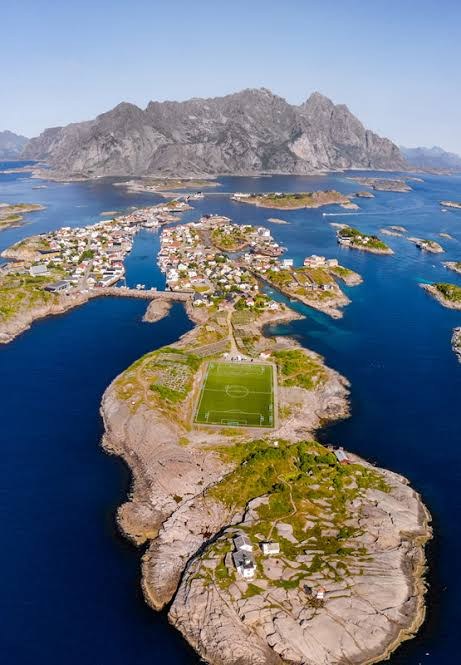
Henningsvær is the day's anchor: a fishing village spread across small islands connected by bridges, with galleries, cafés and the much-photographed football pitch on its own islet. Beyond it lie Kabelvåg and Svolvær, the islands' town — useful for its shops and harbour life, and the departure point for boat trips toward the Trollfjord.
Be honest with yourself about the distances: Svolvær is about 1½ hours' drive from a western base without stops — and this is Lofoten, so there will be stops. That is why this is a whole day-shape, not an errand: drive out in the morning, take the villages slowly, and let the drive home in the evening light be part of the experience rather than a chore. Save it for a day of decent-but-not-perfect weather; the summits deserve the clearest skies, and village days don't.
Temporary: the Nappstraumen tunnel works (until December 2027)
The undersea Nappstraumtunnelen — the E10’s only link between Leknes and the west of Lofoten — is being upgraded through the end of 2027. During work periods, daytime traffic passes in convoys behind a lead car, and the tunnel closes at night (roughly 23:00–06:00) with only limited let-throughs; queues can add up to an hour. The works pause around Christmas and for a period each summer. Check current convoy and closing times in the Statens vegvesen traffic app when you plan late or early drives.
Addition 2 — The second summit
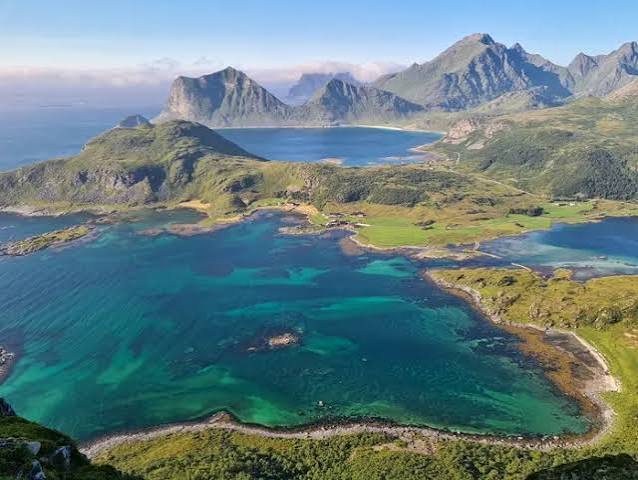
Five days gives you one mountain. A week gives you two — and the second one changes how you see the islands, because you now recognise what you are looking at.
Good second summits from a western base:
- Offersøykammen (436 m) — a steep start that soon relaxes onto a plateau, about 2 hours round trip, with a full-circle view over the Nappstraumen strait. Short enough to fit a half day.
- Ryten or Volandstind — whichever you didn't climb in the first five days.
- For experienced hikers with a full day and stable weather, the Munkebu route from the Sørvågen area is the west's step up in seriousness — see our hiking guide for what it demands before you commit.
The mountain rules don't change with trip length: wool against the skin, a spare dry base layer for the summit break, food and drink in the pack, and one summit is one day's main event.
Addition 3 — The boat day, without the schedule squeeze
On a five-day trip, the Bunes boat day competes with the slow day for the same slot. On a week, it gets its own: the small passenger boat from Reine up the Reinefjord (about 20 minutes), the easy 3 km walk from roadless Vindstad, and the enormous sweep of sand at the end. Book ahead in season, and treat the return departure time as sacred.
With ten days and good legs, its neighbour Horseid — same boat, a different stop, a longer walk — offers the same idea with even fewer people.
Addition 4 — Weather immunity (the quiet superpower)
Here is the arithmetic nobody puts in a brochure. In any Lofoten week, expect at least one day the mountains disappear into cloud and the rain arrives sideways. On a five-day trip, that day costs you 20 % of the holiday and usually a highlight. On a nine-day trip, it costs you almost nothing — because everything can slide a day.
This is why we keep saying the extra days aren't for extra sights. They are insurance that converts, on the good weeks, into pure bonus. And the "lost" days have their own repertoire: the storm beaches from a safe distance, the villages, the sauna, a low coastal walk — the weather here is a show, not just an obstacle.
Addition 5 — The repeat day (our favourite)
Somewhere around day five, something shifts. You stop being a visitor working through a list and start having your places. And then comes the best day of a long Lofoten trip: the day you go back.
Back to the beach at the hour you now know the light is best. Back up the mountain that was cloudy the first time — or clear, and you simply want it again. Back to the village café where they recognise you. First visits are reconnaissance; second visits are the actual holiday.
We watch this happen with our week-long guests every season, and the pattern is remarkably consistent: the second half of the week has fewer kilometres and better days.
Did you know? — from Casa Lofoten
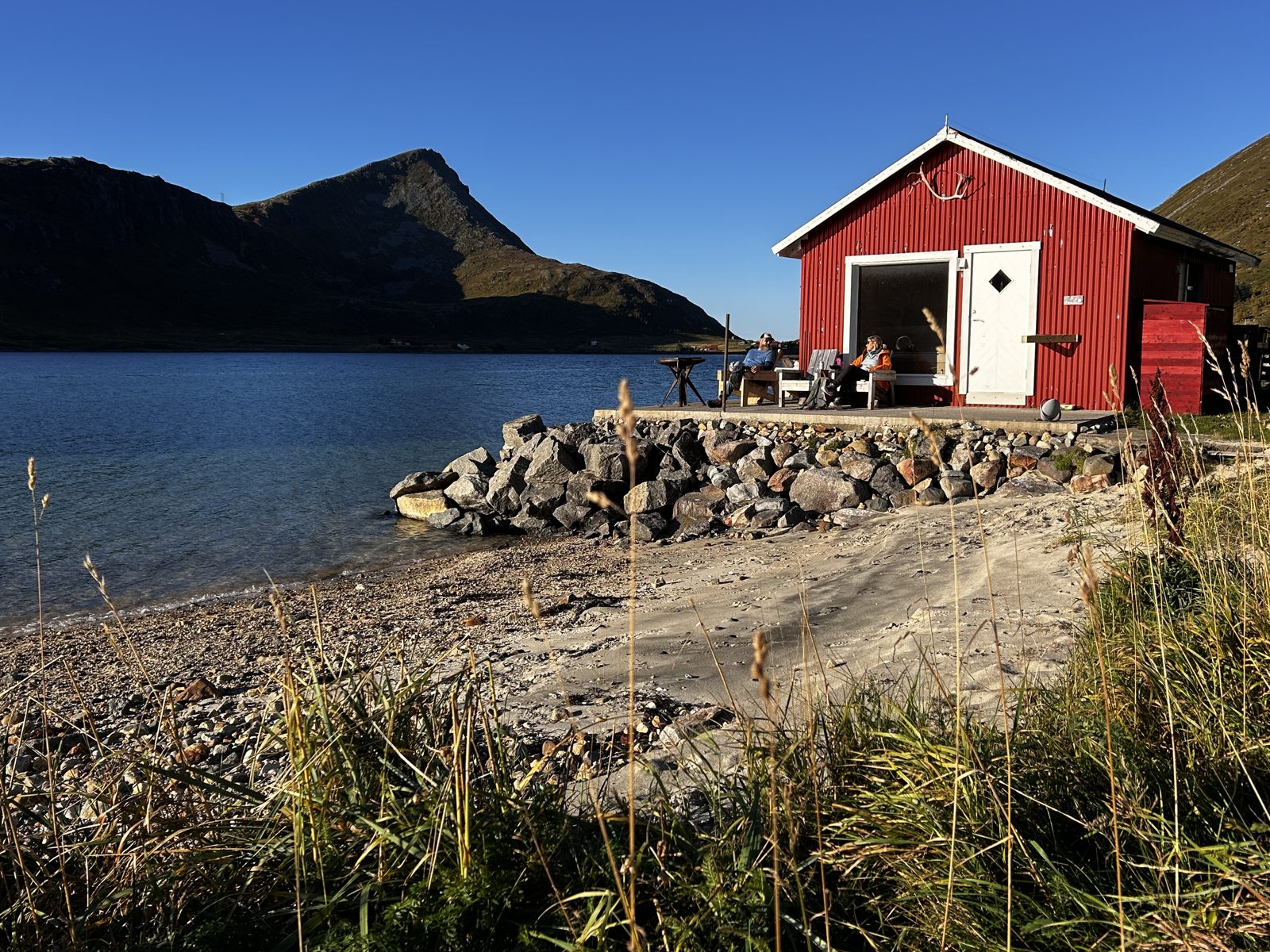
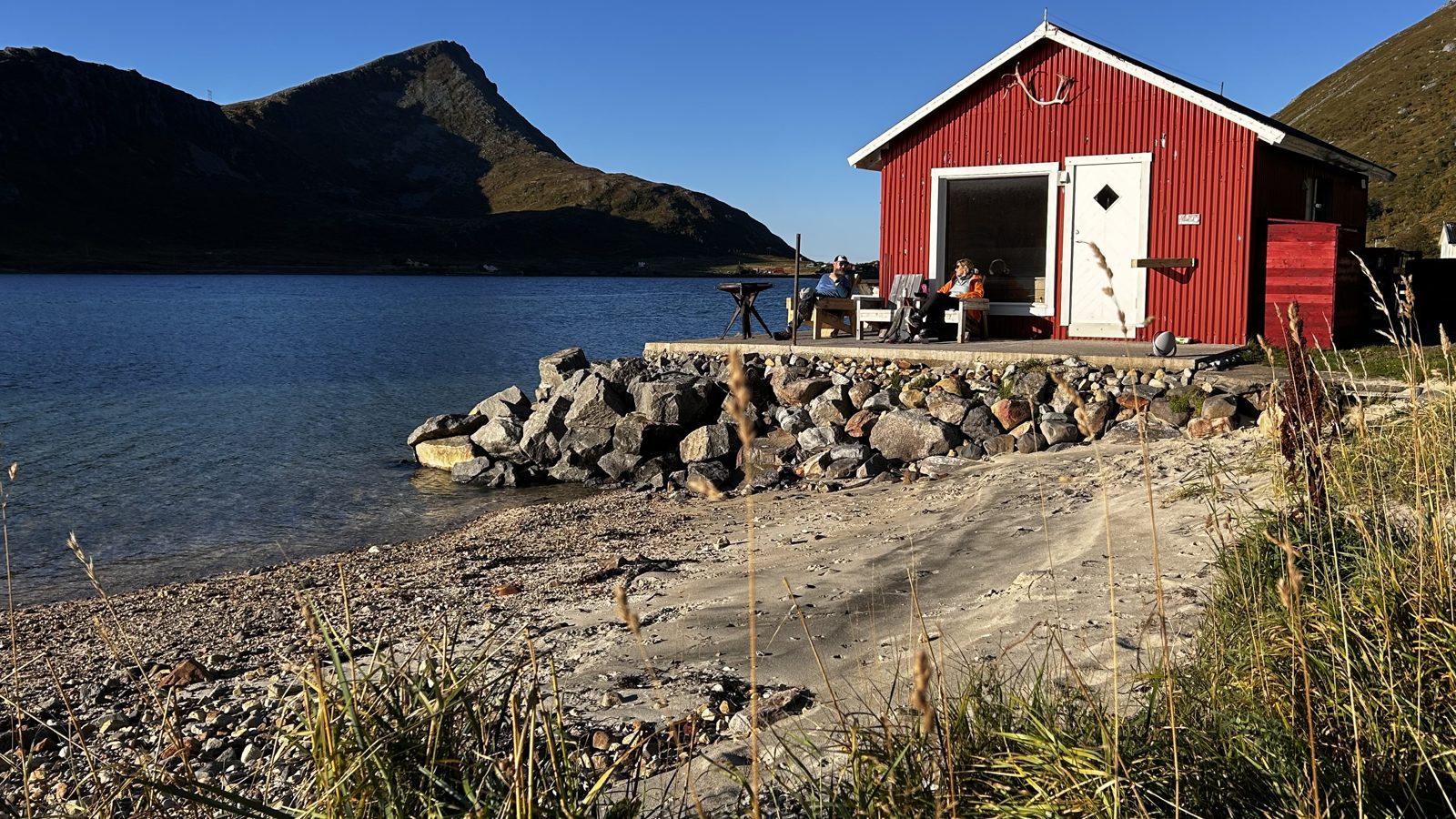
Most of our bookings are exactly this shape — a week from one base — and the evenings are where the week shows its value: the sauna and the beach a few steps apart, the midnight sun from the dock chairs in summer, the aurora benches on the hill behind the house from mid-September. As one guest with children put it: "The children fished every evening in the area." (translated) The base stops being where you sleep and becomes part of the holiday. → A week based at Casa Lofoten
Stretching to 8–10 days
Everything above fills seven days well. Days eight to ten are where the trip becomes yours:
- A surf day at Unstad — the Arctic surfing bay on Vestvågøya's outer coast, with courses and rentals; summer is the beginners' season. (Full guide coming.)
- A fishing evening — from shore, a dock or a hired boat; ask locally about gear and rules. Cooking your own catch is the meal the restaurants can't sell you.
- The month's specialty: the midnight sun beaches in June–July, the first aurora nights from mid-September, the skrei season's working harbours from around January to April.
- More repeat days. Genuinely. By day nine, you know exactly what you want more of — trust that over any list, including ours.
And a season note on crowds: real high season here is roughly late June to late August. A long trip in September, or in the winter light, often means having the famous places nearly to yourself — the same islands, at a completely different volume.
The weekly rhythm that makes it work
Our one structural advice for any long stay: alternate big and small days. Summit, then villages. Boat day, then beach. The good-day recipe we give all our guests applies daily: one main experience plus slack, a proper lunch and dinner — grill your own catch or eat out — a sauna and a cold dip for the legs, and a weather check over breakfast with two or three alternatives ready. A week planned this way ends with energy left over. A week planned as a checklist ends at the airport, exhausted, having "done" Lofoten and missed it.
Frequently asked questions
Is a week too long for Lofoten?
We have hosted hundreds of week-long stays, and not one guest has left claiming they ran out. The honest risk runs the other way: most visitors take three or four flights to get here and then allocate the islands three days.
Should we split the week between two bases — west and east?
For 7 days centred on what most people come for, one western base plus one east day beats moving: a base move costs the better part of a day. At 10+ days with a strong east appetite — Trollfjord boats, the eastern mountains — a split can start to make sense. Our where-to-stay guide walks through the honest trade-offs.
Which days should be planned in advance, and which left open?
Book the things with limited seats — the Bunes boat, popular restaurant tables in summer. Leave everything else as a menu the weather orders from. The longer the trip, the less you should fix.
What about a rest day — is it wasted here?
It is the opposite of wasted; it is usually the day guests describe at checkout. A slow morning, the beach below, the sauna, a book. The landscape doesn't stop performing just because you sat down.
Is 7–10 days enough to see all of Lofoten?
It is enough to know the west and visit the east — which we think is the right shape for a first long trip. "All of Lofoten" is what return trips are for, ideally in a different season; the islands in February and the islands in July are two different places sharing a map.
Stay long enough to slow down
A week is when Lofoten stops being a checklist — repeat days, a second summit, and evenings that end in the sauna.