The Best Things to Do in Lofoten: An Honest Guide from Local HostsThe Best Things to Do in Lofoten: An Honest Guide from Local Hosts
What should you actually do in Lofoten — and is it worth visiting? Local hosts in the west answer honestly, by kind of day rather than a list of 25.What should you actually do in Lofoten — and is it worth visiting? Local hosts in the west answer honestly, by kind of day rather than a list of 25.
Search this question and you will find lists: 16 things, 21 things, 25 things, 41 things.
We live here, and we will be honest with you: nobody does 41 things in Lofoten. The travellers who leave happiest do about seven — slowly, in the right season, in the right order for the weather.
So this guide answers the real question underneath the lists: what should you actually do in Lofoten — and is it worth coming for?
We answer the second part first, because it deserves a straight answer. Then we give you the catalogue — not 25 items, but seven kinds of day, with links to the full guide for each one.
“An ideal base for hikes and other activities around the islands.”
Is Lofoten worth visiting? An honest answer
Yes — for the right traveller. And we would rather tell you who that is than pretend it is everyone.
Lofoten is worth it if the landscape itself is the point for you: mountains straight out of the sea, white-sand beaches in the Arctic, fishing villages that are still working places. If you are happy to drive a narrow road slowly, walk in changing weather, cook some of your own meals, and let the sky decide the order of your days — you will understand this place within an hour of arriving, and you will start planning the return trip before you leave.
Be more careful if what you want is city life, nightlife, shopping, guaranteed sunshine, or a checklist of famous sights ticked in two days. Lofoten has almost none of the first four, and it actively punishes the fifth: the distances are short on the map and long on the road, and the weather rewrites plans without asking. Travellers who arrive with a rigid itinerary tend to leave frustrated; travellers who arrive with a list of possibilities tend to leave converted.
Two honest caveats, whoever you are. First, getting here takes effort — most visitors take three or four flights, and the last leg alone can eat half a day; see How to Get to Lofoten. That effort is exactly why we tell everyone: come for enough days. Three or four is the absolute minimum and gets you little more than some of the Instagram pictures; five to seven is enough to do the west of Lofoten properly — see How Many Days Do You Need. Second, it is genuinely busy from late June to late August. Come then for the midnight sun and the mildest weather, and expect company at the famous spots — or come in another season and trade some daylight for space.
Who it works for, specifically. Families do remarkably well here — the beaches and short walks are made for children, and we wrote a full guide to the family version: Lofoten With Kids. Photographers plan pilgrimages here for a reason, in winter as much as summer. Non-hikers are better served than the trail-heavy lists suggest: villages, drive-to beaches, boat days and the sky shows need no boots at all. The traveller we would gently talk out of it is the one with two nights, a fixed shot list, and a flight out of the other end of the islands.
Our verdict, plainly: for landscape-first travellers with five days or more, Lofoten is one of the most rewarding places in Europe — in any season, not just summer. If that is not you, Norway has cities that will suit you better, and we would honestly rather you had the right trip than our trip. (Weighing it against the north's other favourite? See Lofoten or Tromsø.)
The shape of a Lofoten day — read this before the list
One planning rule makes every item below work: one, at most two, experiences a day. A mountain, or a beach, or a village — done properly, with slack around it. The light here stretches the days in summer, but it does not stretch your legs, and the best moments happen in the slack: the unplanned stop, the second coffee, the evening that turns clear.
The second rule follows from the first: let the weather choose the order. Plan days as shapes — a mountain day, a beach day, a village day — and deal them out as the forecast allows. Our itineraries are built exactly this way: see the 5-Day Itinerary and A Week or More.
Two more habits make the days below work better. Base yourself in one place and day-trip, rather than moving every night — the distances punish packing more than they punish driving, and the argument for basing in the west is made in Where to Stay. And treat the evening as a second, smaller day: in summer the light runs long past dinner, and in aurora season the day's best hour may start at ten. The step-by-step version of all this planning is in How to Plan a Lofoten Trip.
Now, the seven kinds of day.
1. Climb something
This is the day most people come for, and it earns its reputation. The mountains here are not high — most tops are 400 to 700 metres — but they start at the sea, so you get the full drama for a half day's effort.
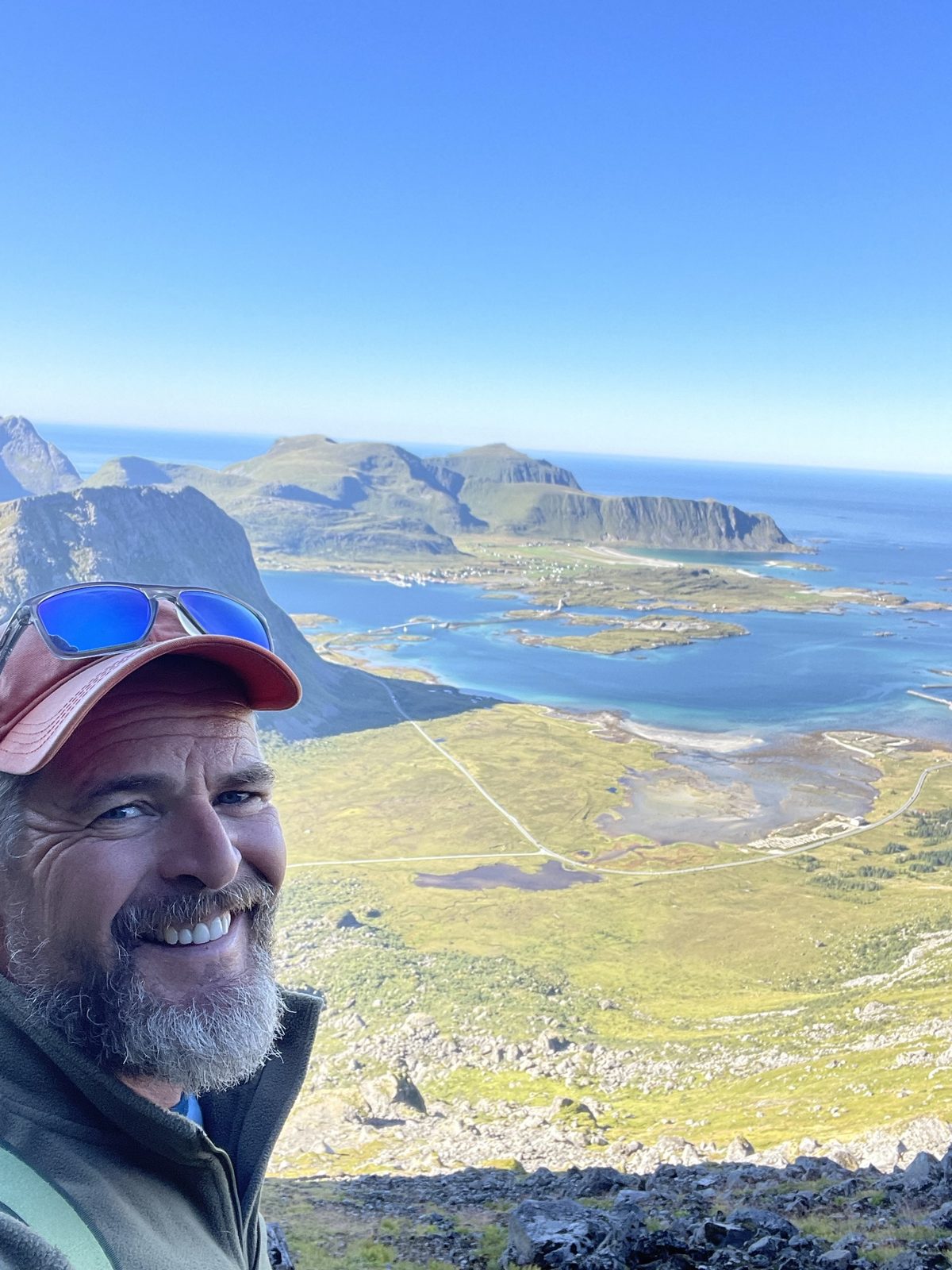
The honest hierarchy for a first trip, from our hikes guide: Volandstind (457 m, about 2–3 hours round trip) for few people and a full-circle view over beaches, fjord and open sea; Offersøykammen (436 m, steep start then an easy plateau, about an hour up) as the classic short top; Ryten (about 540 m) for the famous look straight down onto Kvalvika's sand; and Reinebringen — over 2,000 stone steps to the most photographed view in Lofoten, wonderful and busy, at queue pace in season, open May to September. Choose by legs and weather, not by fame, and read our hiking safety guide before the first one.
Two local notes the lists rarely include. There is a short version of this day: fifteen minutes of easy walking on the Volandstind trail reaches a wooden shelter with a fjord view and a tiny outdoor lending library on its wall — the established turning point for groups with small children, and a real mountain moment for the price of a stroll. And do not automatically cancel for fog: the sun often shines above it, and a summit poking out of a sea of cloud is one of the best mountain days this place offers.
Did you know? — from Casa Lofoten
The Volandstind trailhead is about 1.8 km from our door — a 20–25 minute walk, no car required. Our guests climb it on the first clear evening rather than saving it for a "good day". → Volandstind guide
2. Spend a day on a beach
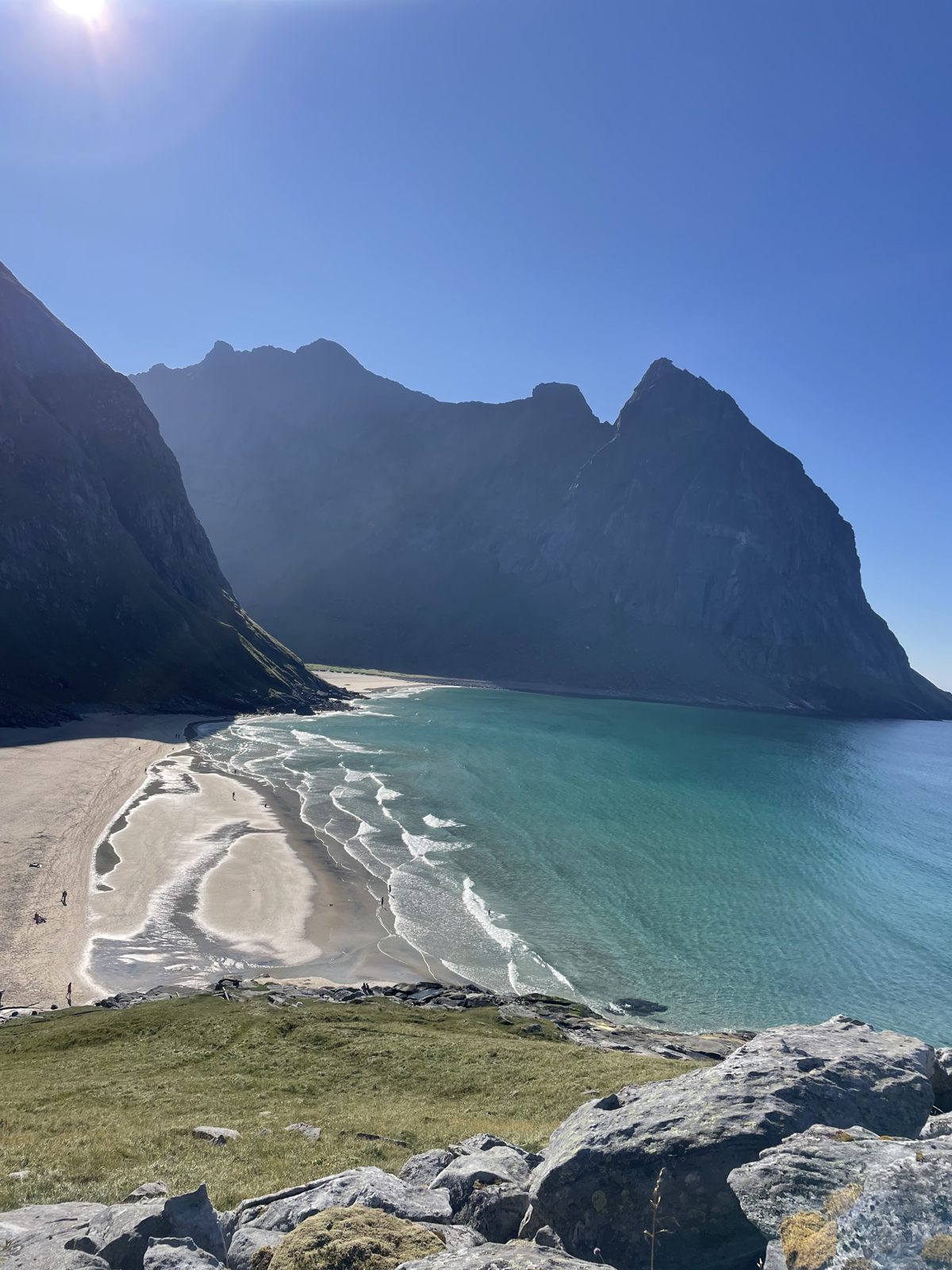
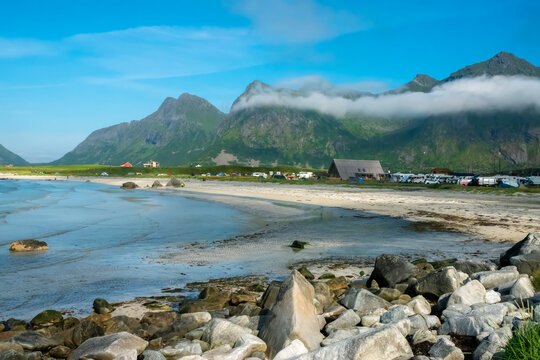
If you have only seen Lofoten's mountains in photographs, the beaches are the surprise: chalk-white sand, cold turquoise water, and almost nobody there outside the peak weeks. They are not a summer-only subject — autumn storms and winter aurora make them a year-round reason to be here.
The short version: some you park beside (Rambergstranda, Hauklandstranda, Uttakleiv, Skagsanden), one you earn on foot (Kvalvika), one you reach by boat (Bunes). Yes, you can swim — roughly 9–15 °C at its warmest, a triumphant dip rather than an afternoon. The full sorting, by effort and season, is in our beach guide.
3. Walk through a fishing village
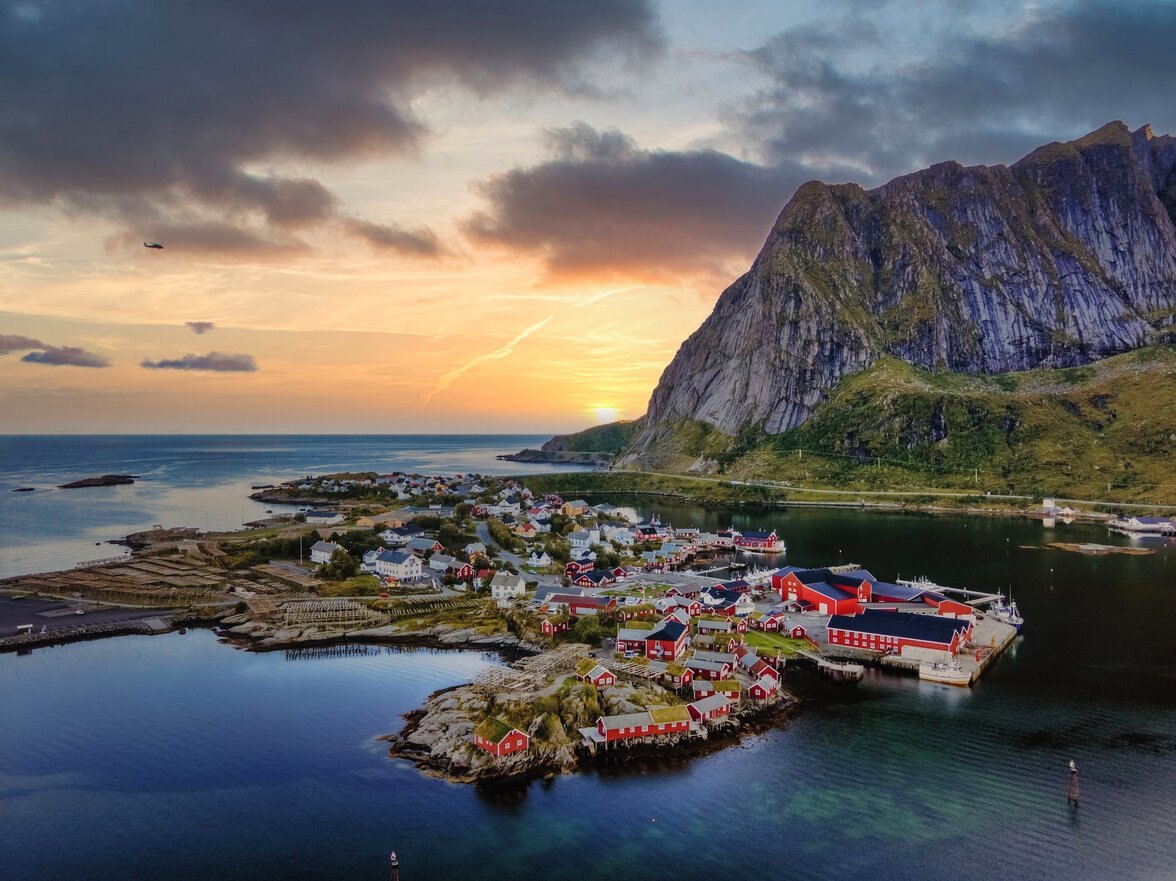
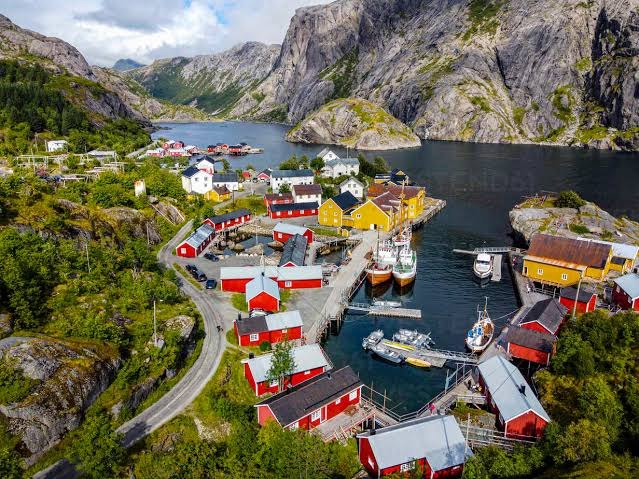
The villages are why Lofoten looks like Lofoten: red cabins on stilts, drying racks, working harbours. In the west, the classic set is Reine and its photogenic neighbours Hamnøy and Sakrisøy, the road's-end village of Å with its preserved fishing-village museum buildings and a bakery with a long history (seasonal — check opening hours), and Nusfjord, a conserved fishing village on its own side road with a visitor fee in season.
Our honest advice: pick one or two and give them hours, not all of them in an afternoon. A village here rewards coffee-pace walking; from a car window they are just red paint. Lunch helps — the west has a small, seasonal set of places worth planning around; see the food guide.
On trips of a week or more, the east earns its own village day: Henningsvær, a fishing village spread over small islets joined by bridges, with galleries, cafés and the famous football pitch on its own islet — about an hour and a half's drive without stops from the Ramberg area, and this is Lofoten, so there will be stops. We put it in the longer itinerary for a reason: see A Week or More.
And treat the driving between villages as part of the day, not dead time. The E10 is narrow, slow, and frequently interrupted by sheep with right-of-way attitudes — which is another way of saying it is one of the most scenic roads in Europe. Plan one direction per day and it stays a pleasure; see Getting Around Lofoten.
4. Get on the water
Lofoten is a sea culture, and a day at sea level changes how you read everything else.
The simplest version is free: recreational sea fishing with a rod needs no licence in Norway — the sea, that is; lakes and rivers require a local permit — and an evening with a spinning rod on a shore or dock, with dinner as a possible bonus, is as local as an activity gets. The classic boat day is the small passenger boat up the Reinefjord to the roadless side of the fjord and the walk to Bunes beach (book ahead in summer, and mind the return time). Guided fishing trips, sea-eagle safaris and kayak tours run from the harbours in season for those who want a skipper; the kayaking is honestly a calm-day activity here, so hold it loosely and let the sea decide. And on longer trips, the east adds Svolvær's boat excursions toward the Trollfjord — see A Week or More.
5. Surf — or watch the surfers
Yes, there is surfing above the Arctic Circle, and it is not a gimmick: Unstad is the famous wave, and in the west, Brunstranda with Lofoten Beach Camp is about two minutes' drive from Ramberg. Summer is the gentle, beginner-friendly season; winter brings the storm swells the experienced surfers travel for, in full winter wetsuits. Even if you never touch a board, an hour watching surfers under snow-covered mountains is a genuinely good use of a rough-weather afternoon.
6. Stay up for the sky
Lofoten runs two light shows a year, and planning around them is half the trip.
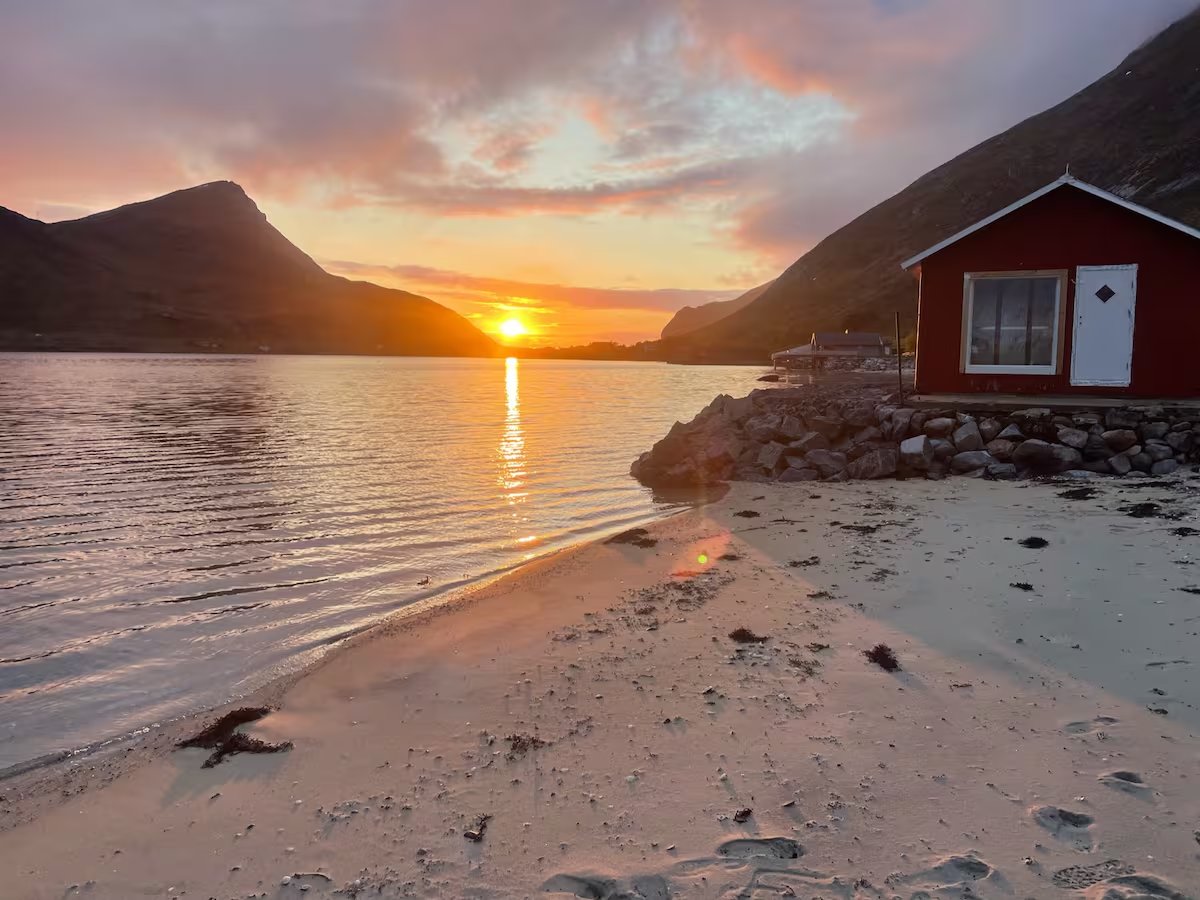
The midnight sun, from roughly late May to mid-July: the sun swings low across the sea through the evening and sits lowest around 01:00 — which means the show needs a free horizon to the west and north, and the west of Lofoten's outer coast is built for it. A west-facing beach at midnight is the summer memory most guests take home.
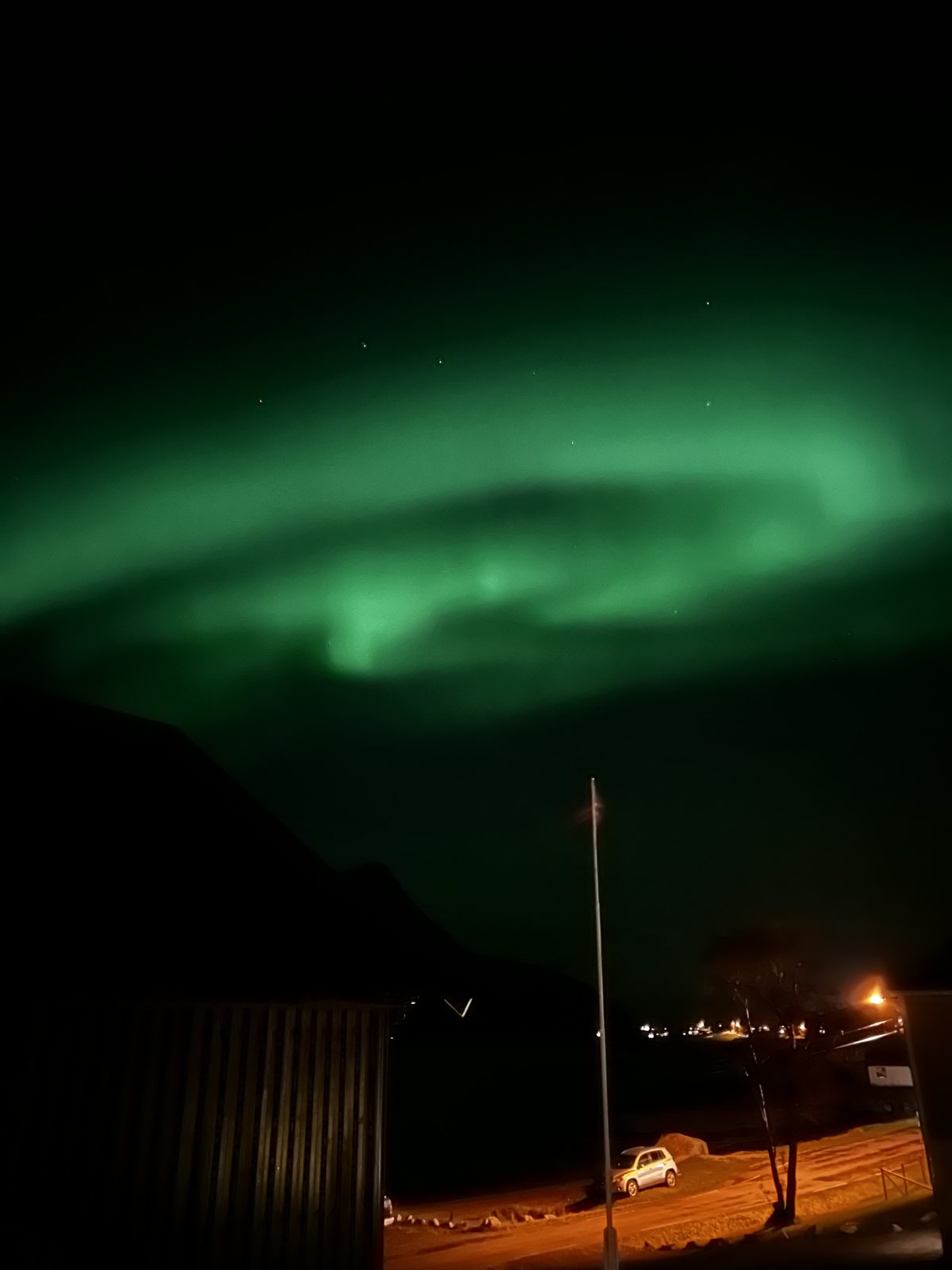
The northern lights, from mid-September to early April: no tour bus required. The method is simple — darkness plus clear sky, a spot away from lights right outside where you stay, twenty metres into the dark, and patience. Waiting works best as an in-and-out affair from somewhere warm, which is why the best viewpoint is usually your own doorstep rather than a car park an hour away. And bring the camera even if the activity looks weak: a camera's sensor sees more colour than your eyes do, especially on quiet nights. Our full guide covers the forecast tools and the honest odds: Northern Lights in Lofoten.
7. The sauna and the cold sea
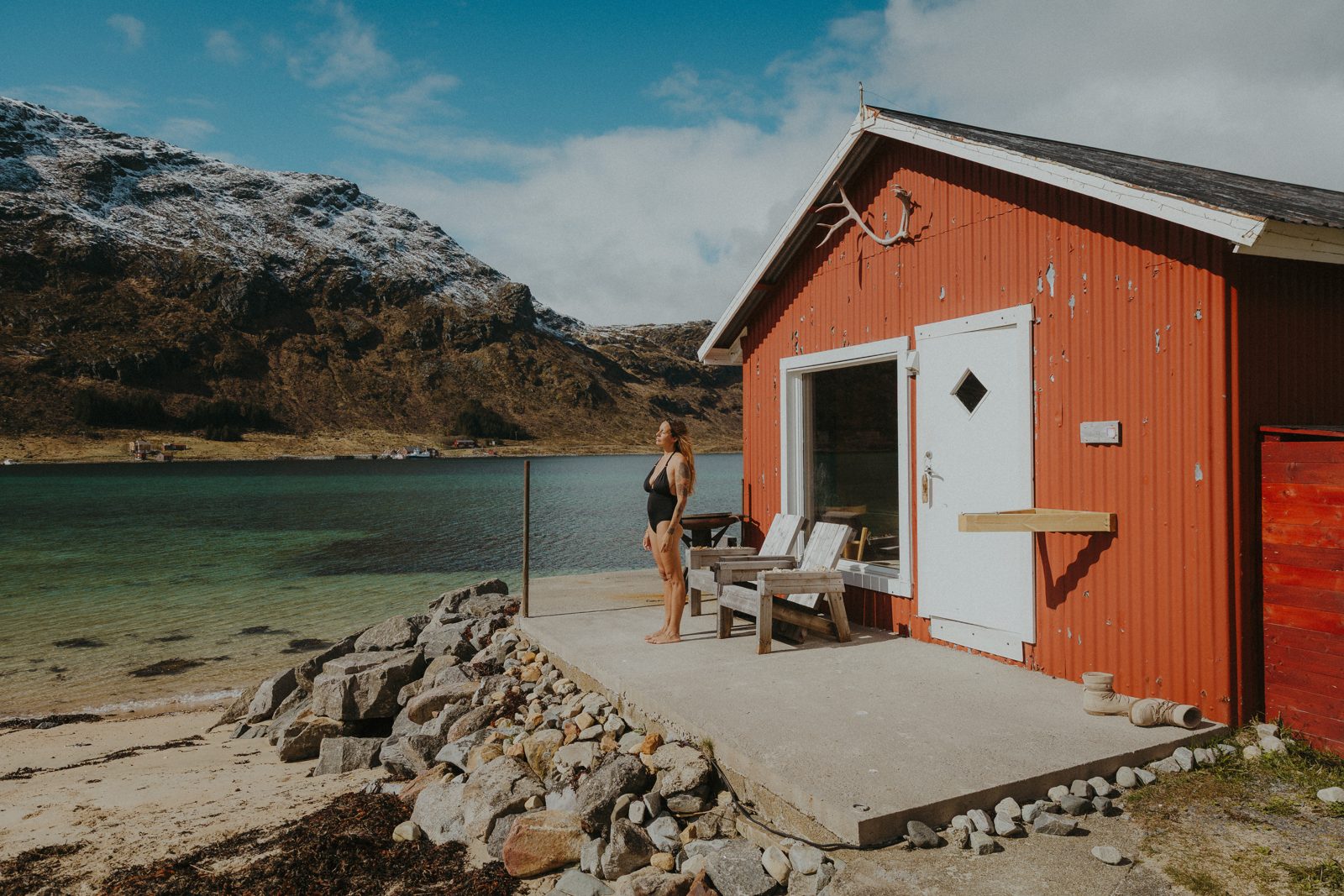
Ask people afterwards what they remember, and this one comes up more than any summit: heat, a short walk over sand, cold water, and back into the heat. It is the local answer to rain, to sore legs, to a long drive — restitution as an activity. Beach saunas and accommodation saunas exist across the islands now; if this ritual appeals to you, check what your accommodation offers before you book, because having it at the door is a different holiday from driving to it.
Did you know? — from Casa Lofoten
This ritual is our house's heart: our own sauna stands by our own beach, and the beach-and-sauna combination is the single most mentioned thing in our guest reviews. → The sauna and the beach
The quiet extras — for the slack in your days
None of these fills a day, and all of them have saved one: the glassblowing workshop at Vikten on Flakstadøya's outer coast, run by the same family since 1976, with a café facing the sea (seasonal, roughly May to September — check opening hours); the galleries scattered through the villages; the Viking museum at Borg on Vestvågøya for a history fix on a wet day (check current opening); a café afternoon with weather on the other side of the window; and the kitchen day — cooking something slow while the storm files past. Our weather guide has the full bad-weather repertoire.
What changes with the seasons
The list above holds all year; the mix changes. Summer is everything at once — hiking, beaches, the midnight sun, the crowds. September and October trade some trail comfort for storm light, colours and the first aurora. Winter is the blue light, the northern lights and the surf at its most serious, with the mountains left to the properly equipped. Spring is quiet, bright and in-between. The honest month-by-month sorting is in Best Time to Visit Lofoten — and whichever you choose, the local rule travels well: there is no bad weather, only bad clothing.
One thing we would genuinely skip
Trying to see all of Lofoten from one end to the other in a weekend. The islands are 150-plus kilometres of narrow, slow, beautiful road, and a base-plus-day-trips trip beats a moving-every-night trip at every trip length we have seen. Choose one end — our argument for the west is in Where to Stay — and let the other end be the reason you come back. (We are collecting the other classic first-timer mistakes in a guide of their own.)
Frequently asked questions
Is Lofoten worth visiting?
For travellers who come for landscape and outdoor days: emphatically yes, in any season, given five days or more. For travellers who want city comforts and guaranteed sun: honestly, no — and it is better to know that before you book.
How many days do you need in Lofoten?
Three to four is the absolute minimum; five to seven is enough to do the west of Lofoten properly. Longer is better — see How Many Days Do You Need.
Can you visit Lofoten without hiking?
Yes. Villages, drive-to beaches, the boat days, the surf beaches, galleries and the sky shows are all reachable without a trail. The mountains improve the trip; they are not the entry ticket.
Do you need a car?
Realistically yes — the good days are spread along the road and buses are sparse. See Do You Need a Car in Lofoten.
What do you do in Lofoten when the weather is bad?
Wait an hour, drive twenty minutes, or switch to the indoor repertoire — sauna, kitchen, café, gallery. The weather here is local and fast-moving; a bad forecast is not a lost day. See the weather guide.
What is Lofoten like in winter?
Short blue days, northern lights, serious surf, and villages at their quietest. Different trip, same place — see Lofoten in Winter.
Is Lofoten too crowded?
From late June to late August the famous spots are genuinely busy. The rest of the year, no — and even in peak weeks, the crowds thin dramatically one beach or one trailhead away from the famous names.
What does a Lofoten trip cost?
Norway is not cheap, but the backbone of a Lofoten trip — mountains, beaches, light — is free. The structure of the budget matters more than any number: see What Does a Lofoten Trip Cost.
Seven kinds of day, one base
Every day-type in this guide starts within a short drive of the house — and ends with the sauna, the beach and the fjord.