Lofoten With Kids: An Honest Guide from Local HostsLofoten With Kids: An Honest Guide from Local Hosts
Does Lofoten work with children — and how? Local hosts in the west answer honestly: beaches, short walks, a boat day, and the pace that makes it succeed.Does Lofoten work with children — and how? Local hosts in the west answer honestly: beaches, short walks, a boat day, and the pace that makes it succeed.
Every spring, parents ask us a version of the same question:
Does Lofoten actually work with children — and how do we plan it so it works for the whole family?
The short answer is yes. In our experience it works better with children than almost anywhere — but not for the reasons destination lists usually give.
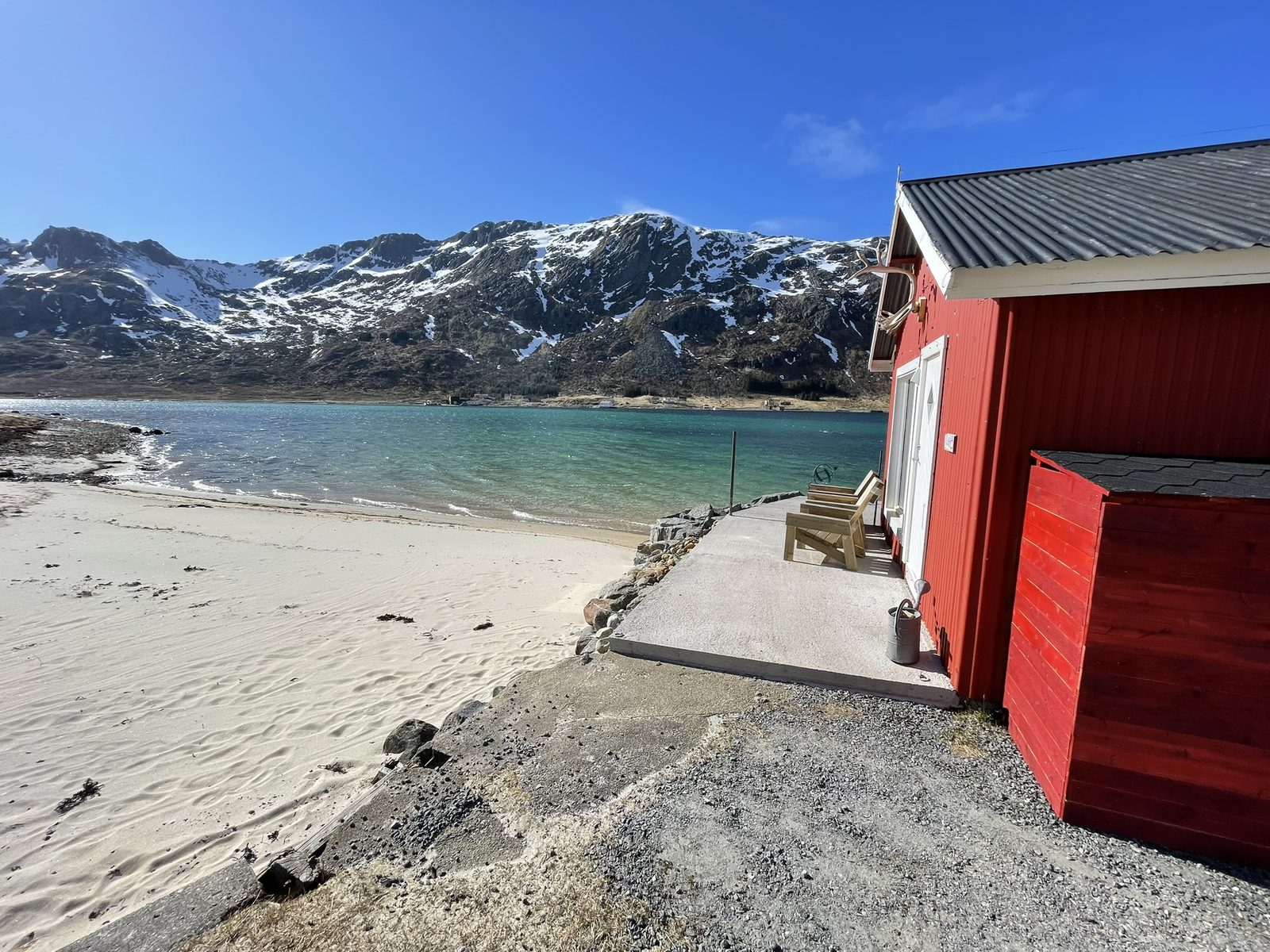
There is no theme park here. Nobody sells a wristband. What Lofoten offers a family instead is simpler and far more durable: white-sand beaches at the end of short walks, fish that bite from the shore, small mountains with child-sized rewards, and summer daylight that refuses to end. The landscape does the entertaining. Children tend to understand this faster than adults do.
One family from New York wrote to us afterwards that their children had declared "the best day ever" — several times, every day. (translated) None of those days required a ticket.
We live in the west of Lofoten and host families through the year, including two families at a time. This guide is how we would plan a family trip if you asked us over coffee.
First, three honest facts about Lofoten with children
1. The pace rule counts double. Our standard advice is one or two experiences a day, with slack around them. With children, that rule is the difference between a good trip and a meltdown in a car park. One proper thing — a beach, a walk, a boat — done slowly, is a full day. The famous photo stops can wait for another trip.
2. The beach day is the backbone. Not a sunbathing day — a building, running, splashing, driftwood-collecting day, with a warm layer on and a thermos in the bag. Children treat an Arctic beach exactly like any other beach, only with better material.
3. The weather will change your plan — and children mind less than you do. Dressed right, most children are genuinely indifferent to drizzle; puddles are a feature. The local saying applies at half height too: there is no bad weather, only bad clothing. Wool closest to the skin, and a spare dry set in the daypack, always.
When to go with children
If the school calendar decides for you, it decides well.
- The summer holidays are the natural first choice: the mildest weather, the long, light nights, and every beach and trail at its most accessible. This is when the swimming happens and the evenings never really end.
- Easter brings snow, returning light, and — on clear nights — the late season of the northern lights. A white beach with children on it is a strange and wonderful thing.
- The autumn school break brings the colours and the first properly dark evenings — which means the first realistic chance for children to see the aurora before bedtime.
Deep winter with small children is possible — families do it — but it is the demanding version: short days, the highest chance of storms, and more logistics per hour of daylight. We would honestly choose one of the three windows above first. For the wider picture, see our guide: Best Time to Visit Lofoten.
The beach is the plan
If you take one planning idea from this guide, take this one: build the family days around beaches, and treat everything else as weather permitting. Our full beach guide sorts them by effort; here is the family short version.
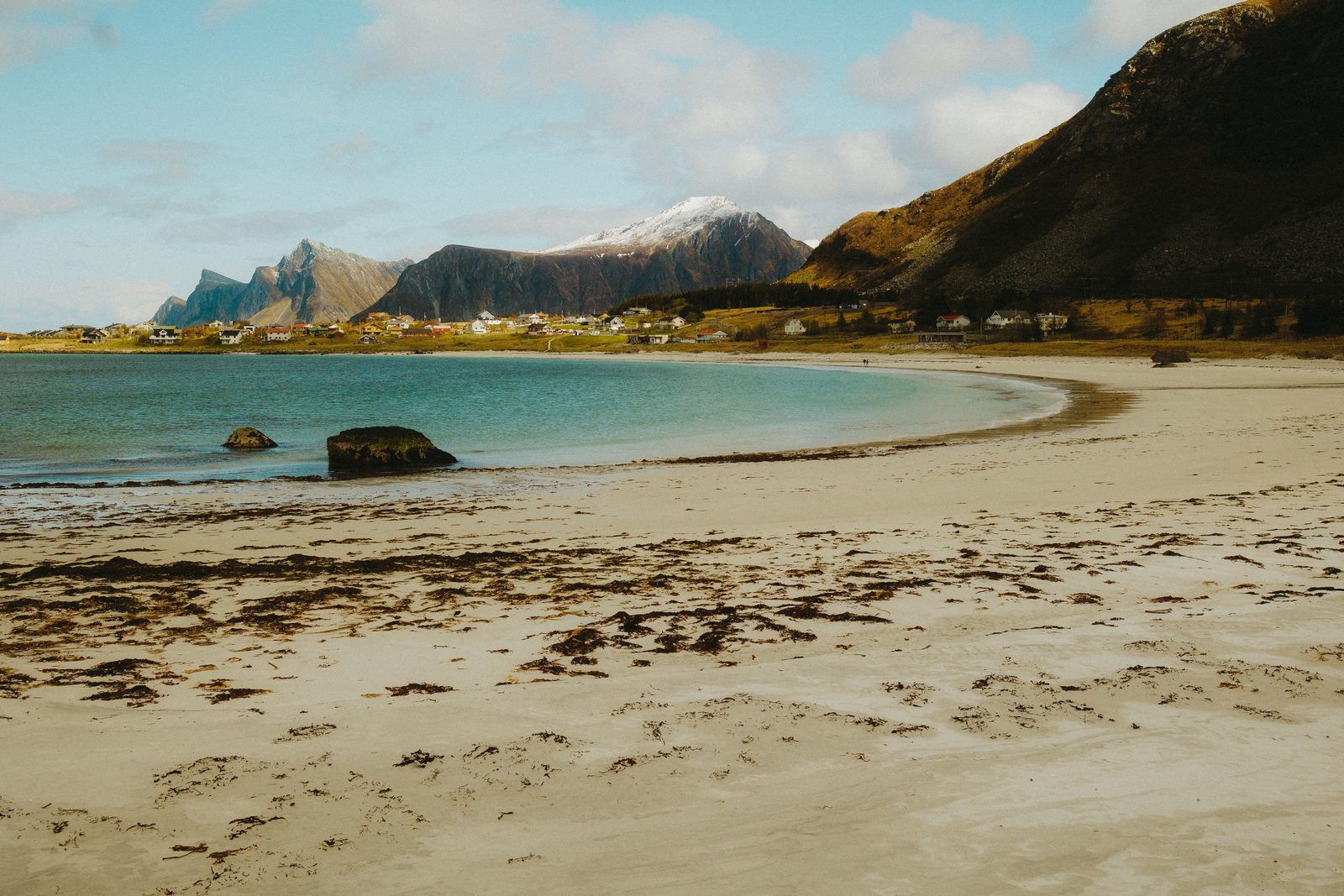
- Rambergstranda is the easiest first beach in the west: sand a minute from the car, the village of Ramberg directly behind it, a shop a few minutes away for emergency ice cream and forgotten snacks.
- Hauklandstranda is the full-day beach: a sheltered bay, gentle sand, and facilities and a café in season — the one to choose when you want to stay until someone falls asleep in the car.
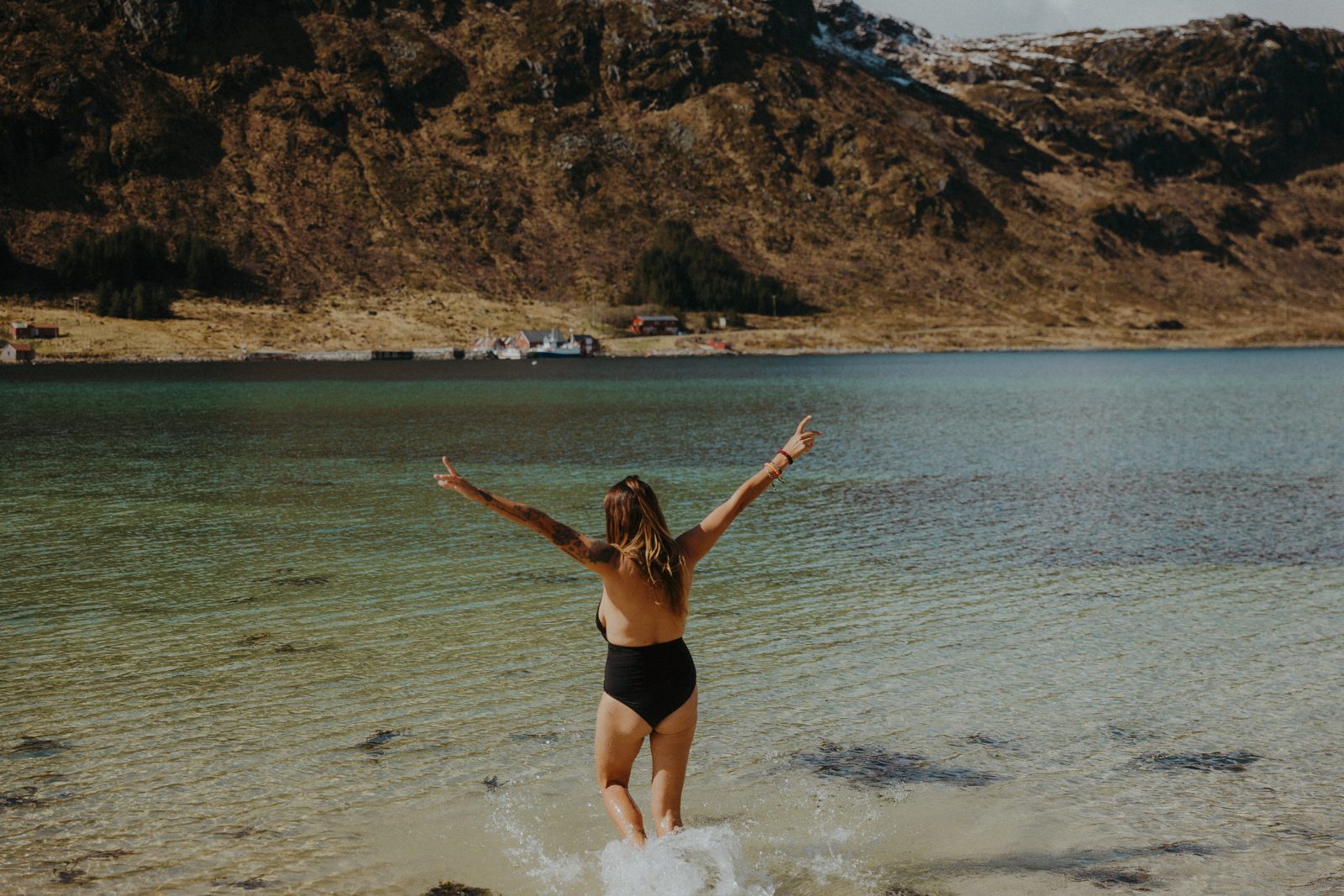
And yes, they will go in the water. The sea is at its least cold in late summer — roughly 9–15 °C at its very warmest. Adults manage a short, triumphant dip. Children, as every parent discovers here, stay in the shallows long after the adults have retreated to their towels. Bring towels, warm layers and a dry change to the water's edge, and let it happen.
“The powerful sauna on a lovely private beach was a highlight for everyone — children and adults alike.”
“Sauna for the adults and a beach for the kids to play on was fantastic.”
Short walks that children own
You do not need big hikes for children to feel they have been to the mountains. These are the walks we recommend to families, in rising order of effort.
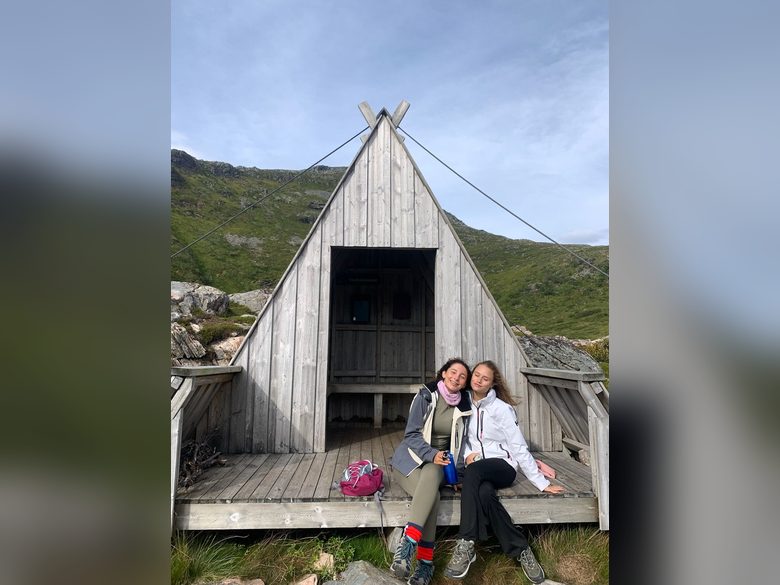
The gapahuk walk (Volandstind trail). From the parking at the Skjelfjorden community house, about fifteen minutes of easy walking brings you to a wooden shelter — a gapahuk — with a view over Skjelfjorden and a small outdoor lending library mounted on its wall. It is the established turning point for groups with small children: the steep climbing starts after it, so families walk up, read a book with a fjord view, and walk back down. As a first "mountain trip" for a four-year-old, it is hard to beat. Full details in our Volandstind guide.
Kvalvika — the family adventure. A road-free, white-sand double bay that children have to walk to, which is exactly what makes arriving feel like an achievement. There are two ways in, and with children we would choose by parking as much as by trail: the Torsfjorden side is the shortest walk (about 2 km each way over a low pass of roughly 180 metres) but its small car park fills early in summer; the Innersand side is longer (about 3 km each way, roughly 260 metres of climbing) on a good path — and children usually love the boardwalk sections. There are no facilities at the beach: carry everything in, carry everything out, and count it a half day at family pace.
Offersøykammen — the first summit. For children with some walking in their legs, this is the classic first top: 436 metres, a steep start that levels into an easy plateau, about an hour up at adult pace — allow well more with children — and a full-circle view that makes everyone feel they climbed something serious.
And Reinebringen? The famous staircase viewpoint is real and the view is real — but so are the more than 2,000 stone steps, the queue-pace walking in season, and the May-to-September window. Teenagers with hiking habits enjoy it. It is not a small-children walk, and there is no shame in saving it for a later trip. Whichever walk you choose, choose it for the youngest member of the group — more in our hiking safety guide.
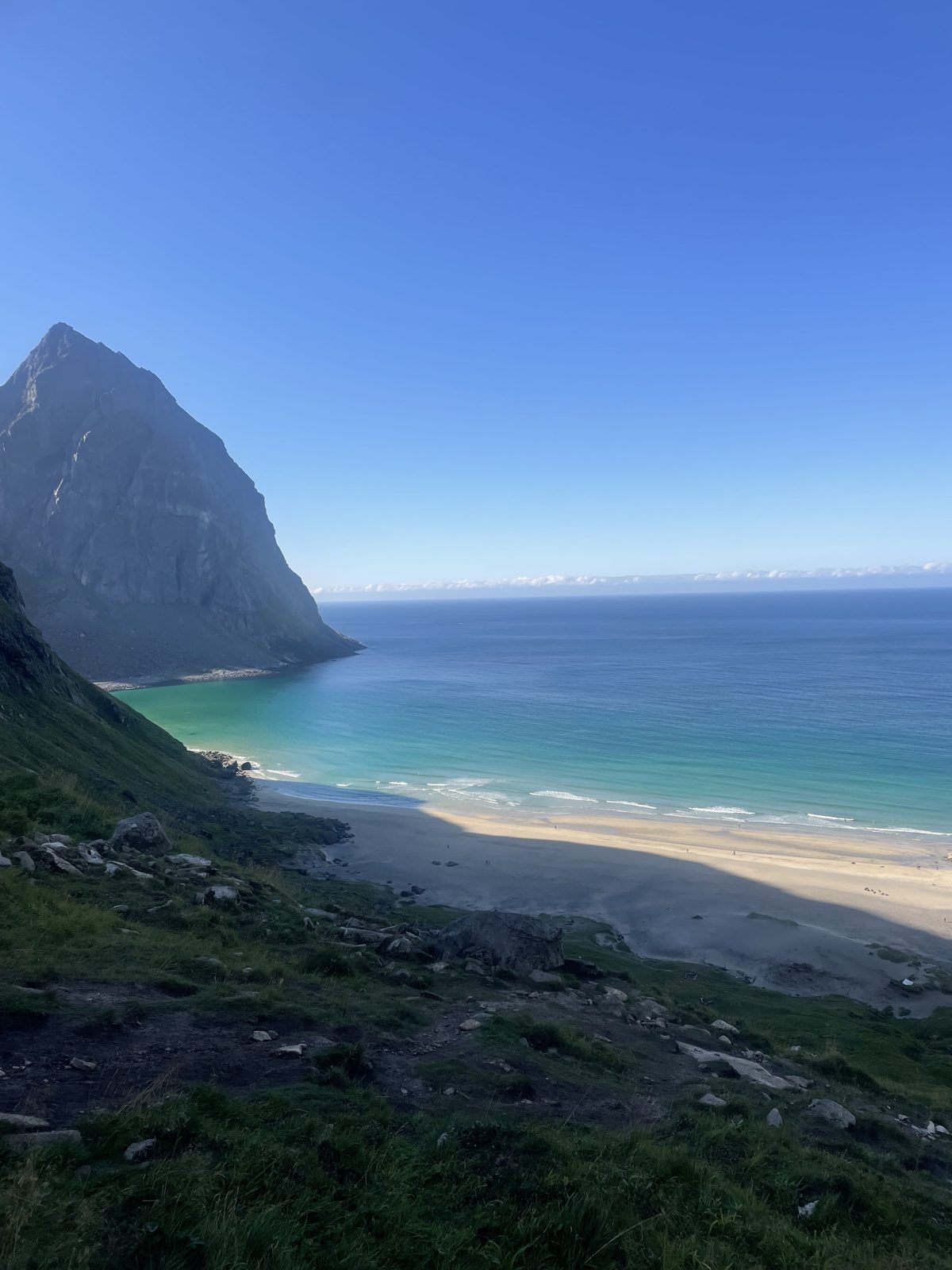
Photograph to come — the boardwalks on the Kvalvika trail
The boat day
For many children, the best day of a Lofoten trip involves no summit at all. The small passenger boat from Reine runs about 20 minutes up the Reinefjord to Vindstad, a village with no road — an idea children find genuinely thrilling — and from there an easy, well-marked path of about 3 km (roughly 45 minutes at adult pace) leads over a low pass to Bunes, the biggest sweep of sand in the west.
Three rules make it work with a family: book the boat ahead in summer; write the return departure somewhere you cannot lose it; and pack as if there is nothing at the beach, because there is nothing at the beach. Done right, it is a full day that feels like an expedition and demands almost no climbing.
Fish from the shore
Here is the quiet star of a family trip that most itineraries miss: in Norway, recreational sea fishing with a rod is free — no licence needed. A simple spinning rod, a safe stretch of shore or a dock, and an hour of patience is a complete evening activity. Some evenings nothing bites and it still works; some evenings dinner comes out of the sea in front of your accommodation, and the kitchen becomes the second event of the night.
Two notes: freshwater is different — lakes and rivers require a local fishing permit — so keep it to the sea. And by the water, the ordinary rules apply: a grown-up within reach, and respect for waves on the outer shores.
Photograph to come — a fishing rod at the water's edge
Long, light nights — and bedtimes
From late May to mid-July the sun does not set, and the light stays generous well beyond those weeks. We will be honest about what this does to families: nobody's children go to bed on time under the midnight sun, and the trips that work are the ones that stop fighting it. Shift the day later. Have the beach evening at nine. Sleep in.
Practically: pack eye masks for the children, and check what your accommodation offers in the way of blackout curtains before you rely on willpower alone.
Northern lights with children
From mid-September onwards, the other light show begins. The good news for families is timing: the aurora is most active from the evening onwards, and once the dark evenings arrive, children often get their chance before bedtime rather than at 2 a.m.
The method with children is short watches, not long vigils: watch from right outside where you stay, dress everyone properly, and go in and out. A child who sees it once will talk about it for years. Our full guide: Northern Lights in Lofoten.
When the weather turns
It will, at some point, and the family repertoire is short and reliable:
- The puddle programme. For the youngest, rain gear plus gravel roads and beaches is an activity in itself. Half an hour is often enough to restore everyone.
- The kitchen day. Baking and waffles are the classic Lofoten answer to sideways rain, and children are enthusiastic staff. This is where self-catering earns its keep — more in our food guide.
- The café afternoon. A village, a hot chocolate, a window with weather on the other side of it.
And remember that the weather here is local: a grey sky over your base is often not a grey sky twenty minutes' drive away. Our weather guide explains how to use that.
Photograph to come — waffles in the waffle iron
Practical notes for parents
You need the car — with children, more than ever. Distances, gear, naps on the move: see Do You Need a Car in Lofoten. Child seats are required by Norwegian law — reserve them when you book the rental car and confirm before you fly, rather than negotiating at the counter.
Plan the Sundays. Most shops keep limited Sunday hours or close entirely, and a family runs on supplies. Do the big shop on Saturday, and know which shop near your base opens on Sundays before you need it.
Pharmacy basics. Everyday non-prescription items are sold in grocery shops everywhere, but full pharmacies exist only in Leknes and Svolvær — with children, bring whatever you rely on from home rather than assuming you can buy it nearby.
Pack for the ground truth. Wool for children too, waterproofs regardless of forecast, and twice the socks you believe in.
Choosing where to stay with children
The accommodation questions that matter with a family are rarely the ones on the booking filters. Can early bedtimes and adult evenings coexist — are there floors or rooms enough to separate them? Is there a real kitchen, and a washing machine and somewhere to dry the daily wet everything? And the one we would weight highest: can the children be let out the door into safe outdoor space, away from the road? Our accommodation checklist guide covers the full list.
Did you know? — from Casa Lofoten
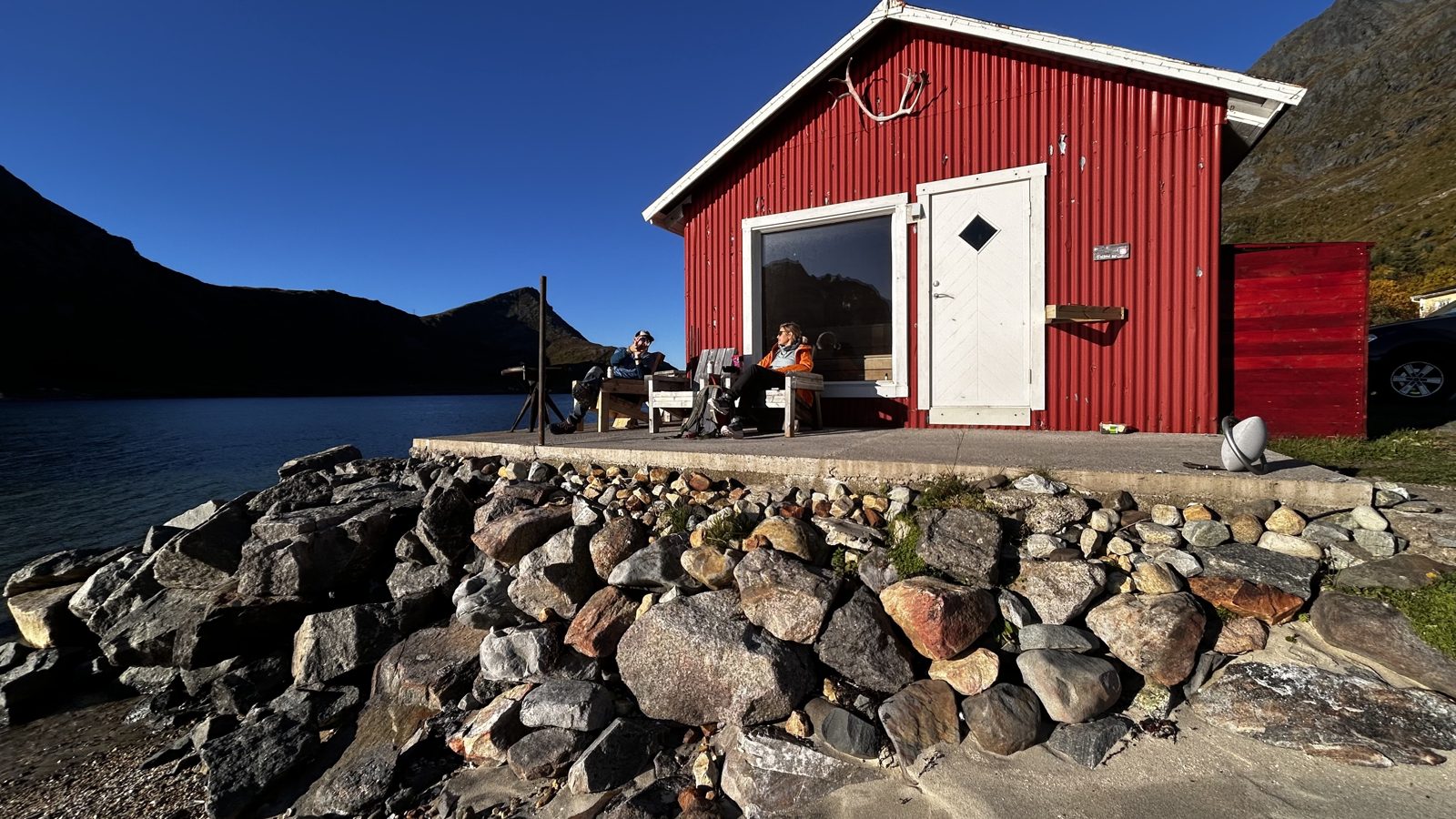
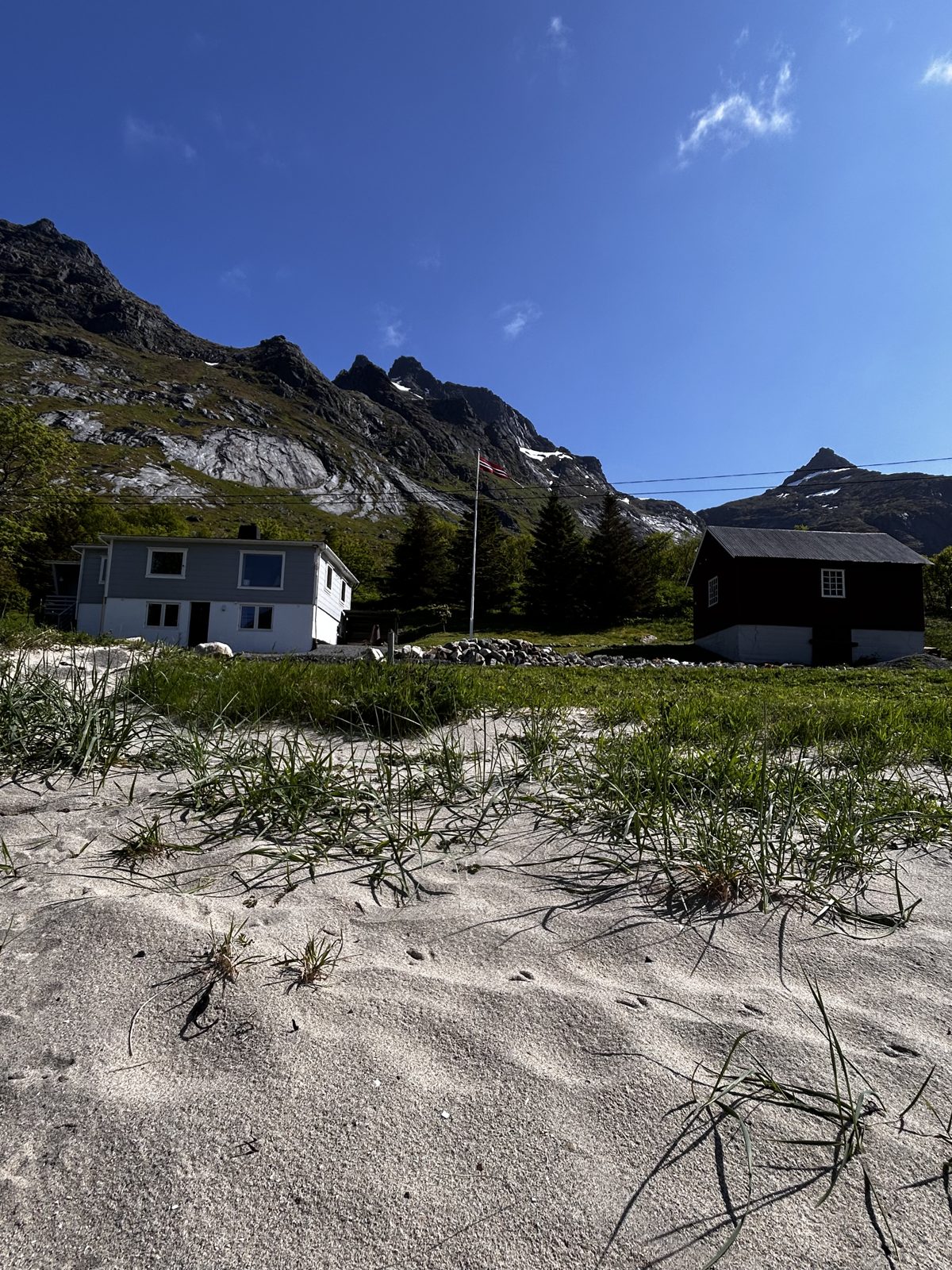
Our house was arranged with exactly this in mind: two floors that work independently — two families can share the house without sharing a bedtime — and the shore begins at the sauna door, so the children's playground is the beach itself. As one family put it: "The house can be shared by two families, as the floors can be used independently." (translated) → The house
Frequently asked questions
Which beach is best with children?
Hauklandstranda for a full day (sheltered bay, facilities and café in season), Rambergstranda for ease (village behind it, sand a minute from the car). Kvalvika for families comfortable with a real walk. Our beach guide has the complete picture.
Can children actually swim in the sea?
They can splash and dip — the sea is roughly 9–15 °C at its warmest in late summer. Keep to the shallows, keep a warm layer and towel at the water's edge, and expect the children to outlast you.
Is Reinebringen suitable for kids?
For teenagers who hike, yes, in season. For small children, honestly no: more than 2,000 steps, queue-pace crowds in summer, and a May–September window. The gapahuk walk and Offersøykammen are better first mountains.
Do we need a car with children?
Yes — even more than travellers without children. Book child seats with the rental car well in advance.
How do bedtimes work under the midnight sun?
Loosely. Shift the day later, use eye masks, check the blackout situation where you stay, and accept that a 22:00 beach run is part of what you came for.
Can children see the northern lights?
From mid-September, yes — and often at child-friendly hours once the dark evenings arrive, since activity typically builds from the evening onwards. Watch from right outside where you stay and keep the watches short.
Is Lofoten safe for children?
The nature is real: cold sea, sudden wind, and drops beside some trails. With ordinary judgement — choose walks for the youngest in the group, never turn your back on big surf, keep small children in reach at the water — it is as good a place to be a child as we know.
What if it rains the whole week?
It almost never rains the whole week everywhere — the weather here is local and fast-moving. A family with rain gear, a kitchen and our bad-weather repertoire will still have a good week. See the weather guide.
Built for two families
Two floors that work independently, five beds, board games in the reading corner — and the beach starts where the lawn ends.