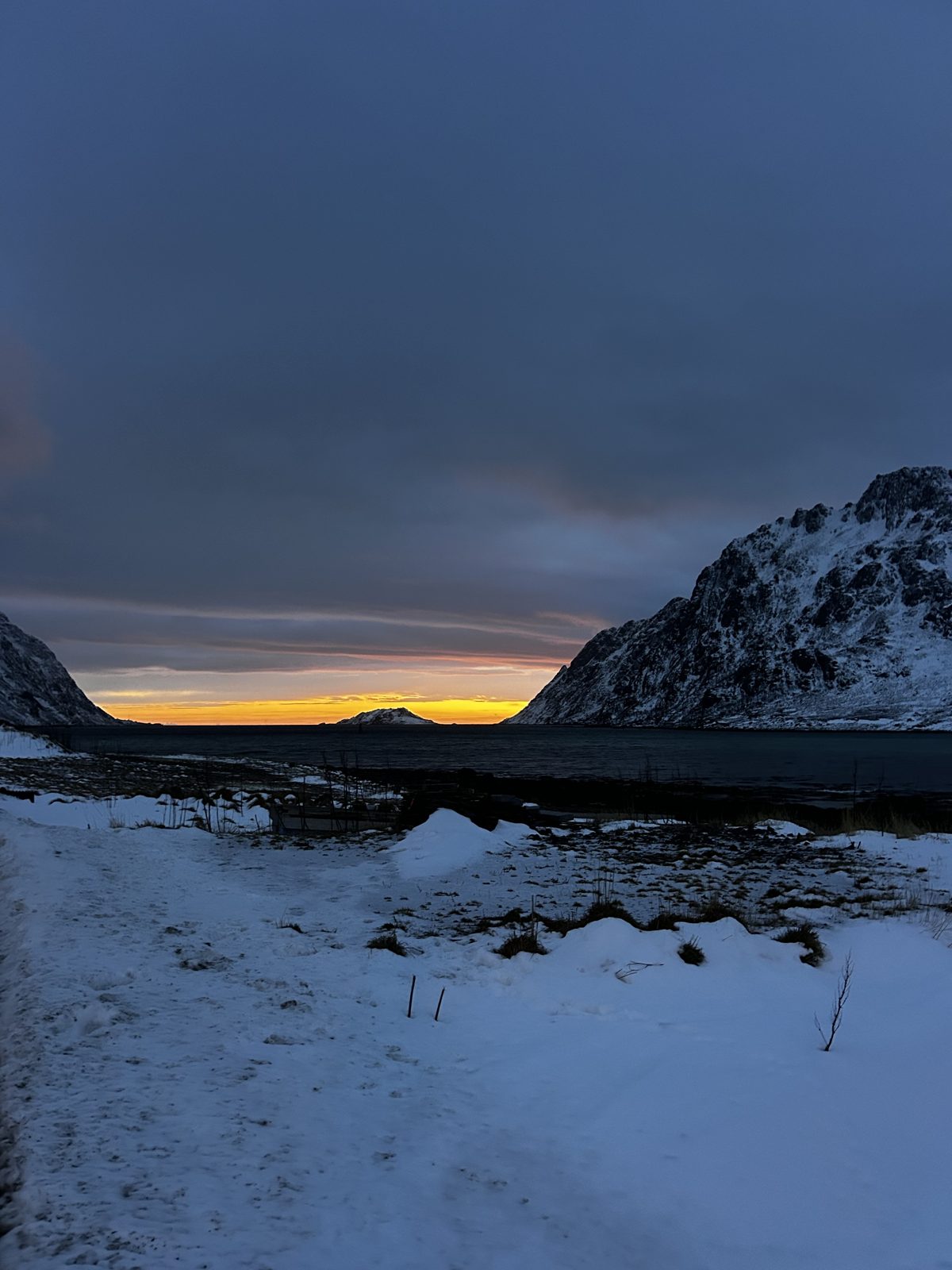
Common Mistakes First-Time Visitors Make in Lofoten: An Honest Guide from Local HostsCommon Mistakes First-Time Visitors Make in Lofoten: An Honest Guide from Local Hosts
The twelve mistakes we see first-time visitors make in Lofoten — flights before base, the umbrella, the 14-day forecast — and the honest fixes for each.The twelve mistakes we see first-time visitors make in Lofoten — flights before base, the umbrella, the 14-day forecast — and the honest fixes for each.
We host first-time visitors all year, and we have noticed something reassuring: almost everyone makes the same mistakes.
So what are they — and how do you avoid them?
Not because travellers are careless — because Lofoten quietly breaks the assumptions that work everywhere else. The map lies about distances. The forecast lies about next week. The midnight sun does not perform at midnight. And the supermarket you were counting on is closed, because it is Sunday.
So here is the guide we wish every guest could read before booking anything: the twelve mistakes we actually see — and the fix for each one.
One pattern connects them all, and it is worth naming before the list. Nearly every mistake below comes from planning Lofoten like a city trip: tight schedule, long-range forecast, restaurants assumed, distances trusted. Lofoten rewards the opposite — a slow base, loose days, and a kitchen. Keep that in mind and half the list fixes itself.
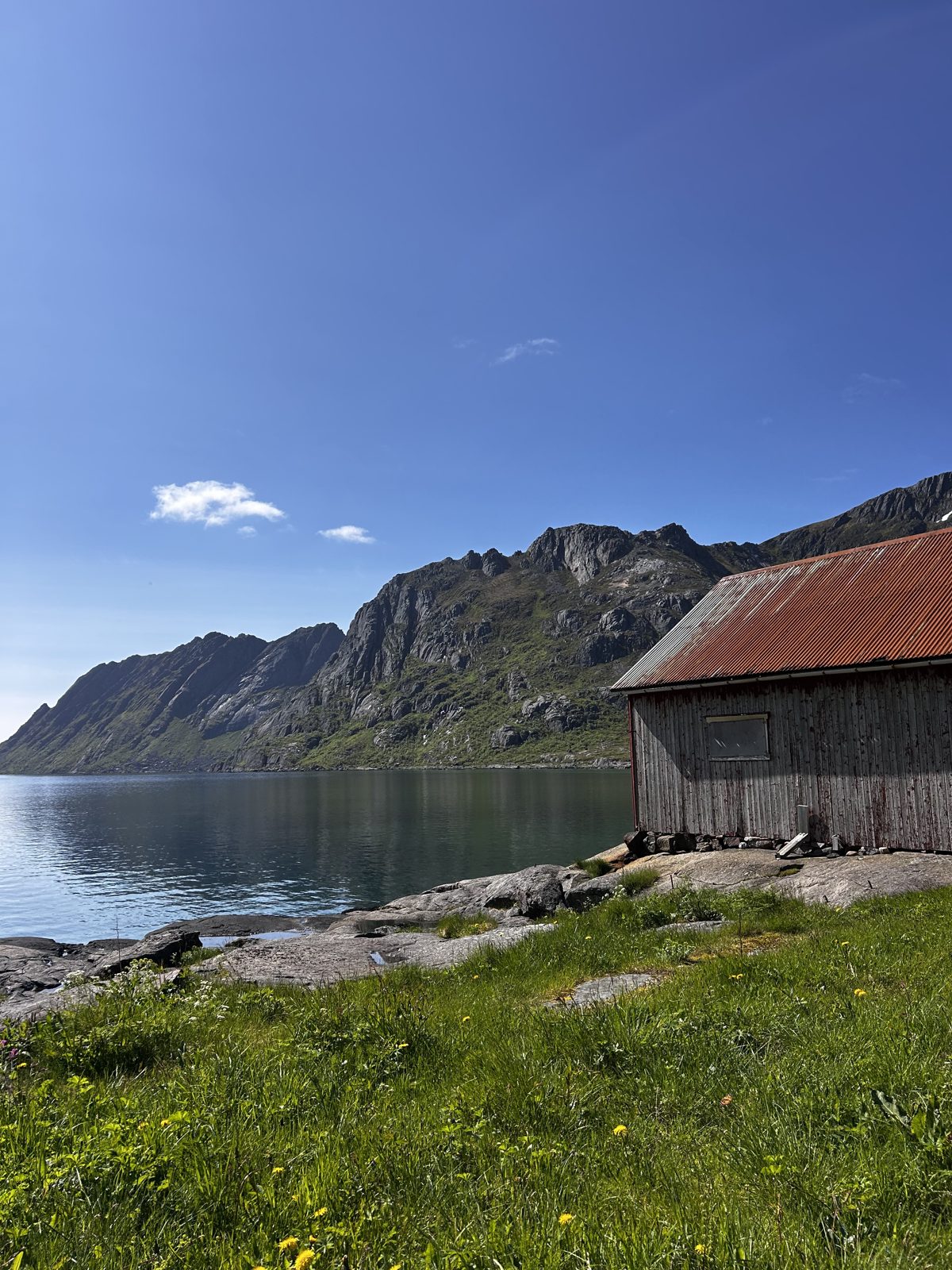
1. Booking flights before choosing where to stay
The most expensive mistake on this list, and the most common. Lofoten stretches over 150 kilometres of slow road, and the airports sit at different ends of it — so where you land should follow from where you stay, not the other way around. Book the tempting flight first, and you can spend the first and last day of a short trip driving the full length of the islands.
The fix: decide your base first — our argument for the west is in Where to Stay in Lofoten — then choose the arrival that serves it: How to Get to Lofoten.
2. Giving the trip too few days
Three to four days is the absolute minimum here, and it buys you little more than some of the Instagram pictures. Most visitors take three or four flights to get here; giving the destination less time than the journey deserves is how people leave feeling they somehow missed the place they were standing in.
The fix: five to seven days is enough to do the west of Lofoten properly. If you cannot stretch the days, shrink the ambitions instead — see How Many Days Do You Need and mistake #3.
3. Trying to see everything, from a new bed every night
The map makes Lofoten look like a two-day drive-through, so first-timers book four accommodations in five nights and spend the holiday packing. The roads are slow, the scenery forces stops, and every move eats half a day. Meanwhile the travellers having the best trip drive past you twice a day from the same comfortable base.
The fix: one base, day trips, one direction per day. Our itineraries are built this way — see the 5-Day Itinerary — and yes, this means choosing to leave some of Lofoten for the next visit. That is not a defeat; it is the local method.
4. Trusting the 14-day forecast
Every autumn we watch it happen: a guest sees rain across the long-range forecast and starts talking about cancelling. Then the week arrives and delivers three of the best days of the year. Long-range forecasts here are fiction with confidence intervals — the weather that actually happens is decided much closer to the day, and it changes by the hour and by the valley.
The fix: use the forecast a few days out for planning the order of days, never for judging the trip. And on the ground, remember the weather is local — twenty minutes' drive is often a different sky. Full method in our weather guide.
5. Underestimating the last leg of the journey
The Bodø–Leknes plane has 39 seats, and it fills. The summer car ferry to Moskenes wants advance booking. The Moskenes ferry quay has no car rental and no taxi rank waiting for you. And until the tunnel work finishes, the E10's Nappstraumen tunnel runs convoy driving and night closures — check the traffic app before a late arrival. First-timers plan the long-haul flights meticulously and improvise the final 100 kilometres; here, it is the final leg that needs the planning.
The fix: book the small-plane leg before you lock the long-haul tickets, book the ferry car deck in summer, and land with the last stretch already solved. Details in How to Get to Lofoten.
6. Renting the wrong car — for the wrong reasons
Two versions of the same mistake. In winter, first-timers insist on a 4x4 they do not need: rental cars here come equipped for the season, and what keeps you safe on winter roads is behaviour — speed down, distance up, brake early and gently — not drivetrain. In summer, travellers fear the electric car they are offered; in fact the EV is normally the cheapest car to run in Norway, and charging is a solved problem if your accommodation has a charger — worth asking before you book.
The fix: take the normal car, drive it the local way, and see Do You Need a Car and Getting Around Lofoten.
7. Planning meals like a city trip
Lofoten's villages are not lined with restaurants waiting for you at 20:00. The good places are few, seasonal, and sometimes lunch-only; many shops close on Sundays; and the wine you planned to buy with dinner is sold only at the Vinmonopolet in Leknes or Svolvær — never in supermarkets, where even beer sales stop at fixed times and pause entirely on Sundays. First-timers discover all of this hungry, at 19:45, in the rain.
The fix: plan the trip around self-catering with restaurant meals as events, shop before Sundays, and buy the wine when you pass the town — not when you need it. The full logistics are in Food in Lofoten.
8. Packing an umbrella
We are not joking: the umbrella is the flag of the first-timer. Lofoten's rain arrives horizontally, attached to wind that turns umbrellas into modern art. The same suitcase usually contains the other classics — cotton next to the skin, one pair of shoes, and occasionally full glacier crampons for a place that needs light microspikes.
The fix: waterproof shell and trousers, wool closest to the skin, spare dry layers in the daypack, and in winter, microspikes and poles. The complete list is in What to Pack — and the local saying is the packing philosophy: there is no bad weather, only bad clothing.
Did you know? — from Casa Lofoten
The unglamorous hero of wet-weather travel is a drying cabinet: today's soaked boots and shells go in at night and come out ready by morning, so one wet day never becomes a wet week. Ours runs more or less continuously — it is one of the most praised details in our guest reviews. → The house
Photograph to come — rain on the window, coffee inside (storm-day motif)
9. Waiting for the midnight sun at midnight — facing the wrong way
The name misleads everyone. Because of summer time, the sun sits lowest around 01:00, not 24:00 — and through the evening it swings low across the sea from west toward north. Stand on the inner side of the islands, with mountains between you and that horizon, and "midnight sun" means a bright sky and no sun at all. Every summer, somebody drives home disappointed at 00:15, half an hour before the show's best light.
The fix: pick a spot with a free horizon to the west and north — the outer coast of the west of Lofoten is built for it — and plan for the late-night hours, not the stroke of midnight. Details in our midnight sun guide.
10. Treating a grey day as a lost day
First-timers see morning rain and write off the day; locals see morning rain and have a second coffee. The weather here moves fast and sits unevenly — one bay can be grey while the next has sun, and an hour can change everything. The travellers who fight the weather lose every time; the ones who keep two or three alternatives ready swap the mountain day for a beach walk, a village, a sauna, a kitchen afternoon — and take the mountain tomorrow.
The fix: check the morning forecast, hold plans loosely, and keep the bad-weather repertoire from our weather guide within reach. Storm-watching from somewhere warm, for the record, is a genuine Lofoten activity.
11. Improvising parking — "just for one photo"
The famous spots have organised parking now, and active enforcement of everything else. Verges, passing places and farm entrances are not photo stops: fines are real, and on these narrow roads the passing places are the road system. The related error is circling a full car park in disbelief — in Lofoten, a full car park means that place is full.
The fix: park only in real spaces, pay what the app or machine says, and when a car park is full, take it as the landscape's honest advice to go somewhere quieter. It is rarely wrong — see the beach guide's parking notes.
12. Doing the famous hikes at the wrong time
Reinebringen in November. The queue-hour ascent at midday in July. The summit push into fog and wind because "we came all this way". The famous trails are famous for good reasons, but they have seasons and hours: Reinebringen is a May-to-September trail, closed with a chain in winter after serious accidents — the rescues each year are for people who climbed past it. In peak season, early and late beat midday by every measure: light, parking and people.
The fix: match the hike to the season and the hour, keep turning back on the honour list — there is no shame in it — and read Hiking Safety before the first trailhead.
Photograph to come — spikes and poles by the door
The short version, for the fridge door
Base before flights. More days, fewer moves. Forecast in pencil. Book the small plane and the ferry. Normal car, local driving. Kitchen first, restaurants as events, wine from the town. No umbrella — wool and shells. Midnight sun at 01:00, facing west-north. Grey morning ≠ lost day. Real parking only. Famous hikes in their season, at their hours.
Do the opposite of this list, and you will have the trip most first-timers get. Follow it, and you will travel like someone on their third visit — which is, honestly, the whole trick.
Frequently asked questions
Is three days enough for Lofoten?
It is the absolute minimum, and it mostly buys the famous pictures. Five to seven days does the west of Lofoten properly. If three days is what you have, base in one place and do less, better.
Do I need a 4x4 in Lofoten in winter?
No. Rental cars come equipped for the season, and winter safety here is about how you drive, not what you drive: slower, softer, further back.
Can I rely on the weather forecast?
A few days out, yes — especially for wind. Two weeks out, no; treat long-range forecasts as fiction and never cancel a trip over one.
Are shops open on Sundays in Lofoten?
Mostly no, or with limited hours — plan the big shop for Saturday and check which shop near your base keeps Sunday hours before you need it.
Where can I buy wine in Lofoten?
Only at the Vinmonopolet in Leknes or Svolvær. Supermarkets sell beer only, within fixed hours and never on Sundays — buy ahead, like the locals do.
When exactly is the midnight sun at its best?
From roughly late May to mid-July — and on any given night, the hours around 01:00, watched from somewhere with open sea to the west and north.
Twelve mistakes, all avoidable
Most of them come down to too little time and too tight a programme. A calm base in the west fixes more of this list than any packing item.