Northern lights in Lofoten
Two conditions decide every aurora night: darkness, and a clear sky. Get those right — and a base where you watch from your own door — and Lofoten delivers.

Lofoten sits in exactly the right place
The aurora forms a thin oval band at roughly 67–68 degrees north — and Lofoten lies at 68°, directly beneath it. That means you do not need a rare solar storm here: even a low Kp forecast that would mean nothing further south can mean dancing lights over the fjord. What Lofoten adds is the setting — mountains rising from the sea, beaches facing the open north horizon, dark villages far from city light.
The season runs from about mid-September to early April — the months with real darkness. September and October pair aurora with mild nights and open trails; December’s long nights bring early-evening displays; February and March lean statistically clearest, the classic photographers’ choice. The autumn, winter and spring guides show the seasons the aurora runs through.
The two conditions
Darkness you choose when you book: a dark base with an open northern view means the best aurora viewpoint of your trip is right outside your door — watch in comfort, warm up inside, step out again. That in-and-out rhythm is how locals do it.
A clear sky is the part nobody controls — so play it smart: more nights beat better nights (every evening is another draw), and thin high cloud is not a verdict; it is the low, dense cloud that closes the show. Five or more nights from a dark base gives you very good odds.
How to catch it: the method
1
Check the forecast
The aurora forecast on yr.no — activity, Kp and a short-term nowcast — alongside the cloud forecast.
2
Step out regularly
Displays often begin as a pale arc low in the north that strengthens in waves. Give your eyes a few minutes away from bright light.
3
Make waiting comfortable
Dress for standing still, keep something warm to drink — and wait somewhere you love being. Some nights deliver at nine, some at one.
Casa Lofoten
An aurora base, by design
- Dark-sky position on a quiet side fjord, away from village lighting, with open sky over the fjord.
- Benches on the hillside behind the house and chairs on the dock — set up for aurora nights.
- The warm side of the window: fires, kitchen, sauna — wait in comfort, step out when the sky moves.
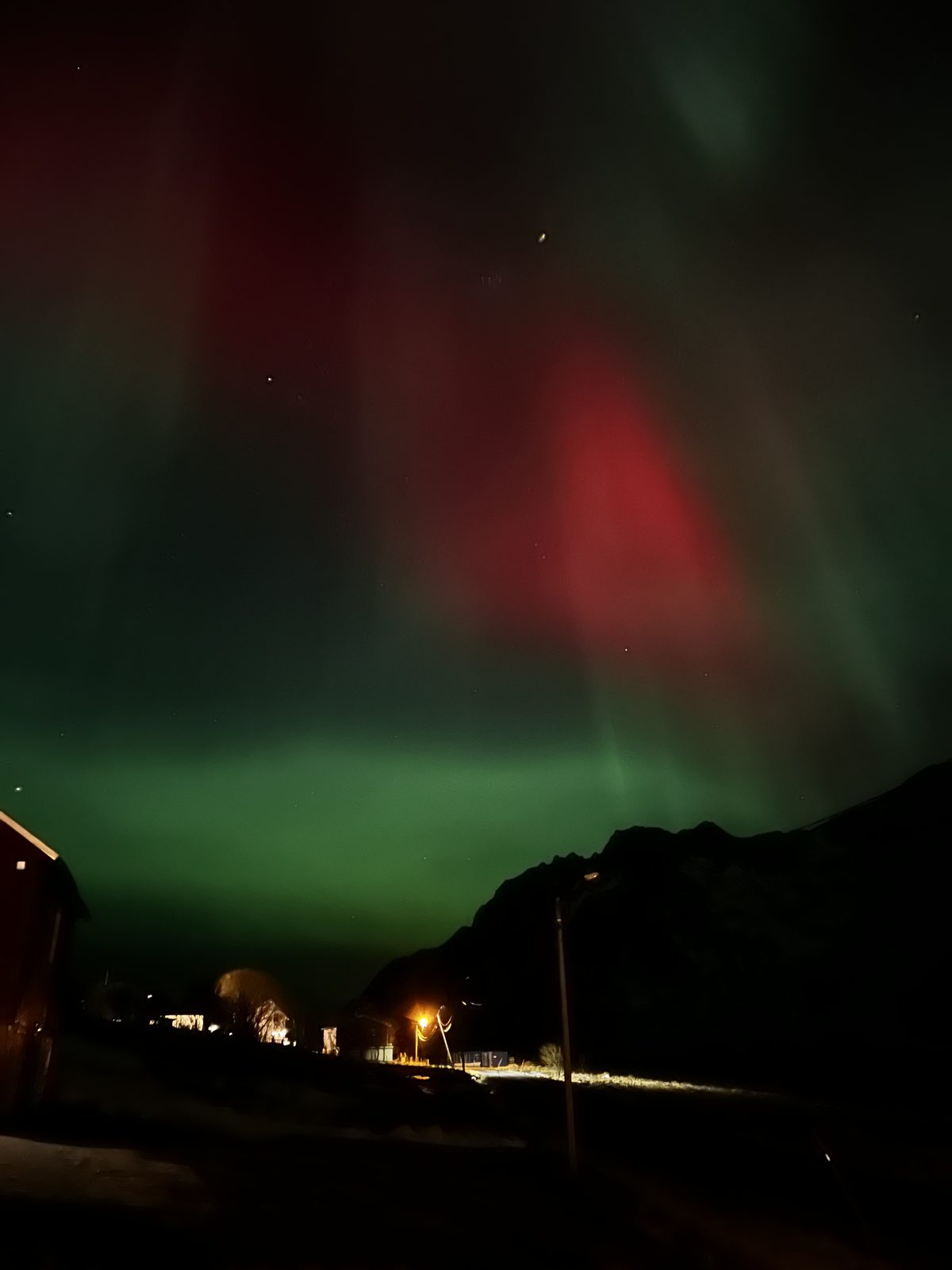
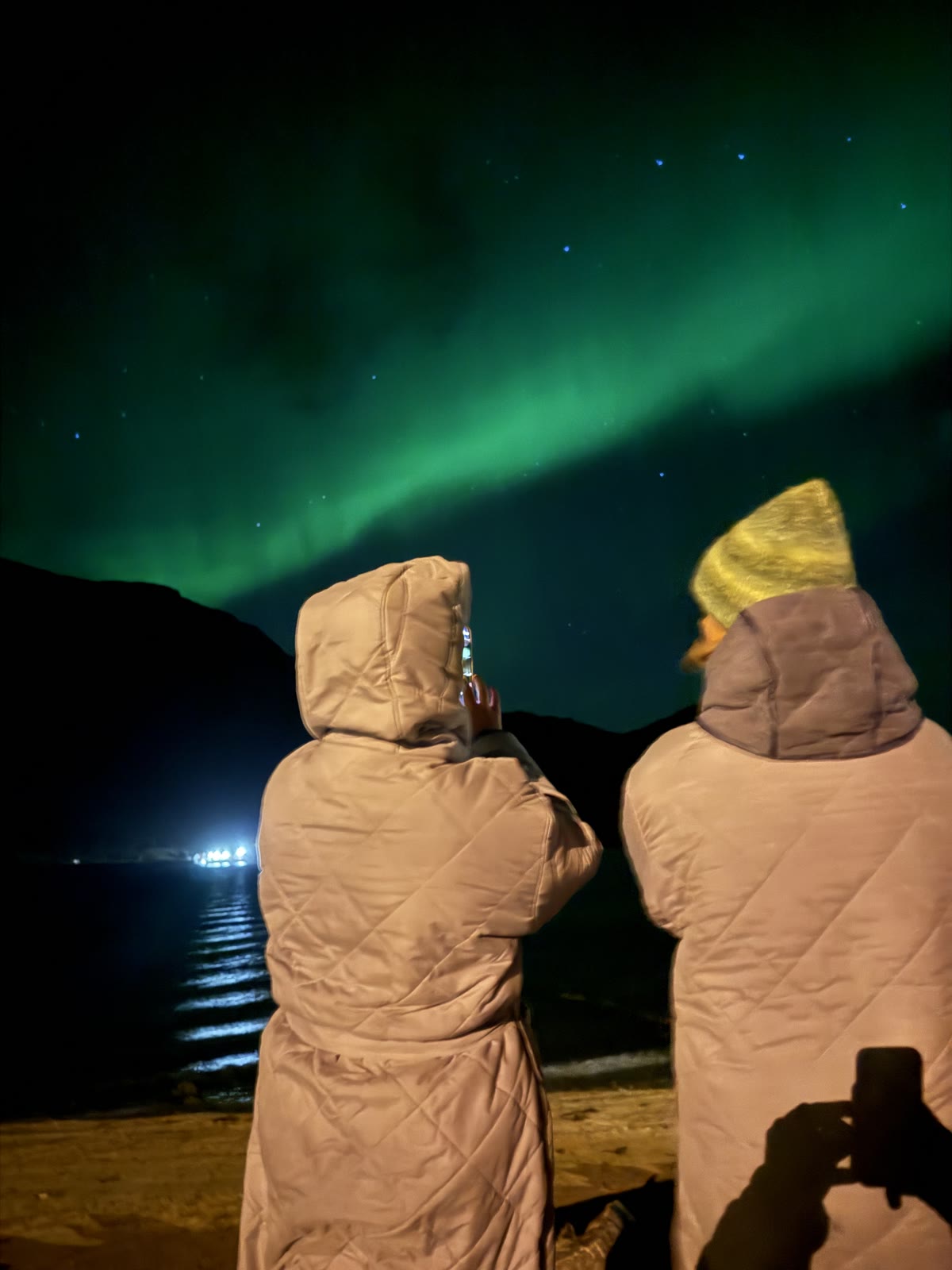
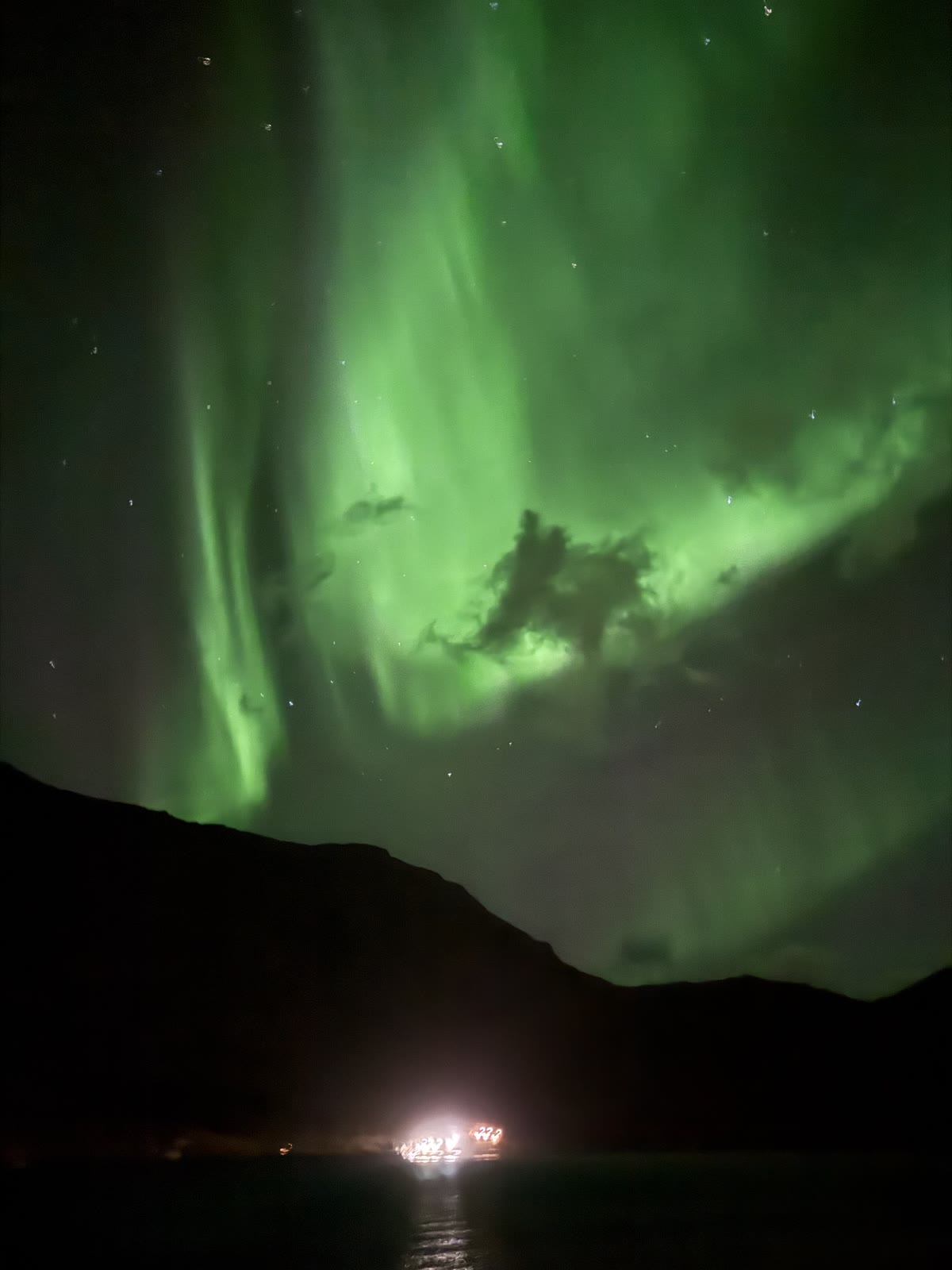
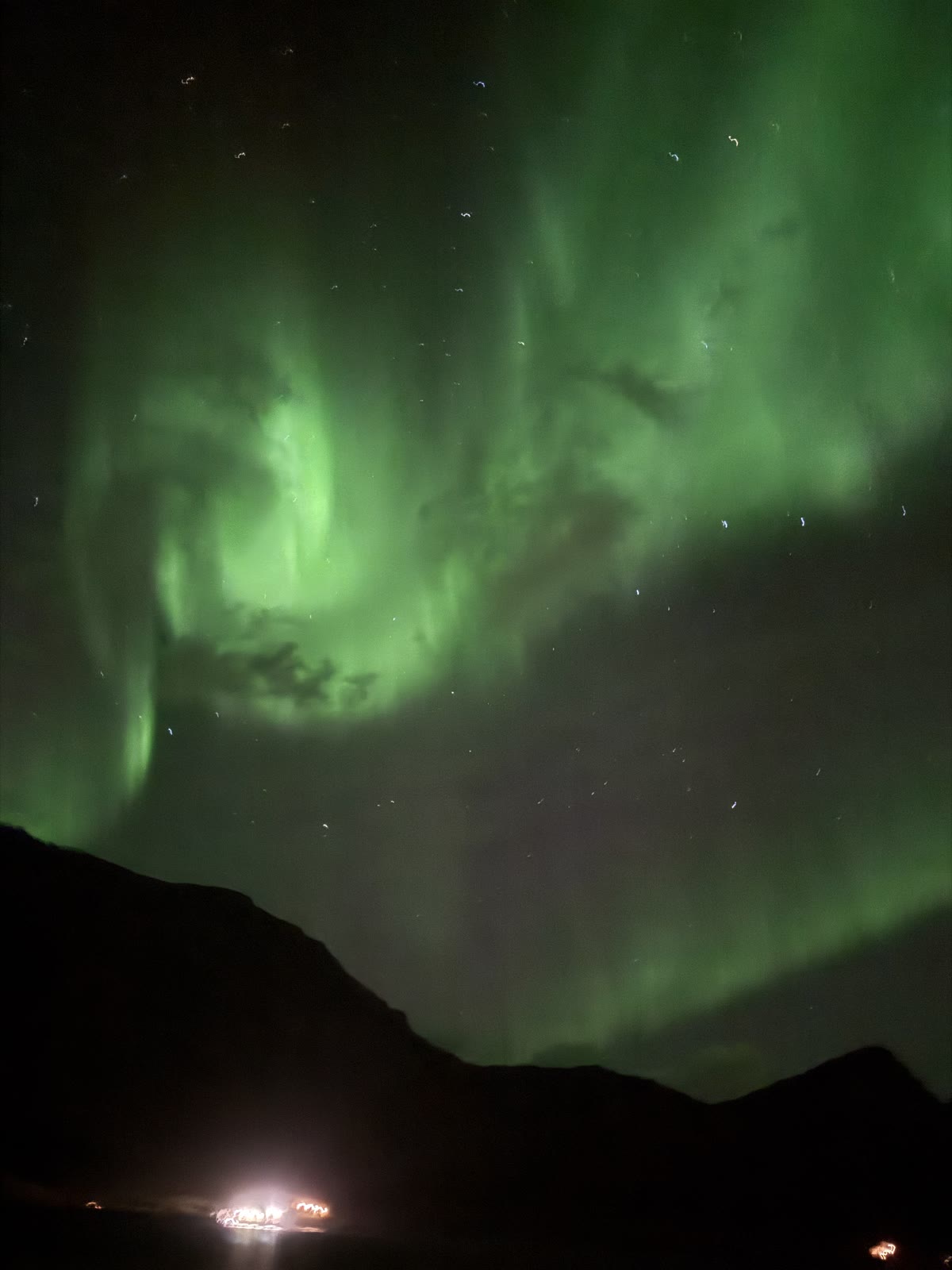
- Proof: every aurora photograph on this site was taken at the house.
No midnight driving, no guessing where to stand — the lights come to you.
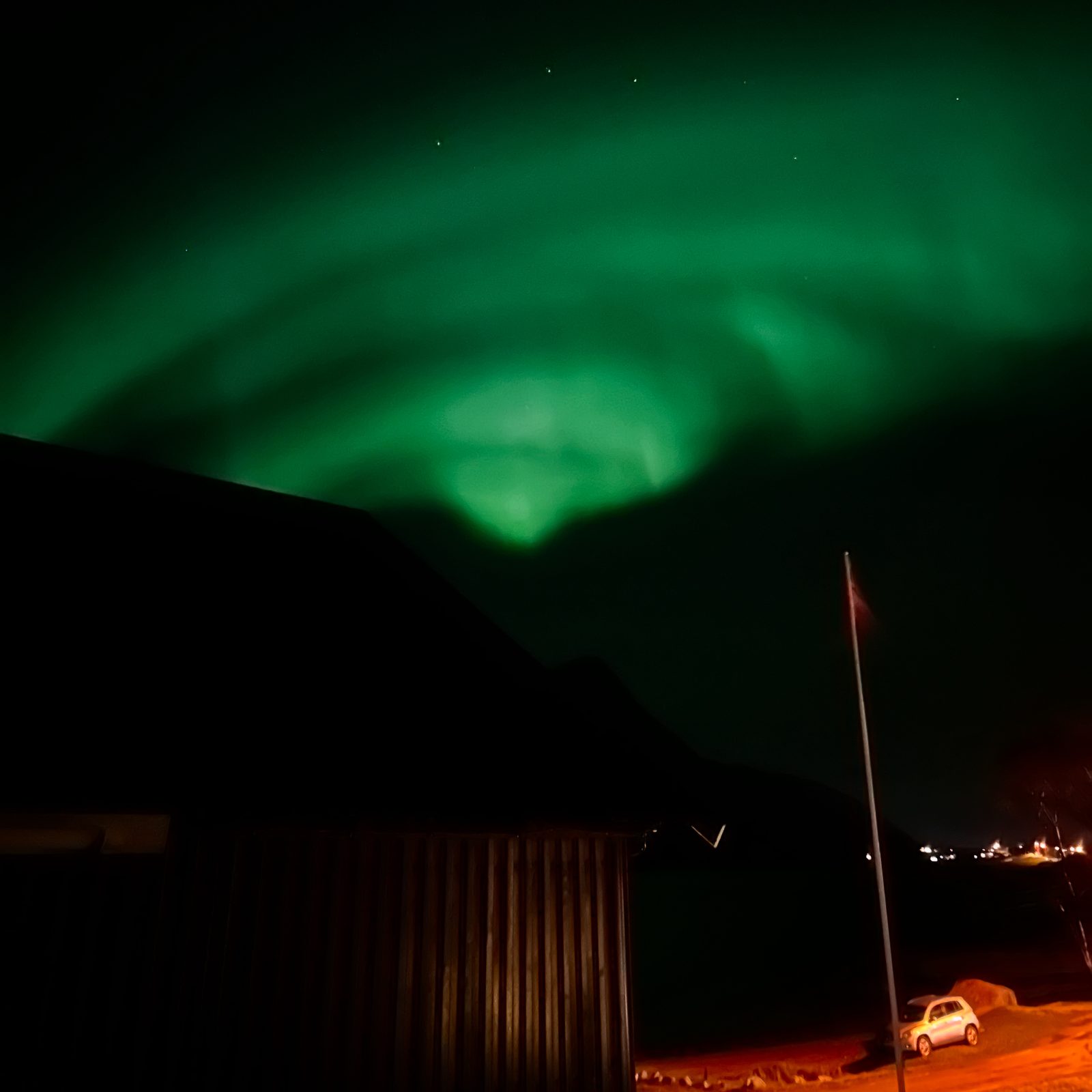
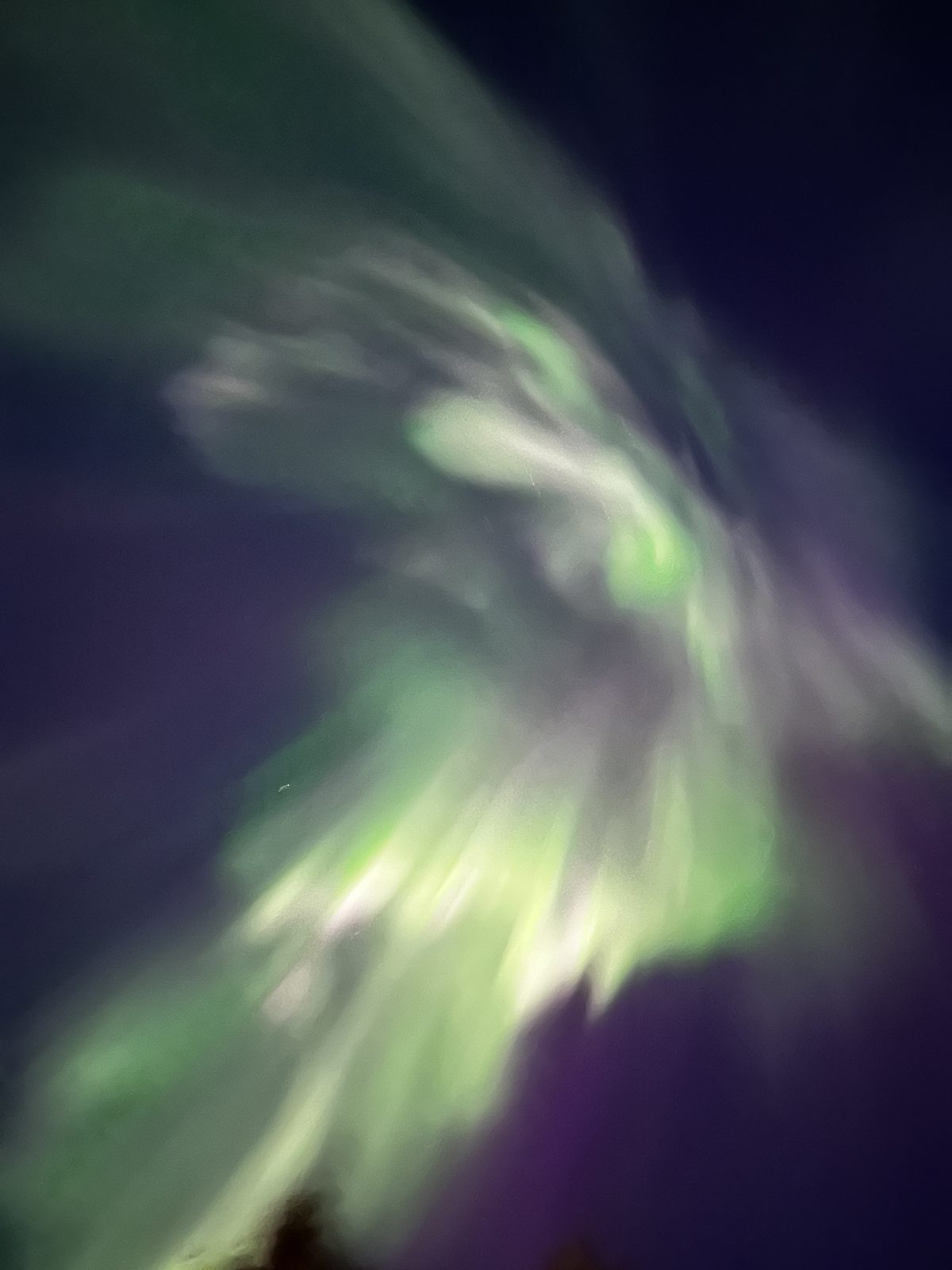
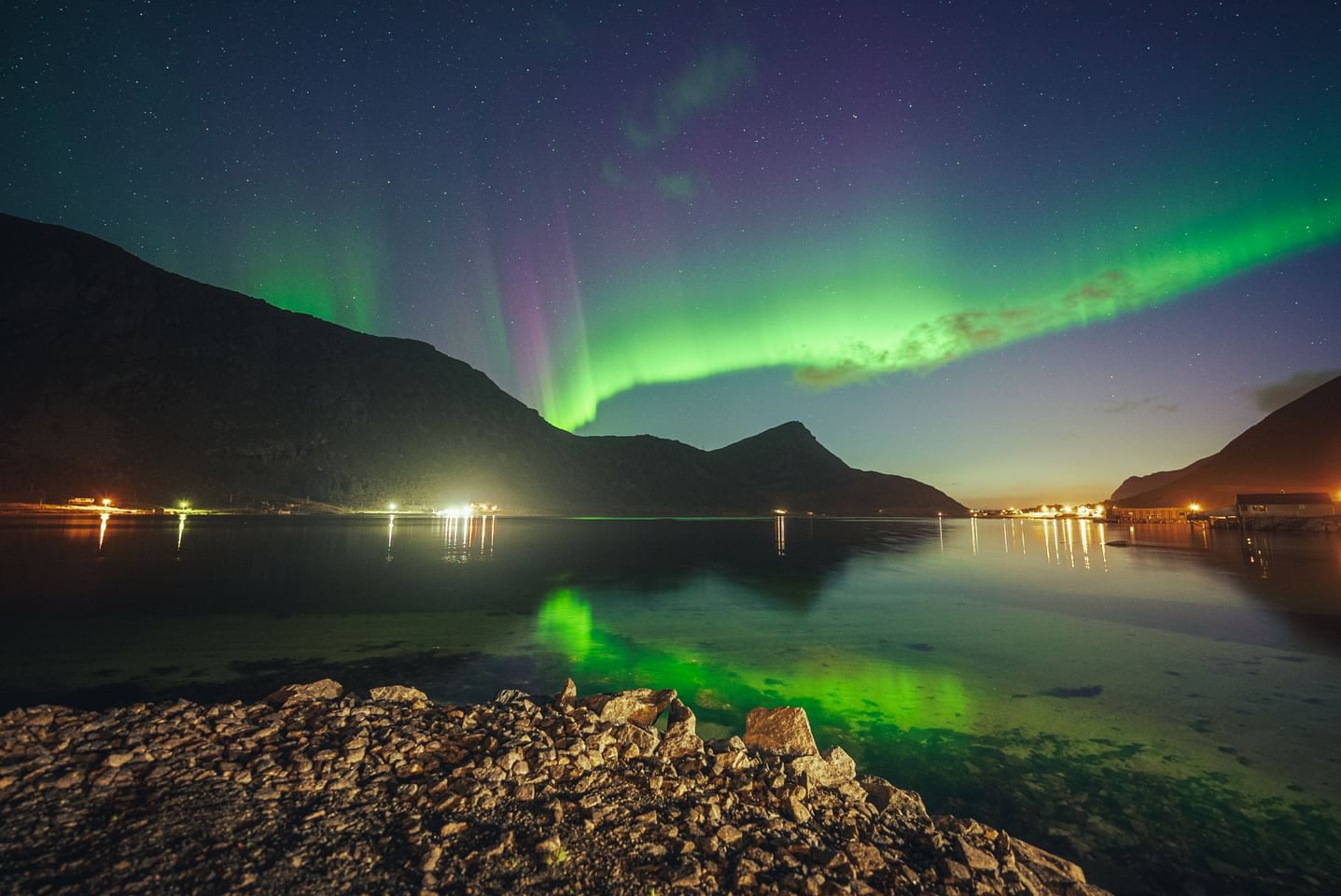
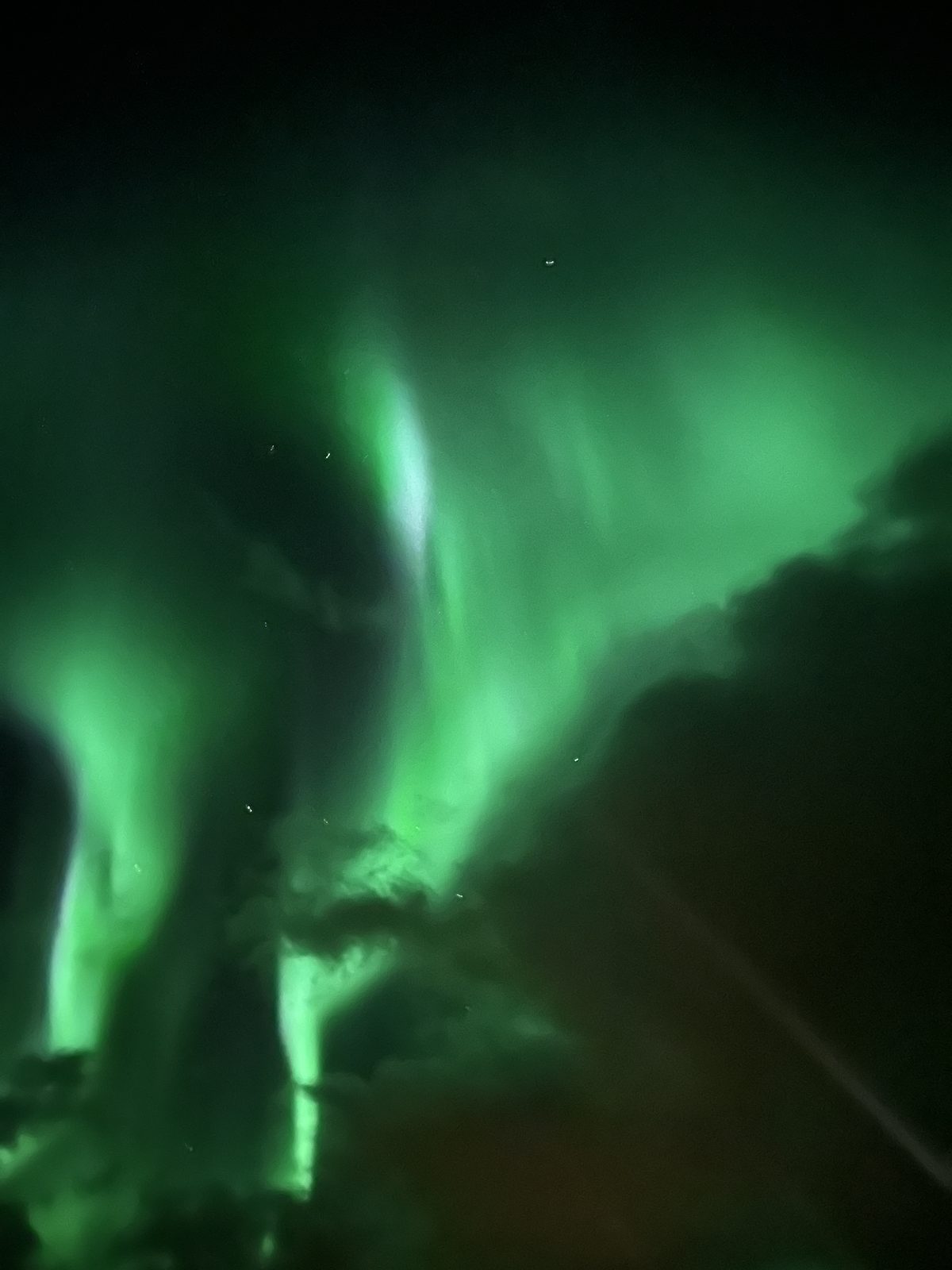
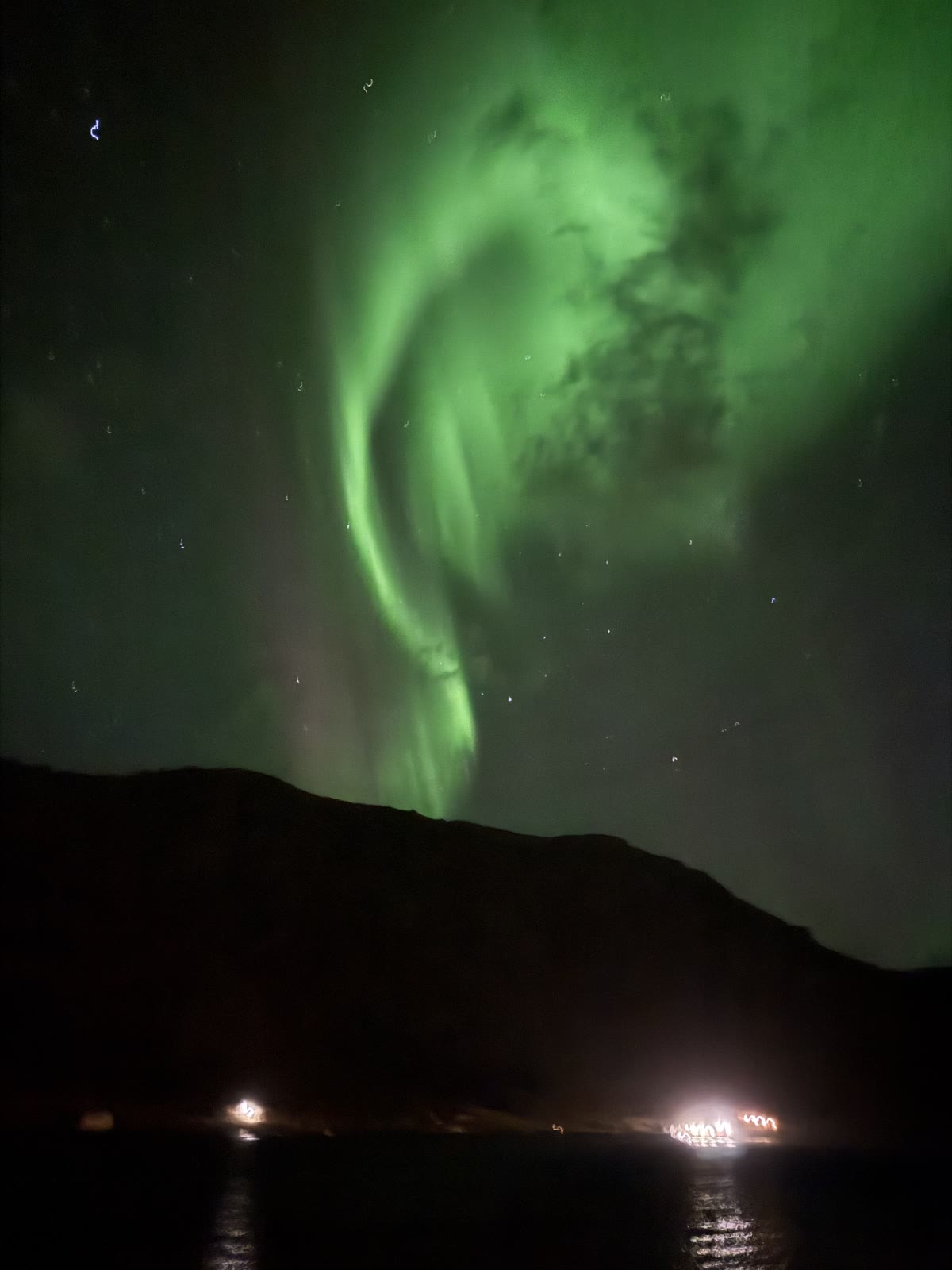
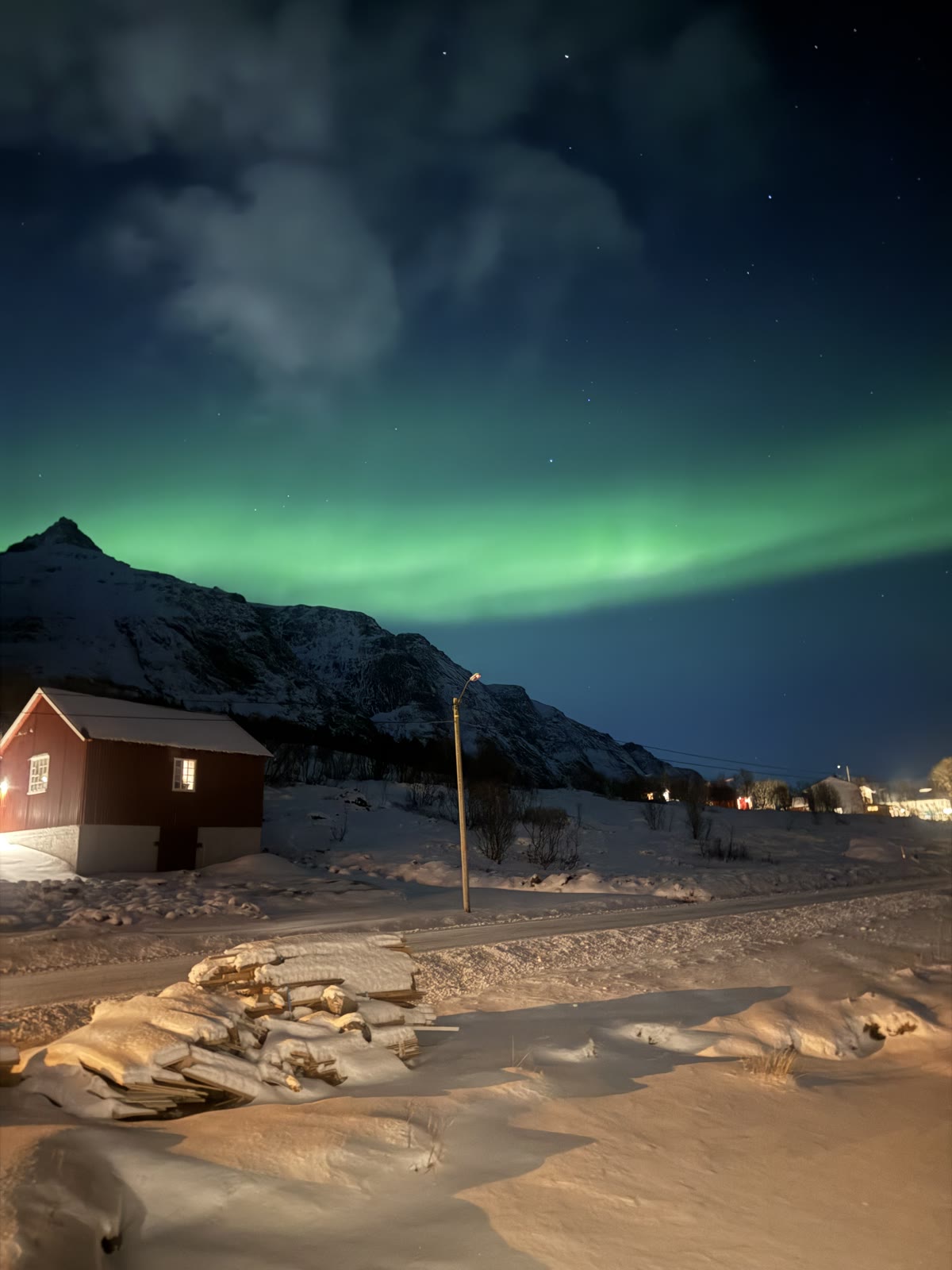
The aurora, photographed from the property
Every photograph below was taken at Casa Lofoten — over the boathouse, the house and the old barn, and across the fjord with Volandstind beneath the lights.
The aurora questions, answered
When can I see them?
Mid-September to early April, on dark, clear nights. February–March pair long nights with the steadiest weather; September is the mildest aurora month.
How many nights do I need?
The more, the better — five or more from a dark-sky base gives you very good odds. Every extra night is another ticket in the draw.
What Kp index do I need?
Less than almost anywhere you have read about — Lofoten sits directly beneath the oval, and Kp 2–4 is already good here. Treat high Kp as a bonus, not a requirement.
Will it look like the photographs?
Faint displays photograph greener than the eye sees; medium ones show clear green in person — and the strong nights need no caveats at all.
Do I need a guided tour?
Tours drive to dark places and read the same forecasts you can. From a dark doorstep with yr.no open, you are your own operator — in far more comfort, and without the full crowd.
Can children join?
The early-evening displays make it easy — some of our guests’ favourite family memories are an aurora in pyjamas and down jackets, steps from the door.