Lofoten in winter
Snow to the tideline, blue twilight, northern lights on clear nights — and long, warm evenings that are half the holiday.

There are two winters — choose yours
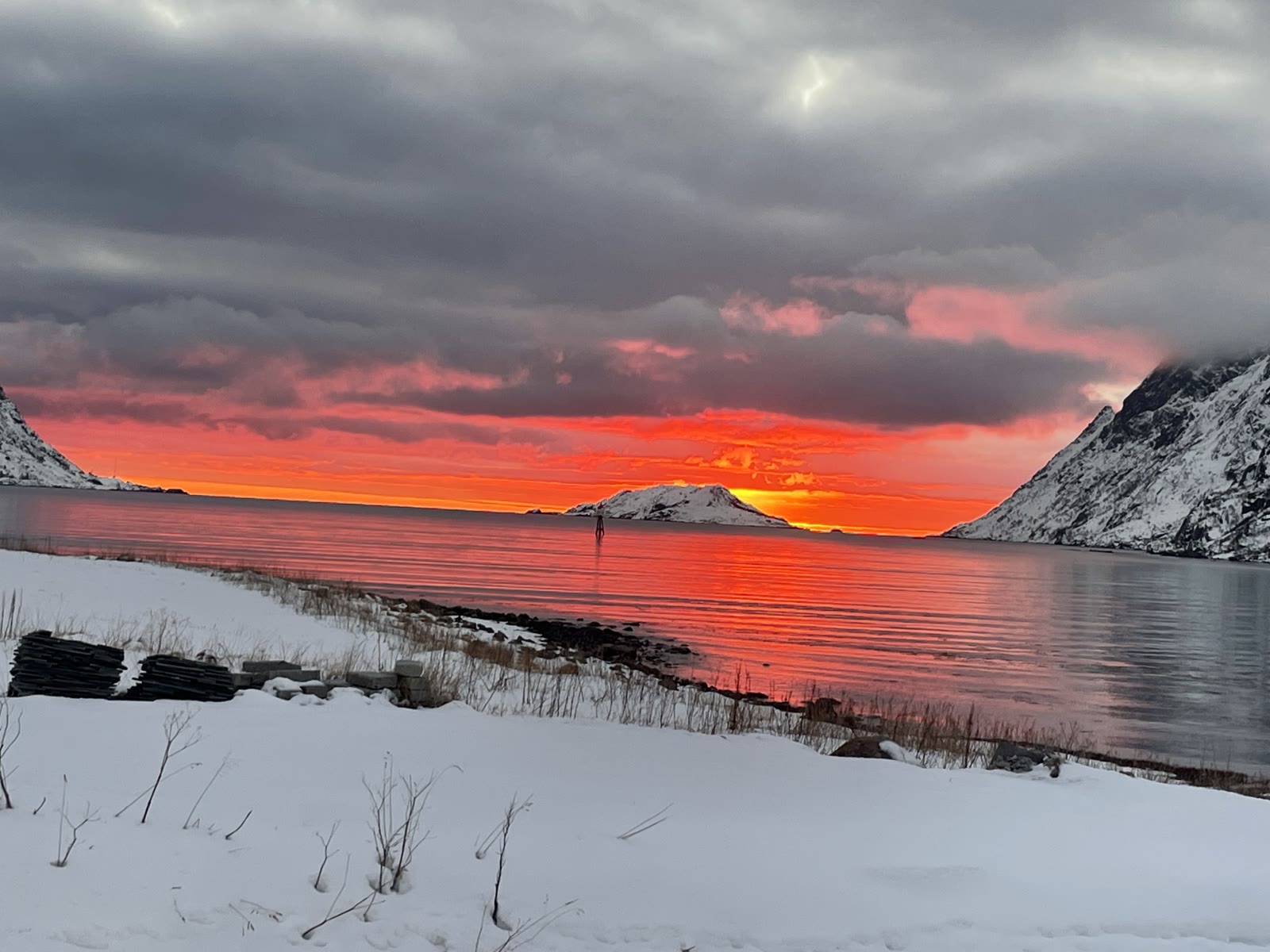
High sun at 12:41 on 11 December.
The deep blue winter
Around 7 December the sun stays below the horizon — and the days become hours of deep blue twilight, snow, sea and sky sharing one palette. Photographers travel here for exactly this light. Quiet villages, candle-lit evenings, and aurora that can appear before dinner. The winter for atmosphere and stillness.
The white winter
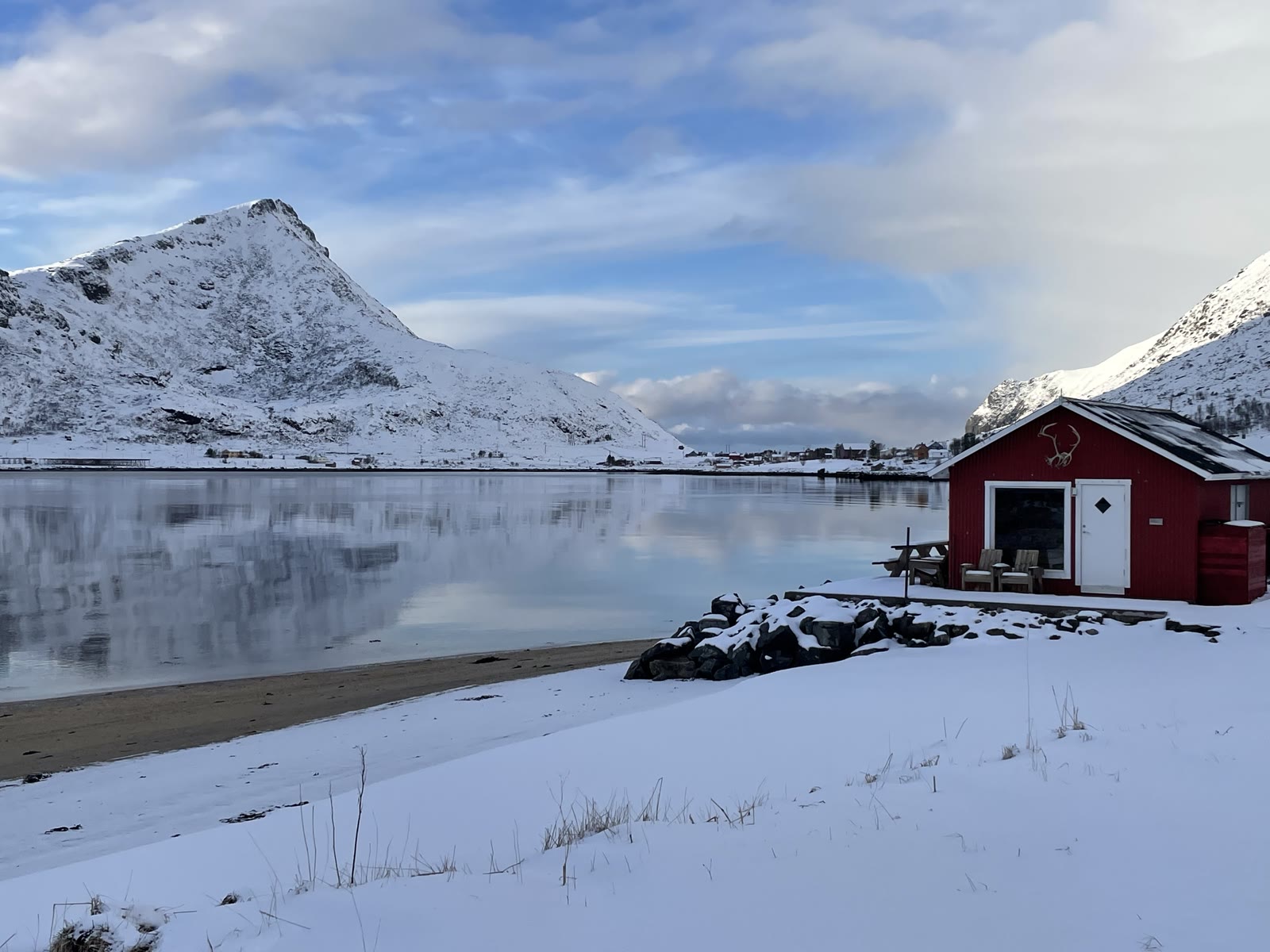
The light returns at astonishing speed: by February the islands are transformed — full snow, lengthening days, white peaks straight out of a dark blue sea. February and March combine real daylight, reliable snow and the steadiest aurora weeks of the year.
Skrei season
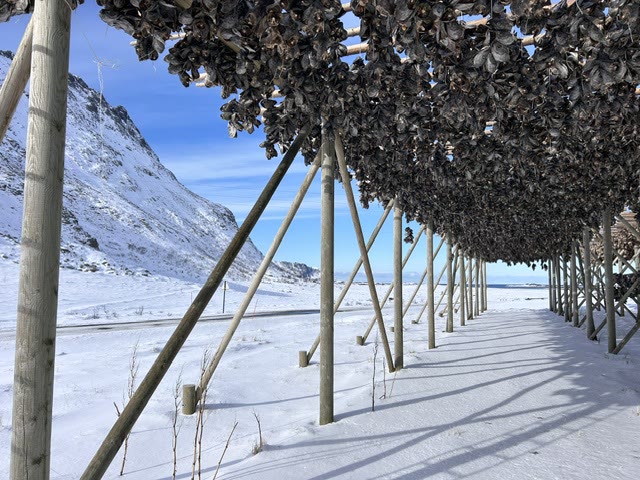
And late winter holds a secret the brochures miss: the skrei season. From roughly February to April the Arctic cod migrate in, the fishing villages work as they have for a thousand years, and the wooden drying racks fill — the living side of Lofoten’s story, happening all around you.
The light coming back, week by week
The month films for January, February and March — the winter light returning, filmed from the property.
The shape of a winter day
The light hours are for being out: a beach walk in snow, the drive to Reine or Nusfjord in low gold light, a hike with spikes or snowshoes — Volandstind, Ryten and Kvalvika are walkable all year round with the right equipment.
The blue hour is the day’s second show — be somewhere with a view, or simply home with the kettle on.
The evening is half the holiday: cooking, firelight, games, the sauna — and on clear nights, the aurora watch. In December the lights can appear early; check the sky before dinner, not just before bed.
What winter asks for
A warm, generous base. You will spend real, wonderful hours indoors — their quality depends entirely on where «indoors» is. A full house with fireplaces, a proper kitchen, a drying cabinet for wet gear and a sauna is the winter format.
Gentle driving. Ploughed roads and winter tyres as standard — drive softly, add margin, and let a storm have its hours. The getting-around guide covers it.
Wool first. Base layers top and bottom, insulation, windproof shell, insulated boots, mittens, a headlamp each.
Casa Lofoten
Winter at Casa Lofoten
- Aurora from the doorstep: a dark side fjord, benches on the hillside behind the house, open sky — watch in comfort, warm up inside, step out again.
- Fireplaces on both floors, underfloor heating downstairs, and space for eight — the long evenings are the point, not the wait.
- The sauna by the winter sea: snow on the sand, steam on the fjord — the season’s finest hour.
- Drying cabinet for boots and shells — ready again by morning.
Blue stillness in December, white light in February–March — both winters start at this door.
Winter, answered
How cold does it get?
Milder than the latitude suggests — typically −5 to +5 °C thanks to the Gulf Stream. Dress for wind and weather, not for Siberia.
Is the polar night completely dark?
No — the middle of each day brings hours of deep blue twilight, one of the most beautiful lights of the year. From late January the daylight returns fast.
Can we hike in winter?
Yes, you can — with the right equipment: spikes are normal, and snowshoes when there has been heavy snowfall. Reinebringen waits for its season.
Is anything open?
Shops, fuel and daily essentials all winter — this is a living community, and the skrei season brings the villages to life from February.
«The view from inside the sauna is a dream.»
«We saw the most enchanting northern lights.»